Key Points
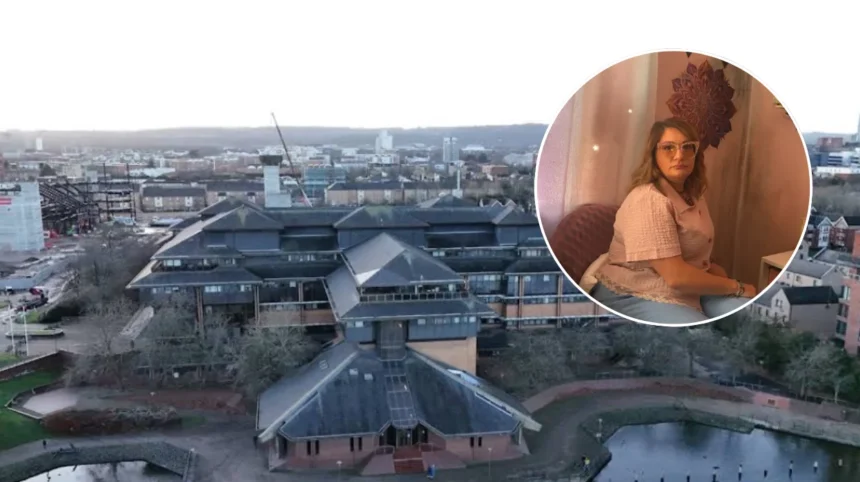
- Melinda Ban, a 41-year-old mother residing in Llanishen, Cardiff, claims that she has been “trapped” in her “rotten” flat for two years after a fire that occurred in 2024 in an adjoining flat within the same building.
- While Ban owns her flat, Cardiff Council holds the lease of the building, thereby making the council accountable for the land and the building structure.
- Ban says that she is suffering from severe water damage resulting in the growth of mold and damp in her kitchen and bedrooms, to such an extent that she has had to get rid of her damaged furniture and shift her youngest son who suffers from asthma to the living room.
- According to the Cardiff Council, independent surveys have revealed no structural damp or water penetration, and the problem of mold has been cited as being due to the lack of ventilation.
- This implies that the problem lies with the leaseholder.
Llanishen, Cardiff (Cardiff Daily) October 05 2026 – Melinda Ban, a 41-year-old homeowner living in Llanishen, Cardiff, has spoken out about her harrowing two-year ordeal trapped inside a water-damaged, mould-infested flat following a residential fire in 2024. Despite owning her individual apartment, the building’s lease is held by Cardiff Council, leaving the local authority accountable for the structure and land. As reported by journalist Kieran Molloy of the Local Democracy Reporting Service, Ban stated that she had to replace all of her children’s furniture, including wardrobes and beds, after they were ruined by water damage. The family’s daily routine now involves continuous cleaning of black mould, which has severely impacted their living conditions, mental health, and family life.
Why is a Cardiff mother trapped in a mould-infested flat?
The crisis began following a fire that broke out in an apartment within Ban’s residential block in 2024. As detailed by Kieran Molloy of the Local Democracy Reporting Service, the subsequent water damage triggered relentless dampness and mould proliferation throughout Ban’s property. Photographs of the flat show widespread mould on the walls of bedrooms and the kitchen, alongside a greying, flaking ceiling.
Ban expressed the psychological toll of her living situation, as reported by Kieran Molloy of the Local Democracy Reporting Service, stating:
“This is my everyday life: I wake up, I look at the mould, I clean the mould, I email the council… they don’t listen to me.”
She added,
“I just need my home back.”
Family life has deteriorated significantly under these conditions. Ban noted that her teenage sons are reluctant to invite friends over, leaving them feeling as though their lives are entirely on hold. Furthermore, because Ban’s youngest son suffers from asthma, she was forced to relocate his bedroom directly into the communal living room.
As reported by Kieran Molloy of the Local Democracy Reporting Service, Ban elaborated on the broader impact:
“We’ve got no space any more to socialise like family. I hate my property, it’s disgusting, and I feel suffocated because I can’t sell it like this. I’m sick, I’m emotionally drained. It literally feels like a fight I’m not winning at all. I just can’t see the light at the end of the tunnel.”
What is Cardiff Council’s official response to the allegations?
In response to the mounting concerns raised by the resident, Cardiff Council defended its position regarding the building’s structural integrity. As reported by Kieran Molloy of the Local Democracy Reporting Service, a council spokesperson stated:
“We recognise the frustration and disruption the resident and her family have experienced and understand the impact this has had on their daily lives.”
However, the local authority maintained that its investigations—conducted on multiple occasions—contradicted claims of severe structural failure. According to the council spokesperson, inspections revealed some black mould but yielded “no evidence of structural damp, water penetration, or building defects,” and determined the roof to be in a satisfactory condition.
Addressing the root cause of the infestation, the council spokesperson told Kieran Molloy of the Local Democracy Reporting Service:
“As the small amount of mould was because of lack of ventilation in the property this was a matter for the leaseholder to resolve.”
The council also acknowledged historical communication hurdles, noting that it had appointed a single point of contact to offer a clearer, more coordinated response to Ban and her family. Regarding financial and property recovery, the local authority emphasized that any matters tied to compensation, damaged possessions, or fire reinstatement must be pursued independently through relevant insurance or legal channels rather than direct council remediation.
Background of the Development
The situation faced by Melinda Ban highlights a complex and increasingly prominent issue across urban housing sectors in the United Kingdom: the friction between leaseholders and freeholders—in this case, a local municipal authority—over property maintenance liabilities. When multi-occupancy residential buildings suffer structural incidents such as fires or major plumbing failures, water ingress frequently travels across boundary lines between council-owned communal frameworks and privately owned leasehold interiors.
Leasehold arrangements often draw strict legal lines regarding internal maintenance versus structural upkeep. While councils or managing freeholders retain responsibility for the building envelope, roof integrity, and shared infrastructure, individual leaseholders are typically bound by lease covenants to maintain their own demised premises. Disagreements commonly flare up when water damage from a common-area incident or structural defect seeps into private apartments, leading to protracted disputes over whether subsequent damp and mould stem from hidden building faults or internal ventilation and lifestyle factors. This administrative gridlock often leaves residents caught in the middle for months or years, struggling with living conditions while legal and insurance pathways move slowly.
This development could significantly affect local leaseholders and council tenants across Cardiff and similar UK municipalities by intensifying scrutiny over how local authorities handle post-incident repairs in mixed-tenure buildings. As public awareness grows around the health hazards of residential damp and mould—particularly concerning vulnerable individuals with pre-existing medical conditions like childhood asthma—councils may face heightened pressure from housing watchdogs and local representatives to adopt more flexible, transparent investigation protocols.
For Cardiff Council specifically, cases like Ban’s risk damaging public trust in leaseholder relations, potentially prompting local leaders to streamline communication channels and re-evaluate third-party independent surveying standards. If public advocacy groups amplify this story, it could catalyze broader policy shifts regarding council accountability, compelling local authorities to offer more robust mediation or financial relief pathways for homeowners trapped in structurally compromised buildings where insurance and council responsibilities overlap.