Finding free parking in Cardiff requires more than locating an empty roadside space. Cardiff Council operates controlled parking zones, pay-and-display areas, short-stay car parks, long-stay car parks and limited-waiting bays across the city. Some locations provide free parking for a defined period, while others become free outside their charging hours.
- Where can drivers find free parking in Cardiff?
- Is parking in Cardiff free for the first 30 minutes?
- Is on-street parking free in Cardiff?
- When is street parking free in Cardiff?
- Which Cardiff parking zones offer free parking?
- Can visitors park for free in Cardiff city centre?
- Can drivers park for free in Cardiff residential areas?
- Do Blue Badge holders park free in Cardiff?
- What parking restrictions should Cardiff drivers know?
- What happens if a Cardiff parking machine is broken?
- How does MiPermit affect free parking in Cardiff?
- Can free parking in Cardiff be used all day?
- What should drivers check before using free parking in Cardiff?
- How can drivers avoid a parking fine in Cardiff?
- Why does Cardiff have different free parking rules?
- What is the best way to find free parking in Cardiff?
- What does the future of free parking in Cardiff look like?
Cardiff is the capital city of Wales and has a dense central area containing Cardiff city centre, Cardiff Bay, residential neighbourhoods, shopping districts, universities, hospitals, sports venues and major visitor attractions. Parking conditions therefore differ significantly between central Cardiff and outer districts.
The most important rule is simple: free parking does not always mean unrestricted parking. A space can be free but still have a maximum stay, permit requirement, registration requirement or other restriction. Cardiff Council states that drivers must check signs and comply with the conditions applying to the particular parking location.
Where can drivers find free parking in Cardiff?
Drivers can find free parking in Cardiff through limited-waiting bays, selected short-stay facilities, free initial periods in some council car parks and spaces that become free outside charging hours. Conditions vary by location. Drivers must check signs, maximum stays and operating times before leaving their vehicle.
Cardiff Council operates different parking arrangements across the city. These include on-street parking, controlled parking zones and council-operated car parks.
One of the clearest forms of free parking is a limited-waiting bay. These spaces allow drivers to park without paying, provided they remain within the maximum period shown on the local sign. Cardiff Council explains that drivers without a permit can use limited-waiting bays in controlled parking zones without paying, but they must not exceed the permitted stay.
Some council car parks also provide a free initial period. Cardiff Council currently states that the first 30 minutes are free in some of its car parks. Drivers still need to obtain a ticket from the machine or use MiPermit where required.
This distinction is important. A driver cannot assume that an empty bay is automatically unrestricted simply because no payment is immediately required.
Free parking in council car parks
Cardiff Council operates short-stay and long-stay car parks across the city. Short-stay facilities are generally designed for shorter visits, while long-stay facilities allow longer parking periods. Charges, opening arrangements and free periods differ between locations.
For example, Cardiff Council lists Penylan Library car park in Roath with 50 spaces. The car park operates 24 hours, with charging hours from 9am to 6pm. Its listed short-stay tariff provides the first 30 minutes free.
Merthyr Road and Penlline Road car parks in Whitchurch also provide a 30-minute free period under the council’s published short-stay arrangements.

Is parking in Cardiff free for the first 30 minutes?
Yes, some Cardiff Council car parks provide a free first 30 minutes, but the arrangement does not apply to every car park. Drivers must obtain the required ticket or digital parking session and check the specific car park conditions before leaving their vehicle.
The 30-minute free period is useful for short visits such as collecting an item, making a brief appointment or visiting a local business.
The important requirement is that drivers must still follow the parking procedure. Cardiff Council states that drivers using car parks offering 30 minutes free must obtain a ticket at the ticket machine or use the MiPermit app or website.
This means that “free” refers to the price for the qualifying period. It does not remove the administrative requirement attached to the parking space.
The arrangement also has a practical limitation. A driver who stays beyond the free period becomes subject to the applicable tariff. Parking beyond the permitted period without valid payment can result in a Penalty Charge Notice.
Is on-street parking free in Cardiff?
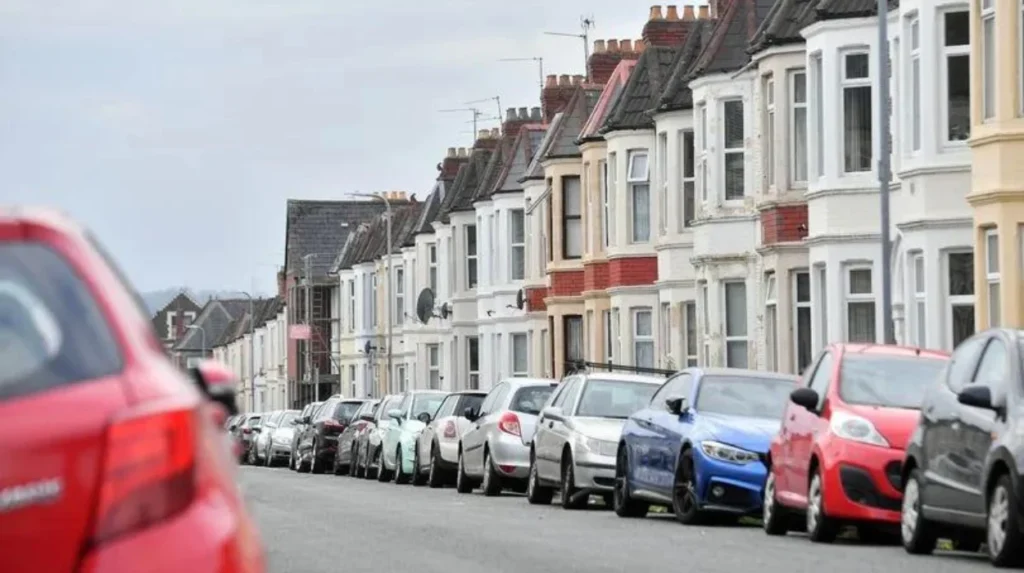
Some on-street parking in Cardiff is free, particularly limited-waiting bays and selected controlled parking areas during their qualifying conditions. Other on-street spaces require payment. Drivers must read roadside signs because restrictions, charging periods and maximum stays differ between locations.
Cardiff has a mixture of on-street parking arrangements.
Controlled Parking Zones, commonly called CPZs, regulate parking within defined areas. They can contain permit-holder bays, pay-and-stay bays, shared-use bays and limited-waiting spaces.
A limited-waiting bay can provide free parking without a permit, but only for the period displayed on the sign. A pay-and-stay bay requires payment during its operating period.
Cardiff Council also publishes specific charging arrangements for controlled parking zones. In the council’s published information, some controlled zones operate from 8am to 6pm Monday to Sunday and provide one hour free, subject to vehicle registration through MiPermit.
The precise conditions depend on the zone. Drivers should therefore treat the roadside sign as the controlling information for the individual bay.
When is street parking free in Cardiff?
Street parking can become free when a charging period ends, when a location provides a free initial period, or when a driver uses a qualifying limited-waiting bay. Free parking remains subject to restrictions, maximum stays, permits and other conditions displayed at the location.
Parking restrictions normally operate during defined hours. Outside those hours, some paid spaces become free, although other restrictions can continue.
For example, Cardiff Council lists different operating periods for individual areas. Civic Centre parking has separate Monday-to-Saturday and Sunday operating hours, while Porth Teigr has its own charging schedule and a three-hour maximum stay.
Drivers should therefore check both parts of a parking sign:
- The hours when the restriction or charge applies.
- The conditions that apply outside those hours.
A road can remain subject to yellow-line restrictions even when a nearby pay-and-display bay is no longer charging. A free period does not override a no-waiting restriction, loading restriction or permit requirement.
Which Cardiff parking zones offer free parking?
Cardiff’s controlled parking zones contain different parking arrangements rather than one citywide free-parking rule. Limited-waiting bays can be free for a specified period, while pay-and-stay and permit bays have separate conditions. The signs inside each zone determine the applicable restrictions.
Controlled Parking Zones protect parking availability for residents and regulate visitor parking.
Cardiff Council states that drivers without permits can park in pay-and-stay bays and limited-waiting bays. Limited-waiting bays can be used without payment, provided the driver remains within the stated maximum stay.
Permit-holder bays operate differently. A driver without the relevant permit cannot simply use an empty resident parking space because it is not occupied.
The city continues to introduce and modify parking arrangements in individual areas. Cardiff Council’s Plasnewydd Central Parking Zone D1, for example, includes permit-holder parking, limited-waiting bays and pay-and-stay bays. Drivers without permits can use designated limited-waiting spaces for free within the applicable time limit.
This demonstrates why drivers should avoid relying on old parking guides. Cardiff parking controls can change as new zones and traffic-management measures are introduced.
Can visitors park for free in Cardiff city centre?
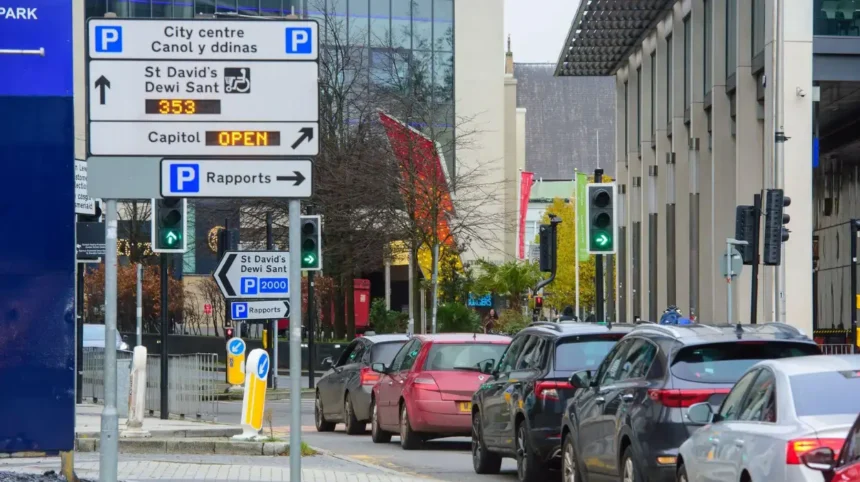
Visitors can find free or temporarily free parking near Cardiff city centre, but unrestricted all-day free parking is not the standard arrangement in central areas. Drivers should expect controlled spaces, paid facilities, limited waiting periods and event-related changes around major venues.
Cardiff city centre contains some of the city’s most heavily used roads and parking facilities. Central parking therefore operates under tighter controls than many outer neighbourhoods.
Drivers visiting Cardiff Castle, St David’s shopping area, Cardiff Central railway station, the Principality Stadium or the Civic Centre should check parking conditions before travelling.
Event days are particularly important. Cardiff Council states that parking tariffs can vary during events and that event-day tariffs apply to all car park users, including Blue Badge holders.
Major events can affect parking availability around Cardiff’s central venues. Drivers should check current council travel advice before travelling to an event.
Can drivers park for free in Cardiff residential areas?
Free parking in Cardiff residential areas depends on the local parking scheme. Limited-waiting spaces can allow free visitor parking for a defined period, while resident permit bays require appropriate permission. Drivers must check signs because restrictions vary between controlled parking zones.
Residential streets are not automatically free parking areas.
Cardiff uses resident parking schemes to control demand and protect spaces for people who live in affected areas. Permit-holder bays and permit parking areas require an appropriate permit during their operating periods.
Shared-use bays can have different rules. Depending on the location, a space can serve permit holders and visitors under separate conditions.
Limited-waiting bays provide another option. Cardiff Council states that drivers without permits can use these bays without paying, subject to the displayed time limit.
Drivers should never assume that parking outside a marked bay is legal. Yellow lines, loading restrictions, pedestrian restrictions and other controls can apply independently of the resident parking scheme.
Do Blue Badge holders park free in Cardiff?
Blue Badge holders receive important parking concessions in Cardiff, including free parking in council car parks under Cardiff Council’s current policy. They must display a valid badge correctly and follow local restrictions, time limits, loading bans and event-day conditions.
Cardiff Council states that valid Blue Badge holders can park for free in its car parks, although event-day tariffs can apply to all users. The badge must be displayed correctly.
A Blue Badge is issued under the national disabled parking scheme. The Welsh Government explains that the scheme is designed to improve access to services by allowing eligible badge holders to park closer to their destination. It is not automatically a licence for free parking everywhere.
Cardiff Council states that Blue Badge holders can use on-street pay-and-display spaces, council car parks and designated disabled bays. Additional rules apply to resident bays, yellow lines and parking clocks.
Drivers must also understand that private car parks have separate rules. The Welsh Government specifically states that off-street car parks operated by private organisations are governed by their own conditions.
What parking restrictions should Cardiff drivers know?
Cardiff drivers must distinguish free parking from legal parking. Restrictions cover resident bays, yellow lines, loading areas, disabled spaces, limited-waiting bays, bus stops, pedestrian areas and controlled zones. Breaking a restriction can result in a Penalty Charge Notice or other enforcement action.
Parking signs and road markings determine whether a vehicle can remain in a particular location.
Cardiff Council identifies several parking contraventions. These include parking without valid payment, parking in a resident bay without the required permit, remaining beyond paid time and parking in restricted areas of car parks.
Yellow lines also require particular attention. A free parking period does not override a yellow-line restriction.
Loading restrictions use yellow kerb markings and signs. Pedestrian crossings, bus stop clearways, cycle lanes and other restricted locations also have specific rules.
The Welsh Government’s Blue Badge guidance reinforces this principle. Even Blue Badge holders cannot use locations such as clearways, pedestrian crossings, bus stop clearways, loading restrictions or other prohibited areas simply because they hold a badge.
What happens if a Cardiff parking machine is broken?
A broken Cardiff parking machine does not automatically make paid parking free. Drivers must use another permitted payment method, such as MiPermit, where available. Cardiff Council states that failure of a machine is not a valid reason for avoiding the parking charge.
Cardiff has expanded cashless parking through MiPermit.
Where cashless parking operates, drivers can use the MiPermit app, website or telephone service. Cardiff Council also provides alternative payment instructions for locations where a machine is not functioning.
The council specifically states that a faulty machine does not provide an exemption from payment. Drivers who fail to use an available alternative payment method can still receive a parking fine.
This rule is particularly relevant for visitors who are unfamiliar with Cardiff’s parking system. Checking the payment instructions on the nearest machine can prevent unnecessary enforcement.
How does MiPermit affect free parking in Cardiff?
MiPermit is Cardiff Council’s digital parking system for many locations. It allows drivers to obtain parking time through an app, website or telephone service. Some free parking periods still require registration or a digital ticket, so drivers should follow the location-specific instructions.
MiPermit supports Cardiff’s cashless parking system.
Drivers can use the service to pay for parking without obtaining a physical ticket from a machine. Cardiff Council provides the MiPermit app, website and telephone options for applicable locations.
The system also matters when parking is technically free for a qualifying period. Cardiff Council states that drivers using some 30-minute free car-park periods still need to obtain a ticket or use MiPermit.
Digital payment requires accurate vehicle and location information. Cardiff Council states that a MiPermit payment must contain the correct vehicle details and parking location to be valid.
Drivers should therefore check the registration number and location before confirming a parking session.
Can free parking in Cardiff be used all day?
Most free parking options in Cardiff are not intended for unrestricted all-day parking. Free spaces frequently have maximum stays, operating hours, permit conditions or registration requirements. Drivers seeking longer stays should check long-stay facilities, park-and-ride options or paid parking.
Limited-waiting parking is specifically designed around maximum stays. Staying longer than the displayed period can turn an otherwise legal parking session into a contravention.
The same principle applies to free initial periods in car parks. A 30-minute free period does not create an all-day exemption.
Long-stay car parks are designed for longer visits. Cardiff Council describes its long-stay car parks as facilities where drivers can park for as long as needed, subject to the applicable conditions and charges.
For commuters, all-day parking therefore requires a different approach from a short shopping or appointment visit.
What should drivers check before using free parking in Cardiff?
Drivers should check the parking sign, maximum stay, operating hours, payment requirement, permit restrictions, road markings and special event conditions before leaving a vehicle. These checks establish whether parking is genuinely free and whether the stay remains legally valid.
The safest parking process is straightforward.
First, identify whether the space is on-street or inside a car park. Second, read the nearest sign. Third, check whether payment or vehicle registration is required even during a free period.
Fourth, identify the maximum permitted stay. Fifth, check whether the space is reserved for residents, disabled users, loading, motorcycles or another category.
Sixth, check for temporary restrictions or event-day arrangements.
Cardiff Council’s parking information covers car parks, on-street parking, controlled parking zones, resident permits, Blue Badge parking, fines and park-and-ride facilities.
This makes the council’s official parking information the appropriate reference when conditions change.
How can drivers avoid a parking fine in Cardiff?
Drivers can reduce the risk of a parking fine by reading local signs, paying when required, registering free periods when instructed, observing maximum stays and using the correct permit or Blue Badge. Cardiff Council enforces several parking contraventions through Penalty Charge Notices.
A Penalty Charge Notice, or PCN, is a civil parking enforcement notice issued when a vehicle breaches an applicable parking restriction.
Cardiff Council lists parking without valid payment, overstaying paid time, parking in resident bays without permission and parking in restricted car-park areas among enforceable contraventions.
Correct payment is only one part of legal parking. A valid payment does not permit parking in a restricted bay.
For example, a driver cannot use a valid MiPermit session to justify parking in a resident-only space. The payment must correspond to a location where that payment is accepted.
The same principle applies to Blue Badge parking. Badge holders must display the badge correctly and observe restrictions that still apply to them.
Why does Cardiff have different free parking rules?
Cardiff uses different parking rules because parking demand varies between the city centre, residential districts, shopping areas, transport locations and visitor destinations. Controlled zones, limited waiting and paid parking help manage available road space and prioritise different users.
Parking policy balances several competing uses of limited urban road space.
City-centre parking serves shoppers, visitors, workers and event attendees. Residential schemes protect parking availability for residents. Short-stay facilities support local shopping and brief appointments. Long-stay car parks accommodate longer visits.
Controlled Parking Zones provide a structured way to manage these competing demands.
The system also supports wider transport policy. Cardiff Council provides park-and-ride services alongside conventional parking facilities, giving drivers an alternative to taking a vehicle into the busiest areas.
This means free parking should be viewed as one part of Cardiff’s wider transport and parking network rather than as a single citywide policy.
Explore More Area Guide
Cheap Parking in Cardiff: Car Parks and Alternatives
Cardiff Parking Guide: Where to Park in the City Centre
What is the best way to find free parking in Cardiff?
The most reliable way to find free parking in Cardiff is to check Cardiff Council’s current car-park and on-street parking information, then verify the signs at the destination. Free options include qualifying short stays, limited-waiting bays and spaces outside applicable charging periods.
The best location depends on the purpose of the journey.
A short visit can suit a car park offering a free initial period. A brief local stop can suit a limited-waiting bay. A longer visit requires a facility with an appropriate maximum stay.
Drivers should avoid relying solely on third-party parking websites or older articles because parking controls and tariffs can change.
Cardiff Council publishes current information covering council car parks, on-street parking, controlled parking zones and parking enforcement.
The council also states that advance MiPermit parking does not guarantee that a parking space will be available.
For visitors, this distinction is important. Payment technology can confirm a parking session, but it does not reserve the physical space.
What does the future of free parking in Cardiff look like?
Free parking in Cardiff is increasingly connected with controlled parking, digital payment, resident protection, short-stay turnover and sustainable transport. Drivers should expect location-specific rules rather than universal free parking as Cardiff manages demand across residential and central areas.
Cardiff’s parking system is already becoming more digitally managed. MiPermit supports cashless payment, while controlled parking zones regulate demand in residential areas.
New parking zones can introduce combinations of permit bays, limited-waiting spaces, pay-and-stay bays, loading areas and disabled spaces. Plasnewydd’s D1 scheme demonstrates how local parking arrangements can be redesigned to prioritise residents while retaining visitor parking.
For drivers, the long-term implication is clear: checking current parking information before travelling is more reliable than assuming that a familiar street still has the same rules.
Free parking remains available in Cardiff, but it is generally conditional. The condition can involve time, location, registration, operating hours or eligibility.
The most important rule for drivers is therefore to distinguish free parking from unrestricted parking. A qualifying free period still requires compliance with local regulations.
Cardiff Council’s official parking pages provide the current reference point for car parks, on-street parking, controlled zones, permits, Blue Badge arrangements and enforcement.
Is there free parking in Cardiff?
Yes. Cardiff has several free parking options, including limited-waiting bays, qualifying short-stay periods in some council car parks and spaces that become free outside charging hours. Restrictions and maximum stays still apply.