Key Points
- Residents on Moorland Road in Splott, Cardiff, report severe parking shortages, exacerbated by Moorland Primary School staff parking on the street despite the school having a rear car park.
- Local inhabitants, including elderly residents with mobility issues, struggle to find parking spaces near their homes.
- Resident Ian Watkins, aged 66, described the parking as “horrendous,” highlighting impacts on vulnerable residents.
- Resident Rebecca Wise, aged 29, called the situation “absurd,” noting that school staff occupy all available spots during the day, leaving no room for locals despite understanding public spaces are not owned.
- The street already features yellow zig-zag markings and disabled parking bays, limiting available spaces further.
- A joint response from Moorland Primary School and Cardiff Council states the school uses both front and rear car parks, which are essential for daily operations.
Moorland Road (Cardiff Daily) April 24, 2026 – Residents on Moorland Road in Splott have raised alarms over a worsening parking crisis, attributing the issue primarily to staff from the adjacent Moorland Primary School who park on the street during school hours.
- Key Points
- What Has Triggered the Parking Complaints from Moorland Road Locals?
- How Does Moorland Primary School Respond to These Parking Allegations?
- Why Is Parking on Moorland Road Already So Restricted?
- What Challenges Do Vulnerable Residents Face Amid This Parking Shortage?
- Are There Any Broader School Parking Policies in Place at Moorland Primary?
- How Has Cardiff Council Addressed the Joint School Parking Concerns?
- What Next Steps Have Residents Suggested for the Parking Issue?
- Background of the Parking Development
- Prediction: Impact on Cardiff Residents
As reported by Wales Online journalists, people living at Moorland Road have claimed they are unable to park in front of their homes due to staff from Moorland Primary School parking on the street during the day despite the school having a rear car park that backs onto Moorland Road.
Resident Ian Watkins, 66, said:
“The parking can be horrendous on the streets. Residents, aged and with mobility issues, are struggling.”
What Has Triggered the Parking Complaints from Moorland Road Locals?
Rebecca Wise, a 29-year-old resident, commented on the situation, stating,
“It’s absurd how crowded it gets; there aren’t enough spaces for everyone. Staff members park here all day, taking up the available spots. While we understand that we don’t own the public spaces, when they fill up the entirety of Moorland Road, it leaves us without anywhere to park, which is incredibly frustrating.”
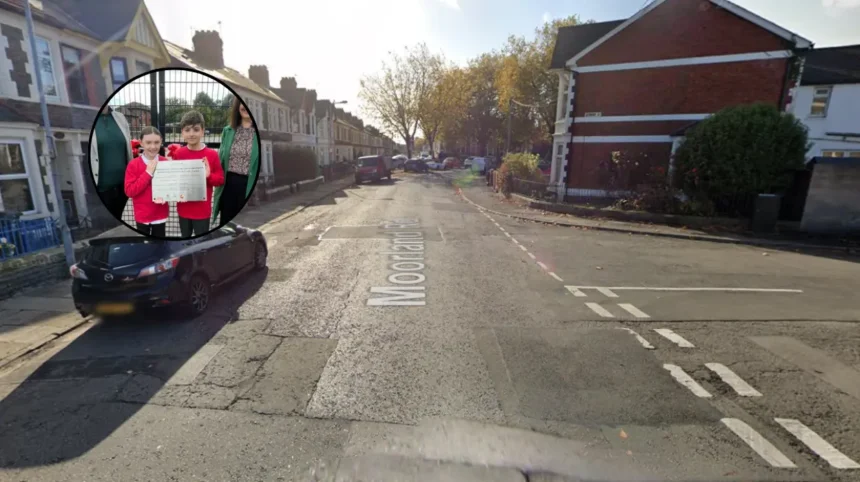
The parking situation on Moorland Road is already constrained due to yellow zig-zag markings and designated disabled parking bays, leading residents to feel that school staff occupying the limited available spaces is particularly aggravating.
Some residents have blamed the local school and said something needs to change, with claims that an already busy street for parking has been made worse because of Moorland Primary School.
How Does Moorland Primary School Respond to These Parking Allegations?
In a joint response from both the school and Cardiff Council, a representative stated,
“The school utilizes both front and rear parking lots, both of which are essential for daily operations.”
Moorland Primary School maintains a rear car park, yet residents report it is not sufficiently utilised by staff, contributing to the overflow onto Moorland Road.
The school’s parking policy, as outlined in official documents, aims to reduce congestion and ensure safety, with the car park closed to certain vehicles at peak times like 8:40am-9:10am and 3:15pm-3:45pm to protect children.
It specifies 61 marked parking bays, including 5 for disabled users, and notes that on average days, 82 staff members are present, with parking restricted primarily to staff and official visitors from 8:15am.
Parents without permission from the headteacher are not permitted to use the car park unless they are disabled Blue Badge holders, for whom three spaces are provided.
Why Is Parking on Moorland Road Already So Restricted?
Yellow zig-zag markings on Moorland Road prevent parking near school entrances for safety reasons, while designated disabled bays further limit general resident access.
Residents describe the street as already busy before school-related parking adds to the demand, creating a daily challenge for those returning home or needing quick access.
The combination of these restrictions means that when school staff vehicles fill the remaining spots, locals are left circling blocks or parking far from their doors.
What Challenges Do Vulnerable Residents Face Amid This Parking Shortage?
Ian Watkins highlighted the particular difficulties for elderly residents and those with mobility issues, who find the lack of nearby parking especially burdensome.
Such individuals may need to walk longer distances carrying shopping or facing uneven pavements, amplifying everyday inconveniences into significant hardships.
Rebecca Wise echoed the frustration felt across the street, emphasising how the full occupation of spaces by non-residents disrupts normal life patterns.
Are There Any Broader School Parking Policies in Place at Moorland Primary?
The school’s policy seeks to eliminate issues like cars stopping outside marked bays, parking on pavements, or idling engines, promoting responsible behaviour among all users.
It stresses safe access for pupils, staff, and visitors, with controls on car park usage during peak pupil arrival and departure times.
Despite these measures, resident accounts suggest that street parking by staff persists, pointing to a gap between policy intent and on-the-ground reality.
How Has Cardiff Council Addressed the Joint School Parking Concerns?
Cardiff Council’s involvement in the joint statement underscores a shared position with the school that both parking facilities are vital for operations.
No specific enforcement actions or changes to street markings were detailed in the response, leaving residents’ calls for alteration unaddressed thus far.
The council’s role in managing public parking zones could influence future resolutions, though current comments focus on operational necessities.
What Next Steps Have Residents Suggested for the Parking Issue?
Residents like Ian Watkins and Rebecca Wise have implied that intervention is required, with phrases like “something needs to change” indicating a desire for practical solutions.
Potential measures could include better staff utilisation of the rear car park, additional bays, or permit systems, though none have been formally proposed yet.
The ongoing nature of complaints suggests continued monitoring by locals, potentially leading to formal petitions or council meetings.
Background of the Parking Development
Moorland Road in Splott has long been a residential street adjacent to Moorland Primary School, which operates with a structured parking policy designed to prioritise child safety and minimise community disruption. The rear car park, backing onto the road, provides 61 bays for approximately 82 staff members daily, with restrictions during peak hours to prevent hazards. Yellow zig-zags and disabled bays on the street predate recent complaints, forming part of standard school-zone regulations in Cardiff. Resident frustrations, as voiced on April 24, 2026, by Wales Online, stem from perceived underuse of school facilities amid growing local parking pressures typical in urban areas like Splott.
Prediction: Impact on Cardiff Residents
This development can affect local residents on Moorland Road and surrounding Splott areas by prolonging daily parking hunts, particularly burdening elderly individuals and those with mobility challenges who rely on proximity to homes. Without adjustments, such as enforced rear car park usage or added street controls, routine tasks like shopping or medical visits may become more time-consuming and physically demanding. Families with children could face compounded stress during school run times, potentially influencing community relations with the school over time.