Key Points
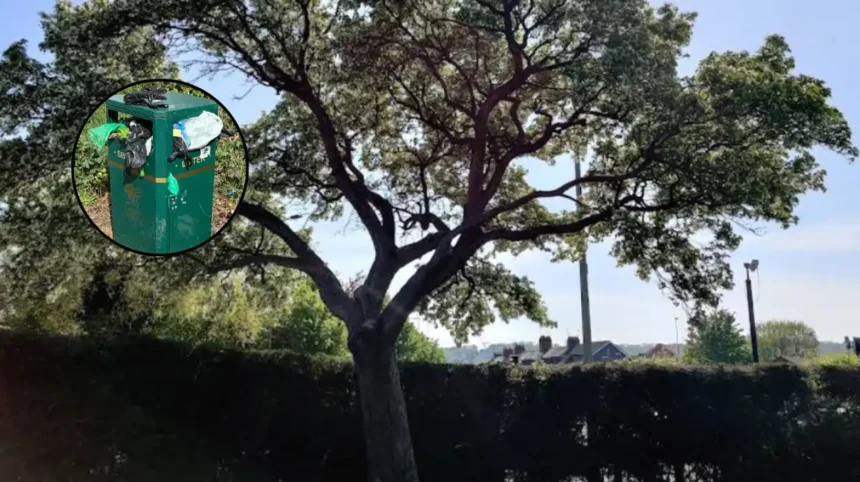
- A Cardiff mother, Sally‑Ann, says public bins in city parks are overflowing with food waste, dog‑poo bags, vapes, and broken glass, calling the situation a hazard for children.
- She described the state of bins at Kitchener Gardens playground and nearby Sanatorium Park as “an absolute danger for children and extremely disappointing”, after seeing takeaway containers, single‑use plates, utensils, rugs, full dog‑poo bags, e‑cigarettes, and shards of glass.
- Another resident, dog‑walker Lee Mason, 47, told BBC Wales and Wales Online that he regularly encounters bins overflowing with dog waste almost daily in several Cardiff parks, including Hailey Park, and has questioned the availability and placement of bins.
- Cardiff Council confirmed that it has introduced a new schedule for emptying litter bins in parks and on streets as part of a wider effort to improve city cleanliness and said bins at Kitchener Gardens and Hailey Park are now emptied daily.
- Mason has reported overflowing bins to the council but said it can sometimes take days for action and that he rarely sees bins being emptied, despite the stated increased collection frequency.
Cardiff (Cardiff Daily) April 18, 2026 –
What has become of Cardiff’s parks under the city’s new bin‑ collection schedule? A mother of 19‑month‑old twins says overflowing public bins filled with dog‑poo bags, takeaway containers, vapes and broken glass are turning children’s playgrounds into a hazard.
Sally‑Ann, 34, from Cardiff, told BBC News that she was “appalled” and “shocked” when she visited Kitchener Gardens playground earlier in April and found bins “overflowing with food scraps, dog‑waste bags and smoking materials”. She described the scene as “an absolute danger for children and extremely disappointing”, adding that she saw “all kinds of trash” while taking her 19‑month‑old son and daughter to play, including takeaway containers, single‑use plates and utensils, a rug, full dog‑poo bags, e‑cigarettes and shards of glass.
“The amount of litter was overwhelming,” Sally‑Ann said, according to BBC News. She also reported finding similar conditions in nearby Sanatorium Park, where bins were again filled with dog‑waste bags and other rubbish, raising concerns about the risk of children stepping on glass or handling contaminated bags.
Why are parents worried about park safety?
How much of a risk does this pose to young children? Public health and play‑safety experts frequently warn that exposed broken glass, sharps and soiled waste in parks can lead to cuts, infections and other injuries, especially when bins are overflowing or poorly sited near playgrounds. In statements to BBC News, Sally‑Ann said she could not understand how such conditions were allowed to persist in a busy family park, where parents bring toddlers to play on the grass and climbing frames.
The presence of vapes and e‑cigarette components in the litter also raises concerns about choking hazards and accidental ingestion by young children, an issue public‑health campaigners have highlighted in previous litter‑control discussions.
As reported by BBC Wales, Cardiff Council acknowledged the complaints and said that, as part of a wider initiative to improve street and park cleanliness, it had recently introduced a new schedule for emptying litter bins in parks and on roads. The council stated that bins at Kitchener Gardens and Hailey Park are now emptied daily, and insisted that the total number of bins in the areas has not been reduced.
How are dog‑walkers experiencing the same problem?
How are regular dog‑walkers responding to the overflowing bins? Lee Mason, 47, a dog‑walker linked to PontK9 who walks up to six dogs at a time in Cardiff parks, told BBC News and Wales Online that bins overflowing with dog waste have become “all too frequent” in many parks and streets.
As reported by journalist at Wales Online, Mason said he encounters bins filled with dog‑poo bags “almost daily” and has posted photos of a bin overflowing with dog waste in Hailey Park on a local community Facebook group. He added that the bin was serving a key section of the Pentwyn‑Hailey Park trail and that its removal or repositioning left residents and dog‑walkers with fewer disposal options.
A Cardiff Council spokesperson told Wales Online that the litter bins in Hailey Park had been “assessed and relocated to enhance accessibility for collection teams, ensuring there is no reduction in the total number of bins available”. The council said the new placement also allowed collection vehicles to operate without driving on the grass, protecting the park’s surfaces, and that bins were being emptied daily.
Despite the council’s assurances, Mason said in BBC News that it can sometimes take days for overflowing bins to be addressed after he reports them.
“Given the hours I spend walking each day, I rarely see a bin being emptied anymore,”
he said, according to the BBC report.
Are there enough bins – or a culture problem?
Are there too few bins in Cardiff’s parks, or is dog‑waste turning into a behaviour problem? Mason told BBC News that he felt some parks and green areas simply did not have enough bins for the volume of dog‑walking traffic. He suggested that people should be willing to carry their dog‑poo bags a little longer if a bin is full, or take them home if no suitable container is available.
“I personally feel there aren’t enough bins in some parks or green areas, so yes, you might find yourself carrying a bag for a while before locating another bin,”
he said, as reported by BBC News.
Mason added that he has taken to keeping a small bin in his van so he can collect and dispose of dog‑poo bags properly, rather than leaving them beside an overflowing receptacle. His comments echo those of other local campaigners who argue that better bin provision needs to be matched by clearer expectations that owners will not discard waste on the ground or in public areas.
Council’s response and what it means for residents
What is Cardiff Council doing to reconcile its new schedule with residents’ experiences? In its statement to BBC News and Wales Online, the council said that the updated bin‑collection rota was introduced to improve the cleanliness of the city’s streets and parks. It stressed that the number of bins in Hailey Park and similar areas had not been cut and that the relocated bins were now emptied daily.
The council also said that regular assessments of bin capacity and placement were being carried out to match the schedule to local demand. Nonetheless, Mason told BBC News that the gap between the official schedule and what he observes on the ground left him “baffled” and “frustrated”.
For parents such as Sally‑Ann, the situation raises questions about whether the council’s cleaning‑programme messaging aligns with the reality of playground environments. As she told BBC News, the sight of children potentially playing within reach of glass, vapes and full dog‑poo bags undermined confidence in the city’s maintenance regime.
Background of the particular development
Cardiff’s current bin and litter regime has been evolving under pressure from several directions. In recent years the council has faced budget constraints, rising waste volumes and growing numbers of dog‑walkers, alongside tighter environmental and public‑health regulations on litter and hazardous materials.
Local media reports and community groups have repeatedly highlighted problems with dog‑waste bins in parks such as Hailey Park and Kitchener Gardens, calling for more frequent collections and clearer guidance to dog‑owners. The council’s move to reposition bins in Hailey Park and to introduce a new daily collection schedule was presented as a response to those concerns, but, as Mason’s comments show, the transition has not always been smooth for users.
The complaints by Sally‑Ann and other residents also reflect wider national debates about how local authorities balance bin‑collection frequency, staffing levels and park‑visitor expectations. In Cardiff, the issue has become particularly visible in green spaces popular with families and dog‑walkers, where the mix of takeaway food, dog waste and vaping products can quickly overwhelm fixed bins if collections are not carefully timetabled.
Prediction: How this development can affect the public
If the current pattern of overflowing bins and intermittent collection continues, Cardiff families may become more cautious about where they let small children play in parks, especially near playgrounds with visibly overfilled or poorly placed bins. Parents may pressure schools, playgroups and local councils to avoid or supervise use of particular sites, which could affect how communities use green space.
For dog‑walkers, the situation may push more owners to carry waste further or take it home, especially if they observe that bins are frequently full or removed. It could also encourage more people, like Lee Mason, to set up personal systems (such as van‑based bins) rather than relying on public infrastructure, which in turn places a greater burden on individual responsibility.
For Cardiff Council, the episode underlines the risk that policy changes—such as bin‑relocation and new collection schedules—may be undermined by public perception if on‑the‑ground conditions lag behind the official timetable. If bin‑collection teams do not visibly match the stated “daily” schedule or if capacity is not aligned with peak‑use times, residents are likely to remain frustrated, which could feed into wider dissatisfaction with the city’s cleanliness and management.