Key points
- A single mother living in a one‑bedroom council flat at Rowena Court, Cardiff, says she has been unable to move despite having an autistic child and a pressing need for larger accommodation.
- The woman claims Cardiff council has not facilitated a transfer or provided suitable alternative housing, leaving her and her child in overcrowded and unsuitable conditions for several years.
- Council housing rules in Cardiff state that households with children are prioritised for properties with two or more bedrooms, but local‑letting policies and “local connection” rules can heavily shape who is matched.
- National and Welsh housing guidance indicates that local authorities must assess housing need and prevent homelessness, yet many single‑parent families report long waiting times and mismatches between policy and practice.
- The case joins wider concerns about autism‑friendly housing, social‑housing shortages and the treatment of single parents within the council‑housing system in Wales.
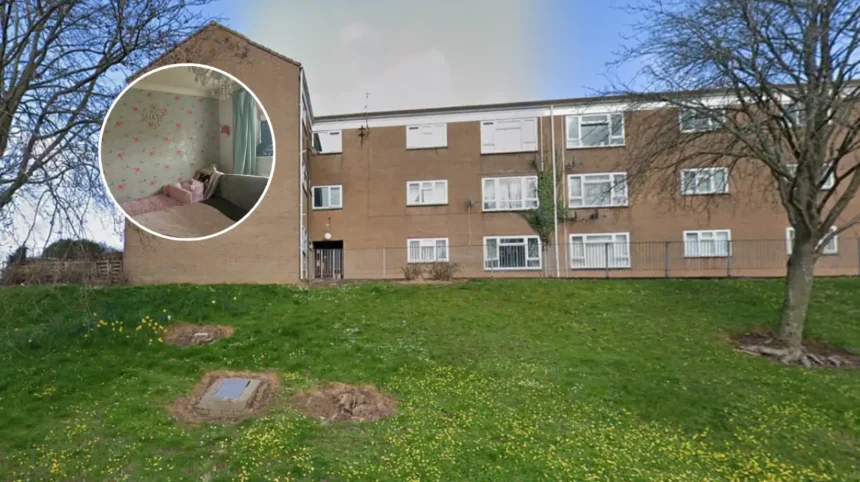
Cardiff (Cardiff Daily) April 21, 2026 A single mother living in a one‑bedroom council flat at Rowena Court, Cardiff, has told local media that she has been “stuck” in the same property for years despite having an autistic child and repeatedly asking for a move, in a case that has reignited debate over social‑housing pressure and support for single‑parent families.
What is the family’s situation?
According to reporting by Kieran Molly, LDRS Reporter for Carmarthenshire News Online, the woman is a single parent who has been living in the one‑bedroom flat at Rowena Court for a number of years and has repeatedly requested rehousing due to her child’s autism and the cramped conditions.
She told the reporter that the current flat is too small for both her and her child and that the lack of space has made daily life difficult, especially given the additional needs associated with autism.
Molly notes that the mother feels “let down” by Cardiff council, arguing that she has not received the support or priority she expected as a single parent with a child who has additional needs.
The report does not state whether the family has formally been identified as homeless under the council’s homelessness criteria, but it highlights that the mother views the situation as unsafe and unsuitable for long‑term residence.
How does Cardiff council normally handle rehousing?
Cardiff Council’s
“Housing Support Programme Strategy 2022–2026”,
published via the authority’s ModernGov site, sets out a framework for preventing homelessness and moving people out of temporary or unsuitable accommodation.
The strategy notes that the council aims to provide
“high quality self‑contained supported accommodation”
for single people and families and to phase out accommodation that no longer meets required standards.
Separately, the council’s public housing page explains that households with children are generally prioritised for properties with two or more bedrooms, and that families with children under eight are usually not offered flats or maisonettes above the first floor unless there is a specific local‑letting initiative for that area.
The same guidance notes that applicants must demonstrate a “local connection” with Cardiff, normally through residency, employment or close family ties, in order to remain near the top of the waiting list.
However, the council also states that the common waiting list is subject to supply, and that not all those with a housing need on the list will receive an offer immediately, which can lead to lengthy waits for larger or more suitable properties.
What does the wider context suggest?
The Rowena Court case echoes broader concerns about single‑parent families and access to appropriate housing in Wales and the UK.
Guidance from organisations such as Single Parents UK notes that single parents who are at risk of becoming homeless within 28 days can ask their council for help, but that the process is complex and councils must still assess whether the applicant has a local connection and meets statutory homelessness duties.
At the same time, tenants’‑rights developments in Wales have highlighted how housing conditions can tightly affect families.
For example, a landmark safety ruling by the High Court in Cardiff held that Welsh tenants could withhold rent if they did not receive mandatory safety reports, underscoring growing scrutiny of landlords’ obligations to provide safe and habitable homes.
How are autism‑specific needs being considered?
Welsh guidance and local‑authority codes do not explicitly state a separate, automatic “fast‑track” category for families with autistic children, although social‑care and housing officers are expected to consider complex needs when assessing housing suitability.
Services such as The Autism Service in Cardiff offer autism and ADHD assessments for children, which can feed into a child’s wider support plan, but accessing appropriate housing is still largely governed by the conventional social‑housing allocation system.
In the Rowena Court case, the mother has not publicly outlined whether she has received a formal autism‑related care plan or a documented housing‑needs assessment from the council, but her comments suggest that she believes her son’s autism has not been adequately reflected in decisions about her flat.
Background of the development
The Rowena Court story sits within a wider pattern of pressure on the Cardiff council‑housing system and on single‑parent households across Wales. Cardiff, like many UK cities, faces a gap between demand for social housing and the number of available properties, particularly larger or adapted homes that can accommodate children with additional needs.
The council’s Housing Support Programme Strategy 2022–2026 acknowledges that homelessness and unsuitable temporary accommodation remain significant challenges and that new family homelessness centres and supported‑housing schemes are being developed to address this.
However, the gradual rollout of these schemes means that some families may still be stuck in one‑bedroom or otherwise unsuitable accommodation for long periods as they wait for more appropriate offers.
Separately, changes in Welsh tenancy law and safety‑report requirements have heightened expectations that local authorities and housing associations will keep properties fit for human habitation, which in turn puts pressure on councils to act if families report overcrowding or safety concerns. In this context, the Rowena Court case adds to a growing body of anecdotal and legal evidence that single‑parent families and parents of children with autism can struggle to have their specific housing needs reflected in allocation decisions.
Prediction: How this development could affect single‑parent families and similar audiences
For single‑parent families with autistic or neurodivergent children, this case may influence how they approach the housing system in Cardiff and other Welsh authorities. If the media and advocacy attention leads to clearer guidance on how autism‑related needs are recorded in housing‑needs assessments, more families could feel empowered to request detailed evaluations of their situation and to challenge decisions they believe are not taking additional needs into account.
From the perspective of local‑authority housing officers, the Rowena Court story may prompt Cardiff council and other Welsh councils to review how they flag autism or other complex needs within their allocation tools and assessment procedures. This could mean more explicit codes for families with autistic children, more frequent reviews of existing tenants’ housing situations, and closer links between social‑care teams and housing departments.