
Key Points
- Independent Member of Parliament Rosie Duffield said a Channel 4 documentary about Huw Edwards could be “incredibly traumatic” for victims.
- Huw Edwards – Guilty will feature the former BBC presenter discussing his criminal actions and public downfall.
- Channel 4 said the film examines Edwards’s attempts to confront his abuse of power.
- The documentary is scheduled to air at 9pm on Tuesday, December 1, 2026.
- Edwards pleaded guilty to three counts of making indecent images of children and received a suspended six-month prison sentence.
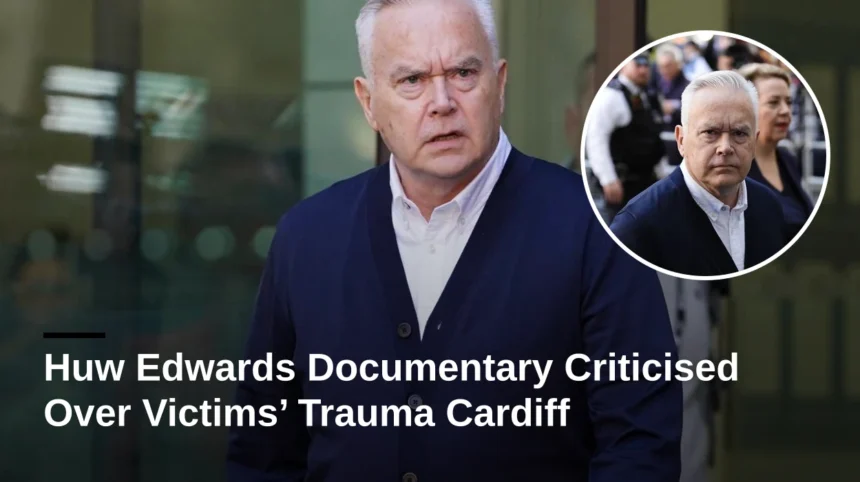
Cardiff (Cardiff Daily) November 27, 2026 – Independent Member of Parliament Rosie Duffield has criticised Channel 4’s decision to broadcast a documentary featuring former BBC presenter Huw Edwards, saying it could be “incredibly traumatic” for victims of his offences. The programme, titled Huw Edwards – Guilty, follows Edwards as he discusses his conviction, loss of public standing and abuse of power. Channel 4 has defended the film as an examination of a disgraced public figure attempting to come to terms with his actions. It is due to air at 9pm on Tuesday, December 1, 2026.
Why has Rosie Duffield criticised the Huw Edwards documentary?
As reported by the Bournemouth Echo, Rosie Duffield, an independent Member of Parliament who sits on the Women and Equalities Select Committee and campaigns on behalf of abuse victims, described the commissioning decision as “bizarre”.
Rosie Duffield questioned why viewers needed to watch Edwards reflect on his conduct, and asked what benefit the programme would provide to victims, their families or Edwards’s family.
She said victims might switch on their televisions to escape difficult experiences, only to see their cases discussed by large audiences as entertainment. Rosie Duffield said this could be “incredibly traumatic” and that victims “deserve better”.
Government minister Anna Turley separately told LBC that she was “deeply uncomfortable” with the interviews and said Edwards was among public figures who had received what she described as a “free pass”.
What will Huw Edwards say in the Channel 4 film?
Channel 4 said the documentary was filmed over nearly a year and shows Edwards at home in rural Wales. The broadcaster said he would face questions publicly for the first time about his criminal actions, betrayal of public trust and abuse of power.
Trailers show Edwards responding angrily to questions about his conduct. In one exchange, he says that silence is toxic and refers to advice to remain quiet. In another, he challenges the interviewer while being asked what he thought he was doing.
Channel 4 senior commissioning editor Sacha Mirzoeff said the broadcaster had an established reputation for addressing controversial subjects through film-making. Mirzoeff said the programme sought answers from a man trying to come to terms with his abuse of power.
Director Patrick Forbes said the film addressed contemporary issues including celebrity culture and media power, alongside questions about crime and punishment.
What is the background to Huw Edwards’s conviction?
Huw Edwards pleaded guilty to three counts of making indecent images of children, including possession of 41 photographs on WhatsApp. Seven images were classified as the most serious type.
Edwards received a six-month prison sentence suspended for two years.
His public career collapsed after The Sun reported in July 2023 that a senior BBC figure had paid a teenager for sexual images. Edwards’s wife later identified him as the presenter at the centre of the report.
Before his conviction, Edwards had presented BBC News programmes, including News at Ten, for decades and reported major national events such as the death of Queen Elizabeth II.
What could the documentary mean for victims and Channel 4?
The documentary is likely to renew public discussion about Edwards’s conviction, the responsibilities of broadcasters and the consequences for victims when high-profile criminal cases become television subjects.
Rosie Duffield’s criticism places the potential emotional effect on victims at the centre of the debate, while Channel 4’s stated rationale focuses on public accountability and examining abuse of power.
The programme’s reception may depend on whether viewers consider Edwards’s participation to provide meaningful scrutiny or to give renewed prominence to a convicted offender. Its broadcast will also test how effectively the film addresses victims’ experiences without turning the case into entertainment.