

Key Points
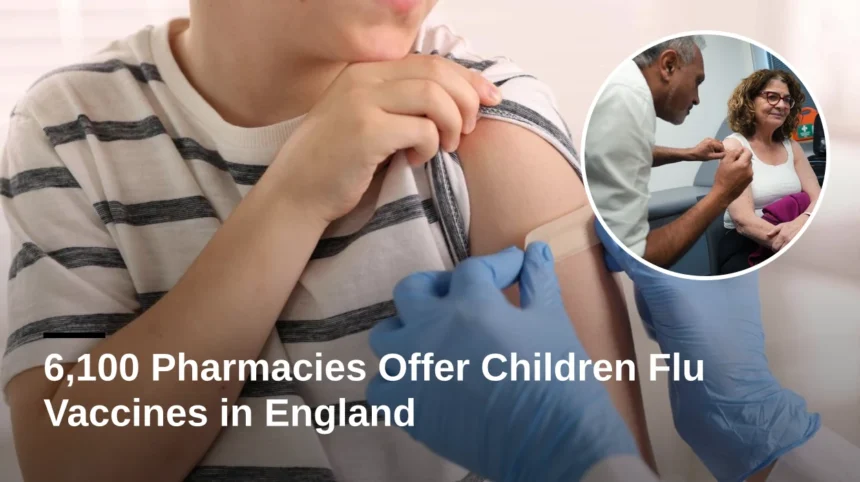
- More than 6,100 pharmacies across England will offer catch-up flu vaccinations to school-aged children who missed vaccination at school.
- Bookings open on 30 November 2026 through the National Health Service app and the National Health Service Find a Pharmacy service, with appointments from 1 December.
- The service covers children from Reception to Year 11; participating pharmacies also provide nasal-spray vaccinations for eligible two- and three-year-olds.
- UK Health Security Agency data shows flu hospital admissions rose to 8.98 per 100,000, up from 5.03 per 100,000 the previous week.
- Provisional uptake by 31 October was 37.2% among primary school-aged children and 25.6% among secondary school-aged children.
Inverted pyramid:
- Key Points
- Which children can receive the pharmacy vaccination?
- Why are pharmacies expanding access to flu vaccination?
- What do the latest flu figures show?
- What could the pharmacy service mean for families?
- Background: how does the child flu programme work?
- What could this mean for pharmacies and families?
England (Cardiff Daily) November 28, 2026 – More than 6,100 high street pharmacies will begin offering flu vaccination appointments to school-aged children who missed their vaccination at school, as health authorities respond to rising influenza activity and increasing hospital admissions. Bookings open on Monday, November 30, through the National Health Service app and the National Health Service Find a Pharmacy service, with appointments available from Tuesday, December 1.
Which children can receive the pharmacy vaccination?
According to NHS England, the catch-up service is available to children in Reception through Year 11. Participating pharmacies are also offering nasal-spray flu vaccinations to eligible children aged two and three. Children in clinical risk groups may also qualify for vaccination under the national programme, including those aged six months to under 18 years.
The Independent, in a report by Jane Kirby, said the pharmacy service was being introduced for the first time to help thousands of children who missed vaccination through their school programme. NHS England advised parents to use the NHS app or the NHS Find a Pharmacy service to identify participating pharmacies and arrange an appointment.
Why are pharmacies expanding access to flu vaccination?
NHS national medical director Professor Frankie Swords said the pharmacy option would make it easier for parents to protect children before Christmas, particularly as winter viruses were increasing and placing additional pressure on the National Health Service.
Dr Suzanna McDonald, flu vaccination programme lead at the UK Health Security Agency, said vaccinating schoolchildren also helps protect younger siblings and vulnerable relatives, including grandparents. She urged parents not to underestimate the risk of flu and to arrange vaccination through a general practice or participating community pharmacy.
Dr Matt Swallow, clinical lead at Asthma + Lung UK, said flu could be particularly dangerous for young children, including the 1.2 million children living with asthma. Henry Gregg, chief executive of the National Pharmacy Association, said pharmacies had vaccinated millions of patients but that more could be done to promote the service to eligible families.
What do the latest flu figures show?
The UK Health Security Agency’s surveillance report for the week ending November 22 recorded an influenza hospital admission rate of 8.98 per 100,000 people, compared with 5.03 per 100,000 the previous week. Intensive care or high-dependency unit admissions also increased, from 0.16 to 0.28 per 100,000.
The agency reported that influenza positivity, general-practice consultations for influenza-like illness and emergency-department attendances were increasing. The hospital admission rate was higher than the 4.9 per 100,000 recorded in the equivalent week of 2025, while current activity was described as moderate and rising.
Provisional UK Health Security Agency data showed that, between September 1 and October 31, vaccination uptake reached 37.2% among children aged four to 11 and 25.6% among children aged 11 to 16. NHS England said more than 3.5 million children from Reception to Year 11 had already received a flu vaccination.
What could the pharmacy service mean for families?
The new arrangement gives pharmacies a direct catch-up role for school-aged children who were absent, missed consent arrangements or did not receive vaccination during a school session. Families can use the NHS Find a Pharmacy service to check availability, although individual appointment capacity may vary between pharmacies.
Background: how does the child flu programme work?
Children in England usually receive their flu vaccination through school, while two- and three-year-olds are generally offered a nasal-spray vaccination through general practices and some community pharmacies. The national programme also includes children with qualifying clinical risk conditions. The 2026-2027 season began with lower-than-complete uptake among school-aged children and toddlers. Health officials have continued to encourage eligible families to arrange vaccination as influenza activity rises.
What could this mean for pharmacies and families?
For pharmacies offering flu vaccine for children who missed it in school, the service creates an additional route to reach families who did not receive vaccination through school clinics. It may increase demand for appointments from December and support wider coverage among Reception-to-Year-11 pupils. Pharmacies will need to manage available appointments, eligibility checks and vaccine administration alongside their usual winter workload. For parents, the service provides a local alternative to a school catch-up session or general-practice appointment.