Key Points
- Digital-First Strategy: Newly appointed Prime Minister Andy Burnham has adopted a mobile-focused communications strategy targeting younger voters via TikTok and Instagram.
- Creator Collaborations: Burnham has appeared alongside major content creators, including Ukrainian TikTok creator Max Klymenko (9.8 million followers) and Olympic medallist Sir Mo Farah.
- Podcast Strategy: The Prime Minister gave an interview to author Elizabeth Day on her “How to Fail” podcast, recorded at his newly established office in northern England.
- Target Audience Engagement: Polling data from More in Common indicates that over 50 per cent of adults aged 18–24 report seeing Burnham’s content online.
- Contrast in Media Style: Media experts contrast Burnham’s relaxed presentation style with the stiffer approach of former Prime Minister Keir Starmer.
- Political Advertising Restrictions: Because TikTok bans paid political advertising, Burnham’s communications team must rely entirely on organic algorithmic reach and high-engagement short-form video formats.
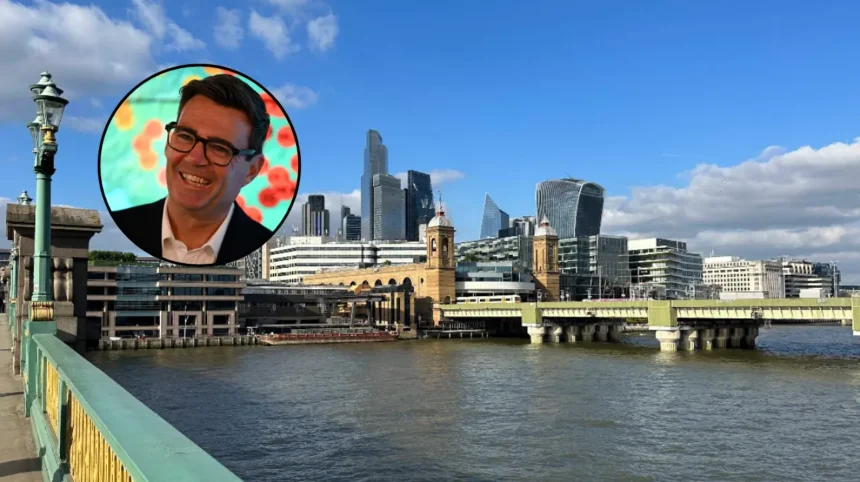
London (Cardiff Daily) August 22, 2026 — Newly appointed U.K. Prime Minister Andy Burnham has launched an intensive digital messaging strategy, earning the moniker of the nation’s “first TikTok PM” through curated short-form videos and appearances on popular creator channels.Following his appointment, Burnham moved quickly to change how No. 10 Downing Street interacts with the public. During his inaugural address outside Downing Street, the Prime Minister invited a selection of teenage social media influencers who build TikTok content focused on Labour politics. Since taking office, Burnham has also opened a secondary prime ministerial office in northern England, using the space to conduct high-profile media appearances, including a sit-down interview on the popular “How to Fail” podcast hosted by author Elizabeth Day.
- Key Points
- How is the new Prime Minister altering digital political communications?
- Why is Burnham’s media approach proving effective with younger audiences?
- Background of political communications in U.K. prime ministership
- Prediction: How this development will affect U.K. political discourse and media consumption
On his first official day in office, Burnham joined Ukrainian content creator Max Klymenko—who commands an audience of 9.8 million followers—for an episode of the TikTok series “Career Ladder”, where guests discuss professional trajectories while standing on a stepladder. To broaden his audience reach, Burnham has also posted footage of a joint morning jog alongside four-time Olympic champion Sir Mo Farah.
How is the new Prime Minister altering digital political communications?
Unlike traditional broadcast interviews, Burnham’s press team has focused heavily on vertical video designed specifically for smartphone consumption. As reported by Noa Hoffman, political correspondent for The Spectator, Burnham has consistently targeted audiences
“through vertical video, through the likes of TikTok, through the likes of Instagram.”
Burnham’s personal TikTok feed blends policy promotion with lighthearted personal moments. In one video promoting technical and vocational education, clever video editing appears to show Burnham tossing a mortarboard cap into the air and catching a builder’s hard hat.
The video concludes with an unedited blooper showing him fumbling the catch and laughing off-camera. In a separate digital post, Burnham pulled a pint behind a bar while announcing new policy measures designed to support publicans and the hospitality sector.
Because TikTok maintains a strict ban on paid political advertising, organic reach is the primary mechanism for political accounts.
Clips must compete directly with entertainment content to earn space on user feeds. Despite these constraints, digital commentary has tilted positive, with one user writing:
“can’t lie the new gaffer is winning me over.”
Explore More UK News
UK PM Andy Burnham Unveils £442m Plan To End Homelessness: London 2026
UK Inflation Accelerates to Four-Month High of 2.9% in UK 2026
Why is Burnham’s media approach proving effective with younger audiences?
Media analysts attribute the success of Burnham’s communications push to his relaxed on-camera delivery compared to his predecessor. Speaking on an internal podcast, BBC political specialist Laura Kuenssberg noted that Burnham stands out as a “good natural communicator,” drawing a clear contrast with Sir Keir Starmer’s more formal style.
This assessment was echoed by Steven Buckley, a lecturer in digital media sociology at City St George’s, University of London. Buckley stated that
“Burnham has a far more astute communications team around him”
with a “better grasp of the media environment” than previous administrations.
Addressing his communication style during his appearance on Elizabeth Day’s “How to Fail” podcast, Burnham explained that studying for an English degree helped him learn the importance of “getting the emotion into what you do and what you say” and establishing a genuine “connection with people.”
Industry figures outside political journalism have also noted the impact of this approach. In an interview on Times Radio, media influencer and former reality television star Georgia Harrison—who has 1.3 million Instagram followers—remarked that the Prime Minister is “absolutely smashing it” when it comes to connecting with online audiences.
Data supports these observations. According to survey research released this month by the polling organisation More in Common, Burnham is currently “winning the attention war” among young demographics, with more than half of U.K. adults aged 18 to 24 confirming they have encountered his content on social platforms.
Background of political communications in U.K. prime ministership
The shift toward direct digital broadcasting by U.K. prime ministers has accelerated over the past decade as traditional newspaper circulation and linear television viewership have declined.
Earlier administrations under David Cameron and Theresa May relied heavily on controlled press conferences and traditional news broadcasts, whereas Rishi Sunak introduced dedicated digital production teams to create tailored graphics and promotional trailers for platforms like X (formerly Twitter) and YouTube.
However, previous leaders often faced criticism for presenting overly polished or synthetic digital personas. The transition toward short-form platforms like TikTok requires a less scripted approach, where raw footage, self-deprecating humor, and unedited bloopers frequently outperform traditional political messaging. Burnham’s team is building upon strategies tested during his tenure as Mayor of Greater Manchester, where he regularly used direct social media engagement to build a distinct political identity outside Westminster.
Prediction: How this development will affect U.K. political discourse and media consumption
Burnham’s heavy reliance on short-form digital platforms is expected to fundamentally alter how political figures across the U.K. communicate with the electorate, carrying distinct implications for voters, opposition parties, and traditional news organizations:
- For Young Voters (Aged 18–24): Political news will increasingly reach younger demographics as passive entertainment within algorithmic feeds rather than through active news consumption. While this increases basic awareness of government policy, critics note that short video clips risk simplifying complex legislative issues into superficial, highly digestable media bites.
- For Opposition Parties: Rival political parties will be forced to restructure their own media operations to remain competitive. Frontbench opposition MPs will likely reallocate communications budgets toward digital content creators and vertical video producers to prevent Labour from monopolizing digital engagement among first-time voters.
- For Traditional Journalists and Broadcasters: Conventional news networks may find their exclusive access to high-profile political figures diluted. As No. 10 Downing Street prioritizes digital creators, podcasters, and non-traditional interviewers who offer direct access to massive niche audiences, mainstream media outlets will face heightened competition for major sit-down interviews.