Key Points
- House prices in Britain declined annually by 0.4% in August for the first time in almost three years.
- According to the Lloyds house price figures, which were formerly known as Halifax house price figures, monthly house prices declined by 0.2% in August.
- July figures were revised downward from 0.1% growth to 0.1% decline.
- The unanticipated decline was not in line with expectations of an annual growth of 0.2% and a monthly increase of 0.1%.
- Housing market weakness can be explained by the postponement of purchases by potential buyers because of high interest rates associated with the war between the US and Iran.
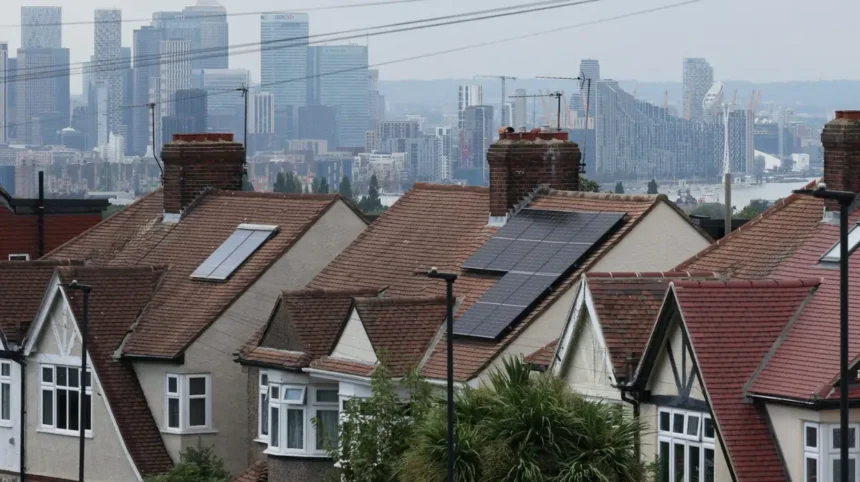
London, UK (Cardiff Daily) September 7, 2026 – British house prices recorded their first annual fall in nearly three years in August as prospective buyers held back on property purchases following higher borrowing costs triggered by the US-Iran war. The monthly performance figures released on Monday by financial institution Lloyds demonstrated a noticeable cooling across the residential property market. The data revealed an annual price decline of 0.4% for August, representing the first negative annual reading since November 2023. The actual performance missed the median expectation in a Reuters poll of economists, which had predicted a 0.2% annual increase.
On a month-on-month basis, residential property prices decreased by 0.2% in August, contrasting with market projections that had anticipated a 0.1% rise. In addition to the August contraction, previous market assessments were adjusted downwards. The initial reading for July, which originally showed a modest growth rate of 0.1%, was officially revised down to reflect a 0.1% fall. The figures indicate that high interest rates and international geopolitical instability are weighing heavily on domestic homebuyer confidence and transaction volumes.
How Are Geopolitical Pressures Impacting Mortgage Rates?
The downturn in property values is linked directly to broader macroeconomic pressures and elevated mortgage rates that have persisted throughout recent months. According to reporting by David Milliken of Reuters, borrowing costs have remained elevated in the wake of financial market volatility connected to the conflict between the United States and Iran. The resulting instability across international energy markets and broader financial networks has influenced fixed-rate mortgage pricing, causing potential buyers to exercise caution or postpone purchases altogether.
The Lloyds metrics—which were historically published under the Halifax brand name prior to a corporate restructuring—provide one of the earliest monthly indicators of British housing market performance. The latest figures show that the resilience demonstrated by the residential market over the preceding years has been tested by prolonged affordability constraints. High baseline interest rates maintained by central banks to manage global inflationary pressure have continued to feed through into consumer lending products, dampening demand among both first-time buyers and existing homeowners seeking to trade up.
What Do the August Figures Reveal About Consumer Behaviour?
The shift into negative growth territory highlights a change in buyer sentiment across the country. Higher interest environments mean that affordability metrics remain stretched for a significant proportion of the population. As mortgage affordability limits the borrowing capacity of potential buyers, sellers have faced increased pressure to adjust asking prices or accept lower offers to secure completions. The revision of the July data from 0.1% growth to a 0.1% fall further indicates that the market momentum was slowing down earlier than initial assessments suggested.
The wider economic landscape continues to present challenges for market participants. While structural housing shortages in major metropolitan areas have historically provided a floor for valuations, elevated debt servicing costs are currently exerting a stronger short-term influence on trading activity. The lower volume of completed transactions has exacerbated price sensitivity across various regions, leading directly to the overall negative reading recorded in August.
Background of the Property Market Downturn
To contextualise the August decline, the UK housing market has navigated a complex series of economic shifts since the end of 2023. Prior to this latest reading, property valuations had maintained a period of modest recovery following the sharp interest rate adjustments implemented throughout 2022 and 2023. The Bank of England raised interest rates repeatedly during that period to curb surging inflation, which elevated average two-year and five-year fixed mortgage rates above historic norms and placed pressure on household budgets.
By November 2023, the market experienced its previous annual decline as the impact of higher borrowing costs peaked. Following that period, property values stabilized and registered incremental annual gains through much of 2024 and 2025, supported by wage growth and brief periods of competitive mortgage pricing among commercial lenders. However, recent geopolitical developments, specifically the outbreak and escalation of conflict involving the US and Iran, disrupted global financial conditions. The resulting economic uncertainty altered expectations regarding central bank interest rate trajectories, causing swap rates—which dictate the cost of fixed-rate mortgage products—to rise again and imposing renewed constraints on homebuyer purchasing power.
Explore More UK News
Uta Frith Autism Claims Spark Debate Over Autistic Voices
Andy Burnham Rules Out Irish Unification Referendum in Belfast 2026
Prediction: How Will This Development Affect Homebuyers and Lenders?
The unexpected annual fall in house prices is likely to influence several key segments of the property market over the coming months:
- Prospective Homebuyers and First-Time Purchasers: Individuals looking to enter the housing market may find reduced property prices offer minor entry-level relief. However, this advantage is expected to be offset by higher monthly repayment obligations due to elevated borrowing costs. Buyers are likely to remain cautious, with many adopting a wait-and-see approach until mortgage rates stabilize or decrease, potentially leading to lower overall transaction volumes through the remainder of the year.
- Existing Property Owners and Sellers: Homeowners planning to sell their properties will face a more competitive environment. Sellers may need to adjust price expectations and accept discounted offers to secure transactions, particularly in areas where inventory levels are rising. Those facing upcoming mortgage renewals may also encounter higher monthly charges relative to their previous terms, reducing overall household disposable income.
- Mortgage Lenders and Financial Institutions: Commercial banks and mortgage providers are expected to re-evaluate their risk profiles and product pricing. In response to reduced transaction activity and falling asset values, lenders may introduce tighter credit assessment criteria or adjust their loan-to-value ratios to mitigate default risks, while simultaneously competing for a smaller pool of creditworthy applicants.