
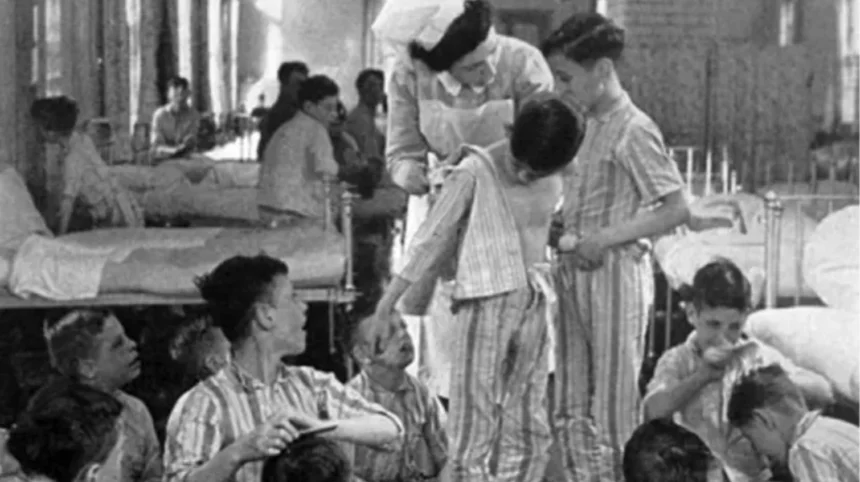
At a time where the importance of ‘community-oriented history’ is an accepted aspect of most secondary-school curriculums, the history of the autistic community remains painfully inaccessible to students on the autistic spectrum.
The concept of the ‘Autism Community’ is becoming increasingly present in SEND classrooms. Parents recognise a need in their children to connect with others who share their experiences, and teachers are finding themselves tasked with inventing new ways of helping students develop their identities as autistic young-people.
As an educator, I argue that teaching autistic young-people about the origins of autism is critical in forming their idea of a wider community of like-minded individuals. The importance of history in the formation of identity is nothing new. Already, students in Wales are taught Welsh history to boost a sense of national-identity and to help them feel integrated into their local communities. For children on the autistic spectrum, who often struggle with many aspects of social communication and the adverse effects of loneliness and anxiety, similar efforts should be made to ensure they are given the opportunity to learn about the origins of autism and the individuals who pioneered their community.
Autism was first described by Leo Kanner in 1943, though Hans Asperger described the same condition months later having studied children with additional needs for several years prior. Earlier still, Soviet psychologist Grunya Sukhareva published her findings on a startlingly similar set of symptoms in 1926, prompting the first symptomatic description of what would eventually be termed autism spectrum disorder.
Both Leo Kanner and Hans Asperger led incredibly eventful lives and oversaw the development of autistic psychiatry for decades, though Asperger’s work would be largely ignored until its rediscovery in 1981 by British psychiatrist Lorna Wing. In recent years, Asperger’s potential involvement in Nazi eugenics has been a subject of considerable interest and has shed light on a chapter of autism history that has only recently begun to garner attention; the experiences of autistic children during the Third Reich’s horrific campaign of child euthanasia.
Autism history as a celebration of neurodivergence cannot be separated from the topic of persecution, but that doesn’t mean it shouldn’t be taught. In the same ways that secondary-schools teach about the experiences of other communities during the holocaust, autism history is best taught through the eyes of those who experienced it. Rather than learning about Leo Kanner, children can be introduced to Donald Tripplet, the first child Kanner officially diagnosed with autism in 1943. In many ways, the complex history of Hans Asperger is best explored through the experiences of the children he worked with – from the four boys he describes in his initial study of autism (Harro, Fritz, Helmuth and Ernst), to the letters written by Elfriede Grohmann (a thirteen-year old girl institutionalised at Asperger’s clinic in 1944) – teaching autism history should be a conversation between the children of today and the children who built this eighty-three year old community.