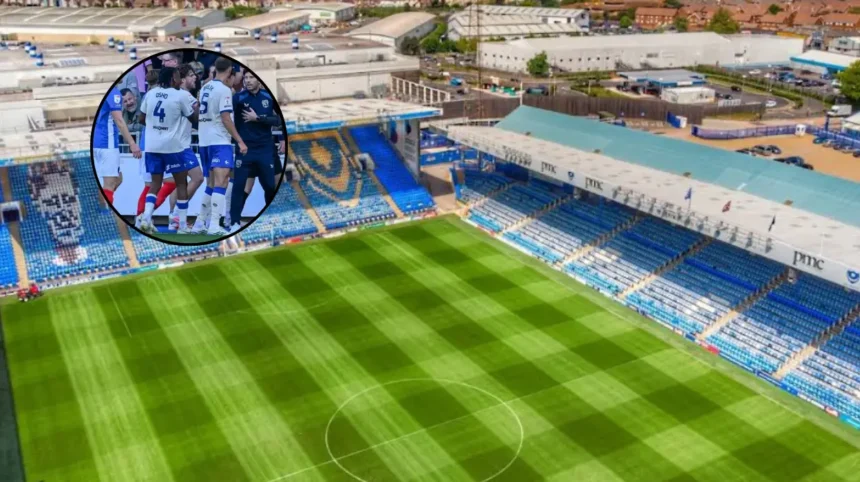
Key Points
- Portsmouth head coach John Mousinho offered a formal apology to Cardiff City players and staff following a physical touchline clash at Fratton Park.
- The incident occurred in the 72nd minute of Portsmouth’s 2-0 Championship victory when Cardiff defender Krystian Bielik went to retrieve the ball.
- Cardiff head coach Brian Barry-Murphy stated that Bielik was slapped in the face by a supporter.
- Social media footage and match observers indicated that Bielik grabbed a young home supporter around the upper body or neck area.
- A second spectator threw a football that struck Cardiff defender Perry Ng on the head, prompting ground security to eject both supporters from the stadium.
- Match referee Ben Speedie paused play for three minutes to consult both managers and team captains; no further disciplinary cards were issued on the pitch.
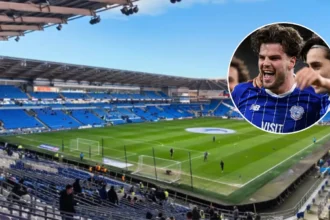
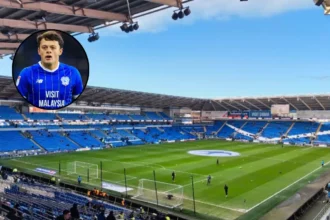
Cardiff (Cardiff Daily) September 5, 2026 — Portsmouth head coach John Mousinho has issued an unreserved apology to Cardiff City following a chaotic touchline altercation between visitor defender Krystian Bielik and a home supporter during Saturday’s Championship encounter on the South Coast.
The flashpoint transpired in the 72nd minute of Portsmouth’s 2-0 victory at Fratton Park as Cardiff, trailing by two goals, attempted to restart play quickly. Poland international Bielik moved toward the touchline to retrieve an out-of-bounds ball, leading to an immediate physical confrontation with a spectator in the front row.
What Triggered the Touchline Clash Between Krystian Bielik and Portsmouth Fans?
The incident unfolded rapidly near the touchline as Cardiff sought a route back into the contest. As reported by BBC Sport, the initial friction began when Bielik attempted to quickly collect the match ball to take a throw-in. Instead of returning the ball, a young Portsmouth supporter threw it over the player’s head, delaying the restart.
The situation escalated when physical contact was made between the player and the spectator. Following the final whistle, Cardiff head coach Brian Barry-Murphy detailed the physical nature of the interaction from his club’s perspective. As reported by BBC Sport, Barry-Murphy stated that Bielik “got slapped in the face” during the encounter as he tried to secure the ball.
Simultaneously, video footage circulating across social media platforms appeared to show Bielik, 28, reaching into the seating area and grabbing the young supporter around his upper body. Witnesses in the nearby seating section made gestures toward match officials indicating they believed the Poland international had grabbed the fan around the throat.
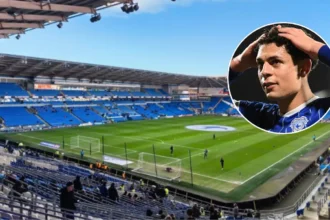
The atmosphere worsened moments later when a second home spectator threw another football directly at the head of Cardiff defender Perry Ng. Match security and stewards intervened swiftly, resulting in both fans being removed from the premises.
How Did Managers John Mousinho and Brian Barry-Murphy React to the Incident?
Speaking in his post-match press conference, Portsmouth manager John Mousinho expressed deep regret over the conduct of the supporters involved while acknowledging the match referee’s account of the event.
As reported by BBC Sport, Mousinho explained the initial briefing he received from match official Ben Speedie, stating:
“The referee said that, as Krystian went to get the ball, there was a little bit of a kerfuffle and one of the supporters struck him. It wasn’t a good incident. I have just seen him there, and he was OK, but that’s not the point, we can’t be having that.”
Mousinho highlighted the fine line between an intimidating stadium atmosphere and unacceptable fan behavior. As reported by BBC Sport, the Portsmouth manager added:
“We want to create a really difficult atmosphere at Fratton Park, we have done that successfully over the past few years. Sometimes it tips over, I understand that, I don’t think it needs to tip over to that extent. We extend our apologies to the players, Cardiff and make sure we can try to cut it out.”
Opposing manager Brian Barry-Murphy addressed the priority of player protection while confirming that the Football Association (FA) and relevant authorities would likely examine the footage. As reported by BBC Sport, Barry-Murphy remarked:
“I just wanted to make sure he was protected and make sure he was OK. He is. I thought the referee and his staff handled the incident impeccably. I think the players are always subjected to different things, it’s not acceptable what happens. They don’t expect that sort of treatment. My job is to protect the players but really my focus is on trying to make sure that we play well and win. So I’m sure the club and the FA will look at this and implement the correct process.”
Background of the Particular Development
Touchline friction between players and spectators remains one of the most sensitive operational and safety challenges in English football. Under English Football League (EFL) and Football Association regulations, clubs maintain a strict duty of care to ensure the safety of players, technical staff, and match officials within the stadium footprint. Fratton Park, renowned for its tight layout and close proximity of the stands to the pitch boundaries, frequently generates an intense home environment, but close contact between spectators and players increases the risk of physical interaction during high-stakes moments.
Statutory regulations enforced by the Football Spectators Act 1989 and updated FA disciplinary codes mandate severe penalties for physical clashes involving spectators and participants. Standard protocol dictates that stadium security must immediately eject individuals engaging in physical aggression or throwing missiles onto the playing surface. Following such ejections, home clubs conduct internal investigations using closed-circuit television (CCTV) footage, often resulting in indefinite or multi-year stadium bans for the individuals involved.
From a participant safety perspective, regulatory bodies review video evidence independently of on-pitch decisions made by match officials. Even if a referee does not issue a red card during play, the FA Regulatory Commission holds the authority to launch retroactively applied disciplinary proceedings against players who engage in improper conduct or physical retaliation toward spectators. Conversely, clubs face potential financial penalties or requirements to implement enhanced security measures if stadium operations are found deficient.
Prediction: How This Development Can Affect Football Clubs, Players, and Supporters
This development is expected to trigger swift disciplinary and operational consequences for Portsmouth, Cardiff City, and the wider Championship audience:
- For Portsmouth Football Club: The club faces an incoming investigation by the Football Association regarding spectator control and stadium security breaches. Portsmouth will likely issue immediate stadium bans to the two ejected supporters following CCTV review. Additionally, the FA may impose financial fines on the club for failing to ensure that spectators conducted themselves in an orderly manner.
- For Krystian Bielik and Cardiff City: Bielik faces potential retroactive disciplinary investigation by the FA. Depending on the commission’s evaluation of the video evidence regarding physical contact with the spectator, the defender could face a multi-match suspension for violent conduct or improper behavior, potentially disrupting Cardiff’s squad availability for upcoming Championship fixtures.
- For Fratton Park Matchday Operations: Portsmouth management will likely review matchday stewarding deployments along the perimeter boundaries. Enhanced security presence and stricter enforcement regarding ball-retrieval protocols are anticipated to prevent physical contact between spectators and opposition players in future matches.
- For Championship Spectators and Fans: The incident reinforces a zero-tolerance precedent across English football grounds regarding physical engagement with players and the throwing of objects. Supporters attending matches can expect heightened vigilance from stewards, with immediate ejection, police intervention, and long-term stadium bans serving as clear deterrents against touchline interference.