Heath Park in Cardiff stands as a vibrant testament to the city’s commitment to preserving natural heritage amid urban expansion. Spanning 37 hectares in the northern suburbs, this Green Flag award-winning park once formed part of the ancient Great Heath, offering residents and visitors a serene escape rich in ecological diversity. Its blend of sports facilities, woodlands, wetlands, and ponds supports a thriving array of flora and fauna, making it a key biodiversity hotspot in Wales’ capital.
- Historical Origins of Heath Park
- Geographical Layout and Key Features
- Woodland Ecosystems and Tree Diversity
- Wetland Habitats and Aquatic Life
- Grassland and Meadow Flora
- Insect and Invertebrate Richness
- Bird Populations and Migration Patterns
- Mammals and Hidden Wildlife
- Reptiles and Amphibians in Microhabitats
- Fungi and Soil Biodiversity
- Conservation Efforts and Community Involvement
- Threats and Future Sustainability
Historical Origins of Heath Park
Heath Park’s story begins centuries ago when it was integrated into the expansive Great Heath, a vast open landscape used for grazing and even horse racing in the 18th and early 19th centuries. By 1938, Cardiff Council acquired the land, transforming it from pastoral fields into a public park that balanced recreation with natural preservation. This acquisition preserved remnants of the original heathland, ensuring that ancient soil profiles and vegetation patterns endured despite encroaching development.
The park’s evolution reflects broader trends in British urban planning during the interwar period, where councils sought to create “green lungs” for growing populations. Unlike more manicured Victorian parks like Roath, Heath Park retained a wilder character, with minimal intervention to protect its semi-natural habitats. Today, this historical continuity underpins its status as a biodiversity refuge, where 19th-century land use echoes in the persistence of acid grassland and scrub.
Geographical Layout and Key Features
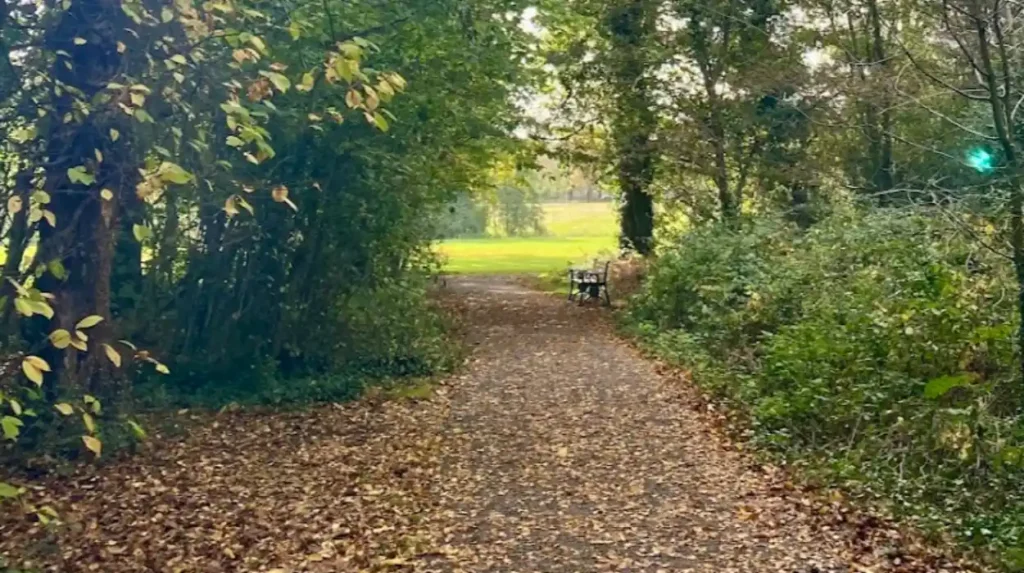
Nestled between the suburbs of Heath, Roath, and Cyncoed, Heath Park’s terrain gently slopes from higher ground near Allensbank Road toward eastern wetlands, creating microhabitats that foster varied ecosystems. At its heart lie two ornamental ponds, fed by natural springs, which serve as central hubs for aquatic life and birdwatching. Woodlands dominate the western edges, comprising mature oaks, birches, and rowans that form a canopy shielding understory ferns and mosses.
Play areas and sports pitches occupy the southern sections, designed to coexist with wilder zones—cricket fields border scrubland teeming with insects, while footpaths weave through wildflower meadows. A hidden gem, the Celebration of Life Garden near University Hospital Wales, adds a poignant touch: its teddy bear-shaped layout honors families facing illness, planted with sensory species like lavender and rosemary that attract pollinators year-round. This thoughtful integration ensures the park functions as both a recreational space and an ecological sanctuary.
Woodland Ecosystems and Tree Diversity
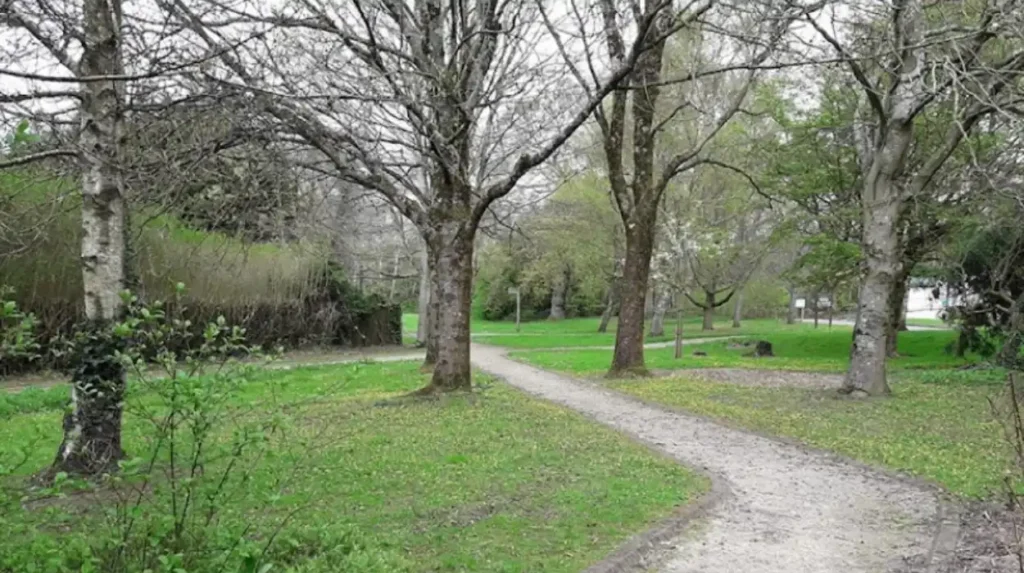
The park’s woodlands represent a mosaic of native and naturalized species, with pedunculate oaks forming the backbone of older stands that date back to the Great Heath era. These trees host epiphytic lichens and mosses, indicators of clean air and stable microclimates, while their fallen leaves enrich the soil for fungi like fly agaric and bracket varieties. Birch and hazel underplantings provide berries for birds, sustaining populations through winter scarcity.
In spring, bluebells carpet the woodland floor, a remnant population from ancient semi-natural woodland fragments preserved since the park’s establishment. Research from local naturalists highlights how these woods support over 20 butterfly species, including the speckled wood and holly blue, drawn to coppiced hazels and brambles. Climate resilience is evident here, as diverse canopy layers buffer against storms, maintaining humidity for shade-loving plants like wood sorrel.
Wetland Habitats and Aquatic Life
Heath Park’s ponds are ecological jewels, their shallow margins fringed with reeds and rushes that filter runoff and prevent eutrophication. Common newts and smooth newts breed here annually, their lifecycle tied to emergent vegetation like bulrush, which offers egg-laying sites and tadpole nurseries. Dragonflies, including the common darter and azure damselfly, patrol these waters, with exuviae (molted skins) clinging to stems as evidence of successful metamorphosis.
The wetlands extend into alder carr, where moisture-loving alders stabilize banks and host rare mosses like fontinalis antipyretica. Birdlife flourishes: moorhens nest in dense cover, while kingfishers occasionally flash through, drawn by minnows and sticklebacks in the clearer shallows. Cardiff Council’s management—such as periodic dredging—sustains water quality, allowing invasive species like blanket weed to be controlled without disrupting native amphibians.
Grassland and Meadow Flora
Acid grasslands, a nod to the park’s heathland roots, dominate open areas with sheep’s fuscaria and tormentil blooming vibrantly in summer. These low-nutrient soils favor wildflowers over aggressive grasses, creating nectar-rich patches for bees and hoverflies. Tormentil’s yellow flowers, in particular, signal healthy, unfertilized swards, supporting ground-nesting birds like skylarks during breeding season.
Meadows transition to neutral grasslands near sports fields, where oxeye daisies and knapweed draw long-tongued bumblebees. Seasonal succession plays out here: spring sees lesser celandine, giving way to bird’s-foot trefoil that fixes nitrogen subtly, enhancing soil for perennials. This floral diversity not only boosts pollinator numbers but also sequesters carbon, contributing to Cardiff’s green infrastructure goals.
Insect and Invertebrate Richness
Heath Park pulses with invertebrate life, from the micro-moths fluttering in bramble thickets to ground beetles patrolling leaf litter. Over 300 moth species have been recorded locally, including the engrailed and swallow-tailed, whose caterpillars rely on specific hosts like sallows in wet zones. Butterflies thrive too, with gatekeepers nectaring on ragwort and small coppers on dock leaves along path edges.
Beetles and spiders find refuge in deadwood piles, managed by council rangers to mimic natural decay. Ladybirds prey on aphids infesting young oaks, maintaining balance without pesticides. This underappreciated web of life forms the base of the food chain, sustaining bats like the common pipistrelle that forage at dusk over ponds.
Bird Populations and Migration Patterns
Birds are perhaps Heath Park’s most visible biodiversity assets, with over 70 species noted yearly. Resident robins and wrens fill the air with song, while blackcaps and chiffchaffs swell numbers in summer as migrants arrive from Africa. The ponds attract winter wildfowl: tufted ducks dive for invertebrates, and grey herons stalk margins at dawn.
Woodpeckers—green and great spotted—drum on hollow beeches, excavating nests that later house tawny owls. A 2024 survey by Cardiff Naturalists revealed pipits and wheatears using grasslands during passage, underscoring the park’s role in migration corridors linking urban Cardiff to nearby Glamorgan uplands. Nest boxes installed in recent years have boosted little owl sightings, blending conservation with community engagement.
Mammals and Hidden Wildlife
Small mammals animate the undergrowth: wood mice and bank voles scurry through root systems, prey for tawny owls and kestrels hovering over fields. Hedgehogs, rarer in urban Wales, persist in shrubby borders, their populations aided by “hedgehog highways” cut into fences by volunteers. Foxes prowl at night, scavenging while avoiding human activity concentrated in play zones.
Bats emerge in twilight, soprano pipistrelles hawking insects over water. Water voles, once in decline, have been reintroduced nearby, with signs of burrows in softer bank soils. These mammals highlight the park’s connectivity to broader habitats, including the nearby Forest Farm nature reserve.
Reptiles and Amphibians in Microhabitats
Grass snakes, Cardiff’s largest reptile, slither through tussocky grass, hunting amphibians near ponds. Common lizards bask on logs in sunnier glades, their populations stable due to low disturbance. Slow-worms, legless lizards, coil in compost heaps, thriving in the warm, sheltered conditions council gardeners maintain.
Amphibians dominate wet areas: common frogs spawn in shallow bays, their tadpoles grazed by fish but evading newts through early hatching. Toads migrate annually, crossing paths under toad tunnels installed for safety. These species underscore the value of unmanaged margins, where log piles and hibernacula provide overwinter refuge.
Fungi and Soil Biodiversity
Fungi underpin Heath Park’s ecosystems, with mycorrhizal networks linking tree roots in symbiotic exchange. Parasitic honey fungus fruits on stressed stumps, while waxcaps dot grasslands in autumn—vibrant indicators of ancient, unimproved turf. Deadwood hosts turkey tails and beefsteak fungus, decomposing lignin to recycle nutrients.
Soil microbes, less visible, drive fertility: earthworms aerate grasslands, enhancing drainage on heavy clays inherited from the Great Heath. Mycologists note over 100 species, from puffballs releasing spores in wind to subterranean truffles feeding squirrels. This fungal wealth sustains the park’s productivity, resisting invasive pressures.
Conservation Efforts and Community Involvement
Cardiff Council, through its Parks and Green Spaces team, implements biodiversity action plans aligned with the UK Biodiversity Net Gain policy. Annual wildflower seeding bolsters meadows, while coppicing rejuvenates willows for wildlife. Invasive Himalayan balsam is hand-pulled by volunteers, preventing stream smothering.
The Heath Residents Association and Cardiff Naturalists’ Society lead citizen science: bioblitz events catalog species, contributing to Wales Biodiversity Partnership data. School programs from nearby Heath Primary introduce children to pond-dipping, fostering lifelong stewardship. Green Flag status, renewed yearly, validates these efforts, ensuring long-term habitat integrity.
Threats and Future Sustainability
Urban pressures challenge Heath Park: dog fouling introduces pathogens, while climate shifts alter pond levels, stressing amphibians. Rodenticide from nearby gardens bioaccumulates in owls, prompting bait-free campaigns. Light pollution disrupts bat navigation, addressed by strategic shading on paths.
Future plans emphasize resilience—rewilding edges with native seed mixes and monitoring via trail cams. As Cardiff aims for carbon neutrality by 2030, Heath Park’s tree planting expands woodlands, sequestering CO2 while cooling urban heat islands. Community funding via crowdfunding sustains these initiatives, securing biodiversity for generations.
Heath Park exemplifies how urban greenspaces can harbor profound biodiversity, blending history, ecology, and recreation. Its ponds ripple with life, woodlands whisper ancient secrets, and meadows hum with pollinators—a living legacy of Cardiff’s Great Heath. Visitors leave not just refreshed, but inspired to protect such irreplaceable havens.
Is Cardiff University being removed from the Russell Group?
No, Cardiff University is still a member of the Russell Group. It remains one of the UK’s leading research universities and continues to contribute strongly to academic research and innovation.
Where is the University Hospital of Wales in Cardiff?
University Hospital of Wales is located in the Heath area of Cardiff. It sits close to Heath Park and is the largest hospital in Wales, serving thousands of patients every year.
Why is Cardiff so famous?
Cardiff is famous as the capital of Wales and for landmarks like Cardiff Castle and the modern Cardiff Bay area. The city is also known for its universities, sports events, and beautiful parks such as Heath Park.
What nationality is the name Heath?
The name Heath is of English origin and comes from an Old English word describing open land covered with shrubs or heather. It was often used as a surname for people who lived near heathland areas.
What is a nickname for Heath?
Common nicknames for Heath include “Heathy” or simply “H.” The name itself is short and distinctive, so it is often used without modification.