Key Points
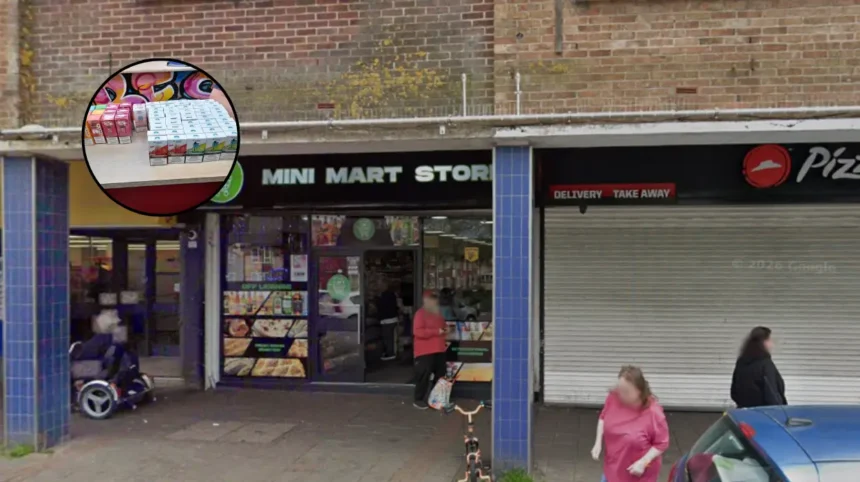
- Aydin Ltd, trading as Mini Mart Store on Countisbury Avenue in Llanrumney, Cardiff, has been ordered to pay more than £20,000 in total for selling illegal vapes and tobacco.
- The fines arose after a series of investigations carried out by the Shared Regulatory Services (SRS), a joint council enforcement team operating across Cardiff and neighbouring authorities.
- Test purchases showed the store repeatedly sold age-restricted and prohibited products, despite having received guidance and formal warnings previously.
- The case is part of a wider crackdown in Cardiff on retailers selling counterfeit tobacco and illegal single-use vapes, which have been banned across the UK since June 2025.
- Other Cardiff businesses, including Vape Zone in Adamsdown and Best One Vape on Clifton Street, have also faced closure orders and multi‑thousand‑pound fines for similar offences.
- The enforcement action underscores the legal requirement for retailers to carry out age checks on vapes and tobacco and to comply with UK safety and labelling standards.
Llanrumney (Cardiff Daily) July 8, 2026 – A Cardiff business has been ordered to pay more than £20,000 for selling illegal vapes and tobacco, marking one of the heaviest penalties issued in the city over recent months for unlawful trading of age‑restricted and prohibited products.
- Key Points
- How did the enforcement action against Mini Mart Store unfold?
- Why are single‑use vapes and unlicensed tobacco now targeted so heavily?
- What other Cardiff retailers have faced similar penalties?
- What legal requirements do retailers face when selling vapes and tobacco?
- Background of the development
- Prediction: How can this development affect local shoppers and businesses in Llanrumney and Cardiff?
How did the enforcement action against Mini Mart Store unfold?
Aydin Ltd, which operates as Mini Mart Store on Countisbury Avenue in Llanrumney, was found to be repeatedly selling illegal vapes and tobacco products following a series of investigations by Shared Regulatory Services (SRS).
As reported by Cardiff Council in an official update posted on 9 January 2026, repeated test purchases by SRS officers demonstrated that the store continued to supply counterfeit tobacco and illegal vaping devices even after being given guidance and formal warnings.
The enforcement action culminated in an application to Cardiff Magistrates’ Court, where the court issued a closure order and financial penalties against the business.
While the council’s social media post does not disclose the precise breakdown of the fine, it confirms that the total amount ordered to be paid exceeds £20,000.
Why are single‑use vapes and unlicensed tobacco now targeted so heavily?
The crackdown on Mini Mart Store is occurring against a backdrop of stricter national rules on vaping and tobacco.
Since June 2025, single‑use vapes have been prohibited throughout Wales and the entire UK, meaning that any retailer supplying or selling these products can face fines or even imprisonment.
Trading standards officials have also highlighted that illegal tobacco often fails to meet UK health warning standards and safety regulations, while some vaping devices discovered in raids have been designed in a way that officers consider could endanger children.
As reported by the Local Democracy Reporting Service in coverage of a separate Cardiff closure case involving Lidia Mini Market, authorities have confiscated large quantities of illicit cigarettes, hand‑rolling tobacco and non‑compliant vaping products, all of which did not adhere to UK safety rules.
What other Cardiff retailers have faced similar penalties?
Mini Mart Store is not the only business in Cardiff to be penalised for selling illegal vapes and tobacco. In late December 2025 and early January 2026, two other retailers – Vape Zone in Adamsdown and the Mini Mart Store on Countisbury Avenue (the same business referenced in the closure notices) – were ordered to shut for three months each following court orders based on repeated unlawful sales.
In a separate case, Sirwan Nuri Kadri, the owner and director of Best One Vape on Clifton Street, was ordered to pay more than £10,000 for breaching health and safety offences as well as selling counterfeit tobacco and illegal vapes.
The court heard that the business had live electrical wires protruding from walls, adding to the seriousness of the offences.
Earlier, in June 2025, Jihad Abass Subhan and his company Corner Mini Market were sentenced at Cardiff Magistrates’ Court after selling a vape to a 14‑year‑old child, despite having received a previous warning from SRS officers.
That case resulted in fines of £2,000 each for the individual and the company, plus an £800 victim surcharge and costs for each.
What legal requirements do retailers face when selling vapes and tobacco?
Selling vapes or other age‑restricted products to under‑18s is illegal, and businesses are expected to carry out proper age checks and have systems in place to refuse sales where necessary.
In addition to age‑restriction rules, retailers must comply with UK health, safety and labelling standards for tobacco and vaping products.
As noted in coverage of the Lidia Mini Market closure, authorities have found illicit tobacco that failed to meet UK health warning standards and vaping devices that exceeded legal capacity limits or were sold after the national prohibition came into effect.
Breaches can lead to criminal offences, closure notices under the Anti‑social, Crime and Policing Act 2014, and significant financial penalties, as seen in the cases of Best One Vape, Vape Zone and Mini Mart Store.
Background of the development
The enforcement action against Aydin Ltd (Mini Mart Store) reflects a coordinated, multi‑agency effort in Cardiff to tackle the sale of illegal tobacco and vaping products.
The Shared Regulatory Services (SRS) is a joint regulatory team that brings together trading standards, environmental health and other enforcement functions across Cardiff and neighbouring authorities, allowing councils to pool resources and conduct more consistent investigations.
This approach has been used increasingly in recent years to address the growth of illicit tobacco and single‑use vape markets, particularly in urban areas where test purchases have repeatedly identified shops selling prohibited or age‑restricted products.
The case of Mini Mart Store is part of a sequence of high‑profile enforcement actions in Cardiff, including closure orders against Vape Zone and financial penalties against Best One Vape, which together signal a shift towards more severe consequences for retailers that persist in illegal trading after being warned.
The broader legal context includes the June 2025 ban on single‑use vapes across the UK and Wales, which removed a whole category of products from lawful sale and exposed retailers continuing to stock them to criminal liability.
At the same time, ongoing concerns about child safety, public health and the impact of counterfeit tobacco on legitimate markets have driven councils and police to prioritise this area of enforcement.
Prediction: How can this development affect local shoppers and businesses in Llanrumney and Cardiff?
For residents of Llanrumney and wider Cardiff, the fine and closure of Mini Mart Store will likely reduce access to cheap, unlicensed tobacco and single‑use vapes in the immediate area.
Shoppers who previously relied on the store for these products may need to travel further or switch to other retailers, some of which may also be under enforcement scrutiny.
The broader crackdown also raises the risk that any remaining shops selling illegal vapes or tobacco could face similar closure orders or fines, potentially creating short‑term gaps in supply for consumers who have become dependent on these illicit products.
Legitimate retailers in Llanrumney and across Cardiff may benefit from reduced competition from shops that sell counterfeit or prohibited products at below‑market prices.
However, the heightened enforcement environment also means that all retailers dealing in tobacco and vaping products will face greater scrutiny, with more frequent test purchases and inspections by SRS and trading standards.
Business owners who fail to implement robust age‑verification systems, or who continue to stock non‑compliant vapes or tobacco, could face closure orders, multi‑thousand‑pound fines, and reputational damage, as demonstrated by the cases of Best One Vape, Vape Zone and Mini Mart Store.
This is likely to encourage more cautious compliance practices among local retailers, but may also increase operational costs associated with training, record‑keeping and product verification.