Key Points
- Court Appearance: Four adults from Cardiff have appeared before Cardiff Magistrates’ Court following an extensive investigation into an international cannabis ring and human exploitation.
- Overseas Arrests: The court proceedings follow the arrest of two 17-year-old boys from Cardiff at a Thai airport on 23 June, after authorities discovered 64kg of cannabis concealed in their luggage.
- Child Exploitation Charges: Prosecutors allege the two teenagers were trafficked across international borders to smuggle class B drugs back into the United Kingdom.
- Firearm Recovery: A handgun was seized from a local storage unit during a series of dawn raids conducted by South Wales Police across south Wales and West Yorkshire.
- Defendants and Charges: Patrick O’Driscoll (30), Levi Coomansingh (20), Gareth Press (42), and Ffion Bowes-Cavanagh Hooley (24) face multiple charges including conspiracy to import class B drugs, modern slavery offences, and firearm possession.
Cardiff (Cardiff Daily) August 7, 2026 — Four individuals from Cardiff have appeared before Cardiff Magistrates’ Court in connection with an ongoing investigation into a suspected international drug trafficking network that allegedly used teenagers as couriers.
- Key Points
- What Led to the Arrests of the Cardiff Teenagers in Thailand?
- Who Are the Defendants and What Specific Charges Do They Face?
- What Is the Current Status of the Arrested Teenagers in Thailand?
- Background of the Particular Development
- Prediction: How This Development Can Affect the South Wales Community and Legal Precedents
What began as an overseas interception at a Thai airport has culminated in serious criminal charges involving modern slavery, firearm possession, and large-scale Class B drug smuggling.
What Led to the Arrests of the Cardiff Teenagers in Thailand?
As reported by police and court correspondents, prosecutor Nicholas Evans detailed the initial events that triggered the wide-ranging multi-agency operation. On 23 June, two 17-year-old boys from Cardiff were detained by security officials at an airport in Thailand.
The teenagers were attempting to board a commercial flight back to the UK when officers searched their luggage and seized approximately 64kg of cannabis hidden inside their suitcases.
Following the initial interception, prosecutor Nicholas Evans explained to Cardiff Magistrates’ Court that the two teenagers had been
“trafficked across international boundaries.”
Both boys remain in custody in Thailand while foreign authorities and UK officials proceed with legal and diplomatic protocols.
The arrests in South East Asia prompted South Wales Police to launch an immediate criminal investigation to identify the broader network responsible for facilitating the minors’ travel and arranging the supply chain.
Who Are the Defendants and What Specific Charges Do They Face?
Following a series of targeted police raids executed in south Wales and West Yorkshire, officers uncovered further evidence, including a handgun stored in a dedicated facility. Four adult suspects were subsequently charged and brought before the magistrates.
According to court filings presented by prosecutor Nicholas Evans, the defendants and their respective charges are as follows:
Patrick O’Driscoll (30)
O’Driscoll, residing at Clos y Rhiw in Caerau, Cardiff, faces multiple severe charges:
- Conspiring to fraudulently evade a prohibition on the importation of a class B drug.
- Four counts of conspiring to arrange or facilitate the travel of another person with a view to exploitation.
- One count of possession of a firearm following the discovery of a handgun during search operations.
Levi Coomansingh (20)
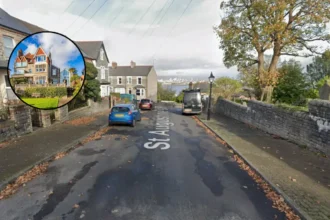
Coomansingh, residing at Angelina Street in Butetown, Cardiff, has been charged with:
- Conspiring to fraudulently evade a prohibition on the importation of a class B drug.
- Four counts of conspiring to arrange or facilitate the travel of another person with a view to exploitation.
Gareth Press (42)
Press, residing at Wheatley Road in Ely, Cardiff, faces the following allegations:
- Conspiring to fraudulently evade a prohibition on the importation of a class B drug.
- Two counts of conspiring to arrange or facilitate the travel of another person with a view to exploitation.
Ffion Bowes-Cavanagh Hooley (24)
Hooley, residing at Clos y Rhiw in Caerau, Cardiff, has been charged with:
- Conspiring to fraudulently evade a prohibition on the importation of a class B drug.
What Is the Current Status of the Arrested Teenagers in Thailand?
The two 17-year-old boys remain detained in Thai custody as local judicial proceedings continue. Representative authorities have confirmed that South Wales Police, alongside the Foreign, Commonwealth & Development Office (FCDO), are maintaining communication with the teenagers’ families in Wales to provide support during the ongoing legal process overseas.
Law enforcement agencies have reiterated that the investigation remains active as investigators examine international flight records, financial transactions, and communications linked to the enterprise.
Explore More Local Cardiff News
Cardiff Bay Barrage Outdoor Fitness Park Project Approved, Cardiff Bay 2026
Cardiff Schools Build Climate-Adapted Playgrounds for Pupils, Cardiff 2026
Background of the Particular Development
Over recent years, law enforcement agencies across the United Kingdom, including the National Crime Agency (NCA) and regional police forces, have monitored a growing trend of organized crime groups (OCGs) utilizing young or vulnerable individuals to move illicit contraband across international borders.
Historically, domestic supply chains such as “county lines” relied on juveniles to transport Class A and Class B drugs between urban hubs and rural towns.
However, the expansion of international trafficking operations has seen similar recruitment strategies applied to cross-border routes, particularly involving destinations where controlled substances are sourced or transitioned through commercial airports.
Thailand’s changing legal framework regarding cannabis has also created complex dynamics for international law enforcement. While domestic regulations in Thailand underwent legislative shifts regarding medical and recreational cannabis use in recent years, the unlicensed commercial export of the substance remains strictly illegal under Thai law.
Furthermore, bringing Class B drugs into the United Kingdom remains a major criminal offense under the Misuse of Drugs Act 1971 and the Customs and Excise Management Act 1979.
The inclusion of charges under the Modern Slavery Act 2015 marks a critical shift in how prosecutorial bodies handle cases where young couriers are deployed by organized syndicates.
Under UK law, arranging or facilitating the travel of an individual under the age of 18 for criminal exploitation constitutes human trafficking, regardless of whether the minor gave explicit consent.
Consequently, investigations into overseas interceptions increasingly focus on identifying the upstream organizers operating within the UK rather than treating young couriers solely as independent offenders.
Prediction: How This Development Can Affect the South Wales Community and Legal Precedents
The court proceedings and ongoing investigation are expected to produce significant reverberations across several distinct groups, notably local communities in South Wales, families, legal authorities, and international law enforcement agencies.
For residents in Cardiff—particularly across the neighborhoods of Caerau, Ely, and Butetown—this case brings heightened awareness to the risks of child criminal exploitation (CCE).
Local youth services, schools, and community organizations will likely face increased pressure to implement safeguard measures against international recruitment tactics used by crime syndicates. Families of young people will be urged to exercise greater vigilance regarding unexplained travel, sudden acquisition of money, or involvement with older associates.
The formal application of modern slavery charges alongside traditional drug importation charges sets a clear prosecutorial tone for similar cases in the UK. By framing the teenagers as victims of human trafficking and exploitation, the Crown Prosecution Service (CPS) reinforces a legal precedent that seeks to dismantle the supervisory tiers of organized crime networks rather than limiting prosecution to border-level interceptions. If convictions are secured under these combined statutes, it may encourage UK police forces to routinely apply modern slavery legislation to cross-border drug smuggling operations involving minors.
The ongoing detention of British minors in foreign jurisdictions highlights the complex operational space between domestic human trafficking laws and international drug enforcement.
While UK authorities treat the teenagers as exploited victims within their own jurisdiction, foreign legal frameworks may treat them primarily as drug offenders subject to severe local penalties.
This divergence will test consular support mechanisms, requiring sustained coordination between the Foreign Office, South Wales Police, and legal representatives in South East Asia to ensure the welfare and fair legal process of the detained youths.