Key Points
- Capital Return Confirmed: The National Eisteddfod will be hosted in Cardiff from 5 to 12 August 2028, marking the cultural festival’s first return to the Welsh capital in ten years.
- Traditional Format: Festival organizers confirmed the 2028 gathering will feature a traditional ticketed layout, though the exact venue within Cardiff has not yet been finalized.
- Preparations Launching: Public preparations and community initiatives will officially launch on 9 September 2026 with a public meeting at Chapter Arts Centre in Cardiff.
- Stepping Stone Sequence: The announcement comes at the conclusion of the 2026 Eisteddfod y Garreg Las in Llantwd, Pembrokeshire, ahead of the 2027 festival set for Glantwymyn on the border of Powys and Gwynedd.
- Civic and Cultural Support: Civic leaders and festival executives have emphasized that the event will act as a major platform for Welsh language learning, cultural participation, and community involvement.
Cardiff (Cardiff Daily) August 8, 2026 –The National Eisteddfod of Wales will take place in Cardiff between 5 August and 12 August 2028, marking the historic cultural festival’s return to the capital city after a ten-year absence. Organizers formally announced the destination as the 2026 Eisteddfod y Garreg Las drew to a close in Llantwd, Pembrokeshire.
While the specific site within Cardiff is yet to be selected by officials, event directors confirmed that the 2028 staging will operate as a ticketed event using a traditional setup.
The decision restores the festival’s long-standing alternate rotation between northern and southern regions of Wales, following the scheduled 2027 gathering in Glantwymyn, located near Machynlleth along the border of Powys and Gwynedd.
What Are Official Figures Saying About the Capital Staging?
As reported by business correspondent Owen Hughes of North Wales Live, Eisteddfod Chief Executive Betsan Moses expressed strong enthusiasm regarding the two-year preparation window in the capital. Moses noted that numerous residents across the catchment region are prepared to assist in creating both the week-long festival and its supporting community initiatives.
She stressed that the organization aims to blend experienced volunteers from the 2018 festival with new participants from varied backgrounds, noting that online registration and public meetings are open to all interested individuals.
Cardiff Council leadership has similarly welcomed the announcement. As reported by ITV Cymru Wales, Leader of Cardiff Council Councillor Chris Weaver highlighted the festival as the premier celebration of Welsh language and culture in the national calendar.
Weaver expressed pride in welcoming visitors from across Wales and beyond, pointing to Cardiff’s established record of managing major international and national gatherings.
Property editor Joanne Ridout of Wales Online reported additional comments from Councillor Jennifer Burke, Cabinet Member for Culture, Parks, and Events.
Burke stated that hosting the event offers a key opportunity to showcase Cardiff’s local arts scene and reinforce the municipal commitment to the Welsh language across music, literature, and performative arts.
How Can Local Communities Participate in the 2028 Preparations?
Formal planning for the 2028 festival and its associated outreach initiatives will commence on Wednesday, 9 September 2026, with an inaugural public meeting scheduled for 6:30 pm at the Chapter Arts Centre on Market Road in Cardiff.
What Roles Are Available for Volunteers and Learners?
Organizers have outlined several avenues for local involvement:
- Executive Leadership Roles: Nominations open for key leadership positions, including Chair, Strategic Vice-Chair, Cultural Vice-Chair, Chair of the Local Fund, and Executive Committee Secretary.
- Sub-Committees: Opportunities will be provided to join specialized committees managing specific aspects of festival logistics, arts programming, and fundraising.
- Language Engagement: The initial public meeting will be conducted in Welsh with simultaneous translation provided. Festival directors are actively encouraging Welsh learners and beginners to join committees to practice and develop their language skills leading up to 2028.
Explore More Local Cardiff News
Cardiff Business School AI Camp Hosts Chinese Students | Cardiff 2026
Cardiff City Pre-Season Boost After Roma Win | Cardiff 2026
What Is the Background Behind the National Eisteddfod Returning to Cardiff?
The National Eisteddfod is the largest competitive music and poetry festival in Europe, tracing its historical roots back to the first recorded court Eisteddfod held by Rhys ap Gruffydd of Deheubarth at Cardigan Castle in 1176.
The modern iteration of the festival was established in the nineteenth century, developing into a traveling event that shifts annually between North and South Wales during the first week of August.
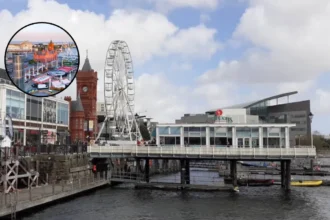
Cardiff last hosted the National Eisteddfod in August 2018. That event broke with traditional practice by utilizing an “open field” concept centered around Cardiff Bay, where admission to the main concourse was free to the public and events were integrated into existing landmarks like the Wales Millennium Centre.
While the 2018 model attracted record footfall, organizers have chosen a return to a traditional ticketed enclosure model for 2028. The 2026 festival took place in Llantwd, Pembrokeshire—a short distance from the site of the original 1176 gathering—while the 2027 festival will be staged in rural Powys before heading south to the capital.
How Will the 2028 National Eisteddfod Impact Cardiff and Welsh Culture?
The return of the National Eisteddfod is anticipated to deliver significant economic benefits to Cardiff’s urban economy.
Hosting up to 150,000 visitors over its eight-day run typically drives substantial revenue for regional hospitality providers, including hotels, retail outlets, transport networks, and food service vendors.
The 2028 event aligns directly with the Welsh Government’s long-term strategy to reach one million Welsh speakers by 2050.
By embedding two years of community projects, committee work, and educational initiatives across Cardiff’s diverse residential areas, the festival provides a structured environment for non-Welsh speakers and language learners in the capital to engage actively with Welsh-language culture.