The Pierhead Building is one of Cardiff’s most recognisable historic landmarks. It stands beside the Senedd at Cardiff Bay and forms part of the historic waterfront associated with Welsh political, industrial and maritime development.
- What is the Pierhead Building?
- When was the Pierhead Building constructed?
- Who designed the Pierhead Building?
- What architectural features make the Pierhead Building distinctive?
- How was the Pierhead Building connected to Cardiff’s coal industry?
- What role did the Bute family play in the Pierhead Building?
- Why is the Pierhead Building important to Cardiff’s history?
- How did the Pierhead Building become connected with Welsh political life?
- What is inside the Pierhead Building today?
- How does the Pierhead Building compare with the Senedd and Cardiff Bay landmarks?
- Why is the Pierhead Building Grade I listed?
- How did Cardiff Bay change after the decline of the docks?
- What can visitors learn from the Pierhead Building?
- Why does the Pierhead Building remain relevant today?
- What is the historical significance of the Pierhead Building for Cardiff?
Built in 1897, the Pierhead Building was commissioned by the Bute Dock Company as its headquarters. The building replaced an earlier dock office destroyed by fire and became an important administrative centre for Cardiff’s expanding port.
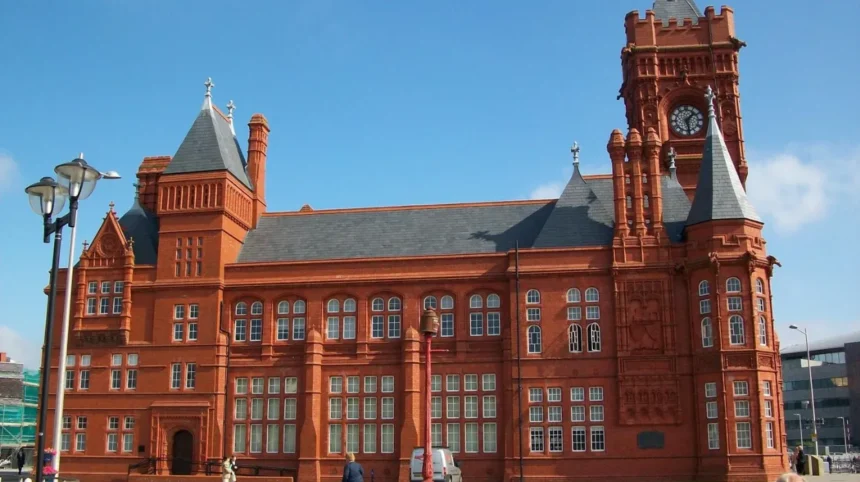
Its architecture combines French Gothic influences, richly decorated terracotta, carved details and a prominent clock tower. The building’s location beside the former Bute Dock reflects Cardiff’s transformation from a small settlement into one of the world’s major coal-exporting ports.
Today, the Pierhead operates as a public heritage and visitor venue. It provides historical exhibitions, educational activities, public events and access to information about Cardiff Bay, Wales and the building’s political and industrial heritage.
Understanding the Pierhead Building requires looking at several connected subjects: its construction, architectural design, relationship with the Bute family, role in Cardiff’s coal trade, changing political importance and position within the modern Cardiff Bay waterfront.
What is the Pierhead Building?
The Pierhead Building is a Grade I listed historic landmark in Cardiff Bay, completed in 1897 as the headquarters of the Bute Dock Company and now used as a public heritage, exhibition and events venue.
The Pierhead Building stands at the southern end of Cardiff’s historic civic waterfront. Its address is commonly associated with Pierhead Street, Cardiff Bay, close to the Senedd and Wales Millennium Centre.
The building was designed as an administrative headquarters rather than as a private residence or religious structure. Its original purpose was to support the management of Cardiff’s docks, which were central to the city’s economy during the industrial era.
The Bute Dock Company controlled important dock infrastructure connected with Cardiff’s expanding coal-export industry. The company required a substantial headquarters that reflected the economic importance of the port.
The completed building provided that headquarters. Its prominent position beside the docks gave it both practical and symbolic importance.
The Pierhead is now recognised as a major part of Cardiff’s built heritage. Its Grade I listing reflects its exceptional architectural and historical significance.
The building is also important because it forms part of the wider architectural group surrounding Cardiff Bay. Nearby landmarks include the Senedd, Wales Millennium Centre and historic dock structures.
When was the Pierhead Building constructed?
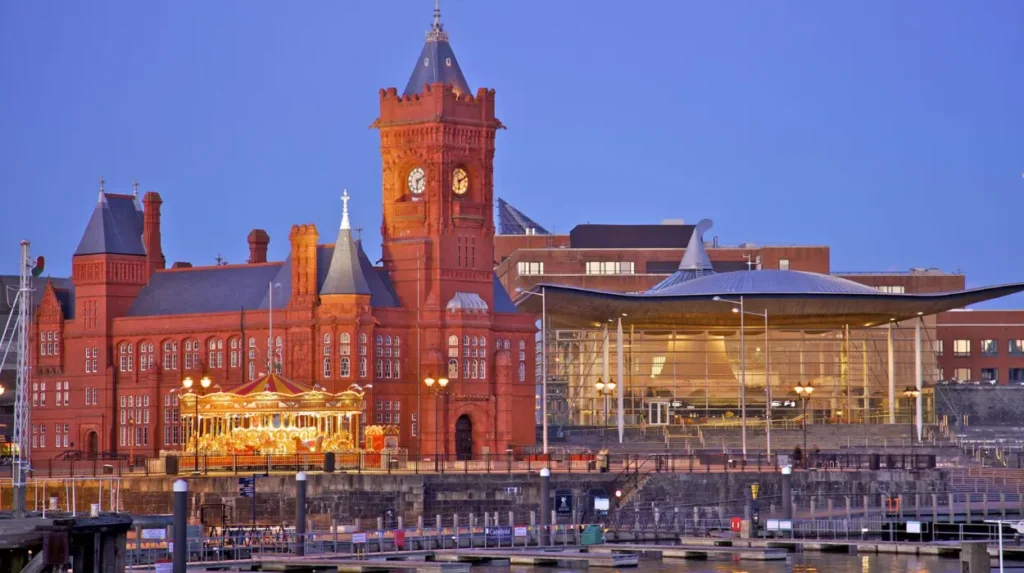
The Pierhead Building was completed in 1897 after replacing an earlier Bute Dock Company headquarters destroyed by fire, creating a distinctive late nineteenth-century administrative building beside Cardiff’s rapidly expanding docks and coal-export facilities.
The construction date is central to understanding the Pierhead’s historical importance. Cardiff experienced rapid industrial expansion during the nineteenth century, driven particularly by coal from the South Wales coalfield.
Cardiff’s docks provided the infrastructure needed to transport coal from the valleys to ships serving markets around the world. The expansion of dock facilities increased the need for sophisticated administrative operations.
An earlier building served as the headquarters of the Bute Dock Company. A fire destroyed that structure in 1892. The replacement headquarters was subsequently designed and constructed during the 1890s.
The new Pierhead Building was completed in 1897. Its design reflected the wealth and influence associated with Cardiff’s dock industry during the height of the city’s industrial development.
The construction period also explains the building’s elaborate decoration. Late Victorian commercial and civic architecture frequently used architectural detail to communicate institutional importance.
The Pierhead therefore represents more than a single historic building. It records the period when Cardiff’s docks became fundamental to the economic development of the city and surrounding South Wales.
Who designed the Pierhead Building?
The Pierhead Building was designed by William Frame, an architect associated with the Bute estate, under the influence of the architectural traditions developed by William Burges for the Bute family and Cardiff’s major nineteenth-century buildings.
William Frame designed the Pierhead Building in the late nineteenth century. Frame worked within the architectural network associated with the Marquess of Bute and Cardiff’s major development projects.
The building’s design is strongly associated with the architectural language established by William Burges. Burges was an influential nineteenth-century architect who designed several major Bute commissions, including Cardiff Castle interiors and Castell Coch.
The Pierhead does not simply reproduce Burges’s work. Its architecture incorporates French Gothic characteristics within a commercial and administrative building.
This distinction is important. The building combines practical office requirements with a highly decorative exterior. The result reflects the architectural ambitions of the Bute estate and the economic importance of Cardiff’s docks.
The relationship with the Bute family is significant because John Patrick Crichton-Stuart, the third Marquess of Bute, played a major role in Cardiff’s nineteenth-century development.
Bute investments transformed Cardiff’s dock infrastructure and contributed to the city’s emergence as an international coal-export centre. The Pierhead became one of the most visible architectural expressions of that transformation.
What architectural features make the Pierhead Building distinctive?
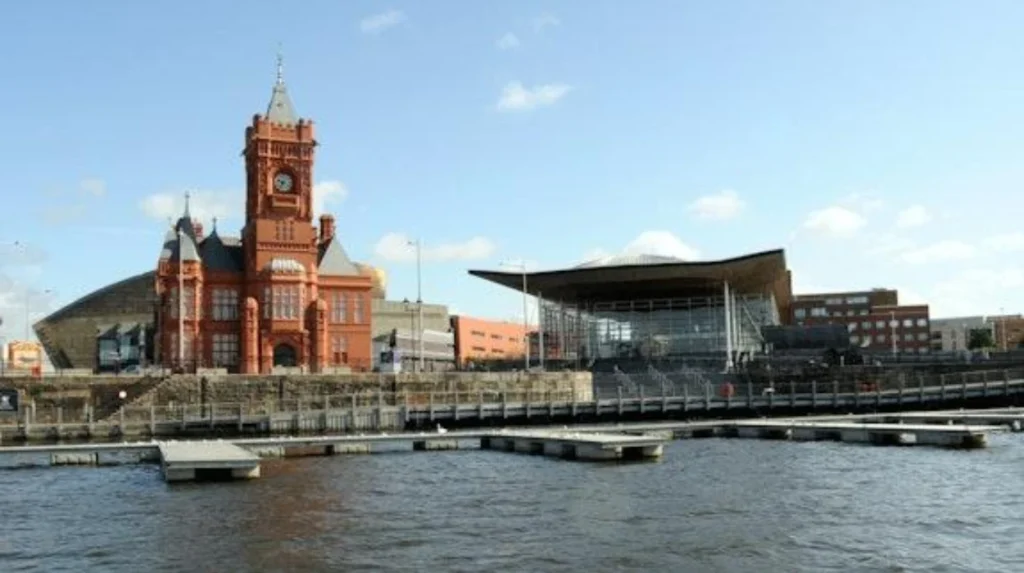
The Pierhead Building is distinguished by ornate terracotta construction, French Gothic detailing, carved decoration, a prominent clock tower, decorative chimneys and elaborate exterior features designed to communicate Victorian institutional importance.
The Pierhead Building is particularly notable for its extensive use of terracotta. Terracotta is a fired clay material widely used for architectural decoration during the Victorian period.
The material allowed craftsmen to create detailed mouldings, panels and ornamental features while providing a durable exterior finish.
The building’s architectural style is commonly described as French Gothic. This influence appears in its pointed arches, vertical emphasis, decorative tracery and detailed ornamental treatment.
Its clock tower is one of the most recognisable features. The tower rises above the waterfront and creates a strong visual landmark within Cardiff Bay.
The clock itself became an important practical feature for people working around the docks. Its position made the building highly visible from the surrounding waterfront.
Decorative carvings also contribute to the building’s identity. Welsh motifs and symbolic details connect the architecture with its location and institutional purpose.
The exterior includes elaborate windows, arches, gables, chimneys and ornamental terracotta elements. These features create a highly detailed façade rather than the plain appearance associated with many functional office buildings.
The building’s architectural importance is one reason for its Grade I listed status. Listing protects buildings recognised as having exceptional historical or architectural significance.
How was the Pierhead Building connected to Cardiff’s coal industry?
The Pierhead Building was directly connected to Cardiff’s coal-export economy because it served as the headquarters of the Bute Dock Company, which managed dock infrastructure supporting the movement of South Wales coal to international markets.
Cardiff’s nineteenth-century economy was closely connected to coal. The South Wales coalfield contained extensive reserves of steam coal, a fuel valued by industrial and maritime markets.
Cardiff’s docks provided a route between inland coal-producing areas and international shipping networks. Coal arrived at the docks by railway and other transport systems before being loaded onto ships.
The Bute Dock Company played a central role in managing Cardiff’s dock infrastructure. Its headquarters therefore stood directly beside the facilities that supported this trade.
The connection between the building and coal exports explains its location. The Pierhead was not positioned beside the waterfront simply for visual prominence. Its headquarters stood within the operational environment of Cardiff’s port.
During the nineteenth century, Cardiff became one of the world’s leading coal-exporting ports. Coal from South Wales supplied industries, railways and ships in Britain and overseas.
The port’s success supported population growth, employment and investment throughout Cardiff. It also encouraged the construction of railways, warehouses, offices and other infrastructure.
The Pierhead Building represents the administrative side of this industrial system. It demonstrates how commercial organisations required substantial headquarters to manage increasingly complex dock operations.
What role did the Bute family play in the Pierhead Building?
The Bute family shaped the development of Cardiff’s docks and commissioned major architectural projects, with the Pierhead Building serving the Bute Dock Company and reflecting the family’s economic influence over Cardiff’s nineteenth-century waterfront.
The Bute family became one of the most influential landowning families in nineteenth-century Cardiff. John Patrick Crichton-Stuart, the third Marquess of Bute, was particularly important to the city’s development.
The third Marquess inherited extensive estates around Cardiff. His financial interests became closely connected with the development of the docks and industrial infrastructure.
Bute Dock was named after the Bute family. The dock system expanded as Cardiff’s coal trade increased.
The family also supported major architectural projects. Cardiff Castle and Castell Coch became prominent examples of the Gothic revival architecture associated with the Bute estate.
The Pierhead Building belongs to the same wider period of development. Its decorative design reflects the architectural ambitions associated with Bute-controlled enterprises.
The building therefore provides evidence of the relationship between landownership, industrial investment and architecture in Victorian Cardiff.
The Bute influence was not limited to architecture. Investment in dock infrastructure helped Cardiff establish itself as a major international trading centre.
The Pierhead provides a physical connection between those economic and architectural developments. Its appearance reflects the prosperity generated by the dock system while its original function demonstrates the administrative organisation required to operate that system.
Why is the Pierhead Building important to Cardiff’s history?
The Pierhead Building is important because it connects Cardiff’s industrial, architectural, maritime and political histories in one landmark, documenting the city’s transformation from a developing port into a major international coal-export centre and modern Welsh capital.
Cardiff’s historical development is closely linked to its waterfront. Before industrial expansion, the area around the modern bay consisted of docks, tidal waters and developing port facilities.
Industrialisation changed the scale and importance of the waterfront. Coal exports increased rapidly, attracting investment, workers and transport infrastructure.
The Pierhead Building emerged during this period of transformation. Its construction in 1897 placed a highly visible administrative headquarters directly within the city’s commercial heart.
Its importance continued after Cardiff’s industrial economy changed. Coal exports declined during the twentieth century, while the traditional dock economy lost much of its earlier importance.
The waterfront subsequently underwent major redevelopment. Cardiff Bay became associated with cultural, governmental, residential and leisure uses rather than primarily with coal shipping.
The Pierhead remained as a physical reminder of the earlier industrial landscape.
Its historical importance therefore extends beyond its original corporate function. The building helps explain how Cardiff’s economy changed over more than a century.
It also provides context for the development of modern Cardiff Bay. Visitors can see the contrast between historic dock architecture and modern public buildings located nearby.
This combination makes the Pierhead an important heritage asset within the city.
How did the Pierhead Building become connected with Welsh political life?
The Pierhead Building became associated with Welsh political life because its Cardiff Bay location placed it beside the modern Welsh Parliament complex, while its historic civic role provides context for the development of Wales’s contemporary political institutions.
The Pierhead’s political association is primarily connected with its location rather than its original function.
The building was constructed as a dock company headquarters. It was not originally designed as a parliament or government building.
Its modern surroundings changed the character of the waterfront. The establishment of the National Assembly for Wales in 1999 created a permanent Welsh democratic institution.
The National Assembly later became the Senedd Cymru, or Welsh Parliament, following constitutional changes in 2020. The Senedd is the devolved legislature for Wales.
The modern Senedd building stands directly beside the Pierhead. This creates an unusual architectural relationship between a Victorian industrial landmark and a contemporary democratic institution.
The Pierhead itself continues to provide a public heritage setting. Its exhibitions and events connect visitors with Welsh history, culture and civic life.
The relationship between the two buildings also demonstrates the transformation of Cardiff Bay. The waterfront changed from a centre dominated by dock operations into a major centre for Welsh government, culture and tourism.
The Pierhead therefore provides historical context for the modern political landscape without being a legislative building itself.
What is inside the Pierhead Building today?
Today, the Pierhead Building operates as a public heritage and events venue containing exhibition spaces, historical interpretation and facilities for educational and civic activities, allowing visitors to explore Cardiff’s industrial past and Wales’s changing public life.
The interior provides a different experience from the building’s original commercial purpose.
Historical interpretation explains the relationship between Cardiff, the docks and the industrial economy. Exhibitions and public displays vary over time according to the programme operating within the building.
The building also hosts events and activities connected with Welsh culture, heritage and civic life.
Its interior retains architectural details that demonstrate the quality of late Victorian craftsmanship. Decorative features provide an important complement to the external terracotta façade.
The Pierhead’s public role makes the building accessible as a heritage destination rather than limiting it to specialist historical research.
Its proximity to the Senedd also makes it part of a wider visitor experience around Cardiff Bay.
Visitors can combine the Pierhead with nearby cultural attractions, waterfront public spaces and modern architecture. This creates a concentrated area for exploring different periods of Cardiff’s development.
The building’s present use therefore preserves its public significance while adapting its function to the modern city.
How does the Pierhead Building compare with the Senedd and Cardiff Bay landmarks?
The Pierhead Building represents Cardiff’s Victorian industrial heritage, while the nearby Senedd represents modern Welsh democracy; together with the Wales Millennium Centre and waterfront spaces, they demonstrate Cardiff Bay’s transition from industrial port to cultural and civic district.
The Pierhead forms part of a group of highly significant buildings around Cardiff Bay.
The Senedd is the home of the Welsh Parliament. Its architecture is contemporary and deliberately transparent, with extensive glazing and an open public character.
The Wales Millennium Centre is a major performing arts venue. It opened in 2004 and became one of Cardiff Bay’s best-known modern landmarks.
The Pierhead predates both buildings by more than a century. Its 1897 construction places it firmly within Cardiff’s Victorian industrial period.
The contrast between these structures illustrates the physical transformation of Cardiff Bay.
The historic Pierhead reflects commercial administration and maritime industry. The Senedd represents democratic government. The Wales Millennium Centre represents culture and performing arts.
Together, these buildings form a concentrated architectural record of Cardiff’s changing priorities.
The area also contains public squares, waterfront promenades, restaurants, residential developments and transport connections. These modern functions have replaced much of the industrial activity that once dominated the docks.
The Pierhead remains important because the historic building was retained within this redevelopment rather than removed from the modern waterfront.
Why is the Pierhead Building Grade I listed?
The Pierhead Building has Grade I listed status because of its exceptional architectural and historical significance, including its distinctive French Gothic design, extensive terracotta decoration, association with Cardiff’s dock development and importance within the city’s heritage.
Listed building status is a system used to identify and protect buildings with special architectural or historic interest.
Grade I is the highest category in the system used for listed buildings in Wales. It is reserved for buildings considered to have exceptional interest.
The Pierhead’s listing reflects several factors rather than one architectural feature.
Its design is an important example of late Victorian architecture. Its terracotta construction and detailed decoration contribute strongly to its architectural significance.
Its historical connection with the Bute Dock Company adds substantial industrial importance.
Its location also strengthens its heritage value. The building stands within an area that played a central role in Cardiff’s industrial development.
Listing provides legal protection for significant architectural features. Changes to a listed building require appropriate consent and consideration of its historic character.
This protection helps preserve the building for future generations.
The Pierhead’s status also demonstrates why historic industrial buildings are important to urban heritage. Industrial history is not represented only by factories, mines and railway structures. Administrative buildings such as the Pierhead also document the organisations that managed industrial systems.
How did Cardiff Bay change after the decline of the docks?
Cardiff Bay changed dramatically after the decline of the traditional dock economy, with industrial waterfront land transformed into a mixed civic, cultural, residential and leisure district while historic structures such as the Pierhead were retained as heritage landmarks.
The decline of Cardiff’s coal-export industry reduced the economic importance of the traditional docks.
Changes in energy markets, shipping, industrial organisation and coal demand affected the port economy during the twentieth century. The docks no longer operated at the scale experienced during the height of the coal-export era.
Large areas of waterfront land subsequently required new uses.
Major regeneration transformed Cardiff Bay. The Cardiff Bay Development Corporation was established in 1983 to support redevelopment and regeneration.
The Cardiff Bay Barrage became a major component of the regeneration programme. Completed in the 1990s, it created a large freshwater lagoon and changed the physical character of the bay.
Cultural and civic developments followed. The Senedd, Wales Millennium Centre and other public facilities established new functions around the waterfront.
The Pierhead survived as a historic reference point within this transformation.
Its continued presence allows the modern waterfront to retain a visible connection with its industrial past.
This makes Cardiff Bay an important example of urban regeneration where historic architecture and modern development coexist within the same district.
What can visitors learn from the Pierhead Building?
Visitors can learn how Cardiff’s docks developed, how coal exports shaped the city, how Victorian architecture expressed institutional wealth, how the Bute family influenced development and how Cardiff Bay evolved into a modern civic and cultural waterfront.
The Pierhead offers several layers of historical information.
The first concerns Cardiff’s industrial economy. The building’s original connection with the Bute Dock Company provides a starting point for understanding the dock system.
The second concerns maritime trade. Cardiff’s position within international coal shipping demonstrates how a local port became connected with global markets.
The third concerns architecture. The building shows how Victorian designers combined functional office accommodation with elaborate decorative treatment.
The fourth concerns urban development. The Pierhead illustrates how economic investment influenced the physical growth of Cardiff.
The fifth concerns modern regeneration. Its position beside contemporary buildings demonstrates the continuing adaptation of Cardiff Bay.
These themes make the building useful for different audiences. Local residents can explore Cardiff’s heritage. Students can examine industrialisation and urban development. Visitors can understand the historical context of the surrounding waterfront.
The building therefore functions as both an architectural landmark and an educational resource.
Explore More Area Guide
Guide to the Best Family Butchers in Whitchurch Cardiff 2026
Community Churches in Rumney Cardiff History Governance and Social Impact Guide
Why does the Pierhead Building remain relevant today?
The Pierhead Building remains relevant because it preserves a direct physical link to Cardiff’s industrial past while standing within a modern centre of Welsh government, culture and tourism, giving the building continuing architectural, educational and civic importance.
Historic buildings remain relevant when they provide reliable evidence about how places developed.
The Pierhead provides that evidence in Cardiff Bay. Its original function connects it directly with the organisations that managed one of Britain’s important dock systems.
Its architecture records the confidence and wealth of late Victorian Cardiff. Its location records the importance of the waterfront. Its continued public use connects that history with present-day Cardiff.
The building also contributes to the identity of Cardiff Bay. Modern regeneration changed the surrounding landscape, but the Pierhead remained as a recognisable historic structure.
Its relationship with the Senedd gives it particular contemporary significance. Visitors can move between a Victorian industrial headquarters and a modern democratic institution within the same waterfront district.
The building also supports heritage tourism. Cardiff attracts visitors interested in architecture, history, culture and Welsh political institutions, and the Pierhead contributes to all four areas.
Its preservation ensures that Cardiff’s industrial history remains visible within the modern city rather than existing only in archival records.
What is the historical significance of the Pierhead Building for Cardiff?
The Pierhead Building is historically significant because it connects Cardiff’s nineteenth-century coal economy, dock administration, Victorian architecture, Bute influence, maritime trade and modern waterfront regeneration within one preserved landmark at the heart of Cardiff Bay.
The building’s significance begins with its original role. It was created for the Bute Dock Company during a period when Cardiff’s docks were central to the city’s economic development.
Its 1897 completion placed it within the peak period of Victorian industrial expansion.
Its architecture adds another layer of significance. William Frame’s design reflects the French Gothic tradition associated with major Bute architectural commissions and demonstrates the use of decorative terracotta on an important commercial building.
Its relationship with the coal trade connects architecture with economic history. The building’s existence depended on the dock system that handled the products of the South Wales coalfield.
Its modern surroundings add a further historical dimension. The former industrial waterfront became a centre for Welsh government, culture, tourism and leisure.
The Pierhead therefore represents continuity within a changing city.
It is not simply an old building beside Cardiff Bay. It is a preserved record of the economic system that transformed Cardiff, the architecture that expressed Victorian prosperity and the redevelopment that reshaped the waterfront.
For Cardiff, the Pierhead remains an essential landmark for understanding how industrial history continues to influence the city’s identity, architecture and public landscape.
What is the Pierhead Building in Cardiff?
The Pierhead Building is a historic landmark in Cardiff Bay. Completed in 1897, it originally served as the headquarters of the Bute Dock Company and is now a public heritage and events venue.