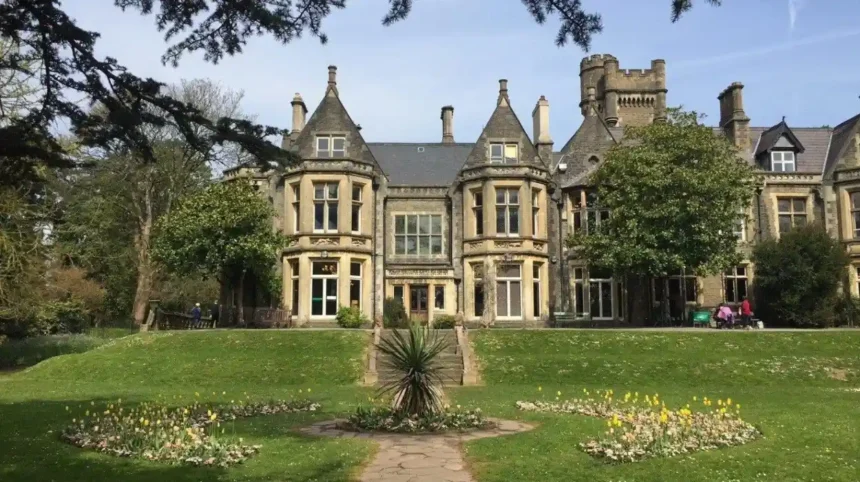
Insole Court is a historic Victorian mansion and public heritage venue in Llandaff, Cardiff. The Grade II* listed house stands within landscaped gardens and provides an important link to Cardiff’s industrial, architectural and social history. The estate combines historic interiors, gardens, community facilities, events, and public spaces.
- What is Insole Court?
- Where is Insole Court located?
- Who were the Insole family?
- When was Insole Court built?
- What architectural features can you see at Insole Court?
- Why is Insole Court historically important to Cardiff?
- What can visitors see in the Insole Court house?
- What are the gardens at Insole Court like?
- Can families visit Insole Court?
- What facilities are available at Insole Court?
- How is Insole Court connected with Llandaff?
- How does Insole Court reflect Cardiff’s industrial history?
- What is the heritage status of Insole Court?
- How can visitors make the most of an Insole Court visit?
- Why does Insole Court remain relevant today?
- What should you know before visiting Insole Court?
- Why should Insole Court be included in a Cardiff heritage guide?
- What is the overall significance of Insole Court?
The house is closely associated with the Insole family, a prominent Cardiff family whose wealth developed through the nineteenth-century coal industry. The surviving mansion reflects the prosperity of Cardiff during the period when coal exports transformed the city into a major international port.
Today, Insole Court operates as a heritage and community destination. Visitors can explore the historic house, grounds, gardens, café facilities, and surrounding Llandaff area. Its combination of architecture, local history, green space, and community use makes it relevant to residents, families, visitors, students, and people researching Cardiff’s heritage.
What is Insole Court?
Insole Court is a Grade II listed Victorian mansion and historic estate in Llandaff, Cardiff, surrounded by landscaped gardens and community spaces that connect Cardiff’s industrial heritage with modern public use.*
Insole Court is located on Fairwater Road in Llandaff, approximately two miles northwest of Cardiff city centre. The property occupies a substantial historic estate that includes the principal mansion, gardens, outbuildings, and landscaped grounds.
The central building is a Victorian country house developed for the Insole family. Its architecture reflects several periods of construction and alteration. The house therefore provides evidence of changing domestic design, wealth, technology, and social expectations during the nineteenth and early twentieth centuries.
The property is also significant because its history is connected with Cardiff’s coal industry. Cardiff became one of the world’s most important coal-exporting ports during the nineteenth century. Industrial wealth generated by coal influenced the construction of substantial residences across the city and surrounding districts.
Insole Court represents this relationship between industrial development and residential architecture. The mansion was not an isolated country estate. Its development formed part of a wider transformation in Cardiff caused by coal mining, railway expansion, port development, and international trade.
The estate now serves a public function. Its historic significance exists alongside community use, making it an important heritage destination within Cardiff.
Where is Insole Court located?
Insole Court is located on Fairwater Road in Llandaff, northwest Cardiff. Its position places the historic estate within a residential district while keeping it accessible from Cardiff city centre, Llandaff and nearby communities.
Llandaff is a historic district within Cardiff associated with Llandaff Cathedral, medieval ecclesiastical history, residential development, and the River Taff.
Insole Court stands within the western part of the Cardiff urban area. Its location provides access to a substantial historic garden environment without requiring visitors to travel outside the city.
The surrounding neighbourhood contains residential streets, schools, religious buildings, parks, and local services. The estate therefore forms part of an established urban community rather than operating as an isolated heritage attraction.
Visitors travelling by car can approach the property through Cardiff’s western road network. Public transport services connect Llandaff and neighbouring districts with Cardiff city centre.
The location also makes Insole Court useful as part of a wider Llandaff heritage visit. Llandaff Cathedral, historic streets, green spaces, and the River Taff are all associated with the area’s long history.
Who were the Insole family?
The Insole family became prominent in Cardiff through the nineteenth-century coal industry. Their commercial success funded the development of substantial residential property, including the mansion that became known as Insole Court in Llandaff.
James Harvey Insole was a significant figure in the family’s rise. He established commercial interests connected with the South Wales coal trade during the nineteenth century.
Cardiff’s position at the mouth of the River Taff created major opportunities for coal export. The development of docks and railways allowed coal from the South Wales coalfield to reach international markets efficiently.
The Insole family benefited from this expanding industrial economy. Their growing wealth enabled investment in property and the development of an imposing residence at Llandaff.
The family’s history illustrates the relationship between Cardiff’s industrial economy and its residential landscape. Coal wealth supported commercial buildings, docks, transport infrastructure, civic institutions, and private houses.
Insole Court therefore has significance beyond its architecture. The building records the economic circumstances that transformed Cardiff during the Victorian period.
The family’s association with the estate continued across generations. Successive owners altered and expanded the house, producing the architectural form visible today.
When was Insole Court built?
Insole Court developed from an earlier house into an enlarged Victorian mansion during the nineteenth century. Major alterations created the substantial residence associated with the Insole family and produced the distinctive historic building seen today.
The earliest house on the site predates the final Victorian mansion. The Insole family acquired the property during the nineteenth century and progressively transformed it.
The principal period of development occurred during the Victorian era. Cardiff experienced rapid population growth and industrial expansion during this period. Wealthy families frequently enlarged their homes to demonstrate status and provide more extensive accommodation.
Insole Court underwent significant architectural changes rather than being constructed as one single building at one moment. This development explains differences in architectural detail and the complex appearance of the mansion.
The house was subsequently enlarged during the late nineteenth century. Its interiors and external appearance incorporated features associated with Victorian and later architectural tastes.
The building’s history therefore consists of several phases. Earlier fabric, Victorian expansion, later alterations, and twentieth-century changes all contribute to the property’s present character.
Understanding these phases helps visitors interpret the mansion as a historic document rather than simply as a Victorian house.
What architectural features can you see at Insole Court?
Insole Court displays Victorian domestic architecture through its substantial stone construction, formal elevations, decorative interiors, large rooms, ornamental details, and successive extensions that reflect changing architectural and social requirements.
The mansion has a large-scale appearance consistent with the residences of prosperous Victorian industrial families.
Its exterior presents a formal architectural composition with substantial masonry, decorative detailing, prominent windows, and carefully designed elevations. Different construction phases contribute to the building’s varied appearance.
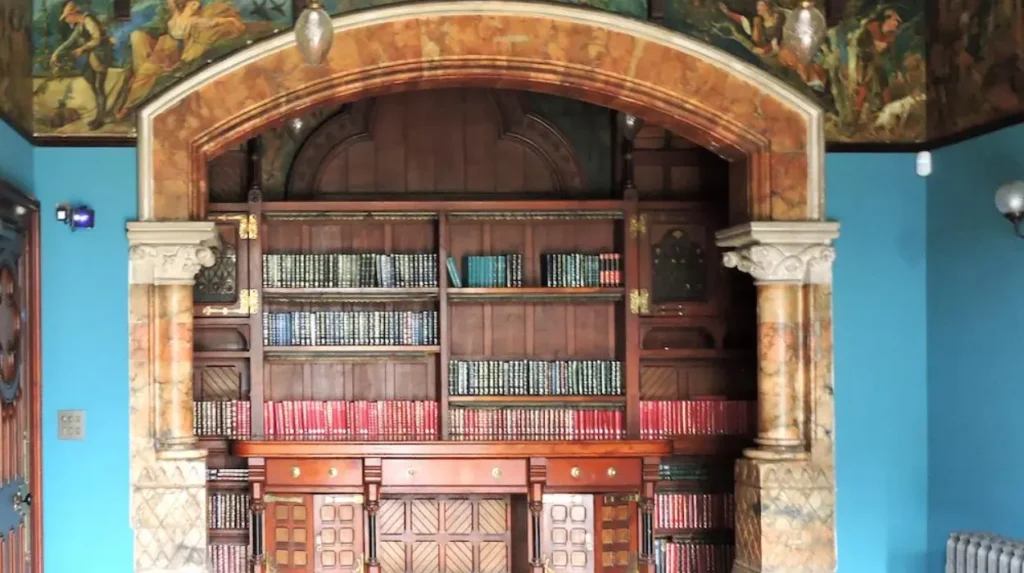
Inside, the house contains rooms designed for different domestic and social functions. Large reception spaces demonstrate the importance of formal entertaining within wealthy Victorian households.
Decorative architectural elements also communicate the social position of the occupants. Ornamental finishes, fireplaces, ceilings, doors, staircases, and other details contributed to the visual presentation of the home.
The building’s design also demonstrates the importance of domestic technology during the nineteenth century. Large houses required extensive systems for heating, cooking, lighting, storage, and household management.
The architecture is therefore connected with social history. The size of the building reflects the resources available to its owners and the domestic workforce required to operate a substantial Victorian residence.
Why is Insole Court historically important to Cardiff?
Insole Court is historically important because it connects Cardiff’s coal-export economy, Victorian industrial wealth, suburban development, architecture, and changing patterns of public heritage use within one surviving historic estate.
Cardiff’s nineteenth-century transformation was closely connected with coal. The South Wales coalfield supplied industrial fuel to Britain and international markets.
The construction and expansion of Cardiff docks strengthened the city’s position within global trade. Railways connected mining districts with the port, creating an integrated industrial transport network.
Industrial prosperity changed the city’s population and built environment. Wealthy industrialists constructed large houses, while workers’ communities expanded around employment centres.
Insole Court represents the residential side of this transformation. Its scale and architectural development reflect the wealth generated by the coal economy.
The estate also records the movement of wealthy families into attractive residential districts outside the commercial centre. Llandaff provided a setting with greater space and a different environment from the rapidly industrialising central areas.
Its modern public role adds another historical layer. A privately associated mansion has become a publicly accessible heritage and community venue.
This transition reflects broader changes in the way historic properties are preserved and used in modern cities.
What can visitors see in the Insole Court house?
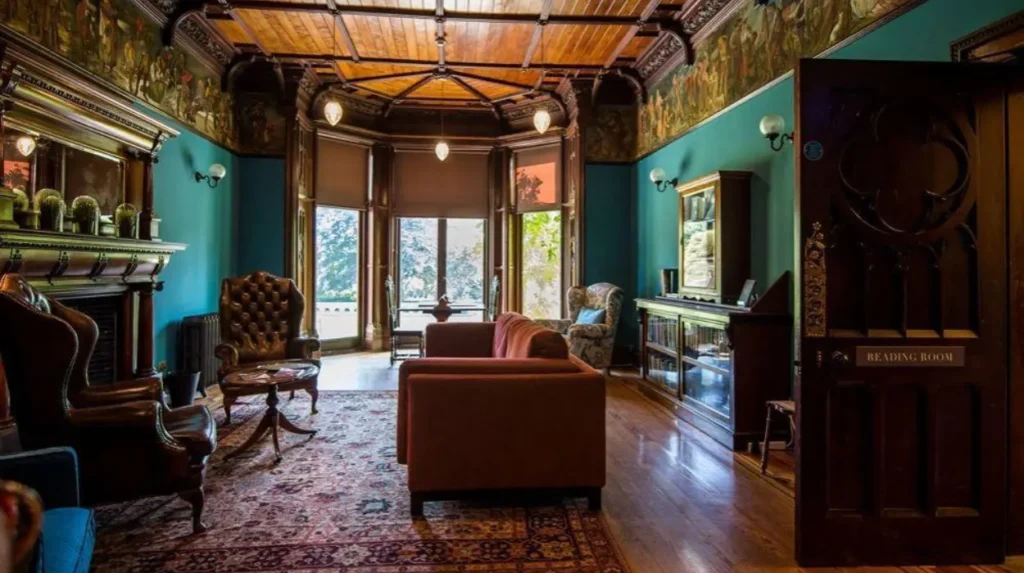
Visitors can experience historic rooms, architectural details, restored spaces, interpretation, and evidence of Victorian domestic life within the mansion. The house provides a physical setting for understanding the Insole family’s history and Cardiff’s industrial past.
The interior contains spaces associated with formal domestic life. Reception rooms demonstrate how wealthy families used architecture to accommodate guests, conduct social activities, and display status.
Historic features help explain how the building operated as a private residence. Fireplaces, decorative finishes, staircases, windows, doors, and room layouts provide evidence of domestic organisation.
The building also contains information about its changing use. Historic houses often develop new functions as ownership changes, and Insole Court reflects this broader pattern.
Interpretation helps connect architectural features with the people who occupied the building and the economic conditions that supported its development.
Visitors interested in social history can use the mansion to understand differences between the lives of wealthy families and the wider population of industrial Cardiff.
The house is particularly relevant for students studying Victorian architecture, Cardiff history, industrialisation, heritage conservation, and domestic life.
What are the gardens at Insole Court like?
The gardens at Insole Court form an important part of the historic estate, combining formal landscaping, lawns, planted areas, mature trees, paths, and open spaces that support recreation, heritage appreciation, and community activities.
The gardens were designed as part of the residential estate rather than as an independent public park.
Historic gardens served practical and social functions. They provided attractive views from the house, spaces for recreation, areas for planting, and settings for entertaining guests.
The landscape surrounding Insole Court retains elements of this historic relationship between house and garden.
Mature vegetation contributes to the character of the estate. Trees, lawns, planting areas, and paths create different spaces within the grounds.
The gardens also increase the property’s value as a community destination. Visitors can use the outdoor areas alongside their interest in the historic building.
For families, the grounds provide additional space beyond the interior rooms. For heritage visitors, the landscape helps explain how wealthy Victorian residences were designed as complete estates rather than individual buildings.
The gardens also contribute to urban biodiversity by providing planted and semi-natural habitat within Cardiff’s built environment.
Can families visit Insole Court?
Insole Court provides a family-friendly heritage environment through accessible outdoor space, historic interiors, community activities, and facilities that allow adults and children to experience Cardiff history within a relaxed public setting.
The estate’s gardens provide space for families to spend time outdoors. The combination of lawns, paths, planting, and historic architecture creates different opportunities for exploration.
Children can encounter history through the physical environment rather than relying only on written information. The mansion demonstrates how people lived, worked, and entertained themselves in earlier periods.
Family events and community activities also contribute to the site’s public role. Programmes vary according to the time of year, so visitors should check current arrangements before planning a specific activity.
The venue’s café and other facilities make longer visits practical. Families can combine the historic house with time in the gardens.
Insole Court also provides an accessible introduction to local history. Children studying Cardiff, the Victorian period, industrialisation, or Welsh heritage can connect classroom subjects with a real historic building.
What facilities are available at Insole Court?
Insole Court provides heritage, hospitality, garden, community, and event facilities within the historic estate. These functions allow visitors to combine cultural exploration with food, outdoor recreation, educational activities, and community participation.
The estate includes hospitality facilities that support visitors during their stay. Café services provide an opportunity to eat or drink while visiting the property.
Event spaces support private and public activities. Historic buildings often require active community use to remain sustainable, and Insole Court combines heritage preservation with practical modern functions.
The gardens provide additional outdoor facilities. Their open spaces support informal recreation and organised activities.
Community use is an important component of the estate’s current identity. The property operates as more than a museum because its spaces support different forms of public engagement.
Facilities can change according to operational requirements, events, conservation work, and seasonal programmes. Visitors planning a specific activity should check current information before travelling.
The combination of facilities makes the property relevant to both dedicated heritage visitors and people seeking a local community destination.
How is Insole Court connected with Llandaff?
Insole Court forms part of Llandaff’s wider historic landscape, linking Victorian industrial wealth with the district’s older religious, architectural, residential, and environmental heritage around Llandaff Cathedral and the River Taff.
Llandaff has a history extending well beyond the Victorian period. The district is strongly associated with Christianity and Llandaff Cathedral, whose history stretches back many centuries.
This older heritage provides an important contrast with Insole Court. The mansion represents nineteenth-century industrial prosperity, while the cathedral and older parts of Llandaff demonstrate earlier phases of Welsh and Cardiff history.
The district therefore contains several chronological layers within a relatively compact area.
Visitors can explore historic architecture from different periods during the same visit. The relationship between Insole Court and Llandaff demonstrates how Cardiff expanded and changed while retaining older settlements and institutions.
The River Taff also influenced the historical development of the surrounding area. Rivers provided transport routes, water resources, natural boundaries, and attractive landscapes.
Insole Court’s position within Llandaff makes it particularly valuable for understanding Cardiff as a city formed through successive periods rather than a single historical era.
How does Insole Court reflect Cardiff’s industrial history?
Insole Court reflects Cardiff’s industrial history through its connection with the Insole family’s coal-related wealth, Victorian expansion, suburban development, and the wider economic transformation created by South Wales coal mining and Cardiff’s international port.
The South Wales coalfield became one of the world’s major coal-producing regions during industrialisation.
Cardiff developed into a major export centre because coal could be transported by rail from mining districts to the docks and then shipped internationally.
This economic system created considerable wealth for industrial entrepreneurs and commercial families.
The Insole family formed part of this industrial business environment. Their residence provides physical evidence of how commercial success influenced private architecture.
The mansion’s scale also illustrates the social hierarchy of Victorian Cardiff. Industrial wealth produced large differences in housing, lifestyle, and access to resources.
Insole Court can therefore be interpreted alongside Cardiff’s docks, coal-related infrastructure, railways, workers’ communities, and civic buildings.
Together, these places explain how industrialisation changed Cardiff from a comparatively modest town into a major international city.
What is the heritage status of Insole Court?
Insole Court is a Grade II listed building, recognising its special architectural and historic interest. Its protected status reflects the importance of the mansion as surviving evidence of Cardiff’s Victorian residential and industrial heritage.*
Listed building status is a form of legal heritage protection in the United Kingdom. Buildings are listed because of their architectural or historic importance.
Grade II* is one of the higher categories of listed building designation. It applies to particularly important buildings of more than special interest.
The designation affects how significant alterations are managed. Changes to listed buildings require careful consideration because historic fabric and architectural character are protected.
Insole Court’s designation recognises both its architectural qualities and its historical associations.
The listing also contributes to long-term conservation. Maintaining a large historic building requires specialist attention to materials, structure, interiors, gardens, and services.
Heritage protection ensures that future changes respect the property’s historic significance while allowing appropriate modern use.
The continued public role of Insole Court demonstrates how conservation can operate alongside contemporary community requirements.
How can visitors make the most of an Insole Court visit?
Visitors can make the most of Insole Court by combining the historic mansion with its gardens, learning about the Insole family, exploring Llandaff, using visitor facilities, and checking current opening arrangements before travelling.
A visit benefits from allowing enough time for both the building and grounds. The architectural details inside the mansion require closer attention than a brief walk through the property.
Reading interpretation about the Insole family also provides useful context. The building becomes more understandable when connected with Cardiff’s coal industry and Victorian expansion.
The gardens provide a separate experience from the interior. Visitors can examine the relationship between the mansion and its landscaped setting.
Combining Insole Court with Llandaff’s other historic attractions creates a broader understanding of the district. Llandaff Cathedral and the surrounding historic environment provide important chronological context.
Opening arrangements, events, café services, room access, and activities can change. Checking current visitor information before travelling is therefore an important practical step.
Visitors interested in photography, architecture, genealogy, local history, or education can focus on different aspects of the estate according to their interests.
Why does Insole Court remain relevant today?
Insole Court remains relevant because it preserves Cardiff’s industrial-era heritage while functioning as a public community venue. Its combination of architecture, gardens, education, hospitality, and events gives the historic estate continuing civic value.
Historic buildings remain useful when their preservation connects with contemporary communities.
Insole Court demonstrates this principle through its combination of conservation and public activity. The mansion retains evidence of its historic development while accommodating modern functions.
Its educational value is particularly significant. Students can examine architecture, industrialisation, social history, conservation, and urban development through one physical site.
The estate also contributes to Cardiff’s cultural tourism. Visitors interested in the city’s history can explore a location that provides a different perspective from major central attractions.
Its gardens contribute another form of public value. Historic landscapes provide green space within urban environments while preserving elements of past estate design.
The property therefore has both historical and contemporary significance. Its future relevance depends on continued conservation, responsible public use, community engagement, and appropriate management of the historic estate.
What should you know before visiting Insole Court?
Before visiting Insole Court, check current opening hours, house access, events, café availability, accessibility information, and any temporary restrictions. The historic estate operates as a community venue, so individual facilities and programmes can change.
Opening arrangements are not necessarily identical for the house, café, gardens, and events.
Special activities can affect access to particular rooms or areas. Private functions and conservation work can also change normal visitor arrangements.
Visitors with accessibility requirements should check available facilities before travelling. Historic buildings often contain architectural features that influence movement through different areas.
Those travelling with children should check family activities and current garden arrangements.
Visitors planning photography or organised activities should also check applicable venue rules.
The best approach is to treat the official visitor information as the final source for current practical details. Historical information remains relatively stable, but opening times and event schedules change.
Explore More Area Guide
Cardiff’s Oldest Bike Shops Guide – Cardiff 2026
Independent Cafés in Roath Guide – Cardiff 2026
Why should Insole Court be included in a Cardiff heritage guide?
Insole Court deserves inclusion in a Cardiff heritage guide because it connects Victorian architecture, the coal industry, the Insole family, Llandaff history, historic gardens, conservation, and modern community use within one accessible Cardiff heritage destination.
Cardiff’s history is often associated with its castle, civic centre, docks, and Bay. Insole Court adds an important residential perspective.
The mansion shows how industrial wealth affected private life and architecture. Its history demonstrates the connection between business success and the development of substantial homes.
Its location in Llandaff also expands the geographical understanding of Cardiff heritage. Historic Cardiff extends beyond the city centre and includes districts with distinct identities and long histories.
The gardens provide an environmental dimension to the site’s importance. They demonstrate the relationship between historic architecture and designed landscapes.
The property’s modern community function completes the picture. Insole Court is not simply a preserved Victorian building. It remains part of Cardiff’s contemporary cultural and social landscape.
For residents and visitors, the estate provides a focused way to understand the economic, architectural, social, and environmental changes that shaped Cardiff.
What is the overall significance of Insole Court?
Insole Court is a significant Cardiff heritage site because its architecture, family history, gardens, and community role preserve a clear record of Victorian industrial prosperity while providing a continuing public destination in historic Llandaff.
The mansion represents the economic power generated by Cardiff’s coal-export economy. Its development reflects the prosperity available to successful industrial families during the nineteenth century.
Its architecture records changing tastes and domestic requirements. The successive alterations demonstrate how historic houses evolved as their owners, lifestyles, technologies, and social expectations changed.
Its gardens preserve the relationship between a large Victorian residence and its designed landscape.
Its Grade II* listed status recognises the building’s architectural and historical importance.
Its present community function provides a practical reason for continued conservation. Public use creates opportunities for education, cultural activity, hospitality, and engagement with local history.
For anyone researching Cardiff, Insole Court provides an important link between industrialisation and everyday life. The estate demonstrates how economic transformation shaped not only docks and factories but also homes, neighbourhoods, landscapes, and social structures.
Insole Court therefore remains an important part of Cardiff’s heritage landscape. It provides a direct connection between the city’s Victorian industrial past and its modern cultural identity.
What is Insole Court famous for?
Insole Court is famous for its Victorian mansion, historic gardens, Grade II* listed status, and connection with the Insole family and Cardiff’s nineteenth-century coal industry.