Cardiff offers nature walks across river corridors, historic parks, wetlands, woodland, meadows and nearby country parks. The city’s green network changes substantially through the year. Spring brings bluebells and blossom, summer supports pollinators and long daylight, autumn produces foliage and fungi, while winter highlights waterbirds and bare woodland structure.
- What makes Cardiff suitable for seasonal nature walks?
- Which Cardiff walks are best for spring?
- Which Cardiff nature walks work best in summer?
- Where can walkers see autumn colour around Cardiff?
- Which Cardiff walks are best for winter wildlife?
- How does the Taff Trail connect Cardiff’s seasonal nature walks?
- What wildlife can walkers expect to see around Cardiff?
- How should visitors choose a Cardiff nature walk by season?
- What should visitors know before walking in Cardiff’s natural areas?
- How do nearby country parks expand Cardiff’s seasonal walking options?
- Why are seasonal nature walks important for Cardiff’s future?
Cardiff Council manages a large network of parks and green spaces across the city, while nearby authorities and conservation organisations manage additional countryside sites. Cardiff also connects directly with longer walking routes, including the 55-mile Taff Trail between Cardiff Bay and Brecon.
The best seasonal walk depends on the habitat, weather, daylight and wildlife interest. Woodland is strongest for spring flowers and autumn colour. Wetlands are productive for birds throughout the year, with winter attracting additional waterfowl. River corridors provide changing scenery and accessible walking throughout the seasons.
What makes Cardiff suitable for seasonal nature walks?
Cardiff combines urban parks, river corridors, woodland, wetlands and coastal habitats within a compact area, allowing walkers to experience different seasonal landscapes without travelling far. Bute Park, Forest Farm, Cardiff Bay Wetlands and nearby country parks provide varied habitats.
Cardiff’s green infrastructure forms an important part of the city landscape. Bute Park alone covers about 130 acres of landscaped gardens and parkland beside the River Taff. The wider green network includes formal parks, woodland, grassland, waterways and nature-focused sites.
The city also provides access to countryside beyond the built-up area. The Taff Trail runs north from Cardiff Bay through areas including Sophia Gardens, Pontcanna Fields, Hailey Park and Forest Farm before continuing towards Tongwynlais and Brecon. The full route measures about 55 miles, or 88.5 kilometres.
Seasonal variation is especially important in Cardiff because different habitats respond differently to weather and daylight. Woodland plants respond strongly to spring light levels. Meadows support insects during warmer months. Trees produce autumn colour after the growing season. Wetlands remain important for birds during winter.
This diversity makes Cardiff suitable for short urban walks as well as longer nature-focused outings. Walkers can choose a formal park for an easy route or move onto riverside, woodland and countryside paths for a more natural landscape.
Which Cardiff walks are best for spring?
Spring nature walks around Cardiff are strongest in woodland and landscaped parks, where bluebells, wild garlic, blossom and fresh foliage appear. Parc Cefn Onn, Cwm George and Casehill Woods, Bute Park and Forest Farm provide strong spring habitats and accessible walking environments.
Spring generally produces the clearest transformation in Cardiff’s woodland. Bluebells typically flower from late March into early May, with April often providing the strongest display. Woodland Trust research identifies bluebells, wild garlic, wild daffodils and increased birdsong as characteristic spring woodland features.
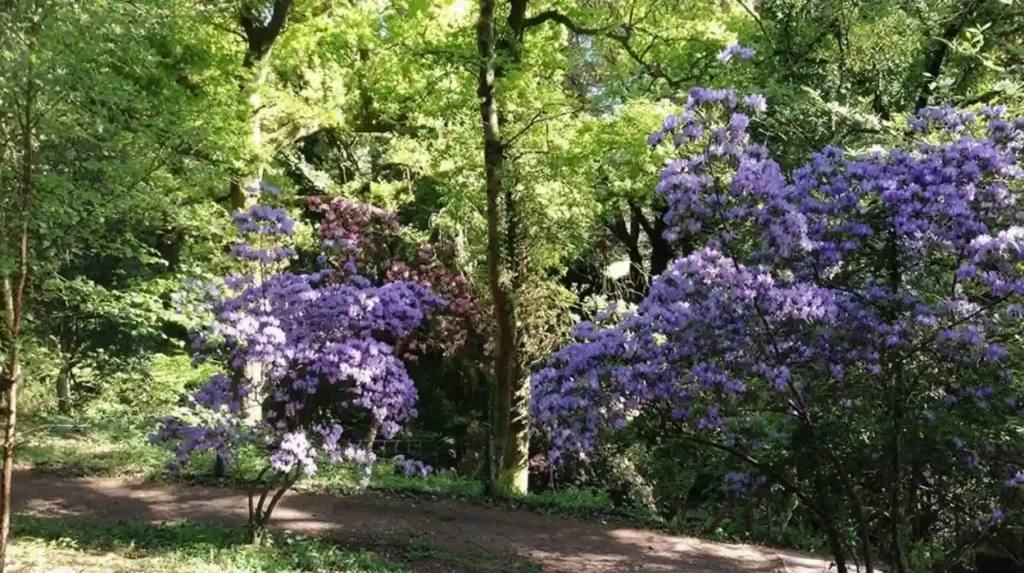
Parc Cefn Onn is particularly relevant for spring walks. The historic woodland park on Cardiff’s northern edge contains specimen conifers, rhododendrons and azaleas. Cadw lists Parc Cefn Onn as a Grade II registered historic park and garden. Its woodland setting gives spring visitors access to flowering shrubs, mature trees and shaded paths.
Cwm George and Casehill Woods, near Dinas Powys, provide another strong spring destination. The Woodland Trust site covers 20.49 hectares and combines ancient semi-natural woodland, newer native planting and open meadows. Spring flowers include bluebells, while wildlife includes kestrels, buzzards, great spotted woodpeckers and the rare hazel dormouse.
Spring is also an important period for bird activity. Migratory birds arrive, insects emerge and woodland animals become increasingly active as temperatures rise. Walkers should remain on established paths where wildflowers grow because trampling damages slow-growing woodland plants.
Bluebells have additional conservation importance. The native English bluebell, Hyacinthoides non-scripta, is protected under the Wildlife and Countryside Act 1981. Woodland Trust information states that bluebells can take at least five years to develop from seed into flowering plants.
Which Cardiff nature walks work best in summer?
Summer walks are best suited to Cardiff’s riverside paths, wetlands, meadows and open parks, where long daylight supports extended outings. Cardiff Bay Wetlands, the Taff corridor, Forest Farm, Bute Park and nearby country parks provide habitats for birds, insects and flowering plants.
Summer provides the longest daylight period for exploring Cardiff’s connected green spaces. Riverside routes remain accessible for shorter walks, while longer sections of the Taff Trail allow visitors to combine urban scenery with increasingly rural landscapes.
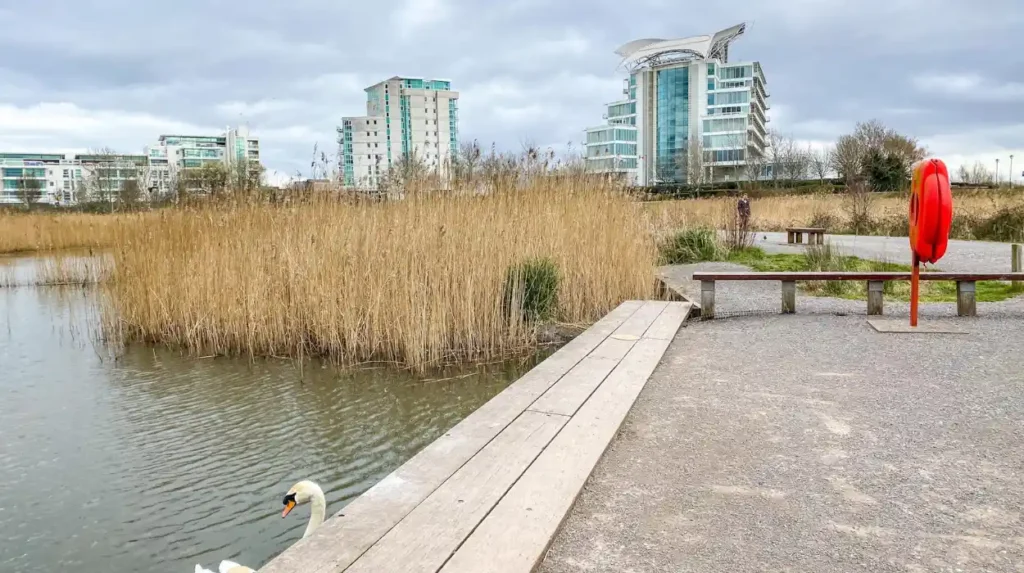
Cardiff Bay Wetland Reserve covers approximately 8 hectares of former salt marsh on the northern shore of Cardiff Bay. The reserve contains plants, fish, invertebrates and other wildlife. A gravel walkway, boardwalk and elevated viewing area provide access for wildlife observation.
Forest Farm and Melingriffith provide another summer option. The site includes the remaining section of the former Glamorganshire Canal, which historically connected Merthyr Tydfil with Cardiff. The freshwater canal supports kingfishers, herons and other wildlife.
Summer is also the strongest period for observing insects around wetland and meadow habitats. Cardiff’s wider biodiversity network includes flowering grasslands that provide food and shelter for bumblebees, hoverflies, beetles, butterflies and moths. Welsh Government guidance identifies meadow-like grasslands as important habitats for insects and other wildlife.
Cosmeston Lakes Country Park, near Penarth, expands the summer walking choice beyond Cardiff’s administrative boundary. The country park covers more than 100 hectares of land and water and contains woodland, lakes, meadows and wetland habitats. It received Local Nature Reserve status in May 2013.
Cosmeston’s woodland covers more than 20 hectares and contains broadleaved species including oak, ash, elm, hawthorn and blackthorn. Summer evenings provide opportunities to observe pipistrelle bats hunting over woodland and lake margins.
Summer walking requires attention to heat, hydration and exposed paths. Riverside and woodland routes provide different levels of shade. Early morning and evening walks can reduce exposure to the strongest daytime temperatures while also improving opportunities for observing some wildlife.
Where can walkers see autumn colour around Cardiff?
Autumn colour is strongest in Cardiff’s mature woodland and tree-rich parks, particularly Parc Cefn Onn, Bute Park and Cwm George and Casehill Woods. Autumn walks also reveal fungi, berries, changing grassland structure and increased squirrel activity across woodland habitats.
Autumn changes the appearance and ecological function of Cardiff’s woodland. Deciduous trees lose chlorophyll as the growing season ends, exposing yellow, orange, red and brown pigments. Leaf litter then becomes an important part of the woodland floor ecosystem.
Cwm George and Casehill Woods is specifically identified by the Woodland Trust as an autumn-colour destination. The site combines broadleaved woodland with grassland and newer native planting, creating different vegetation structures within one walking area.
Parc Cefn Onn also provides a strong autumn landscape because of its mature woodland character. Its historic planting includes conifers and ornamental shrubs alongside other trees, producing a more varied autumn environment than a single-species woodland.
Autumn is also a significant season for fungi. Woodland Trust guidance identifies autumn as a strong period for finding fungi and observing wildlife such as migrant birds, spiders and squirrels searching for food. Fungi should be observed without touching or collecting them because some species are poisonous.
Bute Park provides a central Cardiff option for autumn walks. Its approximately 130 acres of landscaped gardens and parkland form a substantial tree-rich landscape beside the River Taff. The park connects easily with the wider Taff Trail network.
Autumn also changes walking conditions. Fallen leaves can conceal uneven surfaces, while rain produces slippery paths and muddy sections. Suitable footwear becomes more important on woodland trails and unsealed routes.
Which Cardiff walks are best for winter wildlife?
Winter wildlife walks are strongest around Cardiff’s lakes, wetlands, rivers and mature woodland. Cosmeston Lakes provides wintering waterfowl, while Cardiff Bay Wetlands, Forest Farm and the Taff corridor provide year-round opportunities to observe birds and identify wildlife against more open vegetation.
Winter removes much of the dense foliage that conceals birds and woodland structure. This makes lakes, reedbeds and open river corridors particularly useful for wildlife observation.
Cosmeston Lakes is one of the strongest winter destinations near Cardiff. The park’s two principal lakes cover more than 12 hectares of open water. Winter attracts migrating wildfowl including teal, tufted duck, wigeon, pochard and shoveler. Bitterns also use the reedbeds during winter.
The west lake provides quieter habitat and supports grey herons and occasional egrets. Kingfishers remain resident throughout the year. Cormorants occur on both lakes and can often be seen swimming or drying their wings after fishing.
Cosmeston’s reedbeds provide another winter habitat. The site supports water rail, reed bunting and other wetland birds. The ranger service manages the reedbeds through rotational management and scrub removal to maintain habitat quality.
Winter also works well for woodland walks because the absence of leaves exposes trunks, branches and landscape contours. Parc Cefn Onn and Cwm George and Casehill Woods remain suitable for year-round walking, although wet conditions require greater attention to footwear and path conditions.
Short winter days also affect route planning. Walkers should begin longer routes earlier, check the forecast and allow additional time for slower surfaces. Natural Resources Wales advises visitors to check trail information because paths can be closed or diverted for maintenance, operational reasons or bad weather.
How does the Taff Trail connect Cardiff’s seasonal nature walks?
The Taff Trail provides Cardiff’s most significant continuous green walking corridor, linking Cardiff Bay with the River Taff, Bute Park, Pontcanna Fields, Forest Farm and northern Cardiff before continuing towards Brecon over approximately 55 miles.
The Taff Trail is a multi-use walking and cycling route between Cardiff and Brecon. Its Cardiff section follows the River Taff through Grangetown, Sophia Gardens, Pontcanna Fields, Hailey Park and Forest Farm before reaching Tongwynlais.
The route creates a seasonal progression through several habitat types. Cardiff Bay provides waterfront scenery. Central sections introduce landscaped parkland and riverside vegetation. Further north, the landscape becomes increasingly wooded and rural.
The full trail measures about 55 miles, or 88.5 kilometres. Walk Wheel Cycle Trust identifies approximately 70% of the route as traffic-free, although surfaces vary between tarmac, gravel and forest tracks.
Walkers do not need to complete the entire route. Cardiff’s sections work as shorter linear walks, while the route can also connect with other local paths.
The first eight miles northwards from Cardiff Bay provide a particularly accessible introduction to the Taff corridor. Visit Wales describes this section as passing through Cardiff’s urban green spaces before reaching the countryside around Castell Coch.
Seasonal conditions still influence route choice. Riverside sections can become wet after heavy rain, while shaded woodland sections retain moisture for longer. Checking trail information before departure remains important.
What wildlife can walkers expect to see around Cardiff?
Cardiff’s seasonal walking habitats support birds, mammals, insects, amphibians and diverse plants. Examples include kingfishers, herons, waterfowl, kestrels, buzzards, bats, butterflies, dragonflies, bluebells, wild garlic and woodland trees across parks, wetlands and nature reserves.
Wildlife varies according to habitat rather than simply season. Wetlands support waterbirds and aquatic species. Woodland supports birds, mammals, plants and fungi. Meadows support pollinating insects. Rivers provide habitats for fish and birds.
Cardiff Bay Wetland Reserve supports plants, fish, invertebrates and other wildlife across approximately 8 hectares of former salt marsh. Its boardwalk and viewing area provide designated places for observing wetland wildlife.
Forest Farm’s remaining canal section supports kingfishers and herons. The freshwater channel provides a valuable wildlife corridor within the urban landscape.
Cwm George and Casehill Woods supports a particularly diverse woodland community. Recorded species include hazel dormouse, kestrel, buzzard, great spotted woodpecker, comma butterfly and speckled wood butterfly. Plants include bluebell, dog’s mercury and enchanter’s nightshade.
Cosmeston provides another unusually varied wildlife environment. Its lakes support swans, mallards, coots, grebes, herons, cormorants, kingfishers and wintering ducks. Smaller ponds support amphibians, including smooth, palmate and great crested newts.
Wildlife observation is strongest when walkers move slowly and remain quiet. Binoculars allow observation without approaching animals. Photographers should avoid leaving established paths to obtain closer views.
How should visitors choose a Cardiff nature walk by season?
Choose woodland for spring flowers, open parks and rivers for summer, mature tree landscapes for autumn colour, and wetlands or lakes for winter birds. Match route length, terrain, daylight and weather conditions to the season before setting out.
Spring is best suited to flower-focused walks. Parc Cefn Onn, Cwm George and Casehill Woods and other woodland areas provide opportunities to observe bluebells, wild garlic, blossom and emerging foliage. Bluebells generally flower between late March and early May.
Summer provides longer daylight and stronger insect activity. Cardiff Bay Wetland Reserve, Forest Farm, Bute Park and riverside sections of the Taff Trail provide open or shaded options.
Autumn is ideal for tree identification, foliage and fungi. Bute Park, Parc Cefn Onn and Cwm George and Casehill Woods provide different forms of mature tree cover.
Winter favours wetland and lake observation. Cosmeston is particularly valuable because its lakes attract migrating wildfowl during winter. Cardiff Bay Wetlands and the Taff corridor also provide open habitats for birdwatching.
Weather should influence route selection throughout the year. Natural Resources Wales states that walking trails can experience closures and diversions, including because of bad weather. Visitors should check local information before following a specific route.
Accessibility also differs between sites. Waymarked trails provide clearer navigation, while woodland paths and permissive routes can include uneven ground. Natural Resources Wales grades its managed trails to indicate difficulty, duration and route characteristics.
What should visitors know before walking in Cardiff’s natural areas?
Visitors should check route conditions, follow local signs, remain on permitted paths, control dogs, take litter home and avoid disturbing wildlife. Seasonal weather changes affect surfaces and daylight, while conservation areas require careful behaviour to protect habitats and plants.
Natural Resources Wales promotes responsible access through the Countryside Code. Key principles include respecting other people, protecting the natural environment and preparing appropriately for outdoor conditions. Visitors should follow local signs and avoid damaging plants or disturbing wildlife.
Dogs require particular care around wildlife and livestock. Welsh Government guidance advises owners to keep dogs under control and follow the Countryside Code. This is especially important during periods when livestock and wildlife are vulnerable.
Visitors should keep to paths in sensitive woodland areas. Bluebell colonies are particularly vulnerable to trampling because the plants establish slowly and damaged leaves reduce their ability to photosynthesise.
Weather preparation is equally important. Waterproof clothing, suitable footwear and drinking water are practical requirements for longer walks. Winter routes require additional attention to daylight, while summer walks require protection from sun and sufficient water.
Some paths have specific access restrictions. Cwm George and Casehill Woods currently has pathway closures and diversions because of safety issues, demonstrating the importance of checking the latest site information before visiting.
Visitors should also distinguish between public footpaths, permissive paths and open-access land. Natural Resources Wales identifies public footpaths, bridleways, restricted byways and byways open to all traffic as categories of public rights of way.
Explore More Area Guide
Cardiff’s Ancient Trees: History, Wildlife and Protection
Best Wildlife Watching Places Near Cardiff: Forest Farm to Newport Wetlands
How do nearby country parks expand Cardiff’s seasonal walking options?
Nearby country parks extend Cardiff’s seasonal walking network into larger landscapes containing lakes, woodland, meadow, coast and wetland habitats. Cosmeston and Porthkerry provide especially varied environments within the Vale of Glamorgan for year-round nature walks.
Cosmeston Lakes Country Park covers more than 100 hectares of land and water. The site contains lakes, woodland, meadows, wetland habitats and conservation areas, with some areas designated as a Site of Special Scientific Interest.
The park opened to the public in 1978 and became a Local Nature Reserve in May 2013. Its history demonstrates how former industrial land can be transformed into accessible countryside. Two former quarries became the principal lakes, while former landfill areas were landscaped into wildflower meadows and grassland.
Porthkerry Country Park provides a different landscape. It covers 220 acres of woodland and meadowland within a sheltered valley leading towards a pebble beach and cliffs. The park includes nature trails, picnic areas and a café.
Porthkerry also has an active habitat restoration programme. The former golf course is being rewilded into a mixture of hedgerows, ponds, wildflower meadows and salt marsh. This creates additional habitat diversity and demonstrates the role of managed restoration in modern countryside access.
The wider Vale of Glamorgan contains coastal grassland, woodland, wetlands and ponds. Its coastal grasslands support species including clustered bellflower, purple gromwell and tuberous thistle, while woodland areas support trees, mammals and spring flowers such as bluebells and wild garlic.
These nearby sites are particularly useful for walkers seeking larger landscapes than Cardiff’s urban parks provide.
Why are seasonal nature walks important for Cardiff’s future?
Seasonal nature walks connect Cardiff residents and visitors with urban biodiversity, improve access to green infrastructure and support awareness of changing wildlife patterns. Protected habitats, connected green corridors and responsible recreation strengthen the city’s long-term environmental resilience.
Cardiff’s green spaces provide more than recreational routes. They form part of the city’s green infrastructure and support biodiversity, physical activity and climate resilience. Cardiff Council documentation identifies benefits including urban cooling, stormwater absorption, ecological connectivity and opportunities for healthier living.
Seasonal observation also creates useful environmental information. Woodland Trust’s Nature’s Calendar encourages people to record seasonal events such as flowering, leaf changes and wildlife activity. These observations contribute to understanding how environmental conditions affect the timing of natural events.
This is increasingly relevant as seasonal timing changes. Woodland Trust research notes that warmer spring temperatures influence flowering times and the development of woodland canopies. Bluebell flowering therefore provides one example of a natural event that can be tracked over time.
Cardiff’s nature walks also demonstrate the value of connected habitats. River corridors, wetlands, parks, woodland and meadows provide different ecological functions while giving people practical access to nature.
The city’s wider walking infrastructure supports this connection. The Taff Trail links Cardiff Bay with northern Cardiff and then continues towards Brecon, creating one of the most significant continuous recreational corridors in the region.
Responsible recreation remains central to this future. Staying on paths, controlling dogs, avoiding litter and respecting wildlife reduces pressure on sensitive habitats. Cardiff’s seasonal walking network therefore functions both as a leisure resource and as an accessible way to understand the city’s changing natural environment.
For visitors, the strongest approach is to select the habitat that matches the season. Spring favours woodland flowers, summer favours meadows and wetlands, autumn favours mature trees and fungi, and winter favours lakes, reedbeds and open birdwatching locations. Together, these environments make Cardiff a year-round destination for nature walks.
What are the best seasonal nature walks around Cardiff?
Popular options include Bute Park, the Taff Trail, Forest Farm, Parc Cefn Onn, Cardiff Bay Wetland Reserve, Cwm George and Casehill Woods, and nearby Cosmeston Lakes Country Park.