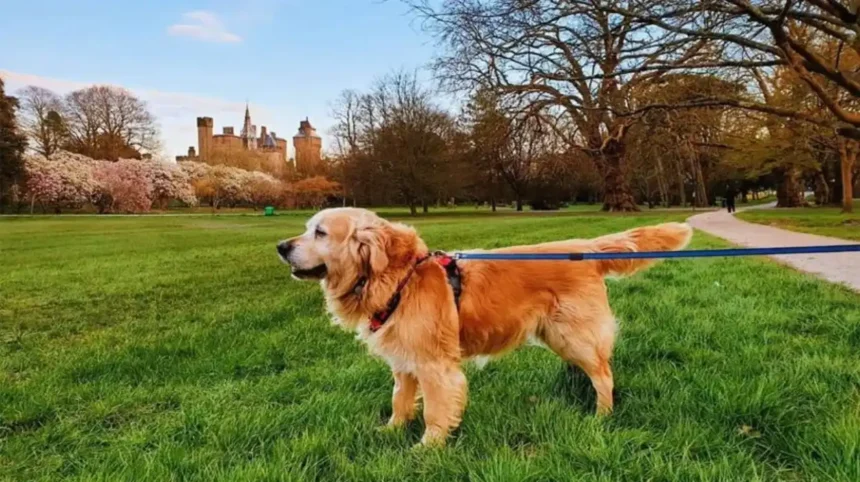
Cardiff is a strong city for dog owners because its neighbourhoods combine residential streets with parks, riverside routes, fields, woodland and waterfront paths. Visit Cardiff currently highlights Bute Park, Llandaff Fields, Roath Park, Victoria Park, Whitchurch Common, the Taff Trail and Cardiff Bay Wetlands Reserve among its scenic dog-walking locations.
- Which Cardiff areas are popular with dog owners?
- Why is Pontcanna popular with dog owners?
- Why do Llandaff and Llandaff North attract dog owners?
- Why are Penylan, Roath and Cyncoed popular with dog owners?
- Why do Whitchurch and Rhiwbina appeal to dog owners?
- Why is Radyr attractive to dog owners?
- Why is Canton useful for dog owners?
- Why is Cardiff Bay attractive for dog owners?
- Why are St Fagans and west Cardiff important for dog owners?
- Which Cardiff green spaces are especially important for dog walking?
- What dog-control rules should Cardiff dog owners know?
- How should dog owners choose between Cardiff neighbourhoods?
- How important are Cardiff’s parks to the city’s dog-owning communities?
- What makes Cardiff a practical city for dog owners?
The city also has an established network of parks and green spaces managed by Cardiff Council. The council provides a searchable list of parks and play areas across Cardiff, while its dog-control rules regulate fouling, leads and access to specified spaces.
For dog owners choosing where to live, the most useful distinction is not simply whether a neighbourhood contains a park. The practical factors include the size and character of nearby green space, access to walking routes, residential density, traffic, local facilities and the restrictions applying to dogs.
The following Cardiff areas stand out because of their combination of these features.
Which Cardiff areas are popular with dog owners?
Cardiff areas popular with dog owners include Pontcanna, Llandaff, Whitchurch, Rhiwbina, Penylan, Cyncoed, Radyr, Canton, Roath, Cardiff Bay and parts of west Cardiff. Their appeal comes from access to parks, riverside routes, open fields and established walking networks.
Popularity among dog owners is closely connected with access to outdoor space. Cardiff has a large network of parks and green spaces, and Visit Cardiff specifically promotes numerous locations for scenic dog walks. These include Bute Park, Llandaff Fields, Roath Park, Victoria Park, Cardiff Bay Barrage, Whitchurch Common and the Taff Trail.
Neighbourhood geography also matters. Areas beside large parks give residents convenient access to daily walks without requiring a car. Riverside neighbourhoods provide longer linear routes, while outer northern and western districts provide access to larger open landscapes.
Dog ownership also interacts with Cardiff’s wider transport and active-travel network. Cardiff Council’s current active-travel mapping covers neighbourhoods including Canton, Cyncoed, Llandaff, Penylan, Radyr, Rhiwbina, Riverside and Whitchurch.
This makes dog-friendly living a neighbourhood-level issue rather than a single-park issue.
Why is Pontcanna popular with dog owners?
Pontcanna is popular with dog owners because it sits beside Pontcanna Fields, Llandaff Fields and the Taff Trail while remaining close to central Cardiff. Its residential streets, independent businesses and nearby green spaces create convenient conditions for regular urban dog walking.
Pontcanna is a neighbourhood immediately northwest of Cardiff city centre. Visit Cardiff describes it as a leafy area with open parkland, independent businesses and easy access to the centre. Pontcanna Fields and nearby Bute Park are important recreational spaces.
Llandaff Fields forms another major advantage. The green space stretches between Pontcanna and Llandaff and contains wide lawns and tree-lined paths. It provides a straightforward setting for everyday walking rather than requiring a dedicated trip outside the neighbourhood.
The Taff Trail adds a longer-distance option. The route follows the River Taff through Cardiff and connects several recreational areas. Visit Cardiff specifically identifies the Taff Trail as dog friendly.
Pontcanna also has practical dog-owner facilities. Visit Cardiff lists several cafés and food venues in the area where dogs are welcomed under venue-specific conditions. Ground, for example, is identified as dog friendly.
The combination of green space and local amenities makes Pontcanna particularly relevant to residents who want daily walking opportunities close to shops and services.
Why do Llandaff and Llandaff North attract dog owners?
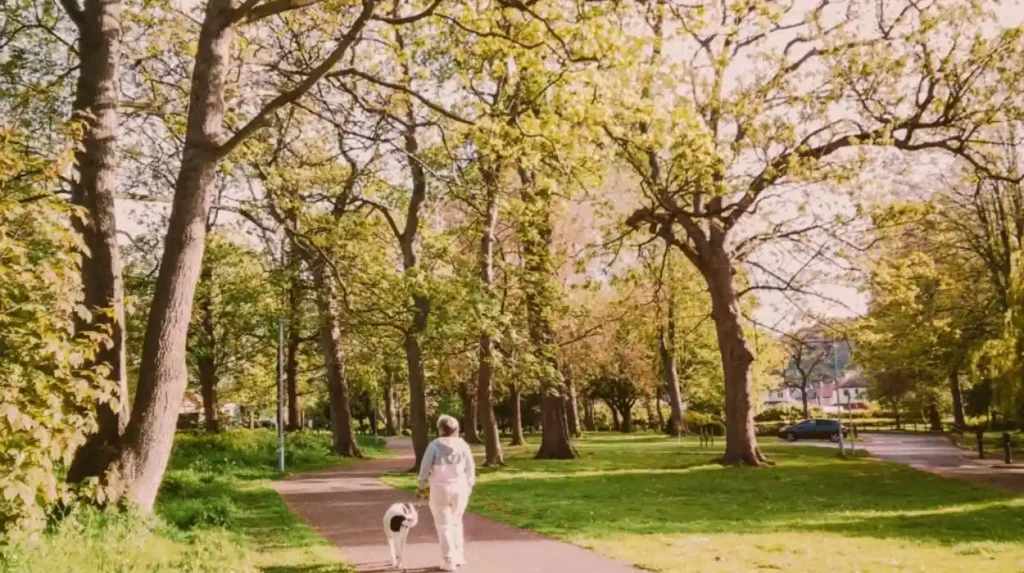
Llandaff and Llandaff North attract dog owners through access to Llandaff Fields, the River Taff corridor, local parks and established residential streets. Llandaff also provides connections towards Radyr and north-west Cardiff, extending walking opportunities beyond the immediate neighbourhood.
Llandaff is a historic Cardiff neighbourhood located beside the River Taff. Its central green-space feature is Llandaff Fields, which stretches south towards Pontcanna.
The fields contain broad lawns and tree-lined paths, making the area suitable for regular walking. Their location also connects two residential districts, creating a continuous recreational environment between Pontcanna and Llandaff.
The River Taff provides another walking corridor. Riverside routes are particularly useful for dog owners because they create linear journeys rather than repeated circuits around a small local park.
Cardiff Council’s active-travel network also identifies Llandaff and Llandaff North as established neighbourhoods within the city’s walking and cycling planning framework.
Llandaff has practical access to parking as well. Cardiff Council lists an 81-space car park at Llandaff High Street, including electric-vehicle charging bays.
For dog owners, the wider significance is connectivity. A resident can use local streets for short walks and move towards Llandaff Fields, the Taff corridor and neighbouring green spaces for longer outings.
Why are Penylan, Roath and Cyncoed popular with dog owners?
Penylan, Roath and Cyncoed benefit from proximity to Roath Park and Roath Park Lake and Gardens, established residential streets and improving active-travel connections. Their eastern Cardiff location provides access to one of the city’s best-known historic park landscapes.
Roath Park is one of Cardiff’s most recognisable green spaces. Cardiff Council’s conservation information identifies Roath Park and Roath Park Lake and Gardens as protected historic landscapes. The listed areas extend across Plasnewydd, Penylan and Cyncoed.
This geographic spread gives several nearby residential communities access to the same major recreational landscape.
Cardiff Council is also developing Cycleway 6 between the city centre and Roath Park through Plasnewydd, Penylan and Cyncoed. The route forms part of the city’s wider active-travel programme.
For dog owners, the important feature is the relationship between residential streets and public green space. Penylan and Cyncoed provide access to Roath Park while remaining within established residential districts.
Roath itself has a more urban character, with denser housing and commercial streets. Its proximity to Roath Park provides a significant outdoor counterpoint.
The wider Roath area also has practical transport and parking facilities. Cardiff Council lists Penylan Library car park with 50 spaces, including four Blue Badge bays and two electric-vehicle charging bays.
Dog owners still need to distinguish between open parkland and restricted facilities. Children’s play areas and other controlled locations are subject to Cardiff’s dog-control requirements.
Why do Whitchurch and Rhiwbina appeal to dog owners?
Whitchurch and Rhiwbina appeal to dog owners because north Cardiff combines established residential communities with parks, commons, open land and access towards the wider countryside. Whitchurch Common and nearby walking routes provide more spacious outdoor options than many inner-city neighbourhoods.
Whitchurch is one of north-west Cardiff’s established residential areas. Visit Cardiff includes Whitchurch Common among Cardiff’s scenic dog-walking locations.
The presence of a common is important because it provides a different recreational environment from formal gardens or heavily urbanised parks. Dog owners seeking longer walks can combine local streets with open-space routes.
Rhiwbina sits further east within north Cardiff. Cardiff Council’s active-travel mapping identifies Rhiwbina as one of the city’s established wards.
The neighbourhood also forms part of the northern residential belt that includes Heath, Lisvane, Llanishen, Cyncoed and Penylan. Cardiff Council uses these communities as part of its Cardiff North planning geography.
Whitchurch has practical parking infrastructure near its parks and commercial areas. Cardiff Council lists Merthyr Road car park with 73 spaces and Penlline Road car park with 57 spaces.
For dog owners, north Cardiff offers a useful balance between residential living and access to open space. The exact walking experience depends on the individual street and the distance from the nearest park or common.
Why is Radyr attractive to dog owners?
Radyr is attractive to dog owners because its north-west Cardiff location provides residential streets close to open countryside, river corridors and recreational routes. Its position beyond the denser central districts gives residents access to longer walks without travelling across the city.
Radyr and Morganstown form a north-west Cardiff community near the River Taff. Cardiff Council recognises Radyr as a distinct area within its active-travel network.
The neighbourhood’s location gives it a different relationship with open space from central districts. Routes extend towards surrounding countryside and the wider Taff corridor.
The nearby Taff Trail is particularly significant. Visit Cardiff identifies the Taff Trail among Cardiff’s scenic dog-walking routes.
Radyr also has a railway station, which connects the area with Cardiff’s wider transport network. This creates practical access for residents who combine walking with public transport.
The area is therefore relevant to dog owners who value longer outdoor routes rather than relying exclusively on small urban parks.
Radyr’s location also connects with Cardiff’s north-west growth and transport planning. Cardiff Council’s active-travel framework includes Radyr within its mapped network.
Why is Canton useful for dog owners?
Canton is useful for dog owners because it combines dense residential streets with easy access to Victoria Park, Llandaff Fields, Pontcanna Fields and western Cardiff walking routes. Its central-west location also places everyday shops and services within walking distance.
Canton is a densely developed neighbourhood west of Cardiff city centre. Its dog-owner appeal comes from access to several larger green spaces rather than from large open areas within every residential street.
Victoria Park is a major recreational destination for the western side of Cardiff. Visit Cardiff includes Victoria Park among the city’s scenic dog-walking locations.
Canton also sits close to Llandaff Fields and Pontcanna. This gives dog owners the ability to choose between different walking environments.
The area has substantial parking infrastructure. Cardiff Council lists Gray Street, Harvey Street, Severn Road and Wellington Street car parks in Canton, with capacities ranging from 39 to 110 spaces.
Canton’s urban density creates a different dog-walking pattern from Radyr or Rhiwbina. Residents often use local streets for short outings before reaching a larger park.
The neighbourhood also provides access to cafés, shops and other services, making it suitable for residents who combine dog walking with everyday errands.
Why is Cardiff Bay attractive for dog owners?
Cardiff Bay attracts dog owners through the Cardiff Bay Barrage, Wetlands Reserve, waterfront paths and extensive pedestrian areas. Its flat waterfront environment provides a distinct walking setting, while Visit Cardiff identifies the Barrage and Wetlands Reserve among Cardiff’s dog-walking destinations.
Cardiff Bay is the city’s major waterfront district. Its recreational landscape differs from traditional residential neighbourhoods because the main walking environment is formed by waterfront promenades, open areas and the Barrage.
The Cardiff Bay Barrage provides a prominent circular walking environment. Visit Cardiff lists it as a scenic dog-walking destination. The same guide also identifies Cardiff Bay Wetlands Reserve.
The waterfront also connects with Cardiff’s wider active-travel network. Cardiff Council’s Cycleway 3 connects the city centre with Cardiff Bay.
Dog owners need to consider crowd levels, cyclists, pedestrians and events when using busy waterfront routes. Cardiff Bay also contains commercial and residential areas, so local conditions change considerably from one section to another.
The area has substantial parking. Visit Cardiff lists 679 bays at the rebuilt Mermaid Quay and 238 at Havannah Street.
Cardiff Bay therefore suits owners who prefer long, relatively level waterfront walks and access to cafés and other amenities.
Why are St Fagans and west Cardiff important for dog owners?
St Fagans and west Cardiff provide access to larger green landscapes, countryside routes and recreational spaces beyond the central urban area. St Fagans, Pentyrch and surrounding communities offer a more rural walking environment while remaining within Cardiff’s administrative boundary.
St Fagans is a village in western Cardiff associated with the National Museum of History and extensive surrounding countryside. Visit Cardiff includes St Fagans among its dog-friendly visitor destinations, subject to site-specific rules.
The wider western area includes Pentyrch, Creigiau, Fairwater, Llandaff and Radyr. Cardiff Council groups these communities within its Cardiff West planning geography.
For dog owners, the defining feature is access to larger landscapes. Rural-edge neighbourhoods provide opportunities for longer walks and different terrain.
St Fagans also demonstrates why dog-friendly status must be checked at individual attractions. A neighbourhood can offer excellent outdoor walking while a particular heritage attraction has separate rules about where dogs are permitted.
Visit Cardiff currently lists St Fagans National Museum of History among Cardiff’s dog-friendly attractions but advises visitors to check restrictions with staff on arrival.
This distinction is important for responsible dog owners planning a complete day out.
Which Cardiff green spaces are especially important for dog walking?
Cardiff’s important dog-walking green spaces include Bute Park, Llandaff Fields, Roath Park, Victoria Park, Whitchurch Common, the Taff Trail, Cardiff Bay Barrage and Cardiff Bay Wetlands Reserve. Each provides a different combination of paths, lawns, water and open space.
Bute Park is one of Cardiff’s major central green spaces. Its location beside the River Taff makes it particularly significant for residents of central Cardiff, Pontcanna and surrounding neighbourhoods.
Llandaff Fields provides broad lawns and tree-lined paths between Pontcanna and Llandaff.
Roath Park provides a historic park and lake environment serving eastern Cardiff. Cardiff Council identifies Roath Park and Roath Park Lake and Gardens within its conservation framework.
Victoria Park serves western Cardiff, particularly communities around Canton and nearby districts.
Whitchurch Common provides an open-space alternative in north-west Cardiff.
The Taff Trail is different because it is a long-distance route rather than a single enclosed park. Visit Cardiff identifies it specifically among Cardiff’s scenic dog walks.
Cardiff Bay adds waterfront walking through the Barrage and Wetlands Reserve.
Together, these spaces create a city-wide network of recreational environments for dog owners.
What dog-control rules should Cardiff dog owners know?
Cardiff dog owners must remove dog faeces, follow applicable lead requirements and keep dogs out of specified restricted areas. Cardiff’s 2021 Dog Control Order covers public spaces and includes restrictions involving children’s play areas, games areas and school premises.
Cardiff Council’s Public Spaces Protection (Dog Control) Order 2021 establishes requirements for responsible dog ownership in designated public spaces. It requires the person in charge of a dog to remove faeces immediately after defecation.
The order also allows authorised officers or police officers to require a dog to be put on a lead where restraint is reasonably necessary to prevent nuisance or behaviour likely to cause alarm, distress or disturbance to people or animals.
Dogs are prohibited from specified enclosed children’s play areas, games areas and school premises under the order.
Cardiff Council also explains that dog-control measures can require owners to keep dogs on leads, prevent dogs entering particular locations and limit the number of dogs handled by professional walkers.
These rules are important when comparing neighbourhoods. A park being popular with dog walkers does not mean every section is unrestricted.
Dog owners should check signs at individual parks and facilities before allowing a dog off lead.
How should dog owners choose between Cardiff neighbourhoods?
Dog owners choosing a Cardiff neighbourhood should assess walking distance to green space, route variety, traffic conditions, park restrictions, local services and access to longer trails. Pontcanna, Llandaff, north Cardiff, Radyr and Cardiff Bay each provide different combinations of these factors.
A suitable neighbourhood depends on the owner’s daily routine and the dog’s exercise requirements.
Pontcanna and Canton provide strong access to central parks and local amenities. Llandaff provides a combination of historic residential streets, Llandaff Fields and the Taff corridor.
Penylan, Roath and Cyncoed benefit from Roath Park and the eastern active-travel network. Whitchurch and Rhiwbina provide access to northern open spaces.
Radyr and west Cardiff provide stronger connections with the city’s rural edge. Cardiff Bay offers waterfront walking and access to the Barrage and Wetlands Reserve.
Distance is also important. A large park several miles away is less useful for a dog owner who needs several short walks every day than a smaller green space located immediately beside the home.
Traffic and pedestrian density also influence walking conditions. Central neighbourhoods provide more services but often have busier streets.
Owners should also check whether their preferred walking location has seasonal restrictions, designated dog-control zones or enclosed facilities where dogs are prohibited.
Explore More Area Guide
Best Quiet Neighbourhoods in Cardiff: Llandaff, Lisvane & Rhiwbina
Historic Maps Showing Cardiff’s Growth and Urban History
How important are Cardiff’s parks to the city’s dog-owning communities?
Cardiff’s parks are central to dog-owning communities because they provide accessible outdoor space within established residential districts. Cardiff Council manages a broad network of parks and green spaces, while Cardiff University research also identifies dog walking as a regular use of local green areas.
Cardiff Council maintains a city-wide network of parks and green spaces and provides a public search facility for local parks and play areas.
Academic work from Cardiff University also demonstrates the role of dog walking in local outdoor environments. Research connected with Trelai Park describes the area as being used by sports clubs, dog walkers and families.
A later Cardiff University report from 2024 again described Trelai Park as a well-used location for sports teams and dog walkers. The research also identified significant archaeological remains beneath the park, including a Bronze Age roundhouse.
This illustrates a wider point about Cardiff’s green spaces. Parks serve multiple groups simultaneously. Dog owners share them with families, runners, cyclists, sports clubs and other visitors.
Responsible dog ownership therefore remains essential. Cardiff Council provides a system for reporting dog fouling and other park problems, reinforcing the importance of maintaining shared public spaces.
What makes Cardiff a practical city for dog owners?
Cardiff is practical for dog owners because its neighbourhoods connect residential areas with parks, rivers, trails, commons and waterfront spaces. The city also provides dog-friendly visitor facilities, active-travel routes and formal dog-control rules that establish expectations for shared public spaces.
The strongest feature is variety. Dog owners can choose urban parks, historic landscapes, riverside routes, commons and waterfront paths without leaving Cardiff.
The city’s compact geography also helps. Pontcanna is close to central Cardiff and its surrounding green spaces. Roath and Penylan connect with Roath Park. Canton connects with Victoria Park and western green spaces. Llandaff and Radyr provide access to the Taff corridor.
North Cardiff provides access to Whitchurch Common and other open spaces, while Cardiff Bay provides a different waterfront environment.
Visit Cardiff currently promotes Cardiff as a dog-friendly destination, listing dog-friendly attractions, restaurants, hotels and scenic walks.
The long-term relevance of these neighbourhoods also depends on how Cardiff manages its green infrastructure. Cardiff Council’s active-travel programme is designed around connections between communities and major destinations, including routes through Roath, Llandaff, Cardiff Bay and other districts.
For dog owners, this means neighbourhood quality extends beyond the immediate doorstep. Parks, paths, rivers, transport connections and public-space management collectively shape the everyday walking environment.
Cardiff’s most dog-oriented neighbourhoods are therefore best understood as communities connected to green infrastructure rather than simply places containing one dog-friendly park.
Which Cardiff areas are popular with dog owners?
Pontcanna, Llandaff, Canton, Roath, Penylan, Cyncoed, Whitchurch, Rhiwbina, Radyr and Cardiff Bay are popular areas for dog owners. Their appeal comes from nearby parks, riverside routes, commons, trails and waterfront walking areas.