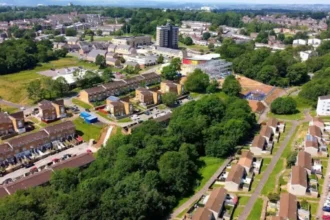
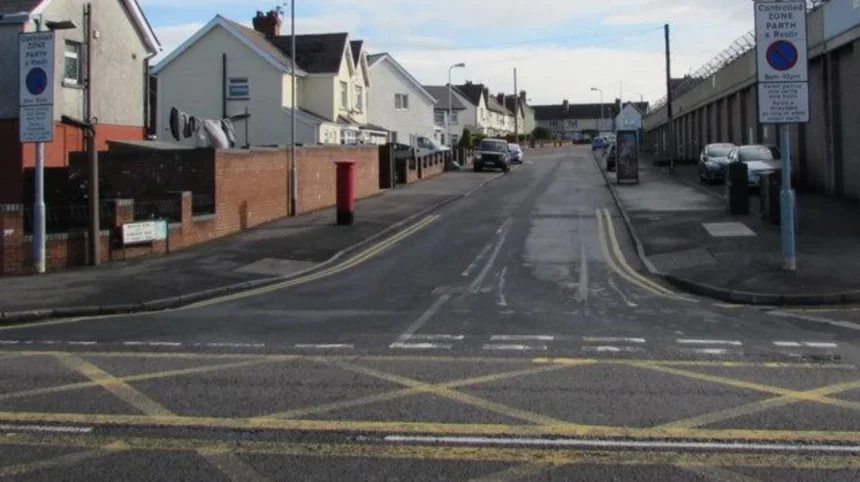
Cardiff has a structured system of resident parking zones, controlled parking zones and digital parking permits designed to manage limited on-street space. The system gives eligible residents priority in designated areas while controlling visitor, commuter, business and short-stay parking.
- What are resident parking zones in Cardiff?
- Why does Cardiff use resident parking zones?
- How do Cardiff resident parking zones work?
- Which Cardiff areas have controlled parking zones?
- How do residents apply for a Cardiff parking permit?
- Who qualifies for a resident parking permit in Cardiff?
- How many resident permits can one Cardiff property have?
- Can visitors park in Cardiff resident parking zones?
- What parking bays can Cardiff residents use with a permit?
- What happens if a driver parks incorrectly in a Cardiff resident zone?
- Can Blue Badge holders park in Cardiff resident parking zones?
- How are new resident parking zones introduced in Cardiff?
- What is changing in Cardiff’s approach to resident parking?
- What should Cardiff residents check before renting or buying a home?
- How can residents avoid common Cardiff parking problems?
- What is the overall purpose of Cardiff’s resident parking system?
A resident parking zone is an area where parking restrictions apply to on-street spaces and eligible residents use permits to park under local rules. Cardiff Council operates resident parking schemes alongside Controlled Parking Zones (CPZs), which control kerbside parking through signs, marked bays, waiting restrictions and permit requirements.
The rules differ between Cardiff zones. A permit does not automatically guarantee a parking space outside a home. Drivers must always follow the signs and restrictions applying to the particular street and zone. Cardiff Council also operates digital permits through MiPermit.
What are resident parking zones in Cardiff?
Resident parking zones in Cardiff are designated streets or areas where parking is controlled to prioritise eligible residents and manage limited kerbside space. Residents use permits, while visitors and other drivers follow separate parking rules.
Cardiff Council uses resident parking schemes to manage demand for on-street parking. These schemes form part of a wider parking management system that includes controlled parking zones, limited-waiting bays, pay-and-stay bays and permit-holder spaces.
A Controlled Parking Zone is an area where on-street parking is controlled during specified periods. Cardiff Council states that motorists entering a CPZ must check signs showing when restrictions apply. Most Cardiff CPZs operate seven days a week, although operating hours differ between zones.
Resident parking controls address several sources of parking pressure. These include commuter parking, visitor parking, local business activity and demand from residents who need to park near their homes.
The system also supports wider transport objectives. Cardiff Council identifies improved residential parking conditions, reduced commuter parking, walking, cycling and public transport use as reasons for introducing controlled parking zones.
The Welsh Government’s terminology defines a CPZ as an area where kerbside space is controlled through waiting or loading restrictions or designated parking spaces.
Why does Cardiff use resident parking zones?
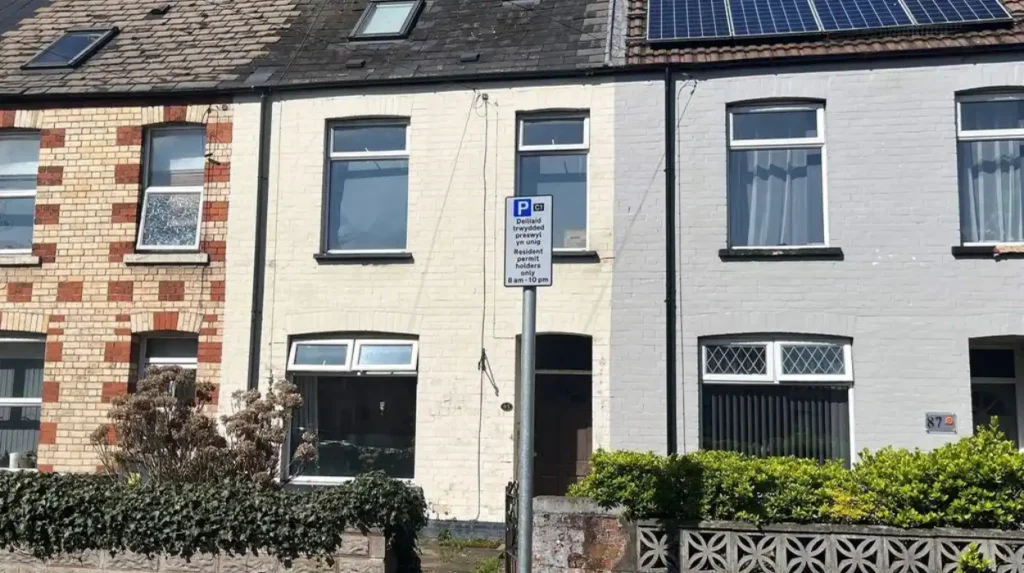
Cardiff uses resident parking zones to manage competition for on-street spaces, reduce commuter parking, improve highway safety and give eligible residents better access to parking near their homes without guaranteeing an individual parking space.
Parking demand is uneven across Cardiff. Residential streets close to employment centres, universities, shopping areas, transport corridors and major destinations experience greater pressure than streets with lower activity.
Controlled parking zones provide a mechanism for managing that pressure. Cardiff Council states that CPZs are introduced to simplify restrictions, save parking space for residents and visitors, discourage commuter parking, encourage sustainable transport and improve highway safety.
Resident parking is therefore not simply a permit system. It is a form of kerbside management. Kerbside space is a limited public resource, and the council allocates different sections for different purposes.
A typical controlled area can contain resident permit-holder bays, limited-waiting bays and pay-and-stay spaces. Some zones also contain spaces reserved for specific users, such as doctors. The exact arrangement depends on the individual zone.
Cardiff’s current parking strategy also links controlled parking with wider city transport planning. The council’s City Parking Plan divides the city into a city and civic centre, inner area and outer area, with parking restrictions tailored to local conditions.
How do Cardiff resident parking zones work?
Cardiff resident parking zones operate through local parking restrictions, signs, designated bays and digital permits. Eligible residents obtain permits linked to their property and vehicle, then park only where their permit and the street signs allow.
The basic mechanism is straightforward. A driver enters a controlled area and checks the zone signs. The signs identify operating times and relevant restrictions.
During controlled hours, parking is permitted only according to the applicable bay, waiting restriction or permit rule. A resident permit does not override yellow lines, loading restrictions, suspended bays or spaces reserved for another category of user.
Cardiff Council states that valid resident permits allow holders to park in permit-holder-only bays or areas. Some CPZs also allow permit holders to use shared-use limited-waiting or pay-and-stay bays.
This distinction is important because not every parking space in a residential zone is automatically available to every permit holder.
For example, Cardiff’s C1 Cathays East, C2 Cathays Central and C3 Cathays West zones contain resident permit-holder bays, limited-waiting bays and pay-and-stay bays. Permit rules apply according to the particular zone and its signs.
The system therefore operates at two levels. The first is the zone-level restriction, which establishes the operating hours and general parking framework. The second is the street-level restriction, which determines exactly where a vehicle can park.
Which Cardiff areas have controlled parking zones?
Cardiff has controlled parking zones covering specific residential and inner-city areas, including parts of Cathays, Gabalfa, Plasnewydd, Fairoak Road, Wedal Road and Butetown. Each zone has its own parking hours and permit arrangements.
Cardiff Council publishes an active list of controlled parking zones. Current examples include B5A Plasnewydd South, C1 Cathays East, C2 Cathays Central, C3 Cathays West, C4 Gabalfa, C5 Fairoak Road, C6 Wedal Road and K1 Butetown South.
These zones demonstrate why residents should not rely on a single city-wide parking rule.
For example, B5A Plasnewydd South has controlled parking from 8am to 10pm, Monday to Sunday, excluding Christmas Day. Its permit parking is enforceable at all times.
C1 Cathays East has general parking controls from 8am to 6pm, Monday to Sunday, while permit parking is enforceable from 8am to 10pm. C2 Cathays Central and C3 Cathays West follow the same broad pattern.
C4 Gabalfa also has general controls from 8am to 6pm, with permit parking enforceable from 8am to 10pm. C6 Wedal Road has general controls from 8am to 6pm, while permit parking is enforceable at all times.
K1 Butetown South operates general controls from 8am to 8pm, with permit parking enforceable at all times.
These examples show why checking the individual Cardiff zone is essential.
How do residents apply for a Cardiff parking permit?
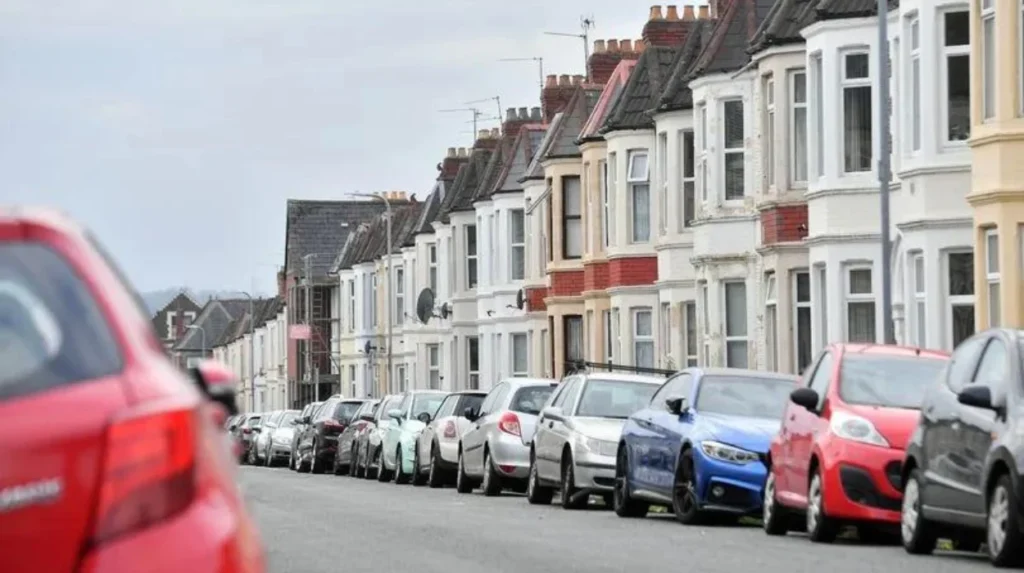
Eligible Cardiff residents apply through MiPermit using their primary address, council tax information, vehicle registration and proof that the vehicle is kept at the property. Resident permits are available for different periods.
Cardiff Council operates its resident parking permit applications through MiPermit, a digital parking management system. Applicants need a MiPermit account, a valid council tax number, vehicle registration details and evidence connecting the vehicle to the applicant’s address.
A resident’s address must be their primary address. The council currently limits residents to two resident permits per property. Permits can be purchased for 3, 6, 9 or 12 months.
For standard resident permits, Cardiff Council currently lists the following charges:
- First resident permit: £8.75 for 3 months, £17.50 for 6 months, £26.25 for 9 months or £35 for 12 months.
- Second resident permit: £22.50 for 3 months, £45 for 6 months, £67.50 for 9 months or £90 for 12 months.
These prices are Cardiff Council’s published resident permit charges and should be checked before application because parking charges and schemes can change.
Residents who do not have access to their council tax number can use the council’s permit registration process and provide alternative proof of address. Examples include a tenancy agreement, council tax document, utility bill or bank statement.
Who qualifies for a resident parking permit in Cardiff?
Eligibility depends on the property’s participation in a resident parking scheme and the applicant’s circumstances. Cardiff does not automatically provide permits to every property because some homes are excluded under parking scheme rules.
Living in Cardiff does not by itself create an entitlement to a resident parking permit.
The property must be located within an eligible residential parking scheme. The applicant must also satisfy the council’s requirements concerning residence and vehicle use. Cardiff Council’s terms state that resident permits are issued to residents of properties within a residential parking permit scheme.
Certain properties are excluded from resident permit eligibility. Cardiff Council identifies several categories, including properties developed after specified dates, properties with off-street car parks, properties on private roads, unauthorised developments, student accommodation and car-free developments.
The specific development date can depend on the parking scheme. Cardiff Council’s current general information identifies properties developed after 1 September 2011 among exclusions, while newer scheme documentation can contain different cut-off dates. For example, the Plasnewydd Central D1 scheme identifies properties built, developed or converted after 1 September 2025 as excluded.
This distinction matters for people moving into newly built homes.
Before renting or purchasing a property, residents should therefore verify the property’s parking eligibility directly with Cardiff Council rather than relying on information from a landlord, estate agent or previous resident. Cardiff Council specifically advises checking eligibility before signing a tenancy agreement or buying a property.
How many resident permits can one Cardiff property have?
A Cardiff property can generally have up to two resident parking permits under the standard resident permit system. The first and second permits have different published charges, with the second permit costing more.
Cardiff Council currently limits standard resident permits to two per property. The pricing structure recognises the difference between the first and second permit.
The first annual resident permit costs £35, while the second annual resident permit costs £90 under the published standard tariff. Shorter permit periods are also available.
The two-per-property limit is separate from the question of whether a specific address is eligible.
A property must first qualify for the relevant resident parking scheme. The vehicle and applicant must then satisfy the permit conditions.
The council’s resident parking terms also state that a resident cannot hold a resident permit for more than one property or zone. The permit is connected to the resident’s property and is subject to proof of residence.
This structure prevents permits from becoming transferable parking privileges across different residential areas.
Can visitors park in Cardiff resident parking zones?
Visitors can park in Cardiff controlled zones when the relevant parking rules permit them to do so. Residents can also use visitor parking arrangements where available, with Cardiff providing visitor permits and zone-specific rules.
Visitor parking is an important part of the Cardiff resident parking system. Resident schemes are not designed solely for households with permanent vehicles.
Cardiff Council provides visitor parking arrangements alongside resident permits. The available visitor permit system depends on the relevant zone and scheme.
The wider City Parking Plan also identifies visitor parking changes, including daily visitor permits and hourly permits for flexibility.
Visitors without a permit must follow the parking rules displayed in the zone. Depending on the street, this can involve pay-and-stay parking or limited-waiting parking.
A visitor cannot assume that an empty resident bay is available for unrestricted parking. A permit-holder-only space remains restricted during its operating period.
This distinction is particularly important in areas with high residential density, universities, businesses and city-centre destinations.
What parking bays can Cardiff residents use with a permit?
A resident permit can be used in eligible permit-holder parking areas, while some Cardiff zones also allow permit holders to use shared limited-waiting or pay-and-stay bays. Specific-user bays remain restricted to authorised vehicles.
Cardiff’s parking system uses different types of on-street spaces.
Resident permit-holder bays are intended for vehicles with the relevant permit.
Limited-waiting bays allow parking for a specified period under the displayed conditions.
Pay-and-stay bays require payment unless the particular permit rules provide an exemption.
Specific-user bays are reserved for defined categories. Cardiff Council gives doctors’ bays as an example.
The permitted use varies between zones.
For example, C1, C2 and C3 allow resident permit holders to use resident permit-holder bays, limited-waiting bays and pay-and-stay bays under the applicable rules. C4 provides resident permit holders access to resident permit-holder and limited-waiting bays, while C5 also includes pay-and-stay bays.
A driver must therefore check the local sign before parking.
What happens if a driver parks incorrectly in a Cardiff resident zone?
Incorrect parking in a Cardiff controlled zone can result in a Penalty Charge Notice. Cardiff has civil parking enforcement powers, allowing authorised enforcement officers to enforce parking restrictions under the Welsh civil enforcement framework.
Cardiff has operated civil parking enforcement since 5 July 2010. GOV.WALES records Cardiff’s parking enforcement powers and identifies the 2010 commencement date.
Civil parking enforcement operates under the legal framework established by the Traffic Management Act 2004 and Welsh civil enforcement regulations. The legislation provides the framework for civil enforcement areas and parking contraventions.
A Penalty Charge Notice can result when a driver contravenes an applicable parking restriction.
Common problems include parking in a permit-only area without the required permit, exceeding a limited-waiting period, failing to pay in a pay-and-stay bay, or parking in a restricted location.
Yellow-line restrictions also remain important. Cardiff Council states that double yellow lines, dropped footways and kerb-crossing restrictions apply 24 hours a day in its controlled parking zones.
A resident permit does not provide permission to ignore these restrictions.
Can Blue Badge holders park in Cardiff resident parking zones?
Blue Badge holders receive specific parking concessions in Cardiff, but the badge does not permit unrestricted parking. Cardiff allows Blue Badge holders to use certain resident, limited-waiting and pay-and-stay spaces subject to local rules.
Cardiff Council states that Blue Badge holders can park in resident permit-holder bays or areas for up to three hours, provided the badge and parking clock are correctly displayed.
The council also states that Blue Badge holders can use limited-waiting and pay-and-stay bays free of charge and without time limits, with the badge displayed correctly.
The Welsh Government stresses that the Blue Badge is not a licence to park anywhere. Badge holders must still follow local restrictions and cannot assume that every restricted location is exempt.
Examples of restrictions that require particular attention include loading restrictions, pedestrian crossings, clearways and spaces reserved for specific users.
The safest approach is to check the road signs and the specific Cardiff parking rules before leaving the vehicle.
How are new resident parking zones introduced in Cardiff?
Cardiff Council normally consults on and designs a controlled parking zone before implementation. The council states that consultation and implementation generally take one to two years, followed by signs, bays and enforceable restrictions.
Introducing a new CPZ is a formal process rather than an immediate permit decision.
Cardiff Council states that it normally takes one to two years to consult on and implement a controlled parking zone.
The council first assesses parking conditions and develops a scheme. Its design principles include identifying safe kerbside parking space, marking parking bays or yellow lines and positioning permit-holder parking near residential properties.
Near shopping areas and other busy locations, the council can allocate more space to limited-waiting and pay-and-stay parking where short-stay demand is significant.
Quieter residential streets can use permit parking areas to reduce the need for extensive signs and yellow lines.
The process connects parking policy with local land use, road safety and transport demand.
What is changing in Cardiff’s approach to resident parking?
Cardiff is moving toward a broader city-wide parking management approach that uses controlled parking zones, digital permits and tailored restrictions for different parts of the city, while prioritising residents and reducing commuter parking.
Cardiff’s City Parking Plan provides a strategic framework for future parking management. It divides the city into the city and civic centre, inner area and outer area and proposes tailored parking restrictions for local conditions.
The plan identifies permit categories for residents, students, businesses, carers and community premises. It also states that vehicles over 2.4 tonnes will face higher on-street resident permit costs and vehicles over 3.5 tonnes will not be eligible for permits under the plan.
The plan also reinforces the principle that a parking permit does not guarantee a space outside a property. Its purpose is to improve parking availability and reduce commuter parking rather than reserve an individual bay for each household.
Digital parking management is another significant development. Cardiff’s resident permit applications use MiPermit, reducing reliance on physical permits and allowing permit details to be managed electronically.
Cardiff’s parking system is therefore becoming increasingly data-led, digital and zone-specific.
What should Cardiff residents check before renting or buying a home?
Anyone renting or buying a Cardiff property should check resident parking eligibility, the exact zone, permit limits, operating hours and property exclusions before committing to the address because parking entitlement is not automatically included with residential occupation.
Parking eligibility is an important housing consideration in Cardiff.
A property inside a controlled parking area is not automatically eligible for a resident permit. Cardiff Council lists exclusions involving off-street parking, private roads, student accommodation, car-free developments and certain newer properties.
Residents should also check whether the street operates a resident permit scheme or a different controlled parking arrangement.
The number of vehicles in a household matters because Cardiff’s standard resident system permits up to two resident permits per property.
Operating hours also matter. One zone can have different restrictions from another. B5A Plasnewydd South, C1 Cathays East and K1 Butetown South demonstrate the range of operating arrangements across Cardiff.
The practical implication is clear: parking eligibility should be checked at property level, not inferred from the wider neighbourhood.
Explore More Area Guide
Blue Badge Parking in Cardiff: Rules, Bays and Car Parks
Cardiff Airport Parking Guide: Prices, Car Parks & Drop-Off
How can residents avoid common Cardiff parking problems?
Residents can avoid most parking problems by confirming zone eligibility, checking street signs, keeping permit details current, using only authorised bays and verifying visitor arrangements before guests arrive.
The most important rule is to check the sign every time parking conditions are unclear.
A resident permit is linked to the relevant property and zone. Cardiff Council’s terms state that residents cannot hold a resident permit for more than one property or zone.
Residents should also keep vehicle registration information accurate. Digital permit systems depend on the vehicle registration recorded against the permit.
Visitors should use the correct visitor arrangement rather than parking automatically in a resident bay.
Drivers should distinguish between resident bays, shared-use bays, limited-waiting bays, pay-and-stay spaces and specific-user bays.
Yellow lines require separate attention because a resident permit does not remove their restrictions.
These basic checks reduce the risk of receiving a Penalty Charge Notice and ensure that resident parking spaces remain available for the households and users they are intended to serve.
What is the overall purpose of Cardiff’s resident parking system?
Cardiff’s resident parking system manages scarce kerbside space by combining permits, controlled parking zones, waiting restrictions and enforcement. Its central purpose is to balance residential parking with visitor, business, commuter and transport needs.
Resident parking zones are part of Cardiff’s wider transport management system rather than an isolated permit scheme.
The system allocates kerbside space according to local demand. Residents receive access through eligible permits. Visitors use visitor arrangements or other legal parking spaces. Businesses and other authorised users can receive specific permits where schemes allow them.
Cardiff’s current system also reflects a longer development of civil parking enforcement. The city has had civil parking enforcement powers since July 2010, while Welsh legislation provides the broader legal framework for enforcing parking contraventions.
The current direction is increasingly digital and zone-specific. MiPermit manages applications and digital permits, while Cardiff Council continues to develop controlled parking zones according to local parking demand.
For residents, the central principle is simple: a permit gives permission to park under defined conditions, not ownership of a parking space. The exact zone, street signs, operating hours and bay markings determine where and when a vehicle can legally park.
What is a resident parking zone in Cardiff?
A resident parking zone is an area where Cardiff Council controls on-street parking through resident permits, parking bays, waiting restrictions and other parking rules. Eligible residents can park according to the conditions displayed for their zone.