Cardiff’s forgotten buildings reveal the city’s transformation from a small market town into one of the most important industrial ports in Britain. Former dock offices, Victorian schools, historic chapels, disused railway structures and abandoned industrial sites preserve evidence of the people, industries and communities that shaped the Welsh capital.
- What Are the Forgotten Buildings in Cardiff?
- Why Does Cardiff Have So Many Forgotten Historic Buildings?
- Which Forgotten Dock Buildings Reveal Cardiff’s Industrial Past?
- What Happened to Cardiff’s Historic Coal Exchange?
- How did the Coal Exchange support international trade?
- Why did Cardiff’s coal-trading buildings lose their original purpose?
- Which Forgotten Religious Buildings Reflect Cardiff’s Multicultural History?
- How did the Norwegian Church become part of Cardiff’s heritage?
- What does St Nicholas Greek Orthodox Church tell us about Butetown?
- What happened to Cardiff’s former industrial chapels?
- Which Forgotten Railway and Industrial Structures Survive in Cardiff?
- Why are former railway facilities important to Cardiff’s history?
- How did industrial decline change Cardiff’s built environment?
- Where Can Visitors Find Overlooked Historic Buildings in Cardiff?
- How Are Forgotten Buildings in Cardiff Recorded and Protected?
- What is the difference between a listed building and a forgotten building?
- How do historians identify buildings that have disappeared?
- Why Does Preserving Forgotten Buildings Matter for Cardiff’s Future?
- How does adaptive reuse protect historic buildings?
- What challenges threaten Cardiff’s lesser-known heritage?
- How can Cardiff residents help preserve forgotten buildings?
- What Do Forgotten Buildings Tell Us About Cardiff’s Identity?
These buildings are important because Cardiff’s history extends beyond Cardiff Castle, the civic buildings at Cathays Park and the redeveloped waterfront at Cardiff Bay. Industrial expansion, coal exports, railway construction, religious change and urban redevelopment left behind structures that are less visible in everyday city life.
Some historic buildings remain standing and have been adapted for new purposes. Others survive as ruins, archaeological remains or protected structures. Understanding their locations, original functions and conservation status helps explain how Cardiff developed and why its architectural heritage requires continued protection.
What Are the Forgotten Buildings in Cardiff?
Forgotten buildings in Cardiff are historic structures that have disappeared from public attention, lost their original purpose or survived outside the city’s main tourist attractions. Examples include former dock buildings, old railway facilities, industrial premises and historic religious buildings that document Cardiff’s social and economic development.
The term “forgotten buildings” describes a broad heritage category rather than an official architectural designation. It includes surviving buildings that receive limited public attention, disused structures awaiting new uses, demolished buildings documented in historical records and ruins that remain part of Cardiff’s urban landscape.
A forgotten building does not necessarily stand empty. Former industrial premises often become offices, cultural venues, apartments or commercial spaces. Their original functions become less obvious as new uses replace the activities that once defined them.
Cardiff’s industrial history provides the main context for understanding this heritage. During the nineteenth century, the town expanded rapidly as South Wales became a major coal-producing region. The development of the docks, railways, factories and associated housing transformed the urban landscape.
Historic buildings also reflect changes in religion, education, local government and public health. Chapels served industrial communities, schools accommodated population growth, and public institutions responded to the demands of an expanding urban population.
The distinction between a neglected building and a forgotten building is important. Neglect concerns physical condition, while historical obscurity concerns public awareness. A well-maintained former warehouse can be historically overlooked, while a ruined structure can remain widely recognised.
Cardiff’s lesser-known buildings therefore provide a way to explore architectural history beyond the landmarks most frequently visited by tourists.
Why Does Cardiff Have So Many Forgotten Historic Buildings?
Cardiff has numerous overlooked historic buildings because industrial expansion, economic decline, transport changes and urban redevelopment repeatedly altered the city. Examples include former coal-export facilities in Butetown, redundant railway infrastructure and religious buildings affected by changing population patterns and worship practices.
Cardiff’s transformation accelerated during the nineteenth century. The opening of the Glamorganshire Canal in 1794 improved the movement of iron and other industrial goods between the Merthyr Tydfil area and Cardiff. Later railway developments increased the capacity to transport coal from the South Wales valleys to the coast.
The construction and expansion of Cardiff Docks created demand for warehouses, offices, engineering works, transport facilities and housing. Butetown and neighbouring districts developed alongside this maritime economy. Cardiff became an internationally connected port, attracting workers and merchants from Wales and overseas.
This growth generated buildings for specialised purposes. Dock offices coordinated commercial activity, railway structures managed freight movements, and industrial premises supported the handling and processing of goods. Many of these functions disappeared when shipping technology, transport networks and commercial practices changed.
The twentieth century brought further changes. Coal exports declined, traditional industries contracted, and the docks lost much of their former commercial importance. Cardiff Bay subsequently underwent major regeneration, including the creation of new residential, leisure and commercial districts.
Redevelopment frequently changed the relationship between historic buildings and their surroundings. Some structures were demolished to make way for roads, housing and infrastructure. Others survived through conversion, while smaller buildings remained outside the main regeneration projects.
Religious and educational buildings also experienced changing circumstances. Congregations declined or merged, schools moved into larger facilities, and older institutional buildings became unsuitable for modern requirements.
These processes explain why Cardiff’s forgotten buildings are spread across different neighbourhoods. Their histories reflect changes in the economy, population, technology and public policy rather than a single period of decline.
Which Forgotten Dock Buildings Reveal Cardiff’s Industrial Past?
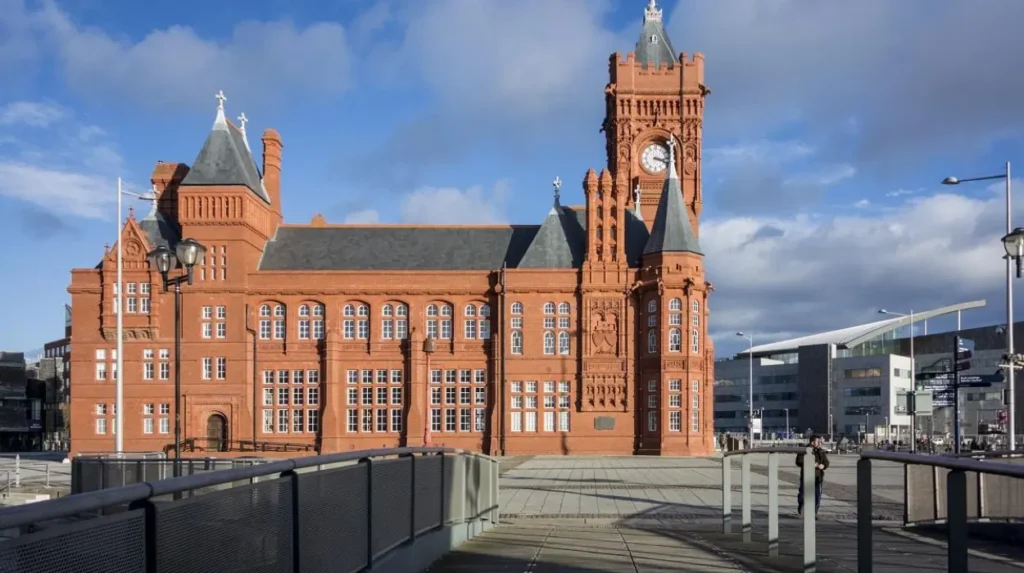
Cardiff’s docklands preserve evidence of the port’s industrial expansion through surviving warehouses, former dock offices, historic trading premises and altered dock basins. Examples include Bute Warehouse, the former Coal Exchange, the Pierhead Building and historic structures around Mount Stuart Square in Butetown.
The docklands provide some of the clearest evidence of Cardiff’s economic transformation. The Royal Commission on the Ancient and Historical Monuments of Wales, known as RCAHMW, documents the relationship between the docks, their associated buildings and the surrounding communities.
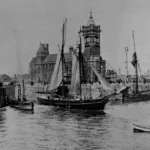
Cardiff’s first Bute West Dock opened in 1839. Bute East Dock followed in stages between 1855 and 1859. Roath Basin opened in 1874, Roath Dock in 1887 and Queen Alexandra Dock in 1907. These developments expanded the facilities available to the South Wales coal trade.
What remains of Bute Warehouse?
Bute Warehouse is an important surviving industrial structure associated with Bute East Dock. The dock originally covered approximately 45 acres and incorporated coal-loading facilities designed to handle substantial export volumes. The Royal Commission identifies Bute Warehouse as the only original building fronting the dock to survive.
The warehouse helps explain the physical infrastructure required to operate a major coal-exporting port. Warehouses protected goods, dock structures supported loading operations, and cranes moved heavy materials between land and vessels.
The surrounding landscape has changed considerably. Sections of the original dock basin were filled in and redeveloped, while surviving water and historic structures remain within a modern urban environment.
Why is Mount Stuart Square historically important?
Mount Stuart Square developed as a centre for shipping and coal-company offices. Its buildings represent the commercial infrastructure behind Cardiff’s international trade. The square also contains the Coal Exchange, a building associated with the city’s historic coal market.
The Coal Exchange was central to the commercial organisation of the coal trade. Merchants and other participants used the premises to conduct business connected with the South Wales coal industry.
The building’s importance extends beyond its architecture. It documents how Cardiff connected inland mining districts with international markets. Coal exports generated demand for shipping services, financial transactions, transport infrastructure and administrative premises.
The surviving dock buildings and altered industrial sites around Butetown are therefore valuable records of the city’s commercial development.
What Happened to Cardiff’s Historic Coal Exchange?
Cardiff’s Coal Exchange in Mount Stuart Square served as a major centre for international coal trading during the port’s industrial peak. The building survives as a historic landmark, documenting the commercial systems that connected South Wales coalfields with shipping companies and overseas markets.
The Coal Exchange belongs to the period when Cardiff became a leading global coal-exporting port. Coal from the South Wales valleys travelled by railway to the docks, where it was loaded onto ships bound for markets around the world.
According to Cardiff Harbour Authority, the port’s coal exports reached more than 13 million tonnes in 1913. The Coal Exchange was associated with the pricing and trading arrangements that supported this large-scale industry.
How did the Coal Exchange support international trade?
The Coal Exchange provided a dedicated setting for commercial negotiations. Buyers, sellers and brokers operated within a trading system that connected coal production with shipping schedules and international demand.
Coal quality, quantities, prices and delivery arrangements formed essential parts of the trade. The Exchange represented the commercial side of an industrial network that included mines, railways, docks, warehouses and vessels.
The building’s trading floor is an important feature of its historical identity. The Royal Commission’s records describe the Coal Exchange as a surviving structure within the former dockland commercial district.
Why did Cardiff’s coal-trading buildings lose their original purpose?
The decline of the coal trade reduced the need for specialised commercial premises. After the Second World War, international demand and shipping patterns changed, while competing coal producers and the growth of containerised transport altered the port economy.
Cardiff Harbour Authority records that coal exports had virtually ceased by the 1960s. This economic change affected the docks and the businesses that depended on them.
Former trading buildings consequently faced a different future. Some remained useful for other activities, while others required restoration, conversion or new investment.
The Coal Exchange demonstrates why historic buildings should be understood within their economic context. Its significance comes from the commercial system it represents as well as the physical structure that survives.
Which Forgotten Religious Buildings Reflect Cardiff’s Multicultural History?
Cardiff’s historic religious buildings reflect the communities formed by maritime trade, migration and industrial employment. Examples include the Norwegian Church in Cardiff Bay, St Nicholas Greek Orthodox Church in Butetown and former chapels associated with Welsh-speaking industrial communities.
The port attracted sailors, merchants and workers from many parts of the world. Cardiff’s Harbour Authority records that at least 50 nationalities settled in the dockland area during the port’s development. This international population shaped local religious and cultural life.
Religious buildings provided more than places of worship. They supported community gatherings, cultural traditions, education and contact with countries of origin. Their architectural forms also reflect the resources, beliefs and practical needs of the communities that built them.
How did the Norwegian Church become part of Cardiff’s heritage?
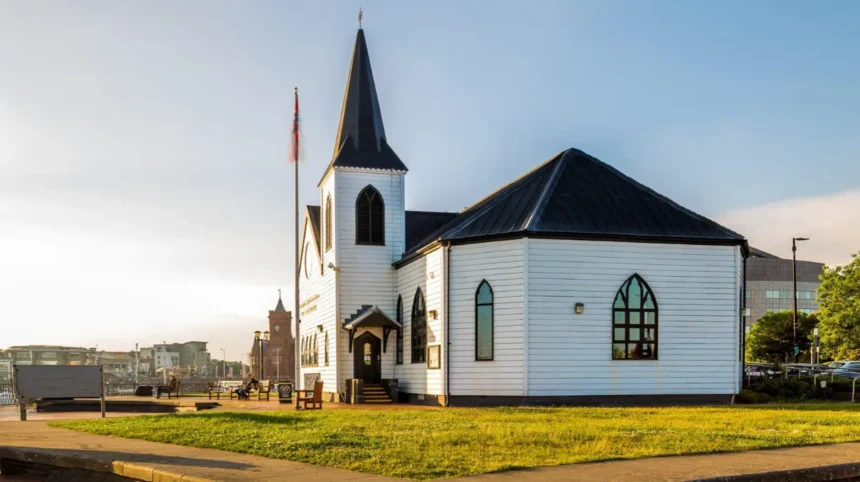
The Norwegian Church Arts Centre dates to 1868, when a church was established to serve Norwegian seafarers visiting Cardiff Docks. Its original timber frame was shipped from Norway, and corrugated iron cladding helped make the building suitable for a dockside location where relocation was possible.
The church became a social and religious centre for Norwegian sailors and the wider Norwegian community. Its importance grew alongside Cardiff’s coal-exporting economy, which brought Norwegian vessels into the port.
After the decline of the docks, the church closed in 1974 and deteriorated. Plans for dockland redevelopment later threatened the structure. The Norwegian Church Preservation Trust was established in 1987 to support its rescue, and the building was dismantled before being reconstructed at its present waterfront location.
The church reopened on 8 April 1992. It now operates as an arts centre, preserving the building’s historic identity while providing a contemporary cultural function.
Its history illustrates a successful form of heritage conservation: retaining a historic building’s recognisable character while adapting its use to changing urban conditions.
What does St Nicholas Greek Orthodox Church tell us about Butetown?
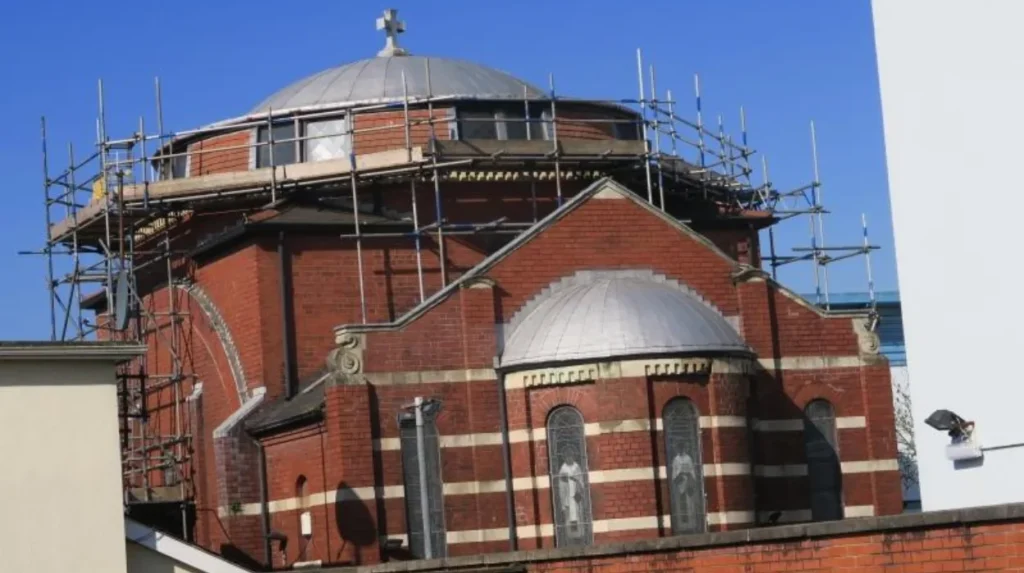
St Nicholas Greek Orthodox Church reflects the history of Cardiff’s Greek maritime community. A decision to establish a Greek church was taken in 1873, and the present church was built in 1906 before being consecrated in 1919. It stands on Greek Church Street in Butetown.
The church represents the religious and cultural life that developed alongside the port. Greek sailors and other members of the community contributed to the creation of a permanent place of worship, helping establish a visible connection between Cardiff and the wider maritime world.
Its continuing religious role also distinguishes it from buildings that survive only as architectural remains. Historic religious buildings retain significance through community use, ceremonies, cultural traditions and the preservation of collective memory.
What happened to Cardiff’s former industrial chapels?
Welsh industrial communities built chapels to support religious worship, education and social organisation. These buildings frequently occupied prominent positions in neighbourhoods shaped by mining, manufacturing and dock work.
Changes in population, religious participation and patterns of worship affected the long-term use of many chapels. Congregations merged, buildings closed and some premises acquired different functions.
The history of an individual chapel depends on its location and documentary record. Historical maps, denominational archives, local records and heritage surveys help establish when a building opened, how it was used and whether it survives.
Former chapels are particularly important because their architecture records the social organisation of working-class Cardiff. Their significance extends beyond the buildings themselves to the communities that financed, maintained and used them.
Which Forgotten Railway and Industrial Structures Survive in Cardiff?
Cardiff’s former railway and industrial structures document the transport systems that supported coal exports, manufacturing and urban growth. Examples include historic dockside railway alignments, surviving industrial buildings, former loading facilities and archaeological remains recorded by the Royal Commission on the Ancient and Historical Monuments of Wales.
Railways transformed Cardiff by connecting the port with mining and industrial districts throughout South Wales. Their infrastructure included tracks, sidings, bridges, loading facilities, workshops and goods-handling areas.
The expansion of the docks required efficient movement between railways and ships. Industrial premises also depended on transport links to receive raw materials and distribute finished products. These connected systems shaped the location and design of buildings throughout the docklands.
Why are former railway facilities important to Cardiff’s history?
Railway facilities reveal how Cardiff’s industrial economy operated beyond the waterfront. Coal had to move from inland production areas to export terminals, while imported materials travelled in the opposite direction.
The development of these transport networks contributed to Cardiff’s rapid urban expansion. Historic records describe growth from the 1830s onwards as demand for shipping facilities increased. The Royal Commission documents how canals and railways connected the South Wales valleys with the port.
The physical evidence of railway activity is not always immediately recognisable. A former railway alignment can survive as a road, path, boundary or strip of redeveloped land. A building associated with freight handling can also remain in use without its original function being apparent.
Historical Ordnance Survey maps are particularly useful for identifying these changes. Comparing maps from different periods reveals former track layouts, industrial plots, dock boundaries and buildings that disappeared during redevelopment.
How did industrial decline change Cardiff’s built environment?
Industrial decline reduced the need for facilities designed specifically for coal transport and heavy manufacturing. As freight operations changed, some buildings became redundant, while others were adapted to accommodate new businesses.
The closure of East Moors Steelworks in 1978, with the loss of 3,200 jobs, illustrates the scale of industrial change affecting South Cardiff. Cardiff Harbour Authority identifies the closure as a significant setback for the local economy.
The resulting changes were both economic and architectural. Industrial sites lost their original equipment, transport connections were altered, and former working areas became candidates for redevelopment.
Recording these structures before alteration or demolition is essential. Measured drawings, photographs, historic maps and building surveys preserve evidence that disappears when industrial sites are cleared.
Where Can Visitors Find Overlooked Historic Buildings in Cardiff?
Visitors can explore overlooked historic architecture in Cardiff Bay, Butetown, Mount Stuart Square and other older neighbourhoods. Examples include the Bute Warehouse, former dockland commercial premises, St Nicholas Greek Orthodox Church and the Norwegian Church Arts Centre, which illustrates the survival of maritime heritage.
Cardiff’s historic buildings are distributed across the city rather than concentrated in one heritage district. Cardiff Bay contains prominent industrial and maritime landmarks, while Butetown preserves evidence of the communities that grew around the port.
The best approach is to examine individual buildings alongside their surroundings. A warehouse, former office or religious building becomes easier to understand when viewed in relation to the dock basin, street plan or neighbouring structures that originally supported its use.
What can visitors discover around Cardiff Bay?
The Pierhead Building is a major surviving landmark associated with Cardiff’s dock administration. Built in 1896, it originally served as offices for the Bute Dock Company. Its architectural design reflects the wealth and ambition of the port during the industrial era.
The surrounding waterfront combines historic buildings with modern development. This contrast helps visitors understand how the docklands changed from a working industrial landscape into a mixed-use urban district.
The Norwegian Church offers a different perspective. Its modest scale and maritime origins reflect the everyday needs of seafarers rather than the administrative power of major dock companies.
Visitors should check access arrangements before entering individual buildings. Some structures operate as public venues, while others remain private, have restricted access or are visible only from public spaces.
Why should visitors explore Mount Stuart Square?
Mount Stuart Square contains important evidence of the commercial activity associated with Cardiff’s historic port. Its former shipping and coal-company offices demonstrate how businesses organised the movement and sale of industrial goods.
The Coal Exchange provides a focal point for understanding the district’s trading history. Nearby buildings and streets help establish the wider setting in which coal merchants, shipping interests and dock administrators worked.
Visitors can also observe how redevelopment has changed the historic relationship between buildings and open space. The survival of individual structures alongside newer development demonstrates that urban heritage is often a combination of retained architecture, altered sites and historical traces.
How Are Forgotten Buildings in Cardiff Recorded and Protected?
Forgotten buildings in Cardiff are documented through historic environment records, architectural surveys, historical maps and conservation records. Examples include Coflein, the national historic environment record maintained by RCAHMW, and Cadw’s statutory listing system, which identifies buildings of special architectural or historic interest.
Heritage recording establishes what survives, documents historical significance and supports decisions about repairs, planning and redevelopment. The process is important for buildings that lack public recognition because reliable records provide evidence for their historical value.
Coflein contains records of buildings, archaeological sites, industrial remains and historic landscapes across Wales. Its Cardiff entries include former docks, warehouses and religious buildings, providing a starting point for investigating structures that are no longer used for their original purposes.
What is the difference between a listed building and a forgotten building?
A forgotten building is a descriptive term, whereas a listed building has formal statutory recognition for its special architectural or historic interest. A historic structure can be forgotten by the public without being listed, and a listed building can remain well known.
In Wales, Cadw administers the system for listing buildings of special architectural or historic interest on behalf of the Welsh Ministers. Listing recognises a building’s significance and provides additional controls over changes that affect its special character.
Listing does not mean that a building is abandoned, and it does not automatically prevent all alterations. Proposed works involving a listed building generally require listed building consent where the legal requirements apply.
Historic buildings outside the listing system can still have archaeological, social or local importance. Their value is assessed through available historical evidence, architectural features, community associations and the wider context of the site.
How do historians identify buildings that have disappeared?
Historians compare documentary evidence with physical remains. Historical maps, photographs, property records, planning documents, newspapers and architectural surveys help identify the location and function of lost structures.
The Royal Commission’s Coflein records often provide site descriptions, historical references and links to archival material. These records are particularly useful for industrial sites where redevelopment has altered the original layout.
For example, a historic map can establish the location of a former warehouse, while a later aerial photograph shows whether the building survived into the twentieth century. Planning and archaeological reports can then provide evidence about its demolition or alteration.
This research method separates verified historical information from assumptions based solely on architectural appearance. It also helps establish whether a structure survives in its original position, has been relocated or exists only in documentary records.
Why Does Preserving Forgotten Buildings Matter for Cardiff’s Future?
Preserving forgotten buildings protects Cardiff’s architectural diversity, industrial history and community identity. Examples include recording former dock warehouses, maintaining historic religious buildings and adapting redundant industrial premises for new uses while retaining their significant architectural features and historical evidence.
Historic buildings provide physical evidence of economic and social changes that written records alone cannot fully communicate. Their materials, layouts and construction techniques reveal how people worked, worshipped, traded and organised urban life.
Cardiff’s industrial heritage also explains the city’s present geography. The docks shaped transport connections, commercial districts and residential neighbourhoods. Their redevelopment changed the waterfront, but surviving structures continue to connect contemporary Cardiff with its maritime past.
How does adaptive reuse protect historic buildings?
Adaptive reuse means giving an existing building a new function while retaining important elements of its historic fabric. Examples include converting a former warehouse into workspaces, using an old industrial building as a cultural venue or adapting a historic church for community activities.
The Norwegian Church Arts Centre demonstrates this approach. Its relocation and reconstruction preserved the building’s recognisable architectural form and maritime associations while establishing a new public function.
Adaptive reuse also requires careful assessment. Building owners and conservation professionals must consider structural stability, moisture, fire safety, accessibility and the suitability of modern services. Proposed alterations must respect any applicable heritage protections.
Not every building is suitable for conversion. Some structures have severe structural damage, contaminated sites or layouts that prevent economically viable reuse. In such cases, detailed historical recording and the retention of significant remains become important considerations.
What challenges threaten Cardiff’s lesser-known heritage?
Historic buildings face several conservation challenges, including deterioration, water penetration, neglected maintenance, redevelopment pressures and the cost of specialist repairs. Industrial buildings also require assessment for structural defects and potential contamination associated with previous uses.
Buildings outside prominent tourist areas face an additional challenge: limited public awareness. Without clear historical records or community interest, their significance can remain overlooked during changes to the urban environment.
Effective conservation begins with accurate documentation. Owners, planners, heritage organisations and local communities need reliable information about a building’s condition, historical function and architectural importance before decisions are made about its future.
Public interpretation also helps. Historic photographs, information panels, digital archives and guided walks make lesser-known buildings more accessible without requiring every site to become a visitor attraction.
How can Cardiff residents help preserve forgotten buildings?
Residents can contribute by identifying overlooked historic structures, sharing family photographs, consulting local archives and reporting potential heritage concerns to the relevant authorities. Examples include documenting a former chapel, researching an old industrial building or recording changes to a historic streetscape.
Historical research should rely on verifiable evidence. Photographs benefit from dates and location information, while recollections become more useful when compared with maps, newspaper archives and official records.
Residents should avoid entering derelict buildings without permission. Unoccupied structures can contain unstable floors, hazardous materials and other risks. Publicly accessible viewpoints and official heritage resources provide safer ways to investigate their history.
Community interest also helps preserve the stories associated with buildings. Recording the experiences of former dock workers, religious congregations and local businesses adds social context to architectural evidence.
What Do Forgotten Buildings Tell Us About Cardiff’s Identity?
Forgotten buildings show how Cardiff developed through maritime trade, industrial employment, migration and urban regeneration. Examples include dockside warehouses, the Coal Exchange, the Norwegian Church and historic religious buildings in Butetown, each preserving evidence of a different aspect of the city’s past.
Cardiff’s identity developed through successive periods of change. Its early role as a settlement and trading centre expanded as canals and railways connected the town with the industrial valleys of South Wales. Dock construction then established the port as a major centre for coal exports.
The commercial success of the port created demand for offices, warehouses, loading facilities and transport infrastructure. It also attracted international communities whose religious and cultural buildings became part of Cardiff’s urban landscape.
The decline of coal exports and the redevelopment of former docklands changed how these structures were used. Some disappeared, some survived through restoration, and others remain visible as fragments of the industrial landscape.
These changes demonstrate why forgotten buildings deserve attention. They are evidence of the systems and communities that shaped the Welsh capital, including parts of its history that are less visible in modern streets and waterfront developments.
Cardiff’s historic environment is not limited to its most recognisable landmarks. Former industrial premises, dockland buildings, religious structures and archaeological remains also explain how the city became what it is today. Recording, understanding and conserving this heritage helps ensure that Cardiff’s future development remains connected to its history.