Cardiff’s abandoned and lost places reveal how Wales’s capital changed from a coal-exporting port into a modern city. Former docks, demolished railway buildings, vanished churches and disused industrial sites preserve evidence of the people, industries and communities that shaped Cardiff’s development.
- What are the abandoned and lost places of Cardiff?
- Why does Cardiff have so many abandoned and lost historic places?
- What happened to Cardiff’s historic docks and abandoned waterfront?
- How did Bute West Dock disappear?
- What remains of Bute East Dock?
- Why is Queen Alexandra Dock historically important?
- Where can visitors discover Cardiff’s lost dockside buildings?
- What makes the Bute Warehouse significant?
- How has the former Bute West Dock area changed?
- What can visitors learn from the Pierhead Building?
- Which famous Cardiff buildings have been demolished?
- What happened to the former Westgate Street fire station?
- Why have Cardiff’s historic chapels disappeared?
- What happened to the former Cardiff railway buildings?
- What industrial ruins reveal Cardiff’s working-class history?
- Why is East Moors Steelworks important?
- How did industrial decline affect Butetown and Tiger Bay?
- What do surviving warehouses and pumping stations tell researchers?
- Where are Cardiff’s lost buildings in Roath and the city centre?
- What happened to Albany Buildings on Wellfield Road?
- Why are Cardiff’s former public-service buildings worth documenting?
- How can people research abandoned and lost places in Cardiff?
- Where can researchers find historic photographs and records?
- How can historic maps reveal a demolished building?
- Can visitors legally explore abandoned places in Cardiff?
- How does Cardiff protect its surviving historic buildings?
- Why does Cardiff’s lost heritage matter for the city’s future?
The city’s industrial decline transformed its southern waterfront during the twentieth century. By the 1960s, coal exports had virtually ceased, and the closure of East Moors Steelworks in 1978 accelerated the economic decline of the surrounding industrial districts. Regeneration subsequently replaced many derelict sites with housing, offices, cultural attractions and public spaces.
Today, Cardiff’s lost heritage includes buildings that have disappeared completely, structures that survive in altered forms, and former industrial landscapes that retain traces of their original purpose. Understanding these places helps residents and visitors explore the city’s history beyond its best-known landmarks.
What are the abandoned and lost places of Cardiff?
Abandoned and lost places of Cardiff are former buildings, industrial facilities, transport sites and historic landscapes that have fallen out of use, deteriorated, been demolished or been transformed through redevelopment. Examples include the filled-in Bute West Dock, the former Westgate Street fire station site and historic dockside structures in Butetown.
An abandoned place is a site or building that is no longer used for its original purpose and remains vacant, derelict or only partly maintained. A lost place is broader: it includes buildings that have been demolished, landscapes that have been filled in, and historic structures whose original appearance has disappeared through redevelopment.
Cardiff contains both categories. Some former industrial sites retain old warehouses, dock walls or surviving structures. Other locations are recognised only through historical maps, archival photographs, planning records and archaeological documentation.
The distinction matters because not every historic site described as abandoned remains physically accessible or even exists today. A demolished building belongs to Cardiff’s lost architectural heritage, while a disused warehouse represents surviving physical heritage if the structure remains.
The Royal Commission on the Ancient and Historical Monuments of Wales maintains Coflein, a national online record of historic buildings, archaeological sites and industrial remains. Its records help researchers identify former dock facilities and understand how individual sites changed over time.
Why does Cardiff have so many abandoned and lost historic places?
Cardiff’s lost places largely reflect industrial change, declining coal exports, changing transport systems, wartime damage, urban redevelopment and the replacement of outdated buildings. The city’s former docks experienced particularly significant changes after international coal demand declined and modern shipping practices reshaped port operations.
Cardiff’s growth accelerated during the nineteenth century as coal and iron from the South Wales Valleys moved towards the port. The Glamorganshire Canal, opened in stages from 1794, helped transport industrial goods from inland communities. Railways and expanding dock facilities subsequently increased Cardiff’s importance as an export centre.
The construction of new docks created warehouses, offices, cranes, rail connections and workers’ housing. These buildings supported an interconnected industrial economy. When the economy changed, many of those facilities lost their original purpose.
After the Second World War, coal exports declined as international markets shifted and other countries developed their own industrial capacity. Container shipping also changed the requirements of maritime trade. By the 1960s, Cardiff’s traditional coal-export economy had contracted sharply.
The consequences extended beyond individual buildings. Empty industrial land, reduced employment and neglected dock infrastructure affected communities across southern Cardiff. Some buildings were demolished because they no longer served a practical function, while others were removed to accommodate new roads, commercial developments and residential schemes.
The establishment of the Cardiff Bay Development Corporation in April 1987 marked a major phase of regeneration. Its remit covered approximately 1,100 hectares of former docklands in Cardiff and Penarth. Regeneration transformed much of the waterfront, but it also changed the physical relationship between the modern city and its industrial past.
What happened to Cardiff’s historic docks and abandoned waterfront?
Cardiff’s historic docks expanded during the nineteenth and early twentieth centuries to support coal exports, but several facilities later became obsolete. Bute West Dock was filled in and built over, while parts of Bute East Dock survive around Atlantic Wharf and Queen Alexandra Dock remains operational.
The docks are among the most important examples of Cardiff’s changing industrial landscape. Their development connected the city to international trade and supported the expansion of Butetown, a distinctive maritime community known historically as Tiger Bay.
How did Bute West Dock disappear?
Bute West Dock opened on 8 October 1839 under the patronage of the second Marquess of Bute. It provided a major new shipping facility for the rapidly expanding coal trade.
The dock measured approximately 4,000 feet (1,219 metres) long and 200 feet (61 metres) wide. Its seaward entrance was known as the Oval Basin, a name that remains associated with the waterfront’s history.
The original dock has since been filled in and built over. The former entrance basin is now associated with Roald Dahl Plass, a public space in Cardiff Bay. The change illustrates how an industrial waterway can disappear physically while retaining a place in the city’s geography and historical records.
What remains of Bute East Dock?
Bute East Dock opened in stages between 1855 and 1859. It enclosed approximately 45 acres of water and was designed to handle large volumes of coal. Historical records describe fifteen coal staiths at the dock, with an initial handling capacity of around one million tons annually.
By 1890, the facility had expanded to include thirty coal staiths, three ballast cranes and twenty-two hydraulic cranes. These installations demonstrate the scale of the machinery and infrastructure required to move coal from railway wagons to ships.
Much of the original dockside environment has disappeared. However, part of the dock survives as a water feature in the Atlantic Wharf area, and the Bute Warehouse remains an important surviving building associated with the historic dock.
Why is Queen Alexandra Dock historically important?
Queen Alexandra Dock opened in 1907 as the final major expansion of Cardiff Docks. The facility covered approximately 52 acres and provided direct access to the sea through a locked entrance.
Although the surrounding docklands underwent major redevelopment, Queen Alexandra Dock remains in use. Its survival shows that industrial heritage does not always require a site to become abandoned. Some historic facilities continue to perform commercial functions even after the wider economy has changed.
The Royal Commission’s Coflein records also identify surviving elements associated with the dock, including a pumping station and sections of transit sheds dating from the 1930s. These structures preserve evidence of the infrastructure that supported cargo handling.
Where can visitors discover Cardiff’s lost dockside buildings?
Visitors can explore Cardiff’s dockland history around Cardiff Bay, Butetown, Atlantic Wharf and the waterfront near the Senedd. These areas contain surviving historic buildings, altered industrial landscapes and public spaces occupying former dock facilities, although many original structures have disappeared.
Cardiff Bay is one of the most accessible places to understand the relationship between industrial decline and modern regeneration. Its waterfront combines historic architecture with newer public buildings and redeveloped land.
What makes the Bute Warehouse significant?
The Bute Warehouse is a surviving industrial building associated with Bute East Dock. Its importance comes from its connection to the former dock system and its role in preserving the physical character of Cardiff’s maritime past.
The building provides a useful reference point for understanding how warehouses supported coal exports and associated commercial activities. Historical records identify it as the only original building fronting the former Bute East Dock to survive.
Its continued presence contrasts with the filled-in dock entrances and demolished industrial structures elsewhere in the area.
How has the former Bute West Dock area changed?
The former Bute West Dock area illustrates the extent of Cardiff Bay’s transformation. Industrial water space and dock infrastructure gave way to public areas, commercial buildings, housing and cultural destinations.
Roald Dahl Plass occupies the area associated with the old dock entrance basin. The Senedd and other waterfront developments sit within a broader landscape shaped by successive phases of maritime activity and regeneration.
Visitors should distinguish between historic locations and surviving historic fabric. Standing on a former dock site offers insight into the city’s industrial geography, but it does not mean the original dock structures remain visible.
What can visitors learn from the Pierhead Building?
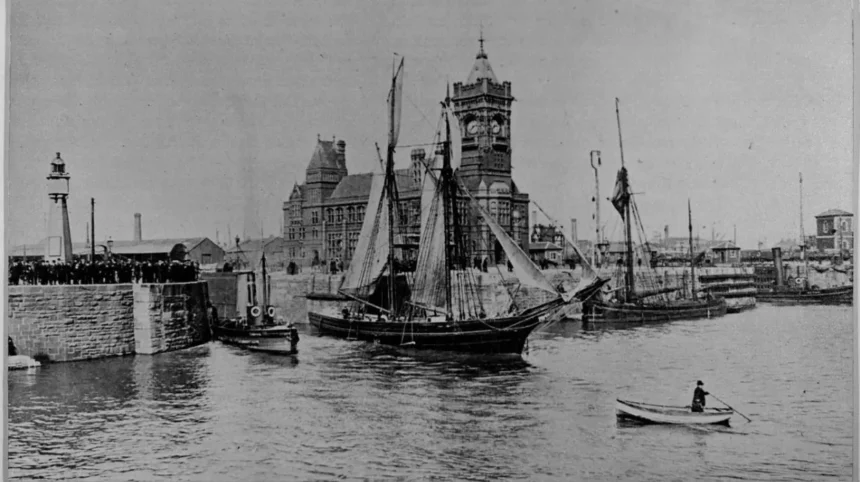
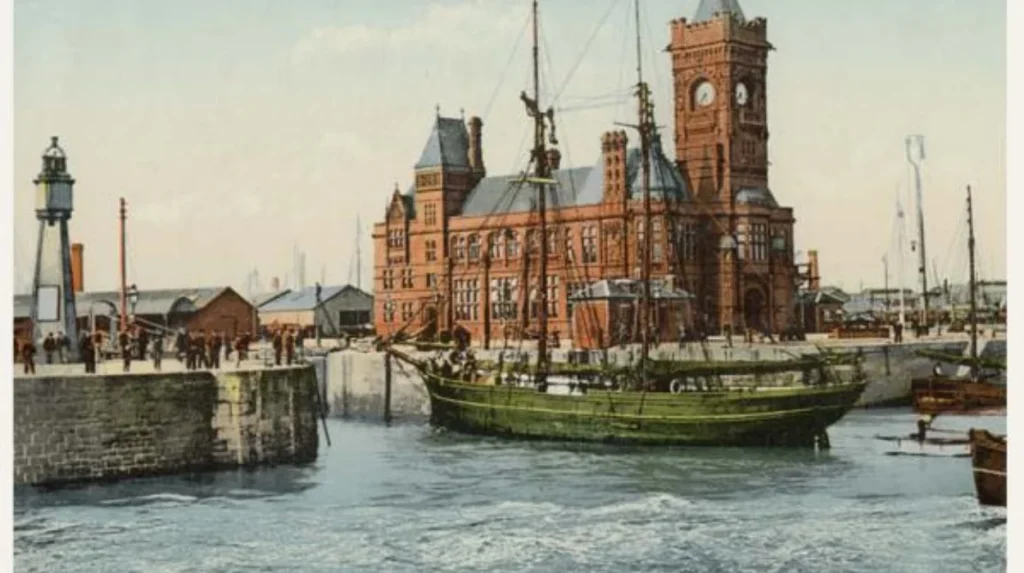
The Pierhead Building is a surviving landmark rather than an abandoned building. It opened in 1897 as the headquarters of the Cardiff Railway Company, replacing the original Bute Dock Company offices after a fire destroyed them in 1892.
Designed by Welsh architect William Frame, the building is known for its Gothic Revival architecture and distinctive red terracotta exterior. Its history connects the modern waterfront to the administrative systems that managed Cardiff’s shipping trade.
The Pierhead is important because it demonstrates how a building can survive the industrial system that created it. Its historical significance remains visible within a waterfront that has otherwise changed substantially.
Which famous Cardiff buildings have been demolished?
Several notable Cardiff buildings have disappeared through demolition and redevelopment. Examples include the former Westgate Street fire station, historic chapels in the city centre and commercial buildings in Roath. Their histories survive through photographs, archival collections, historical records and modern accounts.
Cardiff’s architectural losses extend beyond docks and factories. Civic buildings, religious institutions, railway facilities and commercial premises once shaped the everyday appearance of the city. Their disappearance reflects changes in transport, public services, retail, religious life and urban planning.
What happened to the former Westgate Street fire station?
The former Westgate Street fire station was one of Cardiff’s most distinctive lost civic buildings. Completed in 1917, it featured six storeys, large engine bays, a steeply pitched tiled roof and a prominent watchtower designed to help firefighters identify fires across the city.
The building also contained thirty flats for firefighters’ families. It therefore served both as a public emergency facility and as accommodation for the people who operated it.
The station closed in 1973. It was eventually demolished, and the site became associated with a multistorey car park opposite the Principality Stadium. The replacement illustrates how a landmark building can disappear from the streetscape even when its former location remains familiar.
This site is particularly relevant to people researching Cardiff’s lost architecture because photographs reveal a building that looked very different from the modern structure occupying its former location.
Why have Cardiff’s historic chapels disappeared?
Cardiff once contained a large number of Nonconformist chapels serving Welsh-speaking and English-speaking congregations. Nonconformism refers to Protestant Christian traditions outside the established Church of England, including Baptist, Methodist and Congregationalist communities.
These institutions provided places of worship and often played important roles in neighbourhood life. Their buildings also contributed distinctive architectural features to the streets of Victorian and Edwardian Cardiff.
As congregations declined and urban development intensified, some chapels closed, changed use or were demolished. Historical accounts of Cardiff’s lost buildings identify several examples in the city centre.
Bethany Baptist Chapel in Wharton Street, originally established in 1807 and rebuilt in 1865, was absorbed into later commercial development in 1963. Seion Methodist Chapel in Trinity Street, dating from 1827, was removed in 1880 to make way for a public library. Bethel Methodist Chapel in Union Street disappeared during redevelopment in 1979.
These losses are important because religious buildings documented the social history of individual streets. Their disappearance also makes historical maps and photographs especially valuable for reconstructing the city’s former appearance.
What happened to the former Cardiff railway buildings?
Railway infrastructure helped Cardiff become a major industrial and commercial centre. Stations, junctions, goods facilities and railway offices connected the docks to coalfields and inland manufacturing communities.
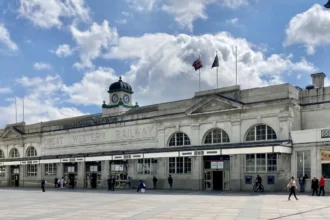
Some railway buildings and facilities disappeared when services changed or urban development altered transport networks. The former Queen Street Station building is among the subjects documented in accounts of Cardiff’s lost architecture, while historical records also identify the former Cardiff Riverside Junction railway station among demolished sites.
The loss of railway buildings reflects a broader shift in urban transport. New station facilities, revised railway layouts and changes in freight handling reduced the need for some historic structures.
Researchers investigating a particular railway site should compare old Ordnance Survey maps with railway records and the National Monuments Record of Wales. This approach helps establish the former location, function and survival status of individual structures.
What industrial ruins reveal Cardiff’s working-class history?
Cardiff’s industrial remains document the employment, transport and manufacturing systems that supported the city’s growth. Examples include former dock warehouses, surviving pumping infrastructure, historic railway facilities and the landscape associated with East Moors Steelworks, which closed in 1978.
Industrial heritage provides evidence of how Cardiff developed beyond its commercial centre. Coal handling, steel production, railway operations and port maintenance supported workers and families across southern Cardiff.
Why is East Moors Steelworks important?
East Moors Steelworks was a major industrial employer in southern Cardiff. Its closure in 1978 resulted in the loss of approximately 3,200 jobs, marking a significant moment in the city’s industrial decline.
The closure occurred after the contraction of the traditional coal-export economy and amid wider changes affecting heavy industry. It demonstrates how the decline of a major industrial facility can affect employment, local businesses and the identity of surrounding communities.
The former steelworks belongs to Cardiff’s industrial history even where its original buildings no longer survive. The site’s significance lies in the relationship between manufacturing, employment and the wider transformation of the city’s southern districts.
How did industrial decline affect Butetown and Tiger Bay?
Butetown developed alongside Cardiff’s docks and became a diverse maritime community. Seafarers and workers from many parts of the world settled in the area, creating a community associated with international trade and cultural diversity.
Historical accounts estimate that at least fifty nationalities settled in the dockland area during its period of commercial growth. Residents worked in shipping, cargo handling and the services that supported the port.
The contraction of dock activity after the Second World War affected the economic foundations of the community. Industrial decline and subsequent regeneration changed both the built environment and the local economy.
The history of Tiger Bay should not be reduced to abandoned buildings. Its social heritage includes migration, work, family life, community organisations and cultural exchange. Historic maps and dockside photographs become more meaningful when interpreted alongside records of the people who lived and worked there.
What do surviving warehouses and pumping stations tell researchers?
Warehouses and pumping stations reveal how industrial sites functioned. Warehouses stored goods before export or after delivery, while pumping infrastructure supported water management and the operation of dock systems.
Surviving dockside structures also help researchers understand the relationship between engineering, cargo movement and shipping. A building that appears isolated today might originally have formed part of a much larger network of railways, storage facilities, loading equipment and waterways.
Coflein records provide descriptions and location information for documented sites. These records help distinguish surviving industrial fabric from structures that have been altered, relocated or demolished.
Where are Cardiff’s lost buildings in Roath and the city centre?
Roath and Cardiff city centre contain examples of lost commercial, civic and religious buildings. Historical records document demolished premises in Roath, while the central districts include former chapels and civic structures replaced by retail developments, transport facilities and public infrastructure.
Roath expanded as Cardiff grew during the nineteenth and twentieth centuries. Its commercial streets, public services and residential neighbourhoods developed to support a growing urban population.
What happened to Albany Buildings on Wellfield Road?
Albany Buildings consisted of four lock-up shops constructed around 1900 on Wellfield Road in Roath. The premises later became known as Cinema Buildings and were numbered 2(a), 2(b), 2(c) and 2(d) Wellfield Road.
The buildings were demolished in 1985 to make way for the Globe Centre complex, according to a local historical account of Roath’s lost buildings. Their disappearance reflects the replacement of smaller historic commercial premises with newer development.
The significance of such buildings lies in their everyday function. Small shops supported local shopping streets and contributed to the architectural character of residential neighbourhoods, even when they lacked the prominence of major civic landmarks.
Why are Cardiff’s former public-service buildings worth documenting?
Former public-service buildings reveal how the city organised health, administration, emergency services and community facilities. Some were adapted for new purposes, while others disappeared when services were consolidated or sites were redeveloped.
Historical accounts identify former Cardiff Public Laboratory buildings on Crofts Street among Roath’s lost sites. The buildings were reportedly demolished around 2016. Their history illustrates the importance of recording less prominent institutions, not only famous landmarks.
For researchers, historic planning applications, council reports and archival photographs provide evidence of the original structures and the reasons for their removal.
How can people research abandoned and lost places in Cardiff?
People can research Cardiff’s lost places through historic maps, archived photographs, heritage databases, council planning records and local history collections. Examples include Coflein, Glamorgan Archives, Cadw’s listed-building records and the Royal Commission on the Ancient and Historical Monuments of Wales.
Research is essential because a building’s current appearance does not always reveal its historical purpose. A modern housing development can occupy a former dock, while an ordinary car park can mark the location of a significant civic landmark.
Where can researchers find historic photographs and records?
Glamorgan Archives preserves historical material relating to Cardiff and the surrounding county. Its collections include photographs, architectural drawings, maps and documents that help reconstruct the appearance of former industrial and commercial sites.
Coflein, maintained by the Royal Commission on the Ancient and Historical Monuments of Wales, provides searchable records of archaeological sites, buildings and historic landscapes. Its dock records are particularly useful for investigating the former Bute docks and surviving maritime infrastructure.
Cadw maintains records of listed buildings in Wales. These records provide information about designated buildings, architectural characteristics and the reasons for their protection. Cardiff Council also maintains planning information and local heritage documentation.
These resources serve different purposes. Archival photographs show how a building looked, historical maps establish its location, and heritage records explain its significance. Combining these sources creates a more reliable account than relying on an isolated photograph or an unverified online description.
How can historic maps reveal a demolished building?
Historic maps show former street layouts, railway alignments, dock boundaries and building footprints. Comparing maps from different periods helps identify when a structure appeared, when its surroundings changed and whether a later development replaced it.
For example, maps of Cardiff Bay can help researchers understand the relationship between the former Bute West Dock, its entrance basin and the present waterfront. Comparing these maps with modern geography reveals the scale of the transformation.
Map evidence should be checked against photographs and documentary records. A building outline establishes that a structure occupied a location at a particular time, but it does not independently prove the exact demolition date or the circumstances of its removal.
Can visitors legally explore abandoned places in Cardiff?
Visitors should explore Cardiff’s industrial heritage from public streets, established footpaths, authorised visitor areas and recognised heritage attractions. Examples include Cardiff Bay’s public waterfront, Roald Dahl Plass and publicly accessible areas around surviving historic buildings. Entry into restricted or unsafe derelict properties requires appropriate permission.
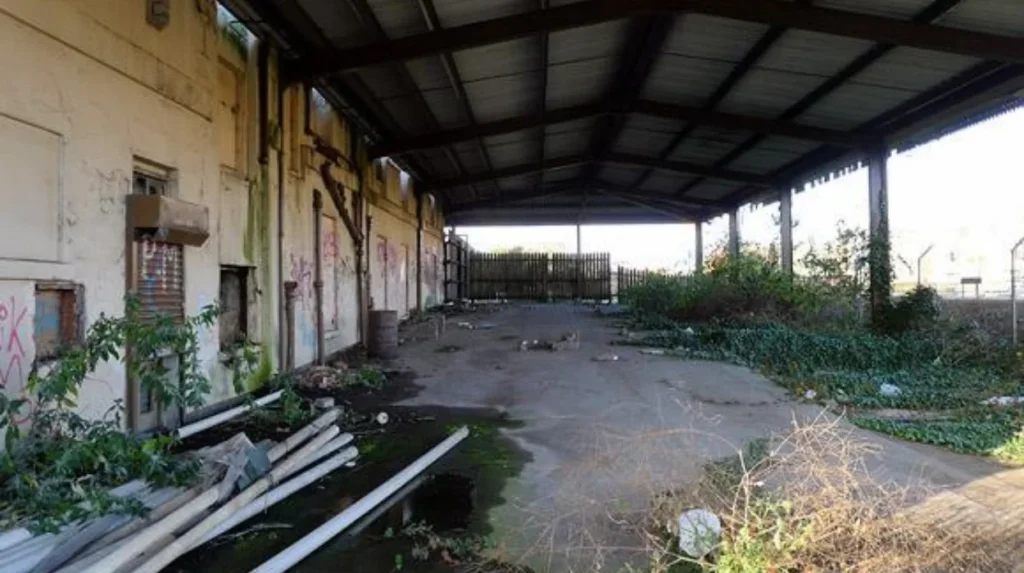
Urban exploration involves visiting former industrial sites, disused buildings and neglected infrastructure to understand their history. However, an abandoned appearance does not mean a property is unowned, open to the public or safe to enter.
Some sites contain unstable floors, open shafts, broken glass, asbestos or contaminated ground. Former industrial properties also contain structural hazards that are not always visible from outside.
Trespassing on private land can create legal problems, and entering a restricted site can expose visitors to serious physical danger. People should follow posted restrictions and respect security barriers.
A safer way to investigate Cardiff’s lost places is to combine a public walking route with archival research. Visitors can photograph visible remains from lawful locations, compare them with historical images and consult heritage records to understand the original structures.
Access conditions vary between sites. Check current visitor information before travelling, especially when a route passes through an active dock, a construction area or privately managed land.
Explore More Area Guide
Forgotten Buildings in Cardiff: Hidden Historic Landmarks and Heritage
Cardiff Parks for Children: Best Playgrounds and Family Days Out
How does Cardiff protect its surviving historic buildings?
Cardiff protects historic buildings through statutory listing, planning controls, conservation policies and heritage documentation. Examples include protected buildings in Butetown, the historic Pierhead Building and designated properties within Cardiff’s conservation areas. These measures help manage changes to structures with recognised architectural or historical significance.
In Wales, listed-building designation recognises buildings of special architectural or historic interest. Cadw maintains the statutory list and publishes records describing individual properties and their designation.
Listed status does not mean that a building can never change. It means that proposed alterations affecting its special character are subject to specific controls, including listed-building consent where required.
Cardiff also uses local heritage policies to identify buildings that contribute to the character of individual neighbourhoods. Cardiff Council has published information about its Local List of Buildings of Architectural or Historic Interest, which recognises structures valued for their local significance.
However, protection does not apply automatically to every old building. The former Westgate Street fire station, for example, was demolished after it closed in 1973 and had never received listed status. Its loss illustrates the importance of identifying and assessing historic buildings before redevelopment decisions are made.
Documenting threatened structures before demolition preserves evidence for future researchers. Photographs, measured drawings, oral histories and archival research can retain information about buildings that cannot be saved physically.
Why does Cardiff’s lost heritage matter for the city’s future?
Cardiff’s lost heritage matters because it explains the city’s industrial economy, architectural development, migration history and changing neighbourhoods. Examples include the vanished Bute West Dock, the demolished Westgate Street fire station and former chapels that once served central Cardiff communities.
Historic buildings provide physical evidence of how earlier generations lived and worked. When a structure disappears, researchers often depend on photographs, plans and written records to reconstruct its former appearance.
The loss of industrial sites also affects how residents understand the economic changes that shaped Cardiff. The closure of coal facilities and East Moors Steelworks was not simply a change in land use; it marked a major transition in employment and local industry.
Regeneration has created new homes, public spaces, commercial districts and cultural destinations. Cardiff Bay demonstrates that a former industrial landscape can acquire a new function while retaining elements of its historical identity.
The future of Cardiff’s heritage depends on recording surviving structures, maintaining important buildings and preserving reliable information about places that have disappeared. Historical research also helps distinguish between genuine surviving industrial remains and modern developments occupying former historic sites.
For residents and visitors, exploring lost places provides a broader understanding of Cardiff than visiting its surviving landmarks alone. It reveals how docks, workshops, chapels, railway facilities and public buildings contributed to the capital’s growth and how successive generations reshaped the city.
What are the most famous abandoned and lost places in Cardiff?
Cardiff’s best-known lost places include the former Bute West Dock, the demolished Westgate Street fire station, historic chapels in the city centre and former industrial facilities around the docks. These locations document the city’s industrial growth and urban redevelopment.