Key Points
- Enforcement Operations Underway: Cardiff Council has launched a targeted programme of education, engagement, and enforcement along City Road, one of the city’s dirtiest and busiest commercial thoroughfares.
- Fixed Penalty Notices Issued: Council officers have issued 65 Fixed Penalty Notices (FPNs) to local businesses that failed to provide statutory waste management information, with 60 cases remaining outstanding.
- Documentation Compliance Low: Out of 86 formal requests issued for waste transfer notes, only 16 businesses responded, leading to just five cases being closed following satisfactory verification.
- New Timings Introduced: Commercial waste collections on City Road are now strictly limited to between 05:00 and 10:00, with all bins and containers mandated to be cleared from public highways by 10:00.
- Pest and Litter Mitigation: The measures aim to stop seagulls and rodents from ripping open improperly presented trade bags and scattering rotting food debris across footpaths.
Cardiff, Wales (Cardiff Daily) November 3, 2026 – Cardiff Council has initiated a sweeping enforcement campaign against non-compliant commercial properties on City Road to eliminate chronic trade waste accumulation. Dozens of financial penalties have been served following widespread failures to produce legally required disposal records. Municipal authorities are combining strict collection windows with direct enforcement to restore public hygiene along the prominent shopping corridor.
- Key Points
- Why Is Cardiff Council Taking Action Against City Road Businesses?
- How Many Fixed Penalty Notices Have Been Issued to City Road Traders?
- What Are the New Commercial Waste Collection Rules on City Road?
- Background of the Commercial Waste Enforcement Development
- Prediction: How Will This Waste Crackdown Impact Local Stakeholders?
Why Is Cardiff Council Taking Action Against City Road Businesses?
As reported by Alex Seabrook of WalesOnline, municipal authorities have initiated a targeted campaign of engagement, education, and legal enforcement along City Road to resolve persistent trade rubbish accumulation. City Road represents one of the primary commercial and retail arteries in the Welsh capital, but the location has suffered from recurring issues surrounding improperly discarded trade waste, discarded packaging, and dumped refuse.
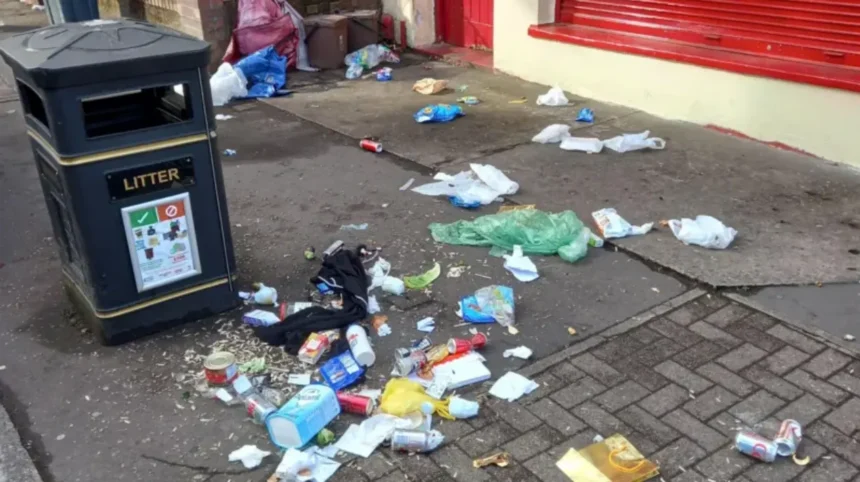
Cardiff Council confirmed that the intervention aims directly at preventing hazardous and unsanitary conditions caused when commercial refuse is left unprotected on public pavements. Improperly presented rubbish frequently attracts urban wildlife, including seagulls and rodents, which tear open plastic bags to reach food scraps. This pattern leaves organic waste, food packaging, and litter scattered across public footpaths, creating health risks and degrading the streetscape for residents, shoppers, and neighboring traders.
Officers from the local authority have systematically visited commercial premises along the length of City Road in recent weeks. The purpose of these visits is to remind business owners and operational managers of their statutory responsibilities under environmental legislation. These duties include securing active, formal waste collection contracts with licensed providers, retaining up-to-date waste transfer documentation on site, and ensuring that all trade rubbish is contained and set out strictly in accordance with municipal guidelines.
How Many Fixed Penalty Notices Have Been Issued to City Road Traders?
As reported by Alex Seabrook of WalesOnline, Cardiff Council has already served 65 Fixed Penalty Notices (FPNs) to businesses operating on City Road. These financial penalties were issued after premises failed to comply with legal requests to produce statutory documentation explaining how their commercial waste is collected, processed, and disposed of by authorized contractors.
According to formal statements provided by a Cardiff Council spokesperson, the majority of the penalised businesses have yet to settle their liabilities or resolve their legal status. Of the 65 FPNs handed out during the initial enforcement phase, 60 cases remain outstanding.
Alongside the financial penalties, municipal officers have issued 86 formal legal requests for waste transfer notes to commercial properties along the corridor. Compliance rates remain low across the area: only 16 businesses have submitted the required documentation to date. Following legal review by environmental enforcement officers, just five cases have been fully closed after business operators successfully produced satisfactory paper trails proving legal trade waste compliance.
To support local traders through the regulatory process, members of the council’s dedicated waste engagement team are speaking directly with business operators. These interactions aim to assess current waste disposal arrangements, identify operational or financial barriers preventing full compliance, and offer practical technical guidance to ensure local traders meet their statutory obligations.
What Are the New Commercial Waste Collection Rules on City Road?
As reported by Alex Seabrook of WalesOnline, the local authority is introducing operational changes to commercial waste collection frameworks across the City Road district to maintain public cleanliness and improve visual standards.
Under the newly instituted regulations, all private trade waste collection services operating on City Road must conduct their pickups strictly between the hours of 05:00 and 10:00. Furthermore, all commercial bins, wheelie bins, and remaining trade bags must be completely removed from public footpaths and highways by the 10:00 deadline each morning. By restricting the timeframe during which commercial waste can sit on public pavements, the council aims to reduce the window of opportunity for seagulls and vermin to scavenge through bags during peak daytime trading hours.
Commenting on the enforcement push and the revised operational window, Councillor Ed Stubbs, Cabinet Member for Frontline Services, stated:
“City Road is one of Cardiff’s busiest local shopping centres and it is important that businesses play their part in ensuring commercial waste is managed and presented responsibly.”
Background of the Commercial Waste Enforcement Development
The enforcement drive on City Road takes place within a broader local governance effort to clean up high-density urban shopping streets across Cardiff. Over recent years, commercial corridors featuring heavy concentrations of takeaway outlets, restaurants, and independent retail units have presented complex environmental health challenges for the local authority.
Under the Environmental Protection Act 1990, all businesses in the United Kingdom carry a legal “Duty of Care” to ensure that any waste produced on their premises is handled, stored, and disposed of safely by an authorized provider. Commercial operators are prohibited from using residential council household bin services and must retain official commercial waste transfer notes for a minimum of two years to prove compliance during routine inspections.
Despite these legislative frameworks, mixed commercial and residential streets like City Road—which feature ground-floor retail units underneath private rented flats—frequently experience severe cross-contamination, illegal fly-tipping, and commercial refuse left out on non-collection days. Seagull scavenging is a widespread issue across coastal and estuarine cities like Cardiff, where birds target thin plastic refuse sacks containing commercial food waste. By shifting to strict timed collection windows and actively auditing business documentation, Cardiff Council is seeking to standardize enforcement methods across all high-footfall suburban high streets.
Prediction: How Will This Waste Crackdown Impact Local Stakeholders?
The enforcement drive and strict collection rules on City Road will produce direct operational, financial, and environmental impacts across multiple local groups:
Impact on City Road Businesses and Commercial Operators
Local business owners face immediate financial pressure to rectify their commercial waste operations. Traders with outstanding FPNs face escalating legal costs or prosecution in the magistrates’ court if penalties remain unpaid. Furthermore, business managers must reconfigure daily staff operations to meet the strict 05:00 to 10:00 pickup window, requiring staff to be on-site early to present waste and pull empty containers off the highway by 10:00. Operators currently lacking official trade waste contracts will incur new monthly overheads to hire accredited private waste contractors and maintain compliant waste transfer documentation.
Impact on Local Residents and Pedestrians
For residents living on City Road and surrounding streets in Cathays and Roath, the cleanup effort promises a dramatic reduction in local environmental nuisances. Strict enforcement of collection times will significantly reduce the volume of ripped trash bags, rotting food items, and scattered litter on footpaths. This will improve overall street hygiene, reduce foul odours during warmer months, and minimize pest activity from rats, mice, and urban seagull populations.
Impact on Cardiff Council and Private Waste Contractors
For Cardiff Council, the ongoing operation establishes a legal and operational template that can be rolled out across other major suburban commercial hubs, such as Albany Road, Cowbridge Road East, and Clifton Street. However, the high volume of outstanding FPNs (60 out of 65) means municipal legal teams must dedicate staff resources to prosecuting non-compliant traders. Meanwhile, licensed private waste collection firms operating in South Wales will likely experience increased commercial demand as non-compliant traders seek rapid service contracts to avoid regulatory fines.