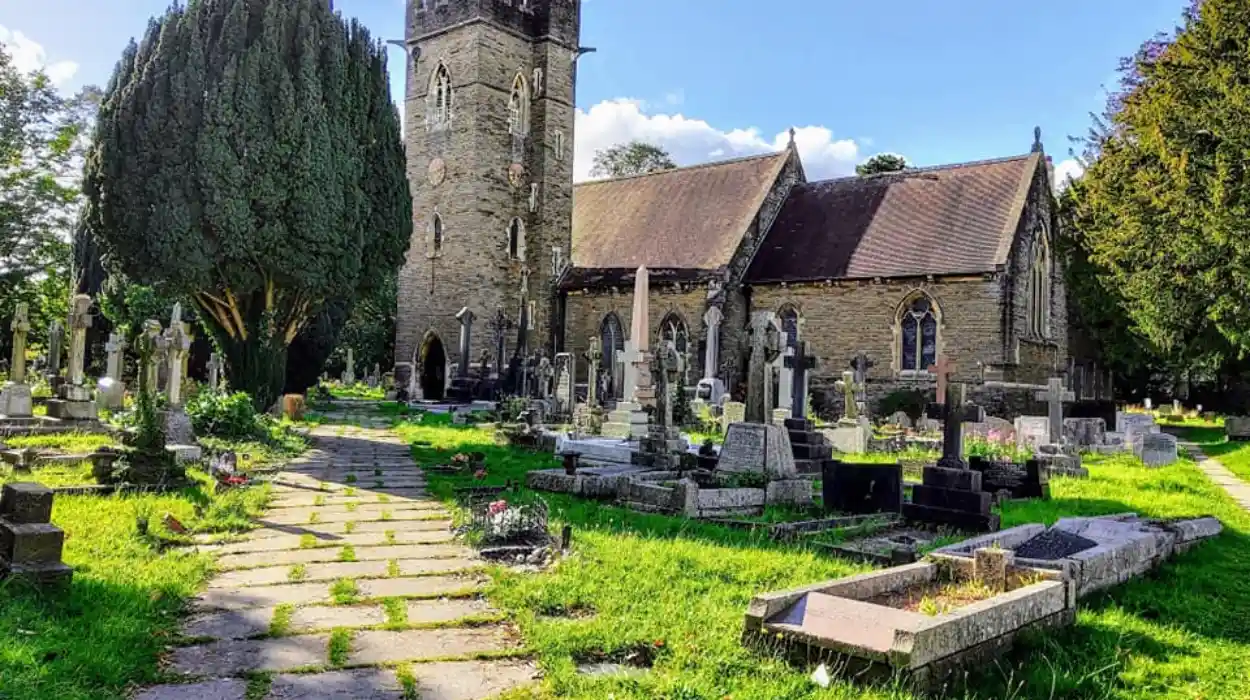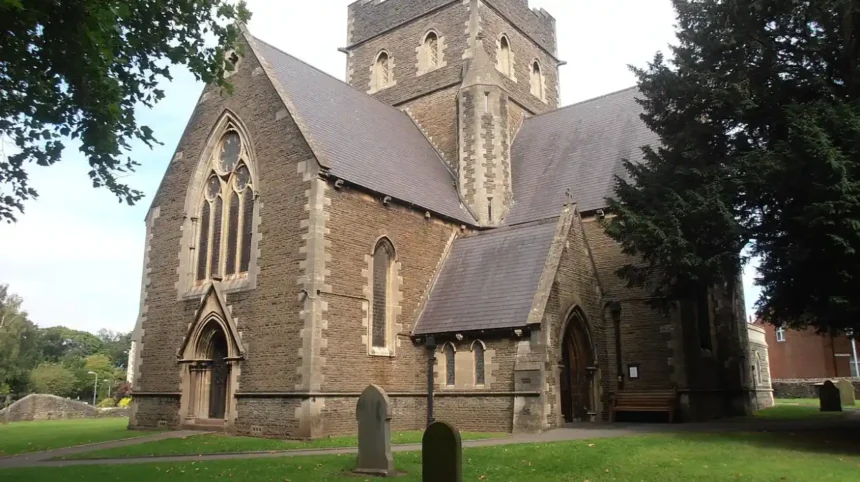
Historic churches in Roath are Grade-listed Anglican and Methodist places of worship built between 1870 and 1921, reflecting Victorian-era ecclesiastical architecture, Bute family patronage, and Cardiff’s suburban expansion. Roath, a district in north-east Cardiff, contains four principal historic churches: St Margaret’s (1870, Grade I), St Martin’s (1901), St Edward’s (1921 chancel, 1968 nave), and St Anne’s (1887, reopened 2019 as Urban Crofters). These structures embody Gothic Revival and Decorated Gothic styles, war memorial functions, and adaptive reuse patterns documented by Cadw, the Church in Wales, and the Roath Local History Society.
- What are the historic churches in Roath?
- When was St Margaret’s Church built and why is it significant?
- What architectural features define St Martin’s Church?
- How did St Edward’s Church become a war memorial?
- What is the history of St Anne’s Church and its reuse?
- Which architects designed Roath’s historic churches?
- How do Roath churches reflect Cardiff’s suburban growth?
- What listed status do Roath churches hold?
- What role did the Bute family play in Roath church history?
- How are Roath churches used today?
What are the historic churches in Roath?
The historic churches in Roath comprise St Margaret’s Church (1870), St Martin’s Church (1901), St Edward’s Church (1921/1968), and St Anne’s Church (1887/2019 reuse), all located within the Roath ecclesiastical parish in Cardiff. These four buildings represent the core Anglican heritage of Roath, with St Margaret’s serving as the mother church and the others as former daughter churches or mission churches established during population growth from 300 to 9,000 residents between 1852 and 1872.
St Margaret’s Church stands on Newport Road as a Grade I listed building, designed by John Prichard in Decorated Gothic style with a Greek Cross plan. St Martin’s Church occupies Albany Road, replacing an 1886 tin tabernacle with a permanent brick structure in 1901. St Edward’s Church on Blenheim Road functions as a war memorial church, constructed in two phases: chancel in 1921 and nave in 1968. St Anne’s Church at Snipe Street and Croft Street closed in 2015, reopening in 2019 as Urban Crofters, a missional community church.
When was St Margaret’s Church built and why is it significant?
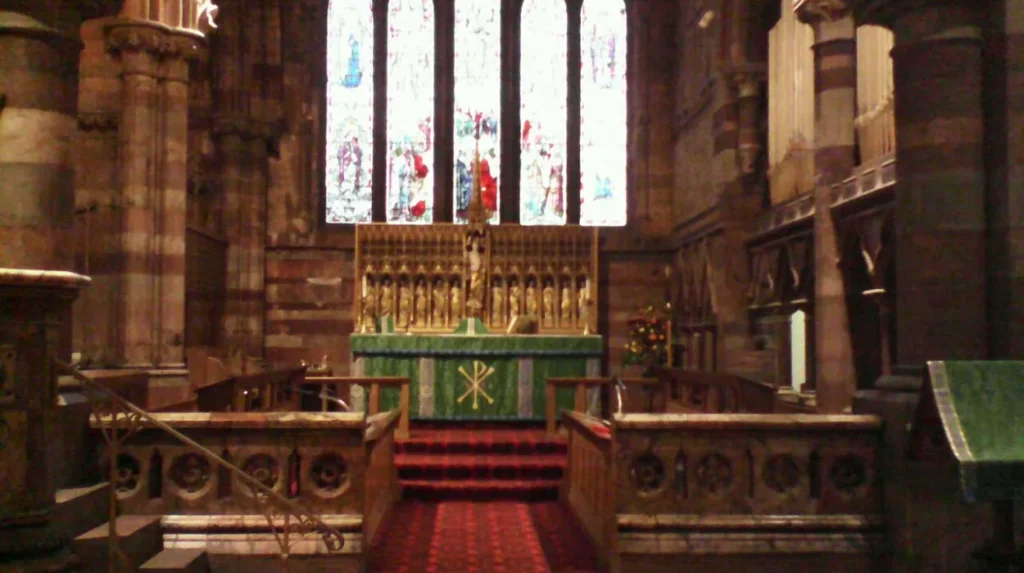
St Margaret’s Church was built in 1870 on the site of a medieval Norman chapel, financed by John Crichton-Stuart, 3rd Marquess of Bute, and designated Grade I listed in 1975 for its architectural and historical importance. The church replaced an earlier Perpendicular-style building demolished in 1868, featuring a cruciform plan in Decorated Gothic style with polychrome brickwork and stone in red, blue, white, grey-green, and pink.
John Prichard, the Llandaff diocesan architect, designed the above-ground structure after Alexander Roos, the Bute family architect, was dismissed when the 3rd Marquess came of age in 1868. The tower, excluding Prichard’s envisaged spire, was completed by John Coates Carter in 1926. The east window glass, destroyed by bomb blast during the Second World War, was replaced in 1952 with depictions of the Ascension of Jesus and patron saints of four daughter churches: St Edward’s, St Anne’s, St Agnes’s, and St Philip’s.
The church includes the Bute Mausoleum, an ornate north aisle chapel added between 1881 and 1886, housing seven red granite sarcophagi containing remains of nine Bute family members interred previously in the medieval church. Those interred include Charlotte Jane Windsor, Marchioness of Bute (1746–1800), John Stuart, 1st Marquess of Bute (1744–1814), Frances Coutts, Dowager Marchioness of Bute (1773–1832), John Stuart, Lord Mount Stuart (1767–1794), Gertrude Amelia Stuart (died 1809), Lord Henry Stuart (1777–1809), and Elizabeth Penelope Stuart (1819–1822).
St Margaret’s served as the mother church for daughter churches including St Francis, Splott (1894–1969), St Agnes, Roath (1886–1966), St Anne’s, Roath (1887–2015), and St Philip’s, Tremorfa (founded 1930, separated late 20th century). Only St Edward’s remains a daughter church after boundary adjustments. The church now operates within the Ministry Area of Roath and Cathays alongside St Edward’s, St German’s, St Martin’s, and St Michael’s, Cathays.
What architectural features define St Martin’s Church?
St Martin’s Church features a 1901 brick structure replacing an 1886 tin tabernacle, with lancet windows installed during 1955 post-war restoration, a 2011 cloister, and a 2013 Christ Pantocrator mosaic by Aidan Hart above the main entrance. The church was erected to serve Roath’s growing suburb, becoming a separate parish in 1903 after the permanent building replaced the temporary iron structure.
The original lady chapel was decorated by a Belgian refugee artist in gratitude for parishioner kindness during the First World War. An incendiary bomb in February 1941 completely destroyed the interior, with services continuing in the surviving choir vestry and neighbouring St Cyprian’s church until full restoration in 1955. During restoration, ornate tracery of original windows was replaced with plainer lancet types to increase light penetration.
Archbishop Barry Morgan consecrated a new cloister fronting Albany Road in 2011. Rowan Williams, former Archbishop of Canterbury, blessed the Christ Pantocrator mosaic installed in 2013. The church maintains its Anglican identity within the Church in Wales, serving the Roath community alongside other ministry area churches.
How did St Edward’s Church become a war memorial?
St Edward’s Church became a war memorial after its 1915 tin tabernacle was destroyed by fire on 11 September 1919, with the Parish of Roath resolving to reconstruct it in memory of First World War fallen before the blaze. The original tin tabernacle, opened in March 1915, faced west unconventionally and was reduced to a wreck by an electrical fault fire, though communion vessels and 240 chairs survived.
The chancel and vestry, designed by E Willmott of Willmott and Smith, were completed in 1921 with brick and sandstone embellishments. Funds ran short, resulting in a galvanised iron nave that faced east, unlike its west-facing predecessor. The iron nave deteriorated by the late 1960s and was replaced in brick by the original architects in 1968, though shorter than the tin version.
The chancel includes the Parish War Memorial on the north wall and a Red Cross Memorial facing west into the nave, commemorating those who died in Red Cross Hospitals on Newport Road. A Second World War Memorial was added below the Parish Memorial. In 2017, after St Anne’s Church closure, wooden panels of their memorial pulpit were erected on the south chancel wall.
A bell installed in 1922, dated 1815 and thought cast from a Battle of Waterloo cannon, was removed in 2015 due to poor condition and bellcote instability. It was replaced in 2016 with a smaller 1816 bell. The church houses St Edward’s Music and Arts Centre, maintaining a musical tradition with a resident orchestra conducted by Alison Dite and an annual October music festival.
What is the history of St Anne’s Church and its reuse?
St Anne’s Church was founded in 1872 as St Clement’s school chapel, with the present church’s foundation stone laid in 1886, designed by J. A. Reeve, a pupil of William Burges, and reopened in 2019 as Urban Crofters after 2015 closure. The church responded to Roath’s population surge from 300 to 9,000 in twenty years, making existing worship spaces inadequate.
Reeve’s design, displayed at the 1887 Royal Academy Exhibition, proved unrealistically elaborate, resulting in only the chancel and spire built as intended, with a plainer nave. The opening ceremony attracted 500 attendees in a space designed for 350. The north aisle was installed in 1891, and the south aisle in 1937. In 1904–1905, the church briefly operated The Moon and Stars pub across the street, ceasing when the vicar departed.
In 1991, the western half and single bay were partitioned to form a church hall. The adjoining church school closed in 2011 after 132 years, with only twenty pupils. By 2015, the congregation had dwindled to around 12, and £250,000 in repairs were needed, prompting closure after 128 years of worship. The last service occurred on Christmas Eve 2015.
Urban Crofters, a new missional community church in the Church in Wales, reopened the building in January 2019. The late 19th-century reredos in the north aisle, designed by John Prichard, was brought from St Margaret’s, Roath. The church now hosts a midweek coffee house and co-working space, exemplifying adaptive reuse of Victorian ecclesiastical architecture.
Explore More Area Guide
Cathays High School History: Complete Guide to Cardiff’s Historic Secondary School Since 1931
Bishop of Llandaff School Guide: Admissions, Curriculum, Sixth Form & More
Which architects designed Roath’s historic churches?
The architects of Roath’s historic churches include John Prichard (St Margaret’s, 1870), J. A. Reeve (St Anne’s, 1886), Willmott and Smith (St Edward’s, 1921/1968), and unnamed builders for St Martin’s 1901 structure. John Prichard, Llandaff diocesan architect, designed St Margaret’s in Decorated Gothic style after dismissing Alexander Roos, the Bute family architect, in 1868. John Coates Carter completed the tower without Prichard’s spire in 1926.
J. A. Reeve, a pupil of William Burges, designed St Anne’s Church, with only the chancel and spire realized from his elaborate 1887 Royal Academy Exhibition plans. E Willmott of Willmott and Smith designed St Edward’s chancel and vestry in 1921, with the same firm replacing the iron nave in brick in 1968. St Martin’s 1901 builder remains undocumented in available sources, though the church replaced an 1886 tin tabernacle.
These architects contributed to Cardiff’s Victorian and Edwardian ecclesiastical landscape, with Prichard also designing the reredos transferred to St Anne’s north aisle. Their works reflect Gothic Revival and Decorated Gothic styles prevalent in late 19th-century Church in Wales construction.
How do Roath churches reflect Cardiff’s suburban growth?
Roath churches reflect Cardiff’s suburban growth through construction timelines from 1870 to 1921, responding to population increases from 300 to 9,000 residents between 1852 and 1872, and the establishment of daughter churches to serve expanding districts. St Margaret’s, built in 1870, served as the mother church for a parish that spawned St Francis, Splott (1894), St Agnes, Roath (1886), St Anne’s, Roath (1887), and St Philip’s, Tremorfa (1930).
The founding of St Clement’s school chapel in 1872, precursor to St Anne’s, directly addressed worship space inadequacy during rapid demographic change. St Martin’s tin tabernacle in 1886, replaced in 1901, served railroad workers in the growing suburb. St Edward’s 1915 tin tabernacle and 1921 reconstruction catered to Roath’s Victorian-era residential expansion.
These churches document the transition from medieval manor supplying Cardiff Castle to a major Victorian suburb, with ecclesiastical infrastructure scaling to match housing development along Albany Road, City Road, and Wellfield Road. The closure and reuse of St Anne’s in 2015–2019 reflects 21st-century demographic shifts toward secular and community-oriented functions.
What listed status do Roath churches hold?
St Margaret’s Church holds Grade I listed status since 1975, while St Martin’s, St Edward’s, and St Anne’s do not carry individual listed designations in available records. Grade I listing denotes exceptional architectural or historical interest, placing St Margaret’s among Wales’s most significant church buildings.
The listing recognizes Prichard’s Decorated Gothic design, Bute Mausoleum, and polychrome interior decoration. St Martin’s received no mentioned listed status despite its 1901 construction and 1941 bomb damage history. St Edward’s and St Anne’s similarly lack cited listings, though St Anne’s interior alterations in 1991 were recorded by British Listed Buildings.
Cadw, the Welsh Government’s historic environment service, maintains the statutory list, with St Margaret’s entry accessible via the British Listed Buildings database. The church’s inclusion underscores its role as a heritage asset within Cardiff’s conservation framework.
What role did the Bute family play in Roath church history?
The Bute family, specifically John Crichton-Stuart, 3rd Marquess of Bute, financed St Margaret’s Church construction in 1870 despite his 1868 conversion to Catholicism, and provided the mausoleum for family tombs between 1881 and 1886. The 3rd Marquess dismissed architect Alexander Roos upon coming of age in 1868, appointing John Prichard for the above-ground design.
The Bute Mausoleum houses seven red granite sarcophagi containing remains of nine family members, including the 1st Marquess and his two wives, transferred from the demolished medieval church. This patronage occurred during Roath’s transition from medieval manor to Victorian suburb, with the Butes owning Cardiff docks and influencing local development.
The family’s ecclesiastical investment persisted post-conversion, reflecting longstanding Anglican ties before Catholic allegiance. St Margaret’s remains a physical testament to Bute influence on Roath’s built environment, alongside docks and suburban infrastructure.
How are Roath churches used today?
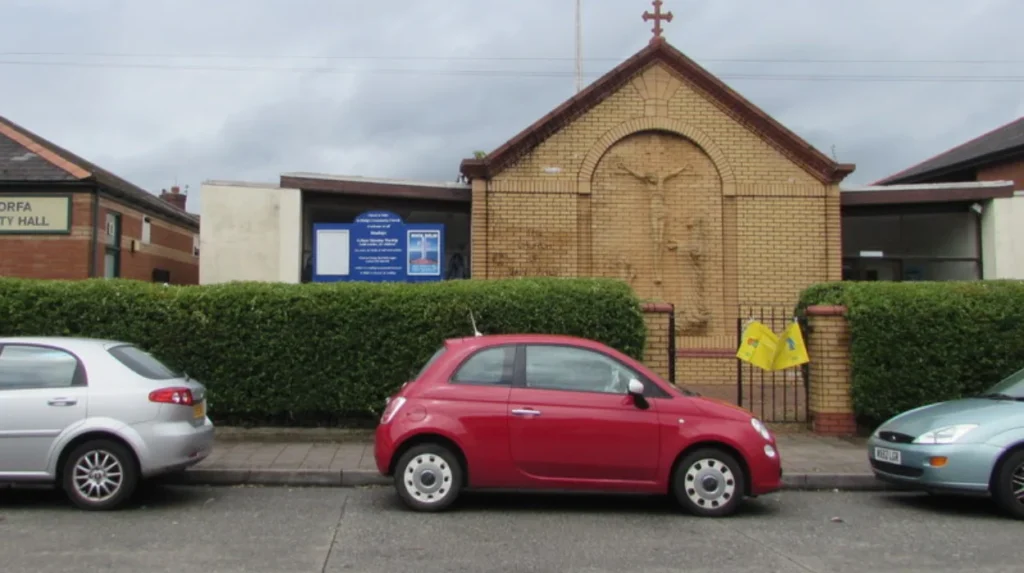
Roath churches today function as active Church in Wales worship sites within the Ministry Area of Roath and Cathays, with St Anne’s repurposed as Urban Crofters community church since 2019. St Margaret’s, St Martin’s, and St Edward’s continue regular Anglican services, while St Edward’s hosts St Edward’s Music and Arts Centre with a resident orchestra and October music festival.
Urban Crofters operates a midweek coffee house and co-working space in the former St Anne’s building, exemplifying adaptive reuse. St Margaret’s remains in the Ministry Area of Roath and Cathays alongside St Edward’s, St German’s, St Martin’s, and St Michael’s, Cathays.
These uses maintain ecclesiastical functions while accommodating community needs, preserving historic fabric through continued occupancy and cultural programming. The churches serve diverse Roath populations, including students, ethnic minorities, and young professionals.