Llandaff is one of Cardiff’s most historically significant areas and contains a concentrated group of protected historic environments. Cardiff Council identifies three conservation areas within the Llandaff ward: Llandaff, Cardiff Road and Insole Court. These are separate designated areas with different architectural and historic characteristics.
- Which conservation areas are located in Llandaff?
- Why is Llandaff designated as a conservation area?
- What does the Llandaff Conservation Area include?
- Cathedral Precinct and River Taff
- Cathedral Green
- High Street and Chapel Street
- The Avenue and Fairwater Road
- When was the Llandaff Conservation Area created?
- What makes Cardiff Road a separate conservation area?
- What is special about the architecture of Cardiff Road?
- What is protected in the Llandaff conservation areas?
- Does being in a conservation area mean a property is listed?
- How does conservation status affect planning applications in Llandaff?
- Are trees protected in Llandaff conservation areas?
- How did Llandaff develop into its current historic form?
- How does Llandaff Fields relate to conservation in Llandaff?
- How can you check whether a property is inside a Llandaff conservation area?
- What should homeowners know before altering a property in Llandaff?
- Why are Llandaff’s conservation areas important for Cardiff’s heritage?
- What is the difference between Llandaff ward and Llandaff Conservation Area?
- What is the current conservation picture for Llandaff?
The distinction between the Llandaff ward and the individual conservation areas is important. A ward is an administrative electoral area. A conservation area is a planning designation created because an area has special architectural or historic interest.
Cardiff currently has 27 conservation areas, according to Cardiff Council. The council’s conservation register lists Cardiff Road, Insole Court and Llandaff under the Llandaff ward. The Llandaff Conservation Area has its own adopted appraisal, while Cardiff Road has a separate appraisal. Insole Court is separately identified by the council as a conservation area associated with the Insole Court Trust.
Which conservation areas are located in Llandaff?
Three conservation areas are identified by Cardiff Council within the Llandaff ward: Llandaff Conservation Area, Cardiff Road Conservation Area and Insole Court Conservation Area. Each protects a different historic environment, including Llandaff’s cathedral precinct, Edwardian residential architecture and the historic Insole Court estate.
The three designations should not be treated as one continuous conservation area. Each has its own geographical boundary, character and planning considerations.
Llandaff Conservation Area
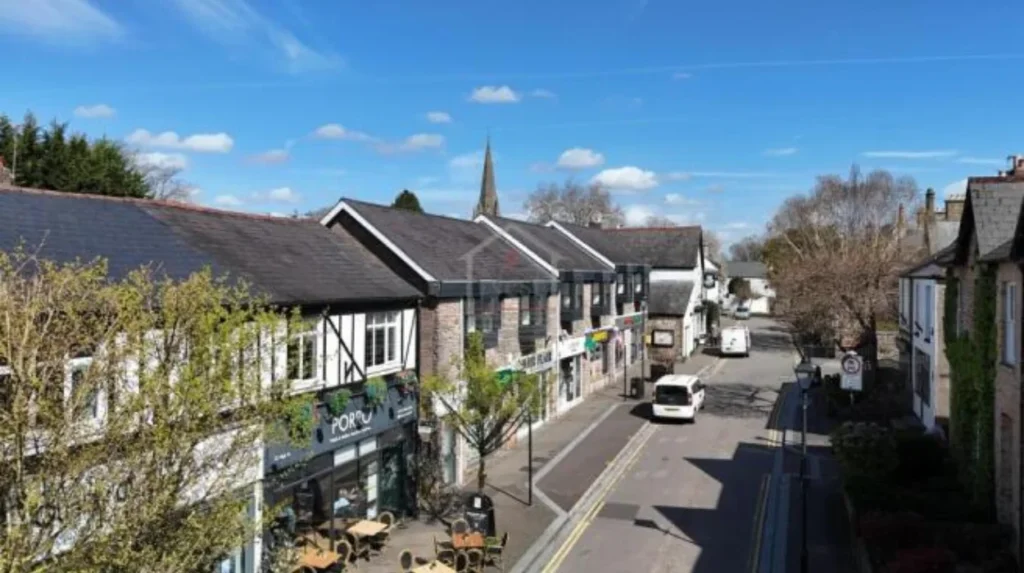
The Llandaff Conservation Area covers the historic core of Llandaff. Its character centres on Llandaff Cathedral, Cathedral Green, the Bishop’s Palace, High Street, Chapel Street, historic residential streets and the relationship with the River Taff.
Cardiff Council designated Llandaff as a conservation area in March 1968. The designation followed Cardiff’s first environmental study and planning brief. Later studies took place during the 1970s and 1980s. A further appraisal was adopted in December 2020.
Cardiff Road Conservation Area
The Cardiff Road Conservation Area protects an important historic residential and institutional environment along Cardiff Road. Its character includes substantial Edwardian villas, mature trees, boundary walls and historic buildings such as Howells School.
The area was designated in 1974 after planning applications for flat development raised concerns about the character of the area. The Cardiff Road appraisal describes its Edwardian villas, tree canopy and relationship with Llandaff Fields as important elements of its special character.
Insole Court Conservation Area
The Insole Court Conservation Area is associated with the historic Insole Court estate. Cardiff Council lists Insole Court separately from the main Llandaff and Cardiff Road conservation areas and identifies it under the Llandaff ward. The estate also contains listed historic buildings, gardens and associated structures.
The three areas therefore represent different layers of Llandaff’s historic development. The main Llandaff designation focuses on the medieval and ecclesiastical core, Cardiff Road focuses strongly on later residential development, and Insole Court represents a historic estate environment.
Why is Llandaff designated as a conservation area?
Llandaff is designated because its historic character combines medieval settlement patterns, ecclesiastical buildings, historic streets, green spaces, architectural groupings, landscape features and the River Taff setting. Cardiff Council considers these elements collectively important to the area’s architectural and historic identity.
Conservation-area designation does not protect only individual buildings. It protects the character and appearance of the wider area.
Cadw defines conservation areas as parts of the historic environment designated because of special architectural or historic interest. The significance can come from settlement patterns, building plots, routes, materials, landscape and the relationship between buildings and open spaces.
This principle is particularly relevant to Llandaff. Its historic significance comes from the relationship between its cathedral precinct, village green, streets, buildings, topography and river setting.
The Llandaff appraisal describes the area as a historic “city within a city”. Llandaff remained a distinct settlement before Cardiff expanded its boundaries to incorporate the area in 1922. The historic core still retains a village character around the cathedral and High Street.
The elevated position beside the River Taff also contributes to its identity. Llandaff developed on a rock outcrop near an important river crossing. Changes in elevation between Cathedral Green and the cathedral create a distinctive landscape setting.
What does the Llandaff Conservation Area include?
The Llandaff Conservation Area includes the historic cathedral precinct, Cathedral Green, High Street, Chapel Street, Cardiff Road, Western Avenue, Bridge Street, Bridge Road, Heol-y-Pavin, Heol Fair, The Avenue, Fairwater Road and other historic residential areas within its designated boundary.
The current appraisal divides Llandaff into eight areas of special character, including the Cathedral Precinct and River Taff, Cathedral Green, High Street and Chapel Street, Mitre Place, Bruton Place and Fordwell, Cardiff Road, Western Avenue, Bridge Street and associated roads, and The Avenue and Fairwater Road.
Cathedral Precinct and River Taff
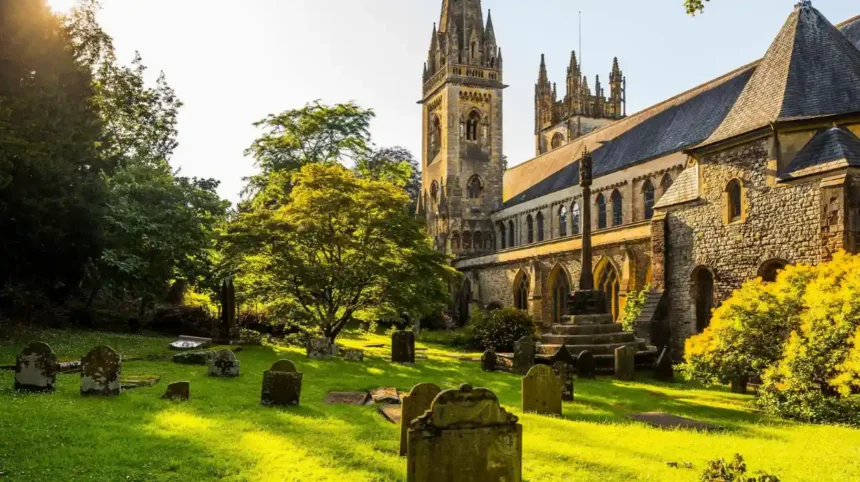
The cathedral precinct forms the historic heart of the conservation area. Llandaff Cathedral, the Bishop’s Palace and the ruined Bell Tower are major historic landmarks.
The River Taff and its banks also contribute to the wider environmental character. The appraisal records the river and its banks as a Site of Importance for Nature Conservation, reflecting their ecological significance within the wider city environment.
Cathedral Green
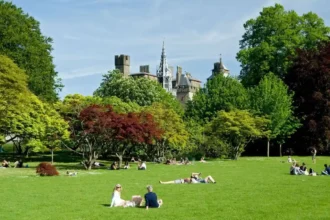
Cathedral Green provides an important open space around the historic buildings. The relationship between the green, cathedral, memorial features, surrounding buildings and streets creates a strong historic townscape.
The concentration of historic assets around the green is one of the defining characteristics of the conservation area.
High Street and Chapel Street
High Street and Chapel Street represent the historic commercial and residential structure of Llandaff. Their buildings contribute to the surviving village-scale townscape.
The streets demonstrate how Llandaff developed from an ecclesiastical and market settlement into a residential and local commercial centre.
The Avenue and Fairwater Road
The western boundary was extended in the 2020 appraisal to include The Avenue and additional properties along Fairwater Road.
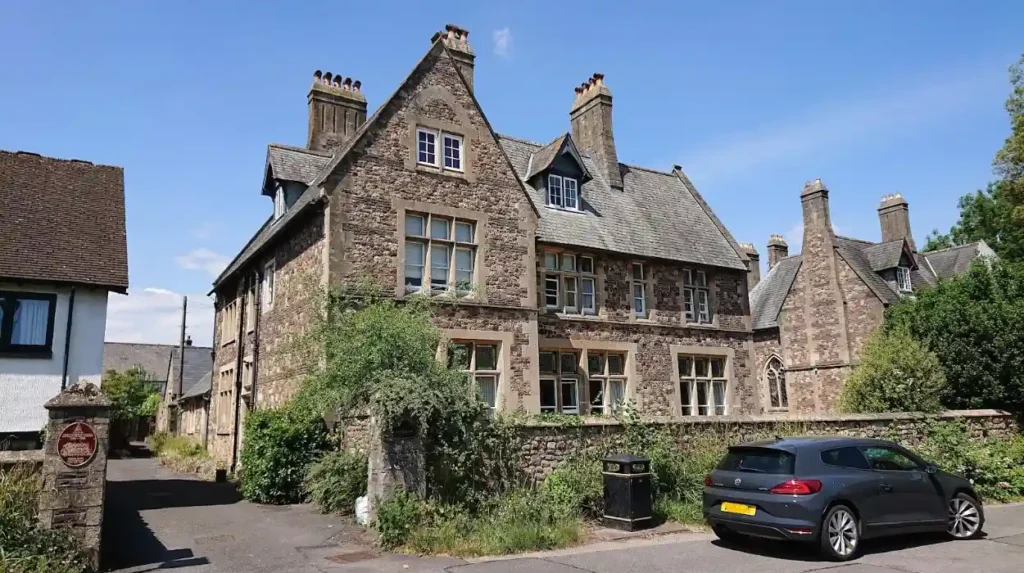
The Avenue contains early twentieth-century houses with features including gable-fronted bay windows, terracotta brick detailing, white render and tiled roofs. Fairwater Road includes locally significant buildings and positive contributors set within larger plots.
When was the Llandaff Conservation Area created?
Llandaff became Cardiff’s first designated conservation area in March 1968. Later studies were undertaken during the 1970s and 1980s, a major appraisal was adopted in 2006, and the current reviewed appraisal was adopted by Cardiff Council in December 2020.
The 1968 designation gives Llandaff a particularly important place in Cardiff’s conservation history.
The designation followed an environmental study and planning brief. Cardiff subsequently developed conservation-area appraisal procedures to identify historic character, assess changes and establish management priorities.
The 2006 appraisal included an extension to the conservation-area boundary. The later review examined changes to buildings and boundaries and assessed how alterations affected the character of the area.
The 2020 appraisal recorded a detailed photographic comparison between 2004 and 2017. It assessed 327 properties and 84 individual alterations. Of the properties assessed, 13% were considered enhanced, 83% preserved and 3% harmed. Of the alterations, 58% enhanced character, 25% preserved it and 17% had a harmful impact.
These figures demonstrate why conservation management focuses on cumulative changes. Individual alterations such as windows, doors, rooflights, boundary walls, dormers, painting, garden changes and signage can affect the character of a wider historic area.
What makes Cardiff Road a separate conservation area?
Cardiff Road is a separate conservation area because its historic character differs from Llandaff’s medieval core. It is defined by Edwardian villas, mature trees, boundary walls, Howells School, Llandaff Fields and the historic expansion of Cardiff towards Llandaff.
Cardiff Road developed mainly during Cardiff’s rapid late nineteenth-century expansion.
The area attracted substantial houses and villas associated with wealthy merchants. The revival of interest in Llandaff Cathedral contributed to the attractiveness of the surrounding area for residential development.
The Cardiff Road Conservation Area was designated in 1974.
Its architectural character differs from the medieval and ecclesiastical focus of central Llandaff. The appraisal identifies large Edwardian properties, generous setbacks, low boundary walls and mature tree cover as important features.
The area also includes Howells School, whose buildings date from the nineteenth century. The appraisal identifies the school as an architectural focus within the conservation area.
Llandaff Fields forms an important landscape edge to the conservation area. The fields are recorded as a Grade II* registered historic park and garden, adding another layer of historic landscape significance to the wider setting.
What is special about the architecture of Cardiff Road?
Cardiff Road contains substantial nineteenth- and early twentieth-century buildings with Edwardian architectural characteristics, including bay windows, gables, sash windows, decorative porches, brickwork, rendered elevations and mature landscaped gardens. Howells School provides a major institutional architectural landmark.
The architectural interest is not based on one building alone.
The conservation-area appraisal identifies a coherent group of residential buildings. Many retain original architectural details, including sash windows, shaped transoms, decorative ironwork, wooden porches, stained fanlights and original front doors.
The area also contains different building materials. Examples include Forest of Dean lias stone, slate, Radyr stone, red brick and stucco.
The mature vegetation is another major component. Trees along Cardiff Road form a strong canopy and contribute to the street’s visual identity. Many trees benefit from Tree Preservation Orders, while conservation-area designation provides additional protection for trees within the area.
What is protected in the Llandaff conservation areas?
Conservation-area protection covers the wider character of a designated area, including buildings, streets, trees, boundaries, landscape, open spaces and views. Additional planning controls apply to demolition and some development, while trees inside conservation areas receive specific protection.
Conservation-area designation is different from listed-building designation.
A listed building is an individual building or structure recognised for special architectural or historic interest. A conservation area protects the character and appearance of a wider geographical area.
Cadw states that conservation areas require special regard to be given to preserving or enhancing their character and appearance when planning functions are exercised. The Historic Environment (Wales) Act 2023 provides the current primary legislative framework for conservation areas in Wales.
Cardiff Council states that national planning controls apply to properties inside conservation areas. The council also notes that additional Article 4 Directions apply in some locations.
Trees receive particular attention. Cardiff Council states that permission is required for works to trees within conservation areas. This applies even where a tree does not have an individual Tree Preservation Order.
Does being in a conservation area mean a property is listed?
No. A conservation area and a listed building are separate heritage designations. A property inside a conservation area is not automatically listed, while a listed building can have additional legal protection because of its individual architectural or historic interest.
This distinction is important for homeowners and buyers.
A conservation area concerns the character of the surrounding place. Listing concerns the special interest of an individual building or structure.
Cadw lists buildings in three grades: Grade I, Grade II and Grade II*. Grade I buildings are of exceptional interest, Grade II* buildings are particularly important buildings of more than special interest, and Grade II buildings are of special interest.
A listed building normally requires Listed Building Consent for works that affect its special architectural or historic character.
Cardiff Council states that around 1,000 listed buildings exist across Cardiff. The city also has around 300 locally listed buildings. These designations operate alongside conservation-area controls.
A property in Llandaff therefore requires a property-specific check. Its location within a conservation area does not by itself establish whether it is individually listed.
How does conservation status affect planning applications in Llandaff?
Planning proposals in Llandaff conservation areas are assessed against the special architectural and historic character of the relevant designation. The location, design, materials, boundaries, trees, landscape setting and relationship with neighbouring historic buildings can all influence planning assessment.
Cardiff’s Local Development Plan includes policies relating to built heritage and conservation of the historic environment.
The Llandaff appraisal identifies Policy EN9 as particularly relevant. It states that development relating to conservation areas should demonstrate that it preserves or enhances architectural quality, historic and cultural significance, character, integrity or setting.
The appraisal therefore acts as an important evidence document.
It identifies buildings, spaces, views, materials, landscape features and historic relationships that contribute to the character of Llandaff.
This approach does not mean that every change is prohibited. Conservation-area management is intended to control change while allowing appropriate development. Cadw describes the purpose of conservation-area management as preserving and enhancing the character and appearance of designated areas while enabling positive management of change.
Are trees protected in Llandaff conservation areas?
Trees inside Cardiff conservation areas receive legal protection through the planning system. Cardiff Council states that permission is required for works to trees in conservation areas, including pruning or removal, unless specific exemptions apply under the relevant regulations.
Trees form a significant part of Llandaff’s historic character.
The Llandaff appraisal identifies mature trees, historic avenues and landscaped spaces as important components of the area. Cardiff Road also has a strong tree canopy that contributes directly to its special character.
Tree protection applies independently from the architectural value of individual buildings.
A homeowner considering substantial pruning, felling or other tree work should therefore check the property’s conservation-area status and relevant tree controls before starting work.
The presence of a Tree Preservation Order provides another layer of protection. Cardiff Council identifies both conservation areas and Tree Preservation Orders as mechanisms for protecting trees.
How did Llandaff develop into its current historic form?
Llandaff developed from an early settlement associated with Christianity and the River Taff into a medieval episcopal centre, then a market and pilgrimage settlement, and later a residential suburb of Cardiff. Its surviving buildings and landscapes reflect these successive historical phases.
The settlement has very old origins.
The Llandaff appraisal records prehistoric origins and describes the strategic importance of its elevated position near the River Taff. An early Christian enclosure developed near the river crossing and pilgrimage routes.
During the twelfth century, Llandaff became a bishop’s seat under Norman rule. Llandaff Cathedral, the Bishop’s Palace and the Bell Tower reflect this ecclesiastical history.
Development slowed between the sixteenth and eighteenth centuries before accelerating during the eighteenth and nineteenth centuries.
Gentry houses appeared alongside renewed development around the cathedral. Cardiff’s rapid nineteenth-century expansion then encouraged new residential development along routes such as Cardiff Road.
The twentieth century brought further suburban expansion. The Llandaff conservation boundary now captures historic buildings and later residential development that contribute to the area’s layered character.
How does Llandaff Fields relate to conservation in Llandaff?
Llandaff Fields provides an important historic landscape setting for the Llandaff and Cardiff Road areas. The fields are recorded as a Grade II registered historic park and garden, while the Llandaff conservation appraisal recognises their contribution to the wider historic landscape.*
Historic landscape protection works alongside conservation-area designation.
The Cadw Register of Landscapes, Parks and Gardens of Special Historic Interest in Wales records historic parks and gardens that have special historic interest. Cardiff Council states that 18 parks and gardens in Cardiff appear on the register, including 12 public parks.
Llandaff Fields therefore forms part of a wider network of protected historic environments.
Its importance is not limited to recreation. Its relationship with surrounding streets, mature vegetation and historic buildings contributes to the setting and visual character of the area.
This demonstrates why conservation planning considers spaces between buildings as well as the buildings themselves.
How can you check whether a property is inside a Llandaff conservation area?
The most reliable way to check a Llandaff property is to use Cardiff Council’s conservation-area mapping and planning information, then check the relevant appraisal boundary. Property searches should also identify conservation-area status, listed-building status and other applicable local land charges.
Cardiff Council provides an online map for checking whether a property falls within a conservation area.
The council also publishes conservation-area appraisals describing the character and boundaries of designated areas. The Llandaff appraisal is particularly useful for understanding the boundary and identifying the different character areas.
A property buyer should not rely only on a postcode or the name of the neighbourhood.
Llandaff is a wider geographical and administrative area, while conservation-area boundaries are defined precisely. A property close to Llandaff can therefore have a different planning designation from another property on the same broad neighbourhood boundary.
Official searches are also relevant during property transactions. Cardiff Council states that local land charges can include conservation areas, Tree Preservation Orders, listed buildings and planning permissions.
What should homeowners know before altering a property in Llandaff?
Homeowners should establish the exact conservation-area boundary, identify any Article 4 Direction, check listed-building status, review tree restrictions and assess whether planning permission or other consent is required before altering windows, doors, roofs, boundaries, extensions, trees or other visible features.
The first step is identifying the relevant designation.
The second step is checking the specific planning controls.
Cardiff Council states that some conservation areas have Article 4 Directions. These directions can remove certain permitted development rights and introduce additional controls over specified alterations.
The Llandaff appraisal also records an Article 4 Direction introduced in 2018 concerning partial demolition of boundary walls. Boundary walls therefore form an important part of the planning context in the area.
Windows, doors, roofs, walls, landscaping and other external features can contribute strongly to historic character. The appropriate requirements depend on the property, its designation and the proposed work.
Where a property is listed, separate listed-building controls apply.
Cardiff Council recommends submitting a pre-application enquiry when considering alterations where planning advice is required.
Why are Llandaff’s conservation areas important for Cardiff’s heritage?
Llandaff’s conservation areas protect different layers of Cardiff’s historic development, from the medieval cathedral settlement to Victorian and Edwardian expansion and the historic Insole Court estate. Together, these designations preserve architectural character, landscape relationships and evidence of Cardiff’s long-term urban development.
Llandaff is significant because its heritage is distributed across buildings, streets, landscapes and historic relationships.
The main Llandaff Conservation Area records the historic core and its ecclesiastical identity. Cardiff Road records the later residential expansion of Cardiff and Llandaff. Insole Court represents a separate historic estate environment.
This layered protection supports long-term management of the historic environment.
Cadw states that conservation areas are intended to preserve and enhance special character and that appraisals provide an evidence base for positive management.
For residents, property owners, visitors and researchers, the designations provide a framework for understanding why particular streets, buildings, trees and landscapes have retained their character.
The conservation-area system also ensures that future development is considered in relation to the historic environment rather than only the individual development site.
Explore More Area Guide
Grangetown Cardiff Flood Zone: Flood Risk Guide
Cardiff Health Board: Cardiff and Vale University Health Board
What is the difference between Llandaff ward and Llandaff Conservation Area?
Llandaff ward is an administrative area used for local government representation, while Llandaff Conservation Area is a defined heritage-planning designation. The ward contains three conservation areas listed by Cardiff Council: Llandaff, Cardiff Road and Insole Court.
This distinction answers much of the confusion around the phrase “conservation areas covering Llandaff.”
The Llandaff ward is the larger administrative reference.
The Llandaff Conservation Area is one specific protected historic area.
The Cardiff Road Conservation Area is another.
The Insole Court Conservation Area is another.
Therefore, a search for “Llandaff conservation area” should not automatically be interpreted as meaning every part of the Llandaff ward.
The exact designation depends on the property’s location.
What is the current conservation picture for Llandaff?
Llandaff remains covered by a network of distinct conservation designations rather than one uniform heritage zone. Cardiff Council’s current register identifies Llandaff, Cardiff Road and Insole Court under the Llandaff ward, supported by appraisals and planning controls for managing historic character.
The central Llandaff Conservation Area remains the principal designation associated with the historic village and cathedral setting.
Its current appraisal was adopted in December 2020 and incorporates a boundary extension covering The Avenue and additional properties along Fairwater Road.
Cardiff Road has a separate conservation-area history dating from 1974 and is particularly associated with Edwardian residential architecture, mature trees and the setting of Llandaff Fields.
Insole Court is separately identified by Cardiff Council as a conservation area within the Llandaff ward.
The wider planning framework is now governed by the contemporary Welsh historic-environment framework, including the Historic Environment (Wales) Act 2023 and associated regulations and guidance.
For anyone researching a Llandaff property, the most accurate approach is therefore to check the exact address against Cardiff Council’s conservation-area map, relevant appraisal boundary, planning records, listed-building records and tree controls.
Llandaff’s conservation status is not based on one building or one historical period. It reflects the combined importance of its medieval origins, cathedral precinct, village streets, nineteenth-century expansion, Edwardian architecture, historic landscapes, mature trees and surviving relationship with the River Taff.
How many conservation areas are in Llandaff?
There are three conservation areas listed within the Llandaff ward by Cardiff Council: Llandaff Conservation Area, Cardiff Road Conservation Area and Insole Court Conservation Area. Each has a separate historic character and planning context.