Grangetown is a residential district in southern Cardiff, located between Cardiff city centre, Cardiff Bay, Canton, Riverside and the River Ely corridor. Its location gives residents access to central Cardiff, rail services, bus routes, local shops, schools, parks and community facilities.
- Where is Grangetown and what is the area like?
- How did Grangetown develop historically?
- What types of housing are available in Grangetown?
- Is Grangetown affordable for housing in Cardiff?
- How good is public transport in Grangetown?
- How easy is it to travel from Grangetown to Cardiff city centre?
- What shops and everyday amenities are available in Grangetown?
- What schools and community facilities serve Grangetown?
- What parks and green spaces are available in Grangetown?
- How does regeneration affect living in Grangetown?
- What is daily life like for residents in Grangetown?
- Is Grangetown well connected to Cardiff Bay and surrounding areas?
- What should people check before moving to Grangetown?
- What is the future outlook for living in Grangetown?
- Why do housing, transport and amenities matter when living in Grangetown?
The area has a strong connection with Cardiff’s industrial and maritime history. Its modern identity also reflects housing renewal, community organisations, active travel investment and wider regeneration across southern Cardiff.
For people researching living in Grangetown, Cardiff, the main considerations are housing, transport, amenities, access to employment, green space and the area’s continuing physical development.
Where is Grangetown and what is the area like?
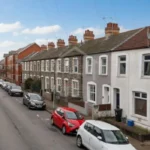
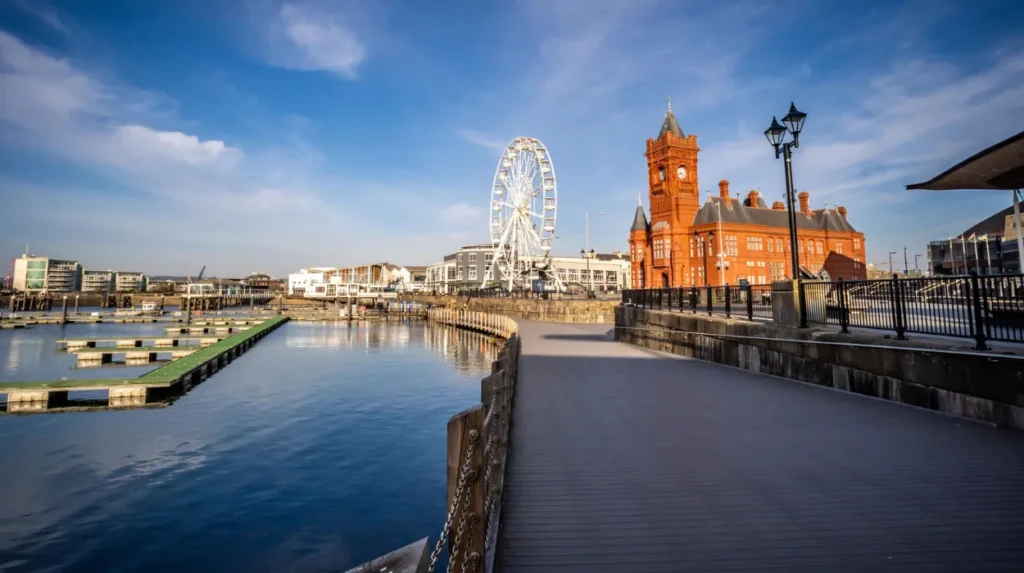
Grangetown is a densely developed residential district south of Cardiff city centre, close to Cardiff Bay and Penarth Road. It combines Victorian housing, later residential development, local shops, community facilities, schools, parks and transport connections.
Grangetown sits within the southern part of Cardiff and has a strategic location between the city centre and Cardiff Bay.
Its built environment reflects several stages of Cardiff’s growth. Older streets developed alongside the expansion of Cardiff Docks and the city’s industrial economy. Later housing development increased the residential population and created the neighbourhood pattern visible today.
The district is closely connected with Penarth Road, Clive Street, Corporation Road, Ferry Road and the routes leading towards Cardiff Bay. These roads provide connections to surrounding districts and major destinations.
Grangetown also has a strong relationship with nearby Butetown, Riverside, Canton, Ely, Leckwith and Cardiff Bay. This makes the area relevant to residents who travel regularly across southern and central Cardiff.
The neighbourhood has a mixed urban character. Terraced streets sit alongside modern housing, community spaces and commercial premises. This creates differences between individual streets rather than one uniform housing environment.
Cardiff Council has also delivered neighbourhood renewal work in North Grangetown. More than 400 homes benefited from external repairs and boundary-wall improvements through one completed renewal programme. The work also included pavement improvements, street trees, traffic-calming measures and community-garden development.
How did Grangetown develop historically?
Grangetown developed as Cardiff expanded during the industrial and Victorian period, with its growth closely linked to docks, coal exports, housing demand and transport. Its history reflects Cardiff’s transformation from a smaller settlement into a major industrial and maritime city.
The history of Grangetown is closely connected to Cardiff’s wider industrial expansion.
Cardiff became an important coal-exporting port during the nineteenth century. Coal from the South Wales valleys moved through Cardiff Docks to international markets. This created employment and increased demand for housing close to industrial and maritime workplaces.
Glamorgan Archives records that Cardiff exported 13.7 million tons of cargo in 1913, including 10.5 million tons of coal. The scale of this trade required a large maritime workforce and extensive commercial infrastructure.
Grangetown developed within this wider economic environment.
The neighbourhood’s historical development has been studied by the Grangetown Local History Society and Glamorgan Archives. A dedicated historical study covers Grangetown’s urban development from 1100 to 1900, demonstrating that the area’s story extends beyond its Victorian housing period.
Industrialisation changed the surrounding landscape significantly. New roads, housing, businesses, transport routes and public services developed as Cardiff’s population increased.
The connection with Cardiff Docks also contributed to the area’s multicultural and working-class history. Cardiff’s port attracted workers and residents from different parts of Wales, Britain and overseas.
This historical background remains visible in the area’s street pattern and older housing stock.
Understanding this history is useful when assessing housing in Grangetown because much of the neighbourhood’s older residential fabric reflects the urban expansion associated with Cardiff’s industrial economy.
What types of housing are available in Grangetown?
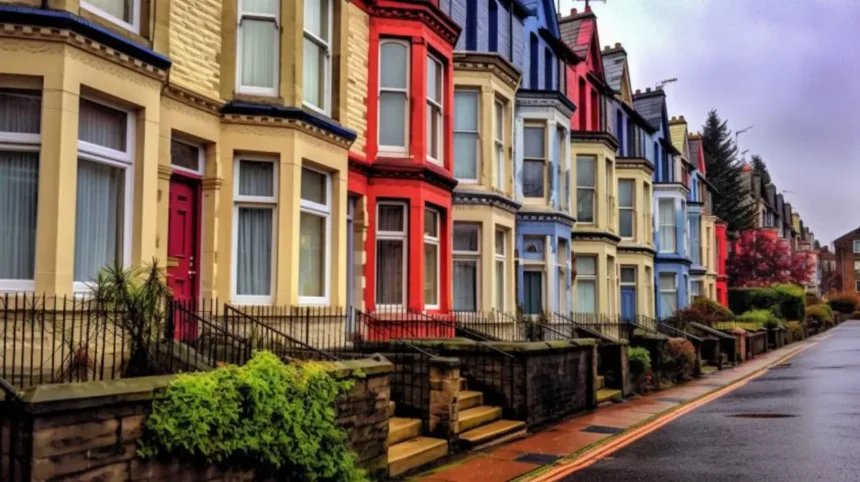
Housing in Grangetown includes traditional terraced houses, converted properties, flats, modern residential developments and social housing. The housing stock reflects the area’s Victorian expansion, later estate development and more recent investment in residential property.
Traditional terraced housing forms an important part of Grangetown’s built environment.
Many older properties were constructed during Cardiff’s nineteenth- and early-twentieth-century urban expansion. These homes often have compact floorplans, front-facing entrances, narrow plots and small rear gardens.
The area’s housing stock also includes flats. Some are purpose-built, while others occupy converted older buildings.
Modern developments provide another housing category. Newer schemes generally offer contemporary layouts, improved energy performance and different tenure options from older terraces.
Social housing is also part of the neighbourhood’s residential structure. Cardiff Council’s housing and regeneration programmes include work designed to improve housing environments and community facilities.
The council’s neighbourhood regeneration programme defines regeneration as improvements to housing, streets, public spaces and local services. Its stated objectives include safer communities, improved quality of life and stronger neighbourhood environments.
Housing conditions therefore vary considerably between properties.
A prospective resident needs to assess individual homes rather than treating Grangetown’s housing market as one uniform category. Important considerations include property age, insulation, maintenance, garden provision, parking, tenure, renovation quality and proximity to busy roads.
Older terraces can also have different internal layouts from modern housing. This affects suitability for households seeking larger living areas, home offices or accessible accommodation.
Is Grangetown affordable for housing in Cardiff?
Grangetown has a broad housing mix, so affordability varies by property type, tenure, condition, size and exact location. Older terraces and smaller flats represent different price segments from larger renovated homes and newer developments. Current asking prices require property-by-property comparison.
Housing affordability in Grangetown needs to be assessed against the wider Cardiff market and the specific property being considered.
There is no single Grangetown housing price because property values differ according to location, size, condition and tenure.
A two-bedroom Victorian terrace, a modern apartment and a larger family house represent different housing markets even when they are located within the same district.
Renters also face different cost structures from buyers. Monthly rent is only one part of the calculation. Council tax, energy costs, insurance, transport and maintenance contribute to the overall cost of living.
The age of the building is particularly relevant. Older terraces can have maintenance requirements associated with roofs, windows, external walls, plumbing and energy efficiency.
Newer homes often have different maintenance profiles but can have service charges when located within managed developments.
Cardiff Council has identified affordable housing as a continuing city priority. Its 2026 budget information states a target of 4,000 new homes by 2035, with 1,800 already built at the time of the statement.
That citywide programme forms part of the broader housing context in which Grangetown sits.
People comparing Grangetown with other Cardiff districts should therefore compare equivalent properties rather than headline neighbourhood averages.
How good is public transport in Grangetown?
Grangetown has strong public transport connections through its railway station, bus network and proximity to Cardiff city centre and Cardiff Bay. Transport options support commuting, education, shopping and leisure journeys without requiring every trip to be made by car.
Rail is one of Grangetown’s most important transport assets.
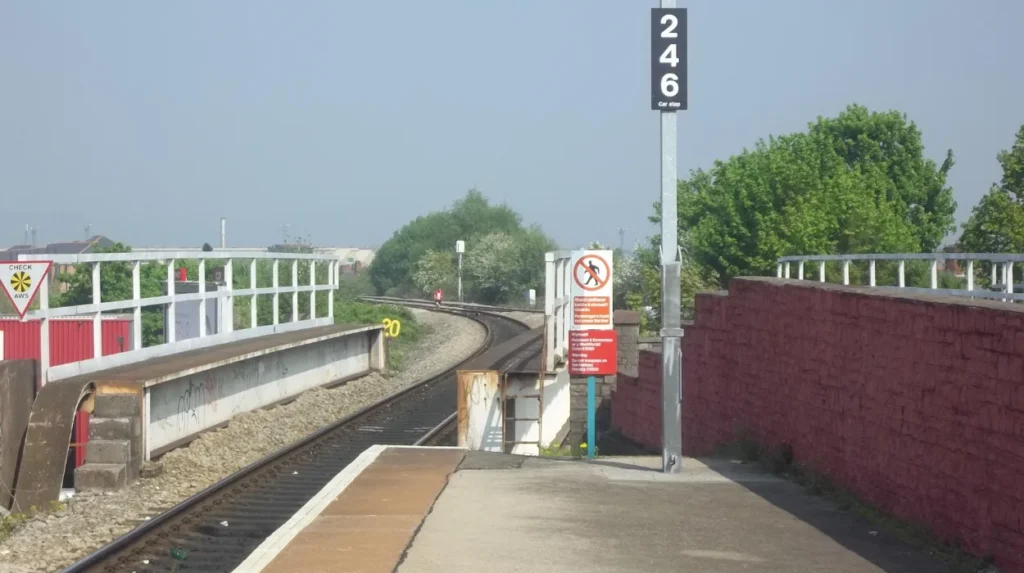
Grangetown railway station is on Penarth Road and is operated by Transport for Wales. It provides rail access towards Cardiff Central and Penarth. Glamorgan Archives describes Grangetown as a station on the Penarth line and records frequent services from Cardiff Central.
Transport for Wales lists the station as unstaffed, with ticket machines, departure and arrival screens, customer help points and other passenger facilities.
The station has an important accessibility limitation. Transport for Wales classifies Grangetown as Category C, with platforms accessible by stairs. It is not wheelchair or mobility-scooter accessible, and Cardiff Central is identified as the nearest fully accessible station.
This distinction is important for residents who require step-free railway access.
Bus services provide another major transport option. Routes through southern Cardiff connect Grangetown with the city centre, Cardiff Bay and neighbouring districts.
Walking and cycling are increasingly relevant to local transport planning. Cardiff Council’s wider transport strategy focuses on reducing congestion, improving air quality and expanding active travel and public transport options. Its transport plans include proposed Cardiff Crossrail and Cardiff Circle tram-train connections.
For many residents, Grangetown’s location reduces the need for long cross-city journeys.
How easy is it to travel from Grangetown to Cardiff city centre?
Cardiff city centre is close to Grangetown, with rail, bus, cycling and walking options available. The short geographic distance makes the district practical for people working, studying, shopping or using services in central Cardiff.
The proximity to central Cardiff is one of Grangetown’s defining characteristics.
Cardiff Central railway station is the city’s principal rail hub and provides national and regional connections. Residents can also use Grangetown station for journeys on the Penarth line.
Walking and cycling provide alternatives for shorter journeys.
The exact journey time depends on the starting street, destination and transport mode. A resident near Penarth Road has different access from someone living deeper inside the neighbourhood.
The relationship with the city centre also affects daily access to employment and services. Residents can use central Cardiff for major retail, offices, cultural venues, healthcare facilities, higher education and entertainment.
Cardiff Council’s transport planning recognises the importance of connecting existing communities with sustainable transport. Its transport proposals include improvements to public transport and active travel infrastructure across the city.
For commuters, this makes transport accessibility an important reason to examine the exact location of a property within Grangetown.
What shops and everyday amenities are available in Grangetown?
Grangetown provides everyday amenities through local shops, food businesses, community facilities, schools, green spaces and services. Larger retail and commercial destinations are also available nearby, particularly around Cardiff city centre, Cardiff Bay and the surrounding southern Cardiff districts.
Grangetown functions as a residential neighbourhood with local services supporting everyday needs.
Residents can access convenience shopping, food outlets and other neighbourhood services without travelling into central Cardiff for every purchase.
The wider area expands these options considerably.
Cardiff Bay provides restaurants, leisure destinations and waterfront facilities. Cardiff city centre provides larger retail, cultural and commercial services. Nearby retail destinations also supplement local shopping.
This combination creates a distinction between neighbourhood amenities and city-level amenities.
Neighbourhood amenities are useful for routine activities such as buying groceries, collecting prescriptions or accessing local services. Larger destinations serve less frequent requirements such as major shopping, entertainment and specialist services.
Community facilities are also significant.
Glamorgan Archives records the role of community organisations in Cardiff’s southern neighbourhoods. Its research material identifies Grangetown Community Concern, now Grangetown Community Action, as an organisation involved in local issues, projects, campaigns and the Grangetown Carnival.
Community infrastructure therefore forms part of Grangetown’s identity alongside commercial services.
What schools and community facilities serve Grangetown?
Grangetown is supported by local schools, community organisations, public services, parks and neighbourhood projects. Education and community provision forms part of Cardiff Council’s wider investment in local infrastructure and neighbourhood regeneration.
Families assessing Grangetown need to consider individual school catchment areas rather than relying only on the neighbourhood name.
School admissions in Cardiff operate through formal council processes. Catchment boundaries determine eligibility for particular schools and can change over time.
A property’s exact address therefore matters when evaluating school access.
Community facilities provide another layer of local infrastructure. They support activities involving residents, children, families, voluntary groups and local organisations.
Cardiff Council’s neighbourhood renewal approach involves local councillors and communities in identifying improvement priorities. Completed projects include changes to pavements, roads, public spaces, gardens and community environments.
Grangetown’s community activity also has a documented historical dimension.
Glamorgan Archives holds records relating to Grangetown Community Concern and other organisations involved in community development in southern Cardiff.
This makes local community infrastructure relevant not only to current residents but also to understanding how the neighbourhood has developed.
What parks and green spaces are available in Grangetown?
Grangetown contains local open spaces and community gardens, while larger parks and waterfront environments are accessible in surrounding Cardiff districts. Regeneration projects have also introduced landscaping, street trees, safer pedestrian routes and improved neighbourhood public spaces.
Green space in Grangetown operates at several scales.
Small local spaces support everyday recreation. Larger parks elsewhere in Cardiff provide more extensive areas for walking, sport and leisure.
North Grangetown has benefited from community-focused environmental improvements. Cardiff Council records the creation of Gerddi Courtmead Gardens, a community garden developed with local residents and children. The project formed part of wider neighbourhood renewal activity.
Street improvements also contribute to the local public realm.
Tree planting, improved pavements and traffic-calming measures influence how residents experience streets on foot.
Cardiff’s wider environmental strategy places importance on accessible open spaces and sustainable transport. The council’s Stronger Fairer Greener strategy identifies high-quality open spaces and sustainable transport as components of its long-term city objectives.
For residents choosing a property, proximity to a particular park or green space should therefore be checked at street level.
How does regeneration affect living in Grangetown?
Regeneration in Grangetown focuses on housing conditions, streets, public spaces, pedestrian safety, community facilities and the wider residential environment. These projects form part of Cardiff Council’s broader programme to improve neighbourhood quality and infrastructure.
Regeneration is an important part of Grangetown’s present-day development.
Cardiff Council describes neighbourhood regeneration as the process of updating areas to meet current needs. Its programme covers housing, streets, public spaces and local services.
North Grangetown provides a documented example.
More than 400 homes received external repairs and boundary-wall improvements. The programme also introduced pavement build-outs, street trees, road-surfacing work, raised junctions and community-garden improvements.
Transport-related improvements continue to form part of the area’s infrastructure planning.
In 2026, Cardiff Council consulted on a proposed tabled zebra crossing on Ferry Road, Grangetown. The proposal aimed to improve pedestrian crossing facilities and reduce vehicle speeds. The council stated that delivery was proposed for 2027–2028, subject to funding.
Such projects demonstrate how regeneration affects practical aspects of daily life.
Residents should distinguish between completed schemes, funded schemes, proposals and long-term strategies. Planning status can change, so current council information is the appropriate source for individual projects.
What is daily life like for residents in Grangetown?
Daily life in Grangetown combines residential streets, local services, public transport, community activity and convenient access to central Cardiff. Residents also experience the practical differences created by traffic, housing type, parking, property condition and proximity to major roads.
The neighbourhood’s residential character supports routine urban living.
Local shops and services reduce the need for some short journeys. Public transport provides access to larger employment, retail and cultural centres.
The housing environment varies significantly.
Older terraced streets can have limited off-street parking. Modern developments can have different parking arrangements, communal areas and management structures.
Busy roads also influence individual properties differently.
Penarth Road and other major routes perform important transport functions but can experience higher traffic levels than quieter residential streets.
For pedestrians, street design is therefore relevant. Cardiff Council’s work on pavement improvements, build-outs and traffic-calming measures demonstrates the importance of pedestrian infrastructure in the area.
Community life is another defining feature.
Organisations, local campaigns and events contribute to neighbourhood activity. The historical record of Grangetown Community Action illustrates the long-term role of community organisations in the district.
For new residents, understanding the immediate street and nearby facilities provides a more accurate picture of daily life than relying solely on a general description of Grangetown.
Is Grangetown well connected to Cardiff Bay and surrounding areas?
Grangetown has a strategic position between Cardiff city centre, Cardiff Bay and southern Cardiff neighbourhoods. Rail, buses, roads, walking and cycling routes connect residents with nearby destinations, while major roads provide wider access across the city and surrounding areas.
Cardiff Bay is particularly important to Grangetown’s location.
The bay area has undergone major redevelopment over recent decades, creating cultural, leisure, commercial and residential destinations.
Grangetown’s southern position provides access to these destinations without placing residents far from the city centre.
The district is also connected with Penarth and other communities in the Vale of Glamorgan through the Penarth rail corridor and road network.
Nearby districts provide additional services and amenities. These include Riverside, Canton, Butetown, Leckwith and the central Cardiff area.
Transport connections are therefore distributed across several modes rather than depending on one route.
Cardiff Council’s long-term transport planning also focuses on improving connections between communities and increasing alternatives to private car travel.
This is relevant to future residents because transport investment can influence accessibility, journey patterns and the relationship between neighbourhoods.
What should people check before moving to Grangetown?
People considering a move to Grangetown should assess the exact property, street, transport access, parking, school catchment, local amenities, flood and environmental information, housing condition and current regeneration proposals before making a housing decision.
A neighbourhood guide provides context, but property-level research remains essential.
The first consideration is the exact address. Different parts of Grangetown have different relationships with railway stations, major roads, shops, schools and green spaces.
The second consideration is housing condition. Older properties require checks covering insulation, windows, roofs, damp, heating systems and general maintenance.
Transport accessibility also requires attention. Grangetown railway station has stairs-only platform access, which is significant for people who require step-free facilities.
Parking is another practical issue. Older terraced streets can have limited private parking, so prospective residents should inspect local parking arrangements at different times.
School catchment should be verified through current Cardiff Council information rather than property advertisements.
Residents should also distinguish between completed regeneration and future proposals. Cardiff Council’s published project information identifies completed North Grangetown improvements, while separate consultations cover future infrastructure projects such as the Ferry Road crossing.
Finally, buyers and renters should examine current planning applications and local development information.
Cardiff Council’s planning and development framework links new housing with infrastructure such as transport corridors, schools, community facilities and green spaces.
Explore More Area Guide
Living in Pontcanna: Cardiff Housing, Transport & Amenities
Living in Cathays Cardiff: Student Housing, Transport & Amenities
What is the future outlook for living in Grangetown?
Grangetown’s future is connected to Cardiff’s housing, transport, regeneration and sustainability programmes. Continued neighbourhood investment, active-travel planning, housing development and public-transport improvements will influence how the district functions as Cardiff expands.
Grangetown sits within a city experiencing continued housing and infrastructure pressure.
Cardiff Council’s current housing programme targets 4,000 new homes by 2035, with 1,800 reported as already built in its 2026 budget information.
Transport is another major area of investment.
Cardiff’s transport strategy includes proposals for Cardiff Crossrail and Cardiff Circle tram-train lines, alongside improvements to active travel and public transport.
These citywide policies are relevant to Grangetown because the district occupies a strategically connected position in southern Cardiff.
Regeneration also remains an ongoing process. Cardiff Council continues to identify neighbourhood improvements involving streets, public spaces, housing and community facilities.
The area’s future therefore involves both existing residential character and continued infrastructure change.
For residents, the practical implications are clear. Transport access, housing quality, local amenities and public-space improvements remain central to the experience of living in Grangetown.
Why do housing, transport and amenities matter when living in Grangetown?
Housing determines everyday residential conditions, transport determines access to work and services, and amenities support daily needs. In Grangetown, these factors are closely connected through its location between Cardiff city centre, Cardiff Bay and southern Cardiff communities.
Grangetown’s appeal as a residential district is closely linked to its urban position.
Its housing stock reflects Cardiff’s industrial and residential history. Its railway station and bus connections support movement across the city. Its local shops and community facilities support everyday life. Nearby Cardiff Bay and central Cardiff provide larger-scale services and leisure destinations.
The neighbourhood also demonstrates how older urban districts change over time.
Historical housing sits alongside newer development. Community organisations operate alongside modern regeneration programmes. Transport infrastructure continues to evolve while established roads and railway routes remain important.
Cardiff’s wider housing and transport policies will continue to influence the district.
For anyone researching living in Grangetown, the most useful approach is to assess the specific street and property alongside the wider neighbourhood context. Housing type, transport access, local services, school catchment, parking, green space and regeneration plans all contribute to the practical experience of living in this part of Cardiff.
Is Grangetown a good area to live in Cardiff?
Grangetown is a residential area in south Cardiff with access to Cardiff city centre, Cardiff Bay, public transport, local shops, schools, green spaces and community facilities. Housing ranges from traditional terraces to flats and newer developments.