Key Points
- Two Cardiff men, Kieran Chapman and Keanu Hicks, have been jailed after admitting offences linked to the supply of Class A drugs.
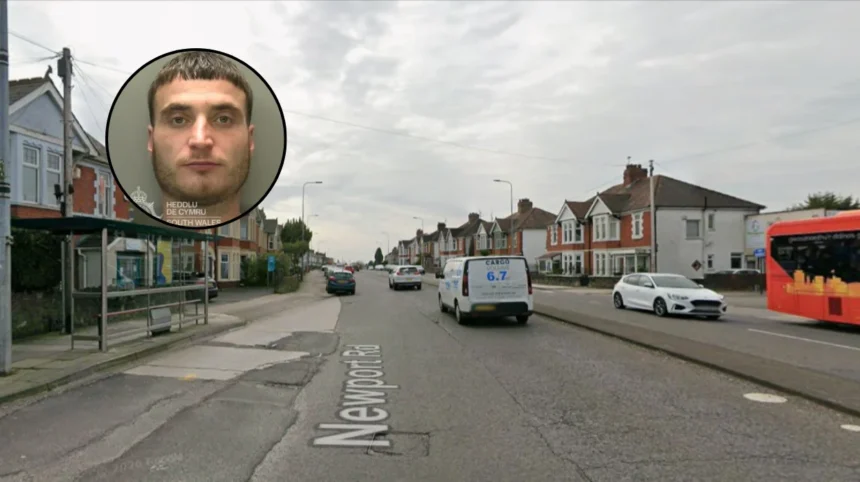
- The pair were stopped in a rental vehicle on Newport Road in Cardiff on 9 April 2025.
- Police found wraps of crack cocaine and heroin, cash, and mobile phones, including one linked to a drug line.
- Chapman received four years and five months in prison after pleading guilty to being concerned in the supply of cocaine and heroin.
- Hicks was jailed for three years and four months after pleading guilty to possessing cocaine and heroin with intent to supply.
- A search of the address linked to Chantelle Johnson, the driver of the vehicle, uncovered cannabis, shotgun shells and a bullet-proof vest.
- Johnson received a three-year jail sentence, suspended for 30 months.
- Detective Sergeant Lia Jones said the quantities of drugs and cash made the criminal links immediately clear and that the trio belonged in prison.
- The case underlines police efforts to tackle drug supply networks and associated criminality in Cardiff.
Cardiff (Cardiff Daily) August 4, 2026 – Two men from Cardiff have been jailed after pleading guilty to their involvement in the supply of Class A drugs, in a case that police say exposed strong ties to wider criminality and local drug dealing.
- Why were Kieran Chapman and Keanu Hicks jailed?
- What did police find in the car?
- What happened after Chantelle Johnson was arrested?
- What did Detective Sergeant Lia Jones say?
- How did the case progress through the courts?
- Why do cases like this matter in Cardiff?
- What does the evidence suggest about the supply operation?
- How have police described the harm caused?
- What is the background of this development?
- What is the prediction for local residents?
Why were Kieran Chapman and Keanu Hicks jailed?
As reported in the supplied account, 29-year-old Kieran Chapman, from St Mellons, and 26-year-old Keanu Hicks, from Adamsdown, were both in a rental vehicle stopped by officers on Newport Road on 9 April 2025. Police searched the vehicle and found numerous wraps of crack cocaine and heroin, alongside a significant amount of cash and several mobile phones.
One of the phones recovered, which was found in the vehicle’s glove box, was linked to a drug line. That detail added an important line of enquiry for investigators, as it suggested the vehicle may have been connected to organised drug distribution rather than a one-off possession case. The discovery also gave officers further evidence to support the later guilty pleas entered by the two men.
Chapman pleaded guilty to being concerned in the supply of cocaine and heroin. He was sentenced to four years and five months in prison. Hicks pleaded guilty to possessing with intent to supply cocaine and heroin and was jailed for three years and four months.
What did police find in the car?
The main seizure from the vehicle was the combination of Class A drugs, cash and phones. In drug cases, those items are often treated by investigators as possible indicators of supply activity, particularly where the quantities and packaging suggest distribution rather than personal use.
The statement supplied by police said the smell of cannabis was also overwhelming at the time of the stop. That detail, together with the heroin and crack cocaine recovered, helped form the basis of the later investigation. The presence of multiple mobile phones, meanwhile, can be significant in drug supply cases because phones are often used to manage customers, routes and payments.
What happened after Chantelle Johnson was arrested?
The driver of the vehicle, 36-year-old Chantelle Johnson, from Gabalfa, Cardiff, was also drawn into the investigation after the arrest. Following the stop and subsequent arrests, police searched her address.
During that search, officers found cannabis, shotgun shells and a bullet-proof vest. The items increased the seriousness of the wider case, because they suggested a possible link not only to drugs but also to other criminal activity and protective equipment often associated with offending or fear of violence.
Johnson was handed a jail sentence of three years, suspended for 30 months. That means the sentence was imposed by the court, but its operation was suspended for the specified period, subject to her compliance with the court’s conditions.
What did Detective Sergeant Lia Jones say?
Detective Sergeant Lia Jones said the evidence recovered at the scene made the nature of the offending clear from the start. She said:
“It was immediately apparent that these three individuals had strong ties to criminality involving Class A drugs just from the quantities of substances and money that were found in their car when they were arrested. The smell of cannabis was also overwhelming.”
She added that the investigation confirmed those links and described the defendants as people who had chosen to sell Class A drugs for financial gain, while showing no concern for the harm caused to users, families and wider communities. Jones said:
“The belong in prison, and that’s where they’re heading.”
How did the case progress through the courts?
The case progressed after the April 2025 stop and the evidence gathered from the vehicle search and the later address search. Both Chapman and Hicks entered guilty pleas, which meant they accepted responsibility for the offences before sentencing.
Guilty pleas can be an important part of criminal proceedings because they remove the need for a full trial on disputed facts. In this case, the pleas appear to have followed the police evidence obtained from the vehicle, the cash, the phones and the associated address search.
The court then imposed custodial sentences on Chapman and Hicks, while Johnson received a suspended sentence. The different outcomes reflect the offences each defendant admitted and the court’s assessment of their individual roles in the case.
Why do cases like this matter in Cardiff?
Drug supply cases often have effects that go beyond the immediate defendants. Police and community agencies regularly link Class A drug dealing with wider harm, including exploitation, violence, debt, antisocial behaviour and pressure on neighbourhoods.
In this case, officers highlighted the wider community impact directly. The police statement said the defendants had sold drugs “without a care for what harm these drugs will do” to those who consume them and to their families. That wording reflects the way authorities often frame drug supply as both a criminal and social issue.
The Cardiff case also shows how routine policing can uncover broader criminal behaviour. What began as a vehicle stop on Newport Road led to seizures, arrests, a follow-up search and eventually prison sentences.
What does the evidence suggest about the supply operation?
The presence of wraps of crack cocaine and heroin, cash, multiple phones and a phone linked to a drug line suggests the case involved more than simple possession. In drug investigations, those features can point to active supply rather than isolated use.
The use of a rental vehicle also matters in the context of policing because such vehicles may be used in attempts to move people or goods while reducing direct links to ownership. The combination of the vehicle stop, phone evidence and the later address search gave investigators several strands of evidence that supported the eventual convictions and sentences.
How have police described the harm caused?
Police framed the case as one involving deliberate choices by adults who were profiting from Class A drugs. Detectives said the defendants were putting financial gain ahead of the harm caused to users and wider communities.
That is a familiar theme in drug enforcement cases. Authorities often focus not only on the drugs themselves but also on the chain of harm that starts with supply and can extend into addiction, debt, theft, violence and family stress. The police statement in this case made that wider concern explicit.
Explore More Cardiff Crime News
Samuel Hyde sentencing adjourned in Cardiff Court, Wales 2026
Rioters Sentenced After Chaos at Cardiff Crown Court: Ely 2023
What is the background of this development?
Cardiff has seen ongoing police action against drug supply and associated criminality, with officers frequently using vehicle stops, warrants and intelligence-led searches to disrupt local networks. Cases such as this usually emerge from routine enforcement activity that leads to the recovery of controlled drugs, cash and communications equipment.
This particular case began on Newport Road on 9 April 2025, when officers stopped the rental vehicle carrying Chapman, Hicks and Johnson. The later searches and admissions in court turned that stop into a criminal case that ended with prison terms and a suspended sentence.
What is the prediction for local residents?
For Cardiff residents, cases like this may lead to continued police visibility around routes and areas associated with drug supply. It may also encourage further enforcement activity using vehicle checks, intelligence gathering and search warrants where officers suspect Class A drug dealing.
For communities affected by drug supply, the immediate impact is usually limited to the removal of specific offenders from circulation. The longer-term effect depends on whether police can disrupt wider networks and whether local services, including outreach and prevention work, can reduce demand and harm.