Key Points
- Oklahoma City Fire and Police utilise 20 dispatch drones, with expansion planned to 50 drones across the city.
- Drones feature live-image, thermal imaging, and high-definition zoom capabilities for real-time scene assessment.
- Drones are stationed at fire stations for optimal geographic coverage and joint access by Police and Fire departments via the 911 centre.
- Fire Department’s drone programme launched in January 2025 with just a few units; it is a newer initiative compared to Police usage.
- Drones operate within a two-mile radius, fly up to 40 minutes (weather dependent), and recharge in as little as 10 minutes.
- Demonstration held on Wednesday showcased dispatchers—trained firefighters—deploying drones for emergencies.
- Primary uses include hazmat incidents, swift water rescues, car wrecks, and fires.
- Drones provide dispatchers with real-time visuals, overcoming limitations of voice-only reports, and relay data to ground crews via phones.
- Battalion Chief Lucas Qualls highlighted how the programme delivers “additional seconds that truly do matter” in response times.
- Lieutenant Zack Stephens, a fire dispatcher and drone pilot, compared drone response speed to arriving in a fire truck.
- Future plans involve multiple drones per fire station as the fleet grows.
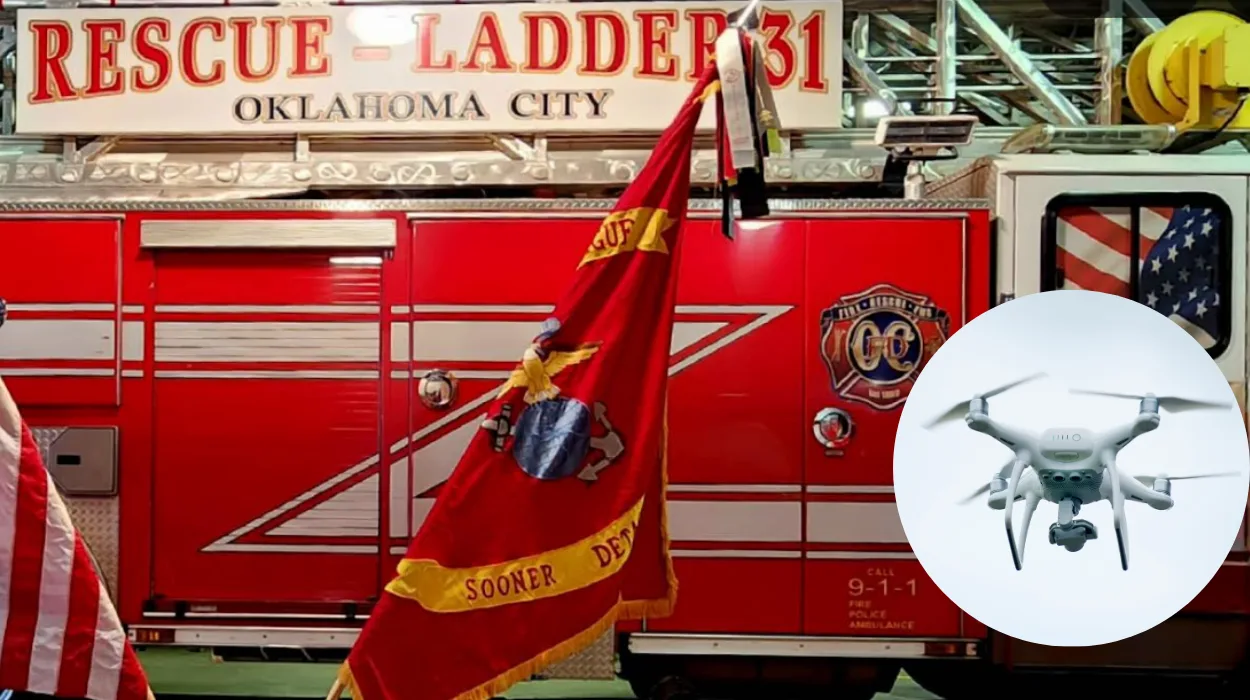
Oklahoma City (Oklahoma City Times) 14 January 2026 – Oklahoma City Fire demonstrated its dispatch drone programme on Wednesday, showcasing how the technology equips emergency responders with real-time visuals to shave critical seconds off response times. The city currently deploys 20 drones equipped with live imaging, thermal cameras, and high-definition zoom, jointly accessible to Fire and Police through the 911 centre. Plans are underway to expand the fleet to 50 drones, stationed at fire stations for broad geographic reach.
- Key Points
- What Is the Oklahoma City Fire Drone Programme?
- How Do the Drones Enhance Emergency Response?
- What Emergencies Benefit Most from Dispatch Drones?
- Who Operates the Drones and What Training Is Involved?
- What Are the Plans for Expanding the Drone Fleet?
- Why Are Real-Time Visuals Critical for Dispatchers?
- How Does the Programme Compare to Police Drone Usage?
- What Challenges Do Weather and Range Pose?
- Who Key Figures Praised the Drone Demonstration?
What Is the Oklahoma City Fire Drone Programme?
The drone initiative marks a significant evolution in emergency dispatching for Oklahoma City Fire. As noted in the demonstration coverage, each drone is headquartered at one of the city’s fire stations to ensure swift deployment across the metropolitan area.
“Our [police] counterparts have had a programme of some sort in place for a while, but this is a new programme for the fire department, and it’s been really interesting to see it grow into what it’s become now,” said Oklahoma City Fire Battalion Chief Lucas Qualls.
Oklahoma City Fire’s involvement with the drones began last January, starting with only a couple of units at its disposal. The technology has since expanded, reflecting growing confidence in its operational value.
How Do the Drones Enhance Emergency Response?
Drones operate within a two-mile radius of their launch site and can remain airborne for up to 40 minutes, depending on weather conditions. Recharging takes as little as 10 minutes, enabling rapid redeployment.
“In the dispatch world, they never get to see what’s going on,” Qualls explained.
“They never get to see the event unfold in real time. So, they’re handicapped to a certain degree by only what the information is, coming in. With this programme, we’re actually able to put fire department eyes on scenes, as it is in real time, as it is coming in.”
Dispatchers, who are also trained firefighters, relay drone footage to responding fire companies. Fire crews access the images via mobile phones, informing tactical decisions en route.
What Emergencies Benefit Most from Dispatch Drones?
Besides actual fires, the department highlighted drones’ utility in hazmat incidents, swift water rescues, and car wrecks. These scenarios demand quick situational awareness, where traditional 911 calls provide limited details.
The demonstration on Wednesday illustrated this in action, with dispatchers piloting drones to simulate real-world deployments. Battalion Chief Lucas Qualls emphasised the transformative impact: “This programme is giving us those additional seconds that truly do matter on the response times.”
Who Operates the Drones and What Training Is Involved?
Fire dispatchers double as drone pilots, blending operational expertise with emergency response skills. “You’re quite actually responding just like you would in a fire truck,” said fire dispatcher and drone pilot, Lieutenant Zack Stephens.
Stephens’ comment underscores the intuitive integration of drones into existing workflows. Dispatchers launch drones from fire stations, mirroring the speed of truck dispatches.
What Are the Plans for Expanding the Drone Fleet?
As Oklahoma City adds more drones, many fire stations will house multiple units. This scaling ensures redundancy and faster coverage in high-demand zones.
The current 20-drone fleet serves as a foundation, with the target of 50 allowing broader deployment. Joint Police-Fire access via the 911 centre maximises efficiency without siloed operations.
Why Are Real-Time Visuals Critical for Dispatchers?
Dispatchers traditionally rely on caller descriptions, which can be incomplete or delayed. Drones eliminate this gap by delivering live feeds immediately upon launch.
Qualls reiterated: “They never get to see the event unfold in real time. So, they’re handicapped to a certain degree by only what the information is, coming in.” This capability empowers precise resource allocation, such as sizing up hazmat spills or wreck extrications.
How Does the Programme Compare to Police Drone Usage?
Police have utilised drones for some time, paving the way for Fire adoption. Qualls noted the Fire programme’s rapid growth since its January 2025 inception.
The shared 911 infrastructure fosters collaboration, with both departments drawing from the same pool. This synergy amplifies the technology’s city-wide impact.
What Challenges Do Weather and Range Pose?
Flight duration caps at 40 minutes, influenced by wind, rain, or temperature. The two-mile radius suits urban responses but may require relays for outskirts.
Quick 10-minute recharges mitigate downtime, ensuring drones remain mission-ready. Stations’ strategic placement optimises this footprint.
Who Key Figures Praised the Drone Demonstration?
Battalion Chief Lucas Qualls led the praise, focusing on response time gains. Lieutenant Zack Stephens highlighted pilots’ fire truck-like responsiveness.
No external media quotes were reported, but local coverage captured the event’s enthusiasm. The demonstration affirmed drones’ role in modern firefighting.
In summary, Oklahoma City’s drone programmed exemplifies proactive emergency innovation, delivering visual intelligence where seconds count. Expansion to 50 units promises enhanced coverage, building on Wednesday’s showcase of live saving potential.