Key Points
- A major industrial fire broke out in the hold of the bulk carrier Federal Welland at Cardiff Port’s Queen Alexandra Docks.
- The Marshall Islands-registered vessel was carrying around 20,000 tonnes of scrap metal for export.
- South Wales Fire and Rescue Service (SWFRS) mounted a major response using specialist land and marine units, including rescue tenders, an aerial hydraulic platform, firefighting tugs and aerial monitoring drones.
- All crew members were safely accounted for, with no injuries or casualties reported.
- Public Health Wales advised nearby residents and businesses to keep doors and windows closed as dense smoke spread across the city.
- Local reports, which have not been confirmed, suggested that contaminated materials such as discarded lithium-ion batteries or residual oils in the scrap metal may have contributed to the fire.
Cardiff (Cardiff Daily) August 27, 2026 – Emergency services were dispatched to Queen Alexandra Docks situated within Cardiff Port on the northern side of the Bristol Channel after dense smoke began billowing from the cargo hold of a berthed bulk carrier. As detailed in initial operational updates from emergency responders, the Marshall Islands-flagged dry bulk carrier Federal Welland, operated within the fleet of Canadian shipping line Fednav, suffered a sudden ignition deep inside its cargo holds while fully laden with approximately 20,000 tonnes of recycled scrap metal.
As reported by maritime incident analysts at Baird Maritime, the vessel was actively berthed when the fire erupted around midday, quickly emitting visible plumes of thick smoke across the docklands and surrounding municipal areas. As documented by maritime security reporter Paul Ridgeway of The Maritime Executive, the vessel had been loading the dense scrap cargo intended for transport to metal processing facilities in Turkey prior to the outbreak.
The emergency response required immediate deployment of specialized apparatus due to the sheer volume and compact nature of the material inside the hold. South Wales Fire and Rescue Service (SWFRS) operational teams coordinated alongside port authority personnel to suppress the outbreak before heat could compromise the structural integrity of the ship’s hull.
How Did Emergency Responders Manage the Firefighting Operation?
Extinguishing fires in packed bulk holds presents severe logistical challenges because heat remains trapped deep within dense layers of metal. As reported by news editor Alex Davies of WalesOnline, SWFRS deployed a comprehensive multi-agency tactical operational unit to tackle the blaze from land, air, and water.
The response fleet included land-based rescue tenders, an aerial hydraulic platform to pour water directly into the open hold from above, and dedicated firefighting tugboats operating in the dock basin. As reported by maritime reporter Elena Rossi of Aria Crew, the harbor tug VB Yorkshireman was stationed alongside the vessel, utilizing high-pressure water cannons to cool the external structure of the ship and douse the burning hold.
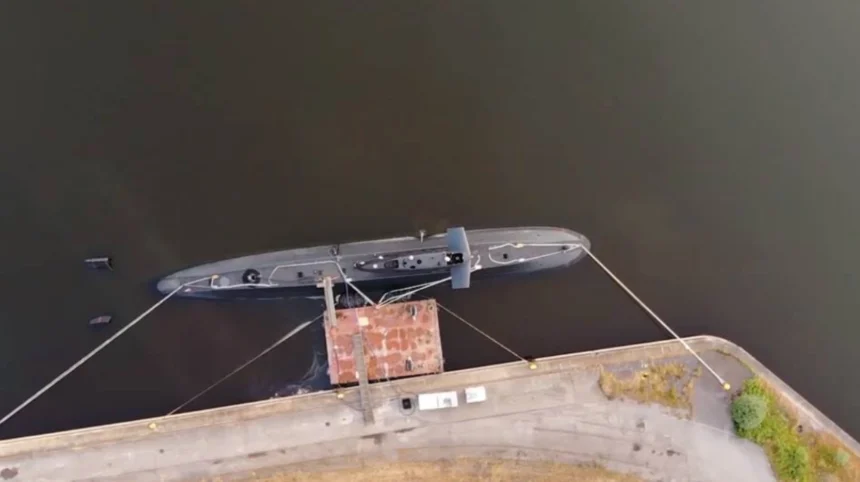
To monitor thermal movement and evaluate structural risks without exposing personnel to hazards, SWFRS deployed unmanned aerial drones over the vessel. In a formal statement released by the press office of South Wales Fire and Rescue Service, emergency commanders explicitly requested that members of the general public refrain from flying private drones near Queen Alexandra Docks:
“The fire service is asking members of the public not to fly drones over the incident, as this could impact operational activity and the safety of emergency responders.”
As reported by maritime safety writer John Campbell of IndexBox, initial assessments indicated that all crew members aboard the Federal Welland were successfully evacuated or accounted for without any reported injuries.
How Has the Incident Impacted the Local Community and Environment?
As firefighting tactics were executed at Queen Alexandra Docks, wind conditions carried large volumes of smoke across Cardiff Bay and into adjacent commercial and residential zones. As reported by civic reporter Rhys Thomas of WalesOnline, residents across distant neighborhoods including Canton, Roath, and Penarth reported strong metallic smoke odors throughout the afternoon and evening. Fans attending fixtures at Cardiff City Stadium also noted visible haze and strong smells inside the venue.
An official spokesperson representing Associated British Ports (ABP), the site operator of the Port of Cardiff, issued a statement detailing their ongoing cooperation with local authorities:
“Associated British Ports, the owners and operators of the Port of Cardiff, is continuing to support the emergency response to a fire involving scrap metal in the hold of the vessel at the port. We are working closely with South Wales Fire and Rescue Service and other partner agencies as they manage the incident. We encourage people to follow the advice of the emergency services and avoid the area while operations remain ongoing.”
In response to atmospheric conditions, Public Health Wales (PHW) published a localized public safety guidance notice. As detailed by health correspondent Sarah Jenkins of WalesOnline, PHW advised residents living or working in smoke-affected zones to keep all doors and windows closed during active suppression operations. PHW further instructed individuals experiencing respiratory discomfort or worsening symptoms to contact NHS 111 or consult their general practitioner.
Background of Scrap Metal Fires in Maritime Logistics
Bulk scrap metal fires represent a persistent operational hazard within global maritime transportation and port logistics. Unlike standard dry cargo, scrap metal shipments often contain mixed materials collected from municipal, industrial, or automotive recycling streams.
When bulk scrap is loaded into cargo holds, residual oils, hydraulic fluids, synthetic rubbers, or unremoved plastics mixed within the material can act as accelerants. Furthermore, damaged or improperly sorted lithium-ion batteries represent a primary hazard; mechanical damage during loading can trigger thermal runaway, igniting surrounding combustible debris.
As highlighted by safety analyst Mark Davis of IndexBox, South Wales Fire and Rescue Service previously managed a similar shipboard scrap fire in April at the nearby Newport Docks port complex. While that incident was controlled within hours, deep-seated fires in dense metal holds can smoulder for days, requiring extensive cooling operations.
Regulatory concerns regarding pre-loading inspections have risen across the UK shipping sector. A investigation report published by the UK Marine Accident Investigation Branch (MAIB) regarding a similar scrap fire aboard a cargo ship at the Port of Hull in June 2025 noted systemic vulnerabilities. The MAIB investigation revealed that recycling yards frequently rely on basic visual inspections and supplier declarations rather than rigorous screening to detect hidden contaminants or hazardous battery waste before loading scrap into ships.
Explore More Cardiff Fire News
Firefighters Tackle Ship Fire on Board Federal Welland Cardiff 2026
Pontllanfraith Fire: Probe Continues Amid Safety Concern 2026
Prediction: How Will This Development Affect Maritime Operators and Port Recyclers?
The fire aboard the Federal Welland at Cardiff Port will likely trigger immediate regulatory and operational shifts across the maritime shipping, port management, and metal recycling sectors.
1. Enhanced Cargo Screening Rules for Recycling Exporters
Regulators such as the Maritime and Coastguard Agency (MCA) and the MAIB are likely to push for mandatory thermal imaging and automated sorting protocols at scrap export terminals. Recycling facilities may face stricter liabilities if hazardous contaminants—such as lithium-ion battery packs or unevacuated fuel tanks—are identified within exported bulks.
2. Operational Delays and Insurance Adjustments for Shipowners
Shipowners operating Handysize bulkers in the scrap trade will encounter higher Protection and Indemnity (P&I) insurance premiums. Insurers are expected to mandate thermal monitoring systems inside cargo holds during loading operations to detect temperature spikes before hatches are sealed.
3. Stricter Environmental Protocol Requirements for Port Authorities
Port operators like Associated British Ports will face pressure from local municipal councils and public health bodies to refine emergency containment strategies. Future port licenses may require dedicated environmental barriers to manage runoff water from marine firefighting cannons, preventing contaminated runoff from entering coastal waters.