Key points
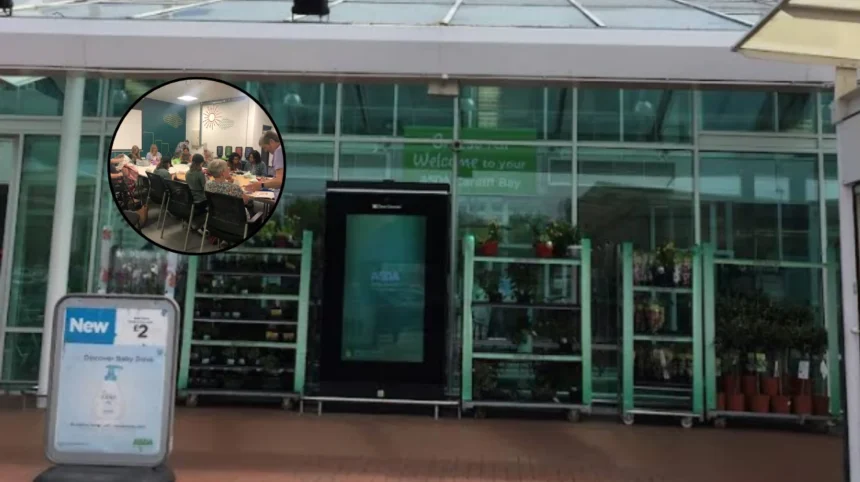
- The Salvation Army has launched a community craft programme in Cardiff, using the newly refurbished community room at Asda in Cardiff Bay.
- The “Knit, Crochet and Natter Café” runs every Monday from 11am to 1pm, bringing together more than 20 people of all ages and backgrounds.
- A second evening group now meets on Thursdays at The Salvation Army Hall in Grangetown to accommodate people who cannot attend daytime sessions.
- Salvation Army volunteer Anne Smith leads the sessions and has witnessed how the groups have strengthened friendship and support in the local community.
- Member Hilary Mitchell said the group has helped her through difficult times and provided a safe space to talk and be listened to.
- Jeanette Mackey, who joined after retirement, said the sessions have boosted her mood and given her a renewed sense of purpose.
- Crafters are knitting hats for premature babies at a local Cardiff hospital and are also making hundreds of poppies for the Royal British Legion ahead of Remembrance Day on 11 November 2026.
- The group is working with The Royal Marines Charity to create blankets for veterans and retired seafarers as part of its community outreach.
Cardiff Bay (Cardiff Daily) May 2, 2026 Asda and The Salvation Army have become the unlikely but visible centre of a quiet community revival, as a weekly “Knit, Crochet and Natter Café” draws more than 20 people through the doors of the newly refurbished in‑store community room every Monday morning. Launched under the banner of The Salvation Army’s Grangetown church, the project has grown from a simple idea into a fixture that many participants now describe as a vital part of their week.
- Key points
- Who is behind the yarn‑and‑friendship revival?
- How are participants describing their experience?
- What practical community projects is the group supporting?
- How many people are involved and who can join?
- Background to this community‑craft development
- What broader context does this fit into?
- Predictions: How this development could affect the community
Who is behind the yarn‑and‑friendship revival?
Anne Smith, Salvation Army volunteer and group leader, has been at the heart of the rollout, overseeing both the Monday sessions at the Asda Cardiff Bay community room and the newer Thursday‑evening group in Grangetown.
As reported by The Salvation Army in its 1 May 2026 feature, Smith has seen how the twice‑weekly gatherings have evolved from informal craft meet‑ups into structured spaces where people share stories, worries and laughter as easily as they share needles and patterns.
The ministry emphasised that the Monday café runs from 11am to 1pm “in partnership with Asda,” using the supermarket’s community room as a neutral, central hub for residents of Butetown, Cardiff Bay and the wider Grangetown area.
When demand grew, the church noted, it became clear that some women could not attend daytime sessions, which prompted the launch of the Thursday‑evening group at The Salvation Army Hall in Grangetown.
How are participants describing their experience?
Several members have spoken on the record about the difference the group has made in their lives. Hilary Mitchell, a participant quoted in The Salvation Army’s feature, said Anne Smith had “brought people in the community together” and that the group had become a critical support network.
She added that when she first started, she was dealing with “a lot of problems,” but that Smith was “on hand to listen,” which she described as living up to “Christian values.”
Jeanette Mackey, another regular, told The Salvation Army that retirement left her needing a reason to leave the house and a sense of purpose. She said the craft group had “boosted [her] moods for the better” and that she now feels “a much happier person” since joining the sessions led by Anne.
What practical community projects is the group supporting?
Beyond companionship, the group is actively using its skills to support others, as highlighted in The Salvation Army’s coverage. Crafters are knitting hats for premature babies at a local Cardiff hospital, a project that has become a regular feature of the Monday sessions.
Ahead of Remembrance Day on 11 November 2026, members are also busy making hundreds of poppies for the Royal British Legion, turning the community room into a hub of commemorative making as well as socialising.
In addition, the group has begun collaborating with The Royal Marines Charity to create blankets for veterans and retired seafarers, threading links between Cardiff’s craft circles and military‑charity networks.
How many people are involved and who can join?
The Salvation Army’s write‑up notes that the Monday café now regularly brings “more than 20 people” through the doors, representing
“a wide mix of ages, backgrounds and cultures.”
The organisation stresses that the sessions are open to anyone “looking to make friends in the area,” positioning the rooms in Cardiff Bay and Grangetown as inclusive spaces where people can join without prior knitting or crochet experience.
Anne Smith is quoted saying that the atmosphere is “wonderful” and that the group has grown in strength as people have recognised that The Salvation Army “has something special” to offer in Grangetown and Cardiff Bay.
Background to this community‑craft development
The Salvation Army’s Cardiff Bay and Grangetown outposts have long run community‑focused programmes, but the “Knit, Crochet and Natter Café” is framed by the organisation as a newer, more targeted response to loneliness and social isolation.
By locating the Monday sessions inside the Asda Cardiff Bay community room, the project joins a wider trend of faith‑based and voluntary groups co‑opting supermarket‑linked spaces to reach residents who might not otherwise step into a church‑centred setting.
The decision to add a Thursday‑evening group in Grangetown reflects what The Salvation Army describes as a reaction to genuine demand: some women raised concerns that they could not attend daytime sessions, so the church expanded the programme to accommodate that.
What broader context does this fit into?
In Wales and wider the UK, health and voluntary organisations have increasingly turned to “social prescribing” models, where activities such as crafts, choirs and walking groups are promoted as low‑cost ways to improve mental wellbeing and reduce loneliness.
The Salvation Army’s own national communications emphasise that the organisation works as both a church and charity “at the heart of communities,” often focusing on companionship and practical support for those on the margins.
This Cardiff Bay–Grangetown craft model echoes other local initiatives, such as the Makers Guild in Wales’ Butetown Community Craft Project, which has run adult craft workshops in the Butetown/Cardiff Bay area with support from the Arts Council of Wales, and school‑based “stitch story” projects that use textiles to connect age groups and mark community moments.
Within that landscape, The Salvation Army’s Knit, Crochet and Natter Café stands out less as an isolated experiment and more as one visible strand in a wider network of community‑craft activity aiming to strengthen social ties in Cardiff’s diverse neighbourhoods.
Predictions: How this development could affect the community
If the current pattern continues, the Monday and Thursday sessions could become established fixtures in Cardiff’s community calendar, similar to other long‑running “knit and natter” groups advertised through local social‑media networks and Salvation Army channels.
As more people hear about the hospital hats, poppies and Royal Marines Charity projects, the group may attract additional volunteers who want to contribute to specific causes, potentially widening the skill pool and volunteer base around the Grangetown hub.
For older adults, particularly those who have retired or live alone, the twice‑weekly routine could reinforce a simple but powerful structure: a regular reason to leave the house, socialise and engage in a creative task. That routine may help mitigate some of the risks associated with loneliness and low‑level depression, which public‑health bodies in the UK have identified as pressing concerns for ageing populations.