Key Points
- More than 10,000 drivers have received Penalty Charge Notices (PCNs) for breaching yellow box junction regulations in Cardiff.
- Between 2025/26, Cardiff Council has earned about £1 million from this particular traffic fine.
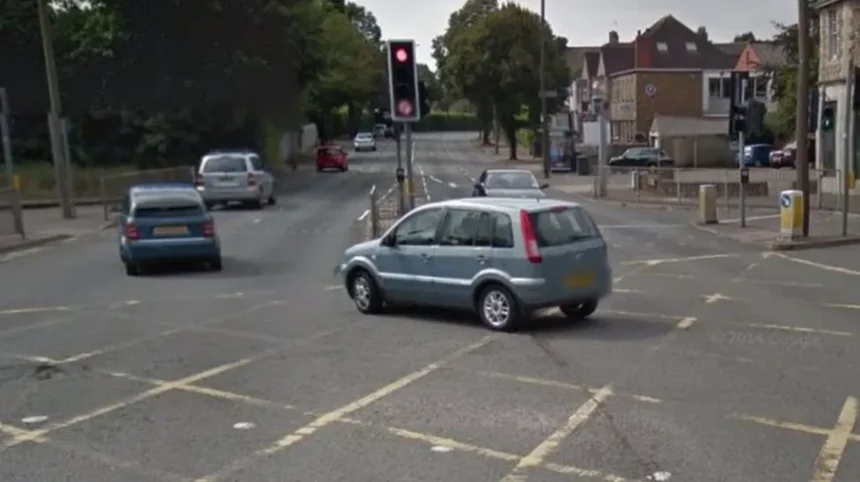
- Under the law, it is illegal to enter a yellow box if there is no space for you to leave unless you turn right with the exit being obstructed only by traffic coming towards you or turning right.
- A penalty charge notice for traffic violations in Cardiff Council will be charged at a fee of £70, but it will reduce to £35 if paid within a 14-period limit (14 days).
- Freedom of Information statistics show some hotspots junctions around Cardiff where fines tend to amass. These junctions include Churchill Way/Bute Terrace and Dumfries Place.
Cardiff (Cardiff Daily) September 19, 2026 – Thousands of motorists navigating the Welsh capital have fallen foul of strict traffic regulations, resulting in a revenue stream nearing £1m for local authorities through penalty notices. Yellow box junctions, fundamentally engineered to maintain fluid traffic movement through dense urban arteries, remain a source of significant financial penalty and frustration for local drivers. Recent transparency data highlights the specific urban intersections where motorists are most frequently trapped and penalised.
What Are the Rules Governing Yellow Box Junctions in Cardiff?
As detailed by WalesOnline senior reporter Bryana Francis, yellow box grid markings are legally implemented to aid traffic flow through high-density areas, though thousands of motorists continue to face enforcement action. As reported by Bryana Francis of WalesOnline, drivers are permitted to enter a yellow box junction strictly
“when their exit is clear and there is enough space on the other side of the junction for their vehicle to clear the box completely without stopping”.
The regulations outline narrow exceptions for specific driving maneuvers. As outlined by WalesOnline reporter Bryana Francis, motorists
“can stop in a yellow box junction when turning right if you are prevented from turning by oncoming traffic, or by other vehicles waiting to turn right”.
Regarding financial penalties, official local authority guidelines dictate the cost structure for infractions. As noted in data published by WalesOnline,
“According to the Cardiff Council website, those handed a yellow box PCN will be fined £70”.
However, a reduction incentive applies for prompt payment. As stated by WalesOnline journalist Bryana Francis,
“the fine will be slashed in half to £35 if paid within 14 days”
. Furthermore, failure to address the notice triggers escalation measures, as “if the PCN is ignored then the penalty will increase further”.
Explore more Cardiff Council News
UK Fridge Freezers Stranded at Docks Sparking Recycling Crisis London 2026
Cardiff Council Expands Specialist Education for Additional Learning Needs in Cardiff 2026
Which Cardiff Junctions Are the Main Hotspots for Fines?
A Freedom of Information request processed via WalesOnline uncovered the primary locations driving these figures across the city.
Topping the urban enforcement list is the intersection connecting Churchill Way and Bute Terrace. As reported by WalesOnline senior reporter Bryana Francis,
“The large yellow box, adjacent to the Utilita Arena, is a hotspot for shoppers heading towards the John Lewis and St David’s car parks, and has caught out over 1,590 drivers since April 1”.
This single location generated £40,060 for the council within the financial year.
The second most problematic area is the complex three-way corridor involving Dumfries Place, Newport Road, and Station Terrace. According to WalesOnline journalist Bryana Francis, this intersection near Queen Street is “notoriously busy around rush hour, with traffic queueing to get out of the city centre,” accumulating 1,347 fines and raising £40,425.
Ranking third is the Adam Street and Central Link box running alongside the local prison. As highlighted by WalesOnline reporter Bryana Francis, this conduit utilized by motorists heading toward Cardiff Bay, Cathays, and key multi-storey locations resulted in 977 fines, yielding £28,770 since April.
Rounding out the primary locations are two major transit zones in Leckwith. As detailed by WalesOnline’s Bryana Francis, the Leckwith Road junction with Wellington Street and Kitchener Road (southwest bound) caught 742 drivers, bringing in £24,465. Meanwhile, the Leckwith Gyratory Junction near the Cardiff City Stadium and Capital Shopping Park trapped 484 motorists, generating £15,645 for the local authority.
Background of the Development
The enforcement of yellow box junctions via civil penalty powers has a distinct regulatory history in the United Kingdom. Historically, local authorities outside of London lacked the legal authority to monitor and fine moving traffic contraventions, such as unauthorized stops inside yellow grid boxes or banned turns, which were traditionally handled exclusively by the police. However, statutory changes shifted these powers progressively. Cardiff, alongside London, maintained unique enforcement privileges for moving traffic offences for years under specific historical arrangements before broader national rollouts permitted select other English and Welsh councils to apply for similar powers.
The financial scale of these operations has expanded correspondingly. Local authority accounts across urban centres indicate that automated camera enforcement has streamlined the identification of rule breaches. The recent data indicating that Cardiff Council amassed close to £1m in a single financial year (2025/26) underscores the heavy reliance on automated monitoring systems installed at chronic congestion bottlenecks. Motoring organizations and municipal authorities have frequently locked horns over whether such junctions are strictly optimized for traffic management or whether oversized configurations inadvertently inflate penalty statistics.
This ongoing trend of strict yellow box enforcement is poised to exert direct financial and behavioral pressures on motorists navigating Cardiff. For the everyday commuter, delivery driver, and visitor, the persistence of high-yield penalty zones means that urban travel will carry an elevated risk of unexpected overheads unless local driving habits adapt or municipal authorities review infrastructure layouts. If junctions such as Churchill Way and Dumfries Place continue to trap hundreds of drivers monthly during peak congestion windows, public scrutiny regarding the exact sizing, visibility, and timing of these traffic boxes is likely to intensify. Consequently, drivers may increasingly contest PCNs or alter their travel routes to bypass city-centre retail hubs entirely, potentially shifting congestion patterns toward alternative suburban corridors while prompting local leaders to re-evaluate whether current enforcement thresholds strike the right balance between traffic flow facilitation and fair motorist treatment.