Key Points
- Major Events Slated: Cardiff is set to host a series of high-profile music events throughout June and July, including headline performances by Take That and Metallica at the Principality Stadium.
- Return of Blackweir Live: The Blackweir Live festival returns to the city, featuring major international and domestic artists such as Lewis Capaldi and Pitbull.
- Cardiff Castle Schedule: A packed summer lineup of events is also scheduled to take place at the historic Cardiff Castle, compounding the influx of visitors to the city centre.
- Transport Demand Surge: Transport for Wales (TfW) has warned that rail and public transport services will be significantly busier than usual during these event windows.
- Capacity and Service Adjustments: TfW has announced measures to strengthen passenger capacity on key routes and has scheduled later services to accommodate concertgoers.
- Station Control Measures: Post-event queuing systems will be strictly implemented at both Cardiff Central and Cardiff Queen Street stations to manage crowd safety.
Cardiff (Cardiff Daily) June 12, 2026 — Transport for Wales (TfW) issued a comprehensive travel advisory on June 12, 2026, urging music fans heading to the capital city for a massive summer line-up of concerts to plan their journeys well in advance due to expected severe pressure on the rail network.
- Key Points
- What Travel Arrangements Are Being Put in Place by Transport For Wales?
- How Will Crowd Control Systems Operate at Cardiff Rail Stations?
- Which Major Artists Are Headlining the Cardiff Summer Concert Schedule?
- The Return of Blackweir Live
- Cardiff Castle Events
- Background of the Summer Concert Transit Strategy
- Prediction: How This Development Will Affect Commuters and Concertgoers
The transport authority confirmed that a combination of stadium-level gigs, inner-city festivals, and historic venue performances throughout June and July will result in passenger numbers being significantly higher than normal capacity. To mitigate overcrowding and ensure public safety, rail operators are adjusting schedules and preparing for extensive crowd management protocols at primary rail hubs.
What Travel Arrangements Are Being Put in Place by Transport For Wales?
To address the anticipated surge in passenger volume, TfW has formulated an operational response aimed at maximizing network capacity. The rail operator announced that it has strengthened capacity across its key routes leading into and out of the capital.
This involves deploying additional carriages and maximizing the length of available train sets on lines expected to experience the highest demand from concertgoers travelling from peripheral towns and major UK hubs.
Recognizing that major concerts typically conclude late in the evening, TfW has also scheduled extra, later services running past standard operational hours.
These late-night services are designed to ensure that attendees are not left stranded in the city centre after the encores finish. However, transport officials have explicitly warned that despite these capacity enhancements, trains are likely to remain highly congested, and passengers should prepare for potential delays.
How Will Crowd Control Systems Operate at Cardiff Rail Stations?
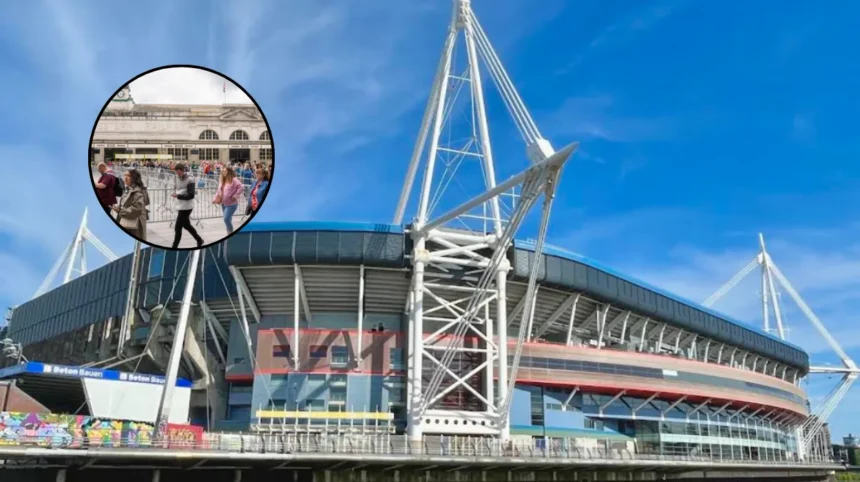
A core component of the city’s transit strategy involves the strict enforcement of post-event queuing systems. Transport for Wales has confirmed that these safety queues will be actively managed at both Cardiff Central and Cardiff Queen Street stations immediately following the conclusion of the major concerts.
Passengers will be directed into designated queuing lanes based on their final destinations. TfW staff and British Transport Police personnel are expected to be on-site to oversee the flow of commuters, monitor platform density, and pulse-feed passengers onto boarding platforms. Officials have advised the public to factor in significant queuing times—potentially exceeding an hour during peak egress—when calculating their return journeys.
Which Major Artists Are Headlining the Cardiff Summer Concert Schedule?
The upcoming summer season features some of the music industry’s most prominent live acts across multiple genres, distributed across three primary venues in the city.
The iconic 74,000-capacity Principality Stadium will anchor the summer rush with two massive, contrasting headliners:
- Take That: The legendary British pop group brings their massive stadium production to the city, drawing an intergenerational demographic from across the UK.
- Metallica: The heavy metal pioneers are scheduled to perform, attracting a vast international and domestic audience known for high merchandise and transit utilization.
The Return of Blackweir Live
Blackweir Fields will see the return of the popular Blackweir Live series, transforming the parkland into a high-capacity festival zone. The festival features distinct headliners:
- Lewis Capaldi: The Scottish singer-songwriter makes a highly anticipated return to the live stage, a drawcard expected to maximize ticket allocations.
- Pitbull: The American rap and pop icon will bring his high-energy global tour to the outdoor venue, further diversifying the city’s musical offerings.
Cardiff Castle Events
In tandem with the stadium and festival dates, the historic grounds of Cardiff Castle will host a packed summer calendar of boutique outdoor concerts, ensuring a continuous flow of visitors into the heart of Cardiff’s retail and hospitality districts throughout the two-month period.
Background of the Summer Concert Transit Strategy
The implementation of stringent travel advisories and bolstered rail services in Cardiff is the direct result of historical precedents involving major event management in the Welsh capital.
As a premier destination for international stadium tours, Cardiff’s city-centre infrastructure faces unique logistical challenges during large-scale events. Unlike many modern stadiums situated on urban peripheries, the Principality Stadium and Cardiff Castle sit directly within the commercial core of the city, mere minutes from primary rail stations.
Historically, the simultaneous exit of up to 75,000 stadium attendees alongside thousands of festivalgoers has pushed local infrastructure to its critical limits.
Past instances of sudden crowd surges at Cardiff Central have necessitated emergency station closures to prevent platform overcrowding.
Consequently, the synchronized response from Transport for Wales, local councils, and emergency services has evolved into a highly structured protocol.
The planning cycle for the June and July 2026 event window builds upon data collected during previous multi-venue event days, formalizing the expansion of late-night services and the standardization of the dual-station queuing model to maintain urban mobility and public order.
Prediction: How This Development Will Affect Commuters and Concertgoers
The upcoming concert series and the corresponding transit adjustments are predicted to impact various segments of the public in distinct ways:
- Concert Attendees: While the provision of later services guarantees a pathway home, attendees will face prolonged periods of waiting in outdoor queuing systems regardless of weather conditions. Those failing to plan ahead or miss the designated late-night windows risk being stranded, as local hotel capacities are already projected to reach near-saturation levels.
- Regular Commuters and Residents: Local citizens who utilize the rail network for daily employment or regional travel will experience notable disruptions. Peak Friday and weekend afternoon commuter trains will likely see severe crowding prior to event doors opening, potentially forcing regular passengers to seek alternative road transport or alter their working hours.
- The Regional Economy: The influx of tens of thousands of visitors is expected to provide a substantial financial boost to Cardiff’s hospitality, retail, and night-time economies. However, local businesses may encounter supply chain stresses, and app-based ride-hailing services are highly likely to implement steep surge pricing during post-event peaks, further impacting the wider traveling public.