The housing crisis in Adamsdown, a vibrant yet strained inner-city ward of Cardiff, reflects broader challenges facing affordable living in Wales’ capital. Long-standing issues of overcrowding, soaring rents, and limited new builds have turned this diverse community into a focal point for urgent reform.
- Adamsdown’s Historical Roots as a Residential Hub
- Current State of the Housing Crisis
- Key Causes Driving the Shortage
- Social Impacts on Adamsdown Residents
- Recent Developments and Initiatives
- Government and Policy Responses
- Community Perspectives and Challenges
- Future Solutions and Innovations
- Broader Lessons for Cardiff
Adamsdown’s Historical Roots as a Residential Hub
Adamsdown, known in Welsh as Waunadda or Y Sblot Uchaf (Upper Splott), emerged as one of Cardiff’s oldest working-class suburbs during the 19th century industrial boom. Situated in the south of Cardiff, the capital city of Wales, between Newport Road to the north and the South Wales Main Line to the south, the area was rapidly developed to house dock workers, coal shippers, and steelworkers flooding into the city.
By 1824, what is now Adamsdown was largely a 270-acre farm. Within decades, speculative builders transformed it into a dense grid of terraced streets, many named after astronomy (Star Street, Constellation, Planet, Eclipse), metals (Gold, Copper, Tin, Zinc), and jewellery (Topaz, Pearl, Sapphire, Agate). This naming tradition is unique to the Newtown area of Adamsdown, where Irish immigrants were among the first to settle.
The area’s institutional roots run deep. Cardiff Prison opened in 1832, a cemetery followed in 1848 and was later converted into a park after a cholera outbreak in 1849. By 1883, the South Wales and Monmouthshire Infirmary opened at a cost of £23,000, eventually becoming the Cardiff Royal Infirmary in 1923. Cardiff’s first municipal secondary school was established at Howard Gardens in 1884, later becoming a grammar school before being destroyed in World War II bombing, with a Cardiff Metropolitan University campus now occupying the site.
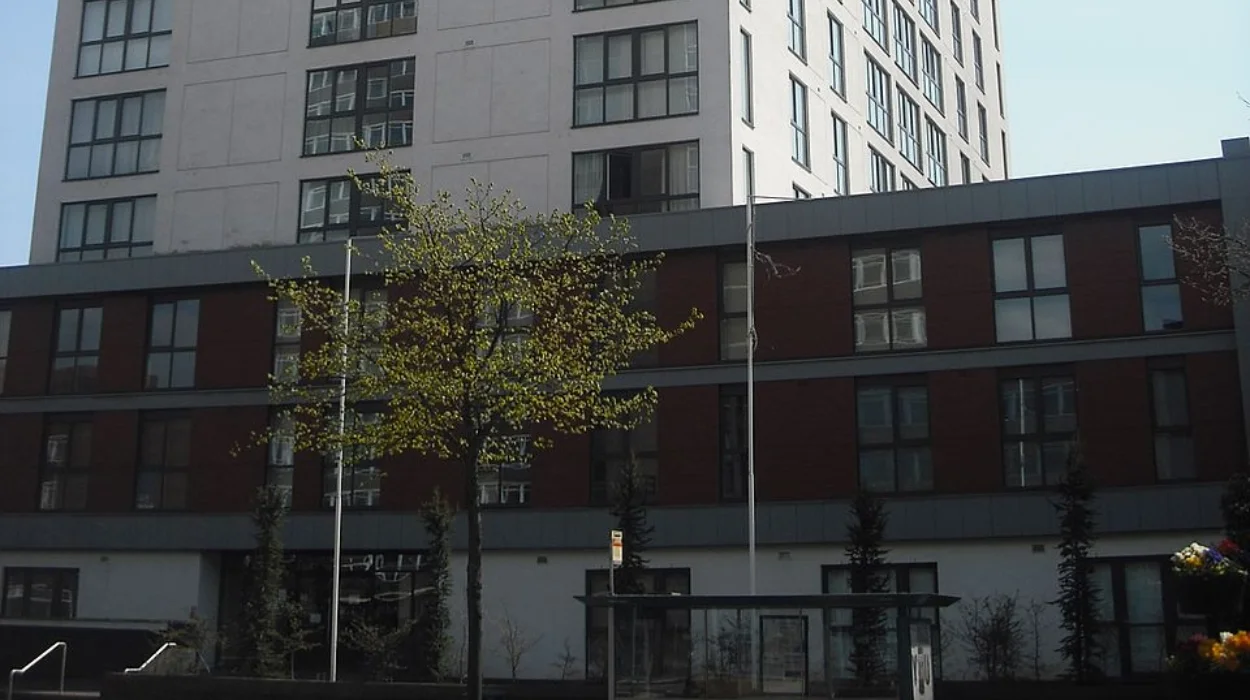
This historical legacy shapes modern Adamsdown. Victorian terraces still dominate the ward’s compact 1.4 square kilometres, blending architectural character with persistent maintenance challenges. Post-war regeneration replaced many Victorian buildings with 1960s and 1970s tower blocks, the tallest being Brunel House at the eastern gateway to Cardiff city centre, just a 10-minute walk away. As Cardiff expanded, Adamsdown absorbed waves of immigrants, from Irish labourers to Somali families, enriching its cultural fabric but amplifying housing pressures without corresponding infrastructure upgrades.
Current State of the Housing Crisis
Today, Adamsdown’s population stands at over 10,371 per the 2011 census, with more recent estimates exceeding 15,000 across its compact footprint, making it one of Cardiff’s densest electoral wards within the City of Cardiff Council area. Located within the Cardiff East UK parliamentary constituency and the Cardiff Central Senedd constituency, the ward falls under South Wales Police and Welsh Ambulance services, whose resources are increasingly stretched by the pressures of overcrowding.
Rental prices across CF24, Adamsdown’s postcode district, have surged over 20% in five years, far outpacing wage growth. Average monthly rents for a two-bedroom property hover around £1,200, significantly above the Welsh average, driven by demand from young professionals and students who see Adamsdown as affordable compared to neighbouring wards like Penylan to the north-east or Plasnewydd to the north. Homeownership remains elusive; only around 40% of properties are owner-occupied, with private landlords dominating in the absence of adequate council stock.
Overcrowding affects nearly one in five households, per recent council data, with subdivided homes housing multiple families in single units. This breaches safety standards and elevates health risks, including respiratory illnesses, echoing the very conditions the Cardiff Royal Infirmary was built to address over a century ago. The crisis deepened post-pandemic as emergency hotel accommodations for the homeless emptied into already saturated neighbourhoods, sparking debates over supported housing placements near Clifton Street and surrounding residential blocks.
Key Causes Driving the Shortage
Rapid demographic shifts fuel the crunch. Adamsdown’s multicultural identity, home to Somali, Eastern European, and South Asian communities along with Cardiff Reform Synagogue, Sikh temples, and a mosque currently under construction, makes it Cardiff’s most diverse ward. Family reunifications and asylum seeker resettlements consistently outpace housing supply.
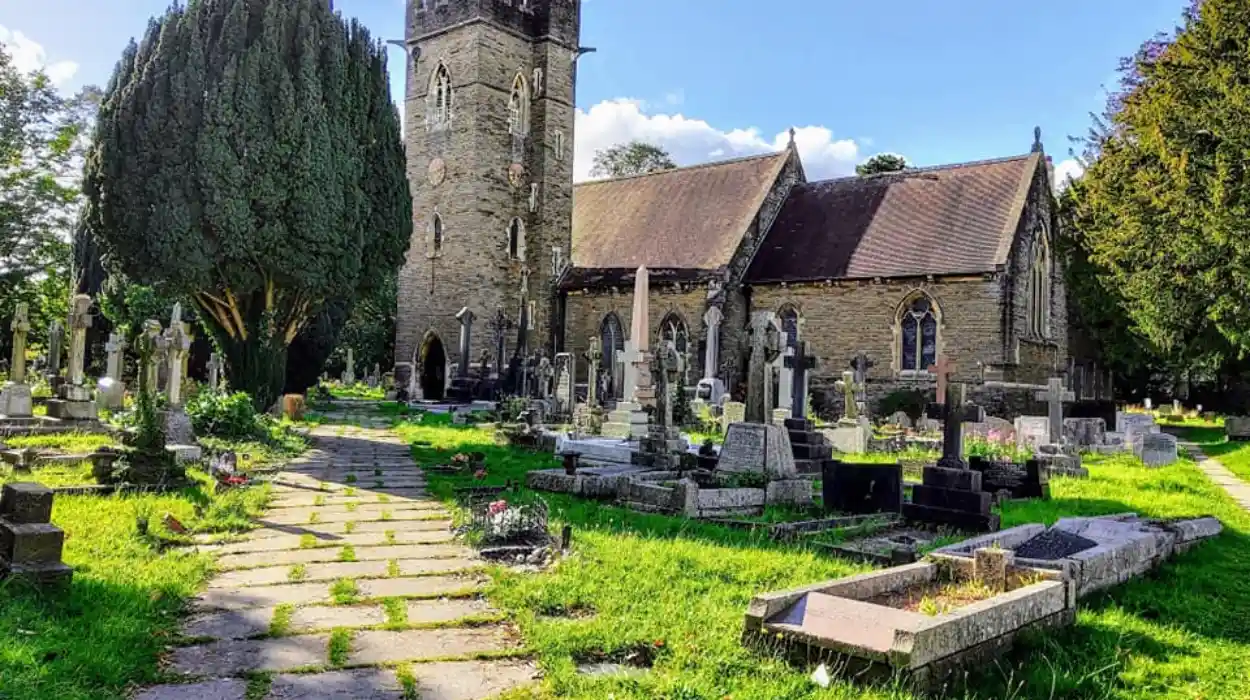
Economic factors compound this. Cardiff Council’s housing waiting list tops 20,000 citywide, with Adamsdown residents facing waits of up to seven years for social rentals. Planning constraints hinder relief: heritage designations protecting Victorian terraces and listed buildings such as the Grade I listed Church of St German of Auxerre on Star Street, designed by Bodley and Garner and built between 1881 and 1884, limit high-rise developments, while NIMBYism stalls projects like the Citadel site approvals on Splott Road.
Speculative investment plays a significant role. Buy-to-let portfolios dominate the CF24 postcode, with absentee landlords prioritising profits over upkeep, producing derelict properties like the former Tredegar pub. The demolition of landmarks such as the Great Eastern Hotel (demolished in 2009) on the corner of Sun Street and Metal Street, the site of the historic Upper Splott farm, illustrates how redevelopment has often prioritised short-term gain over community need.
Legacy issues from 1980s slum clearances persist. Demolitions displaced families without adequate rehousing, fostering cycles of temporary lets and evictions. Until the 1970s, the Roath Cattle Market and Slaughterhouse operated in Adamsdown; the regeneration of that era replaced community-facing uses with developments that served neither heritage nor housing need effectively. Inflationary pressures since 2022 have inflated construction costs by 30%, deterring developers from affordable projects.
Social Impacts on Adamsdown Residents
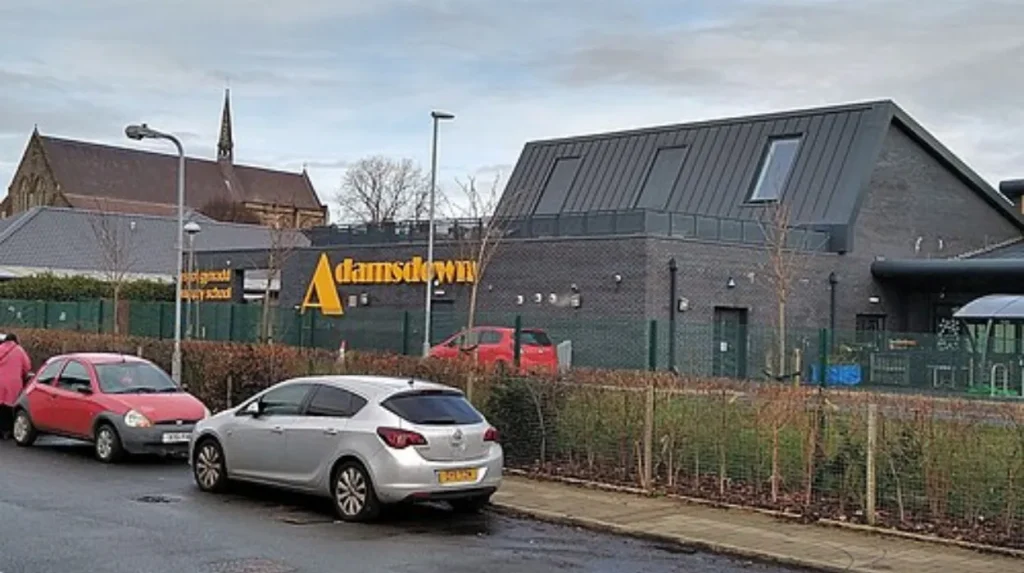
The crisis ripples through daily life. Children in overcrowded homes show elevated stress and poorer academic outcomes, with Adamsdown Primary School and Tredegarville Primary School, the ward’s two primary schools, reporting higher absenteeism tied to unstable housing. Vulnerable young adults, particularly care leavers aged 16 to 21, face exploitation risks in makeshift shared houses near Adam Street and Walker Road, prompting supported living schemes that divide community opinion.
Crime rates, while not the highest in Cardiff, correlate with housing instability. Anti-social behaviour linked to rough sleeping rose 15% in recent years. Mental health strains are evident; local GP practices report increased anxiety cases from no-fault evictions. Women and single parents bear disproportionate burdens, often skipping meals to cover deposits or facing domestic violence amplified by confined living spaces.
Culturally, Adamsdown’s vibrancy, its street markets, mosques, halal eateries, and the Rubicon Dance school, endures. But the crisis erodes cohesion. Long-term residents lament lost community spirit as transient tenants replace established families, weakening neighbourhood watches and community events along Clifton Street, where regeneration efforts have widened pavements, renovated traditional stone buildings including the former Roath Police station, and introduced a one-way traffic system to attract traders and shoppers.
Recent Developments and Initiatives
Hope flickers through targeted projects. Hafod Housing’s Ty Lleuad delivered 20 affordable apartments in 2023 on a former hotel site, blending one- and two-bedroom units with energy-efficient designs to reduce bills. Named by local pupils after the demolished Moon Street, it symbolises regeneration part-funded by Welsh Government grants via Cardiff Council.
Cardiff Community Housing Association (CCHA) advanced Longcross House, adding 35 low-carbon apartments by late 2023, featuring solar panels for EPC A ratings. The Citadel scheme on Splott Road, connecting Adamsdown to the neighbouring ward of Splott to the south-east, introduced 12 flats for care leavers with support services and transport links via Cardiff Bus routes and proximity to Cardiff Queen Street station on the Valley Lines urban rail network, despite resident pushback.
Tredegar pub conversions, approved in 2024, promise further flats, tackling dereliction head-on. The Welsh Government’s Social Housing Grant has injected millions, prioritising Adamsdown for its acute need. Yet scale remains modest, as these 70-plus units barely dent a multi-thousand shortfall.
Government and Policy Responses
Cardiff Council’s 2025 to 2030 Housing Strategy commits to 1,000 annual affordable homes citywide, with Adamsdown earmarked for modular builds on brownfield sites including former industrial land once occupied by the Roath Cattle Market. Rent stabilisation pilots cap increases at 3%, while the end of no-fault evictions shields tenants following Section 21 reforms. The Welsh Government’s £100 million Affordable Homes Programme accelerates delivery, mandating 50% social rent allocations.
Academic analyses praise these measures but urge bolder land assembly, including compulsory purchases for idle plots across the ward bounded by Penylan, Splott, Butetown, Cathays, and Plasnewydd, along with incentives for first-time buyers. Community Land Trusts are piloting in nearby Splott, offering resident-led models that could suit Adamsdown’s activist culture.
Critics note enforcement gaps; rogue landlords evade licensing, per council audits. Cross-party calls grow from councillors representing Cardiff East and Cardiff Central for a Cardiff-wide rent registry to track and enforce standards.
Community Perspectives and Challenges

Residents like Tom Chadwick voice frustration: “How many vulnerable schemes can one area hold before services buckle?” Councillor Owen Llewellyn Jones (Labour), one of Adamsdown’s elected ward councillors, echoes calls for equitable distribution across wards like Llandaff. Yet supporters highlight successes, with Ty Lleuad tenants reporting stability and lower energy costs.
Tensions arise from perceptions of over-concentration of supported housing. Mosques and advice centres including those along Albany Road and Newport Road (A4161) provide vital advocacy, bridging gaps in council outreach to Adamsdown’s diverse communities including its established Somali, South Asian, and Eastern European populations.
Grassroots Initiatives
Local nonprofits and faith groups in Adamsdown are pioneering grassroots solutions. Rent guarantee schemes where community guarantors vouch for tenants facing credit barriers have reduced evictions by up to 25% in pilot programmes. These initiatives, often housed in converted church halls along Walker Road, pair financial aid with skills workshops on budgeting and tenant rights. By fostering trust between landlords and newcomers, mirroring the community spirit that once defined streets like Star Street, Pearl Street, and Sapphire Street, they address immediate gaps while Welsh Government policies mature.
Future Solutions and Innovations
To resolve the crisis, experts advocate mixed-tenure developments: 40% social, 30% affordable purchase, 30% market, fostering integration in a ward already defined by diversity. Modular housing, trialled across Wales, cuts build times by 50% and costs by 20%, ideal for Adamsdown’s tight plots along Adam Street and surrounding brownfield land.
Policy levers include expanding Help to Buy Wales and taxing vacant properties to release stock. Community-led retrofits could upgrade over 1,000 Victorian terraces by adding extensions via grants, preserving the architectural heritage that gives streets like Constellation Street and Planet Street their identity. Partnerships with Hafod and CCHA must scale, targeting 500 units by 2030.
Digital tools aid delivery: Cardiff’s housing portal streamlines applications, while AI-driven need mapping pinpoints hotspots across CF24. Long-term, devolving greater powers to Wales could unlock rent controls, mirroring Scotland’s model, an approach supported by Senedd members representing Cardiff Central.
Broader Lessons for Cardiff
Adamsdown’s plight mirrors Cardiff’s: a 25% supply-demand gap citywide demands regional planning. Success here could blueprint wards like Butetown or Ely, proving dense urban renewal viable. By blending heritage preservation with innovation, Adamsdown can evolve from crisis poster child to model of resilience.
Sustained investment and dialogue are key. As rents climb and lists lengthen, collective action from petitions to co-housing offers the surest path to homes for all.
How many homes are in the Cardiff Community Housing Association?
Cardiff Community Housing Association provides around 3,000 homes in Cardiff, mainly for rent, with some available through low-cost home ownership schemes.
How many people are on the Cardiff housing waiting list?
Cardiff has a very high demand for social housing, with around 10,000 households currently on the waiting list (as of 2025–2026). This is considered a record level and reflects an ongoing housing shortage in the city.
Who is the biggest housing association in Wales?
The largest housing association group in Wales is now Codi Group, formed from a merger of major organisations (including Pobl and Linc). It manages nearly 25,000 homes across Wales, making it the biggest housing provider in the country.
Is Adamsdown a suburb in Cardiff?
Adamsdown is not a traditional suburb; it is an inner-city district located very close to Cardiff city centre. It is considered part of central Cardiff rather than a suburban, outer residential area. (General geographic classification based on Cardiff districts.)
What are the schools like in Adamsdown?
Schools in Adamsdown are generally described as mixed in quality, similar to many inner-city areas. Some schools serve diverse communities and may face challenges such as higher demand and varied performance levels, but there are also improving schools and access to nearby well-rated schools in surrounding areas like Roath and Cathays. Overall, the area offers average to improving education options rather than top-tier schools.