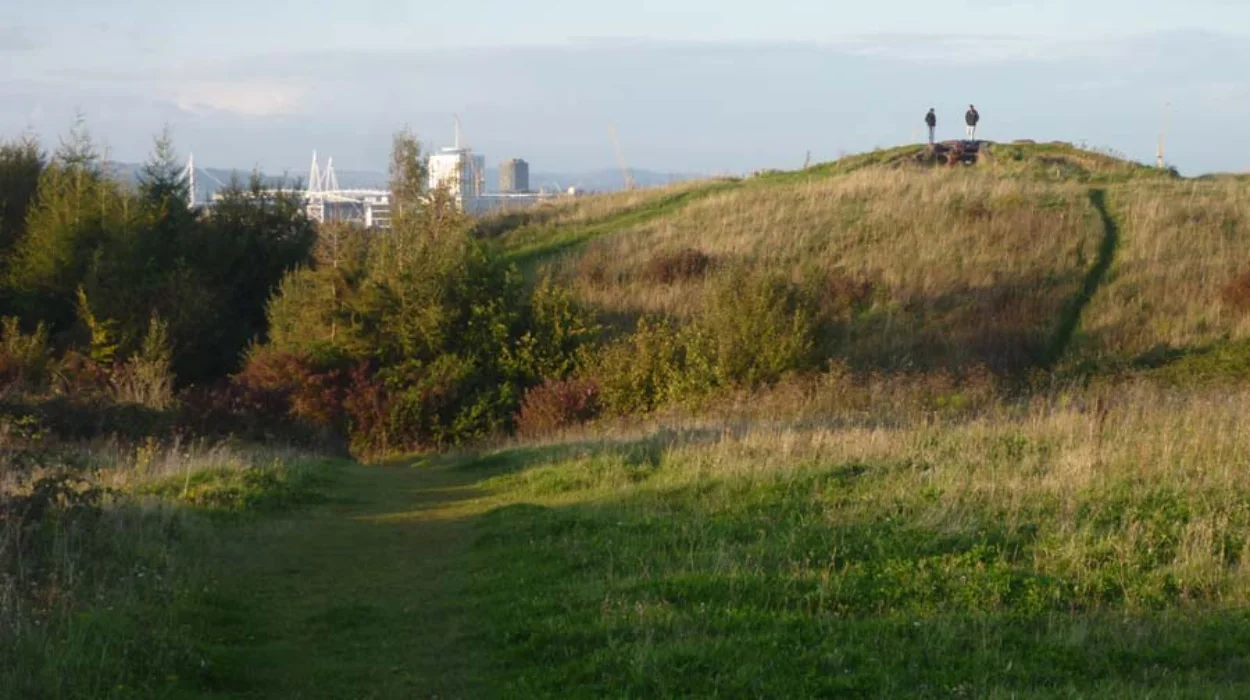
Cardiff, the vibrant capital of Wales, has long embraced green infrastructure as a cornerstone of its urban identity. This network of natural and semi-natural elements weaves through the cityscape, delivering ecological, social, and economic benefits that stand the test of time.
- Defining Green Infrastructure in Cardiff
- Historical Evolution of Cardiff’s Greenspaces
- Key Policy Frameworks Driving Development
- Prominent Green Spaces and Parks
- Urban Forests and Tree Canopy Expansion
- Sustainable Drainage Systems (SuDS) Innovations
- Biodiversity Enhancement Strategies
- Flood Resilience Through Nature-Based Solutions
- Health and Well-Being Benefits
- Economic Impacts and Job Creation
- Community Engagement and Future Plans
- Challenges Facing Cardiff’s Green Network
- Case Studies of Transformative Projects
- Integrating Green Infrastructure in New Developments
- Measuring Success and Ongoing Monitoring
- Global Context and Cardiff’s Leadership
From historic parks to award-winning sustainable drainage systems, Cardiff’s green infrastructure supports biodiversity, mitigates flooding, and improves resident well-being. As climate challenges intensify, these assets prove essential for a resilient, nature-forward future, and Cardiff is leading the way in Wales and beyond.
Defining Green Infrastructure in Cardiff
Green infrastructure refers to the interconnected web of green spaces, waterways, and natural features intentionally integrated into urban planning. In Cardiff, it encompasses parks, woodlands, wetlands, street trees, and sustainable urban drainage systems (SuDS) all treated as strategic assets rather than afterthoughts.
This approach is anchored in Cardiff’s Local Development Plan through Policy KP16, which mandates the protection and enhancement of natural heritage assets. The city’s Green Infrastructure Supplementary Planning Guidance (SPG) builds on this foundation with detailed directives, ensuring that every new development contributes positively to the wider green network rather than fragmenting it.
Unlike traditional “grey” infrastructure such as concrete drains and hard-engineered flood walls, green alternatives mimic natural processes. They absorb rainwater, cool overheated streets, sequester carbon, and foster habitats, creating multifunctional urban environments that evolve with community needs and adapt to a changing climate.
Cardiff’s Green Infrastructure Plan, updated as part of the Biodiversity and Resilience of Ecosystems Duty (BRED) Action Plan, sets out the full inventory of green infrastructure features the city is committed to protecting, connecting, and expanding. These natural heritage assets are now recognised as central to Cardiff’s character, distinctiveness, and long-term quality of life.
Historical Evolution of Cardiff’s Greenspaces
Cardiff’s green legacy traces back to the 19th-century Victorian era, when rapid industrial growth spurred the creation of public parks. Bute Park, adjacent to Cardiff Castle, emerged in the 1870s from the Marquess of Bute’s estate, transforming former private grounds into one of the finest urban parks in Wales.
Roath Park followed in 1894, its iconic boating lake formed by damming the Nant Fawr stream. These early green spaces addressed urgent urban health crises, providing fresh air and recreation amid the city’s rapid expansion as a coal-exporting port. Post-war reconstruction further embedded greenery into Cardiff’s fabric, with post-1940s planning frameworks prioritising open spaces and green corridors.
The late 20th century brought strategic shifts. The 1990s Cardiff Bay regeneration incorporated wetlands and boardwalks alongside the construction of the Cardiff Bay Barrage in 2001, an engineering intervention that transformed the tidal mudflats into a freshwater lake, fundamentally altering the hydrology of the area and reducing tidal flood risk across Grangetown and surrounding neighbourhoods. The barrage maintains a stable water level of approximately 4.5mAOD, which later proved significant for the design of surface water drainage in areas built on reclaimed former estuarine land such as Grangetown.
By the 2000s, rising climate awareness elevated green infrastructure from amenity to infrastructure. This culminated in formal strategic documents, including the Green Infrastructure Plan and the Biodiversity and Resilience of Ecosystems Duty (BRED) Forward Plan, positioning Cardiff’s green spaces as essential components of a climate-resilient city.
Key Policy Frameworks Driving Development
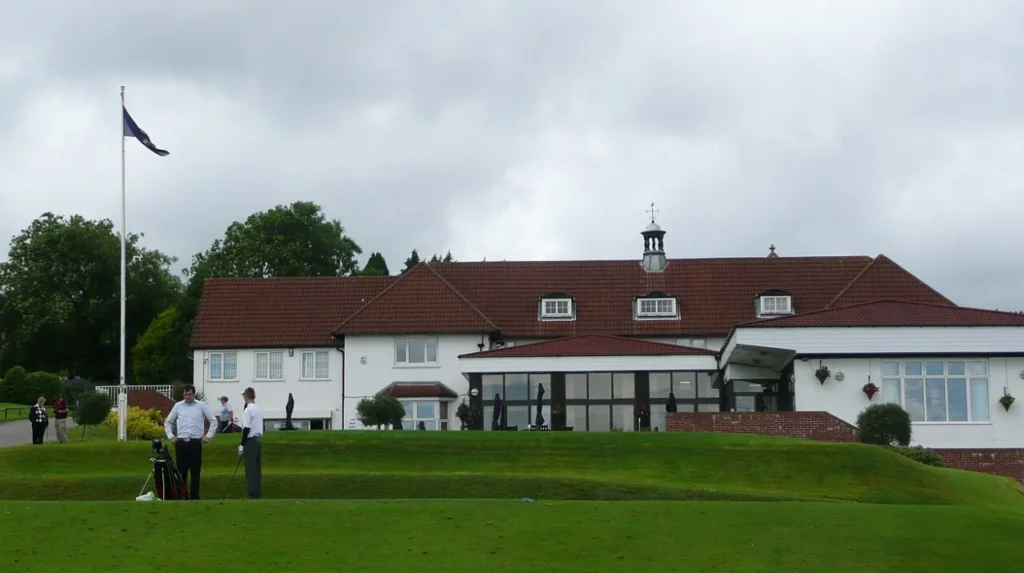
Cardiff Council’s Green Infrastructure SPG, tied to the Local Development Plan 2006–2026, sets ambitious targets across six objectives: protecting ecosystems, enhancing connectivity, improving accessibility, supporting health, boosting the economy, and adapting to climate change.
The Stronger Fairer Greener strategy reinforces this, aligning with the One Planet Cardiff vision for a carbon-neutral city by 2030. It emphasises multifunctional greenspaces that deliver biodiversity net gain, active travel improvements, and flood risk reduction simultaneously.
A critical legislative milestone came with Schedule 3 of the Flood and Water Management Act 2007, which was enacted in Wales in 2019. This made SuDS approval mandatory for new drainage in Wales, with a SuDS Approving Body (SAB) established within each local authority. Cardiff Council’s SAB now reviews all drainage proposals for new developments, ensuring compliance with the statutory SuDS standards before construction begins.
Prior to Schedule 3 coming into force, non-mandatory standards such as those outlined in Sewers for Adoption 7th Edition guided drainage design in Wales. Projects like Greener Grangetown were designed under these earlier frameworks — achieving a 1-in-30-year standard of protection with a 30% climate change allowance — yet set benchmarks that informed the later statutory requirements.
Several Technical Advice Notes (TANs) are relevant to green infrastructure planning in Cardiff, covering open space strategies, green corridors, and natural and semi-natural greenspace requirements within development proposals. Together, these policy instruments ensure green infrastructure is not peripheral but central to how Cardiff grows.
Prominent Green Spaces and Parks
Bute Park spans 130 acres along the River Taff, hosting flower gardens, sports fields, and an arboretum containing rare specimen trees. Its proximity to the city centre makes it a daily hub for joggers, families, and cultural events — a textbook example of accessible urban greenery woven into the fabric of a capital city.
Roath Park’s 100-acre layout includes a Scottish lake stocked with fish, rose gardens, and the historic Scott Memorial Lighthouse. Restored wetlands here attract waders and wildfowl, demonstrating how legacy Victorian parks can be adapted to meet modern ecological demands.
Llandaff Fields and Pontcanna Fields offer expansive meadows for picnics and cycling, linked by the Taff Trail — a traffic-free route that runs alongside the River Taff through the heart of the city. This corridor forms part of UK National Cycle Network Route 8, one of the busiest sections of Wales’ cycle network. The Taff Trail connects green space, active travel infrastructure, and water management in a single continuous corridor, making it one of Cardiff’s most strategically important pieces of green infrastructure.
The River Taff itself is subject to ongoing water quality monitoring by Natural Resources Wales, which conducts routine sampling to track the health of this urban watercourse. The river receives drainage from multiple catchments across Cardiff, and maintaining its water quality is a shared responsibility spanning Cardiff Council, Dŵr Cymru Welsh Water, and Natural Resources Wales.
Llandaff Fields and Pontcanna Fields offer expansive meadows for picnics and cycles, linked by the Taff Trail. These spaces form part of a 20-mile green corridor, promoting active travel and wildlife corridors across Cardiff.
Urban Forests and Tree Canopy Expansion
Cardiff’s urban forest comprises over 200,000 street trees, contributing towards a 20% canopy cover target. Initiatives like the Cardiff Trees for Streets programme plant species resilient to pollution and drought, building a diverse urban canopy capable of withstanding future climate stress.
Woodland areas such as Forest Farm Nature Reserve preserve ancient oak habitats, supporting rare butterflies and roosting bats. Community tree-planting events engage residents directly, fostering long-term ownership and helping sustain maintenance beyond the initial contract period.
Trees mitigate the urban heat island effect: research shows that shaded urban surfaces can be up to 5°C cooler than unshaded equivalents. This cooling, combined with air purification and carbon sequestration, directly improves public health in densely populated neighbourhoods, particularly in areas with high proportions of hard surface coverage.
When selecting species for urban tree planting, Cardiff’s design teams have increasingly adopted evidence-based approaches. The Greener Grangetown project, for example, used a matrix analysis led by Arup’s landscape architects working alongside Natural Resources Wales and Cardiff Council tree officers to select native tree species suited to Welsh climatic conditions. The palette prioritised a mixture of evergreen and deciduous plants, pollinators, and species tolerant of both drought and periodic waterlogging reflecting the dual-function role trees play in SuDS schemes.
Engineered soil systems, including soil cell technology capable of accommodating up to 12m³ of free-draining soil per tree, allow large-specimen trees to establish in constrained urban environments such as parking bays and highway verges. All planting used in projects like Greener Grangetown was sourced from within the UK and specified at semi-mature size to achieve a quicker ecological and visual impact.
Sustainable Drainage Systems (SuDS) Innovations
SuDS represent Cardiff’s most technically innovative strand of green infrastructure, and no project illustrates their potential more clearly than Greener Grangetown a landmark scheme completed in July 2018 that has since become a benchmark for SuDS retrofit across the UK.
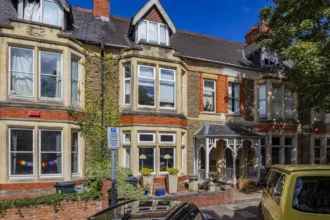
Greener Grangetown is a sustainable drainage system project delivered across 12 Victorian residential streets and 550 properties in the Grangetown district of Cardiff, located on reclaimed former estuarine land close to the city centre. The project was driven by a need to remove surface water from Dŵr Cymru Welsh Water’s combined sewer network, which had previously required surface runoff to be pumped 8 miles before treatment and discharge into the Severn Estuary.
How the SuDS work
The scheme introduced 108 bioretention rain gardens containing native trees and plants, designed to intercept a minimum of 5mm of runoff volume per rainfall event to target the “first flush” of highway contaminants — the most pollutant-laden portion of stormwater. Siltation is encouraged at rain garden inlets using stone forebays or existing gully arrangements, pre-treating runoff before it enters the bioretention media.
Within each rain garden, engineered soil media provides a balance of drainage capacity and plant nutrient properties. After filtering through this growing media, water is collected in perforated sub-surface drainage pipes within a clean stone layer at the base, then conveyed to the River Taff via four new outfalls.
Because Grangetown sits on contaminated made ground with impermeable subsurface conditions, infiltration into the ground was not feasible. All SuDS features are therefore lined with an impermeable liner, which also protects nearby buildings from the impacts of tree roots a design consideration specific to this brownfield, urban retrofit context.
Drainage is kept shallow wherever possible using recycled plastic composite kerb drainage and channel drainage units to convey flows from the busy Corporation Road into rain gardens located at dead ends of seven residential streets. Permeable paving is used in selected locations to manage surface water at source.
Performance and results
Greener Grangetown removes an average of 40,000m³ of surface water from the combined sewer system annually, equivalent to removing 4.4 hectares of impermeable surface from the sewer catchment. The project introduced 127 new trees and 1,700m² of new green space, while creating 14 safer road junctions for inclusive mobility and a 550m bicycle street along the Taff Embankment.
During Storm Callum in October 2018 and one of the hottest summers on record that same year, the scheme performed exceptionally. Analysis of electricity consumption at the Marl pumping station — which receives flows from the Grangetown catchment — showed energy use had significantly reduced compared with the same period in 2016 (pre-construction), despite more than double the rainfall occurring. This demonstrates reduced operational costs, lower carbon emissions, and increased capacity headroom in the sewer network.
Research led by Dŵr Cymru Welsh Water is investigating the effectiveness of the rain gardens and tree pits in removing microplastics from highway runoff. Cardiff University School of Medicine has also conducted pre- and post-construction health and wellbeing surveys of the local community, with results informing future green infrastructure design practice.
The wider SuDS toolkit
Beyond Greener Grangetown, Cardiff has deployed SuDS across a range of contexts. Wood Street’s regeneration near Cardiff Central Station incorporated Arup-designed tree pits and rain gardens to manage flood risk and cool the pedestrian public realm. These schemes demonstrate that SuDS can be integrated into busy commercial streetscapes as well as residential settings.
Consider adding a standalone subsection or callout box titled “Greener Grangetown at a Glance: Key Facts” immediately within this section, using the verified project statistics above. This directly targets the search queries “Greener Grangetown case study”, “Greener Grangetown Cardiff” and “rain gardens Cardiff” terms your competitors rank strongly for.
Biodiversity Enhancement Strategies
Cardiff’s green spaces host over 2,000 plant species alongside diverse urban wildlife. The Green Infrastructure Plan prioritises habitat connectivity, creating ecological stepping stones for pollinators and other species across fragmented urban landscapes where parks and green corridors are separated by roads and development.
The CIRIA SuDS Manual classifies pollution hazard indices for drainage design. Grangetown was assessed as medium-risk within these indices, being predominantly residential. Rain gardens and tree pits designed as bioretention systems are appropriate interventions at this hazard level, providing both physical and biological treatment of surface water runoff before discharge to watercourses.
Wetland restoration in Cardiff Bay’s Mermaid Quay area attracts waders and kingfishers. Native wildflower meadows in Victoria Park boost insect populations, countering declines driven by intensive agriculture and urban impervious surfaces. Protected sites, including Cardiff Wetlands, designated as Sites of Special Scientific Interest (SSSIs), safeguard rare flora and provide refuges for specialist invertebrates.
Council-led monitoring ensures biodiversity net gain in new developments, aligning with Wales’ Nature Recovery Action Plan and the Biodiversity and Resilience of Ecosystems Duty placed on all public bodies in Wales. Ecological matrix analyses of the type carried out by Arup’s landscape team for Greener Grangetown are increasingly standard practice for selecting appropriate planting palettes in new green infrastructure schemes.
Flood Resilience Through Nature-Based Solutions
Cardiff faces compound flood risk from tidal surges via the Bristol Channel, river flooding from the Taff and Ely, and increasingly frequent surface water flooding driven by intense rainfall. The Cardiff Internal Drainage Board integrates SuDS with managed floodplains, storing excess water naturally rather than routing it through hard-engineered channels.
The hydraulic design of surface water schemes in Cardiff must account for a 30% climate change allowance under current standards, with no property flooding predicted in a 1-in-100-year event. For retrofit projects on heavily constrained sites, exceedance flow paths, the routes water takes when drainage capacity is exceeded, must be carefully managed, as site levels cannot be altered drastically due to existing buildings and infrastructure.
Groundwater control zones and contaminated made ground in areas like Grangetown make soakaways unfeasible in parts of Cardiff, requiring all SuDS features to be designed as lined, conveyance-based systems rather than infiltration systems. This constraint shaped the entire Greener Grangetown design, demonstrating that SuDS can be delivered even in the most challenging urban conditions.
During the 2020 flooding events, nature-based solutions, including permeable surfaces, rain gardens, and swales across the city, reduced urban inundation compared with modelled scenarios without these interventions. Community involvement through flood warden schemes maintains these assets and embeds flood resilience into local culture an essential complement to engineered solutions.
Health and Well-Being Benefits
Access to green space correlates strongly with lower stress, higher physical activity levels, and improved mental health outcomes. Cardiff’s planning framework aims to ensure most residents can reach quality green space within a short walk of their home, with equitable distribution a specific policy objective targeting areas of deprivation.
Cardiff University School of Medicine’s research on the Greener Grangetown project involved pre- and post-construction surveys of community health and wellbeing. This work — part of a broader programme linking urban planning, environmental science, and public health research — is building an evidence base that can inform future SuDS and green infrastructure design across Wales and the wider UK.
Trees play a direct role in respiratory health: foliage traps particulate matter and absorbs nitrogen dioxide from vehicle exhaust, improving air quality along busy roads. Studies link tree-lined streets to measurably lower rates of respiratory illness in nearby residents, making urban tree canopy expansion a public health intervention as much as an environmental one.
A Sustainable Project Appraisal Routine (SPeAR) assessment was carried out during the Greener Grangetown feasibility stage to identify where scope for improvement existed across multiple wellbeing dimensions, including outdoor experience, community pride, and sustainable behaviour change. This kind of whole-system appraisal, rather than narrow cost-benefit analysis, is central to Cardiff’s approach to green infrastructure.
During lockdowns, Cardiff’s parks saw usage spikes of around 40%, underscoring their social value. Therapeutic garden spaces such as Roath Mill Gardens support mental health recovery, and prescriptive “green time” schemes are increasingly used to address health inequalities in deprived neighbourhoods.
Economic Impacts and Job Creation
Green infrastructure generates substantial economic value across multiple dimensions. Bute Park’s festivals and events draw approximately 500,000 visitors annually, contributing directly to Cardiff’s tourism economy. Property values near quality green spaces rise by 5–20%, stimulating local housing markets and generating additional council tax revenue.
The Greener Grangetown project’s wider benefits were assessed in September 2019 using CIRIA’s Benefit Estimation Tool (B£ST) alongside other valuation frameworks. The assessment considered health, recreation, air quality improvements, carbon sequestration, and amenity enhancements, arriving at an estimated benefit of over £8.4 million over a 30-year period from 2015 to 2045. This figure excludes several additional benefit streams, including water quality improvements, crime reduction, and the economic value of increased cycling and walking, which were not quantified due to the absence of sufficient baseline survey data.
The assessment suggests a maximum payback period of approximately 12.5 years for the project’s £3 million construction cost, representing excellent value for money by any public investment benchmark.
Funding for Greener Grangetown was pooled from Cardiff City Council, Dŵr Cymru Welsh Water, Natural Resources Wales, and the Landfill Communities Fund. This partnership funding model, combining public utility, regulatory, and local government contributions, is increasingly the template for sustainable drainage and green infrastructure delivery in Wales. Construction and maintenance of SuDS projects creates employment for landscape contractors, civil engineers, ecologists, and maintenance operatives, with Greener Grangetown creating apprenticeship opportunities within the local contractor supply chain.
Community Engagement and Future Plans
Community engagement was at the heart of Greener Grangetown and remains a defining feature of Cardiff’s green infrastructure approach. Participation from the Grangetown community spanned a three-year period leading up to construction, involving residents in the actual design of their streets and giving them genuine choice over layout and planting options.
The community is highly diverse, with 48 different languages spoken at a local primary school requiring a multilingual, multi-format engagement strategy. School visits, indoor and outdoor community events, visualisations, and drawings were all used to convey ideas and inform decisions. Engagement continued throughout construction via weekly drop-in sessions, planting events, and updates through leaflets and social media. Key concerns around parking and litter were directly incorporated into the design, resulting in increased residential parking provision and additional litter bins.
Cardiff’s broader Friends of Parks groups maintain green spaces year-round, planting thousands of trees annually. The Green Flag Award scheme recognises excellence in park management, with over 20 Cardiff sites holding certification. The Green Infrastructure Plan targets a 30% increase in canopy cover by 2030, with wildlife corridors and partnerships with Wildlife Trusts expanding nature reserves and connecting fragmented habitats.
Youth programmes, including Forest School, teach ecology and environmental stewardship, ensuring the next generation understands and values Cardiff’s green network. Digital mapping tools allow residents to track green infrastructure projects and species sightings, fostering transparency, citizen science, and community pride.
Challenges Facing Cardiff’s Green Network
Urbanization pressures fragment habitats, with development threatening 10% of green spaces. Ageing trees succumb to pests like ash dieback, demanding replanting.
Funding shortfalls challenge maintenance; climate shifts bring droughts stressing water-dependent features. Invasive species, such as Himalayan balsam, require vigilant control.
Despite policies, enforcement varies, with some SuDS poorly adopted post-build. Balancing recreation with conservation strains popular parks during peaks.
Case Studies of Transformative Projects
Greener Grangetown is the most significant green infrastructure retrofit project Cardiff has delivered and one of the most cited SuDS case studies in the UK. Designed by Arup and delivered through a partnership of Cardiff City Council, Dŵr Cymru Welsh Water, and Natural Resources Wales, the £3 million project transformed 12 Victorian streets across a 12-hectare site.
The scheme removed 4.4 hectares of impermeable surface from the combined sewer catchment, installed 108 rain gardens and 127 trees, created 1,700m² of new green space, and delivered the first bicycle street in Wales — a 555m cycling-priority street along Taff Embankment forming part of UK National Cycle Network Route 8. The project won multiple industry awards and has been cited by SuDS practitioners across the UK as a model for what can be achieved in heavily constrained urban environments.
The feasibility study, undertaken by Arup in 2013, was instrumental in securing funding by identifying and monetising the benefits to each partner organisation — a business case approach that calculated an annual benefit of £381,760 using cost databases available at the time. This methodology, which preceded the more comprehensive B£ST assessment, demonstrated that SuDS viability depends not just on engineering solutions but on robust multi-benefit economic appraisal.
Cardiff Bay Barrage wetlands (since 2001)
Cardiff Bay’s barrage wetlands filter pollutants from urban runoff and provide habitat for wildlife, including seals and wading birds, merging ecology with waterfront leisure in one of Wales’ most visited urban destinations.
Wood Street’s post-2019 scheme incorporated Arup-designed tree pits and rain gardens adjacent to Cardiff Central Station, managing flood risk whilst cooling and greening one of the city’s busiest pedestrian thoroughfares. Daily use by thousands of commuters validates its dual recreation and flood management role.
Integrating Green Infrastructure in New Developments
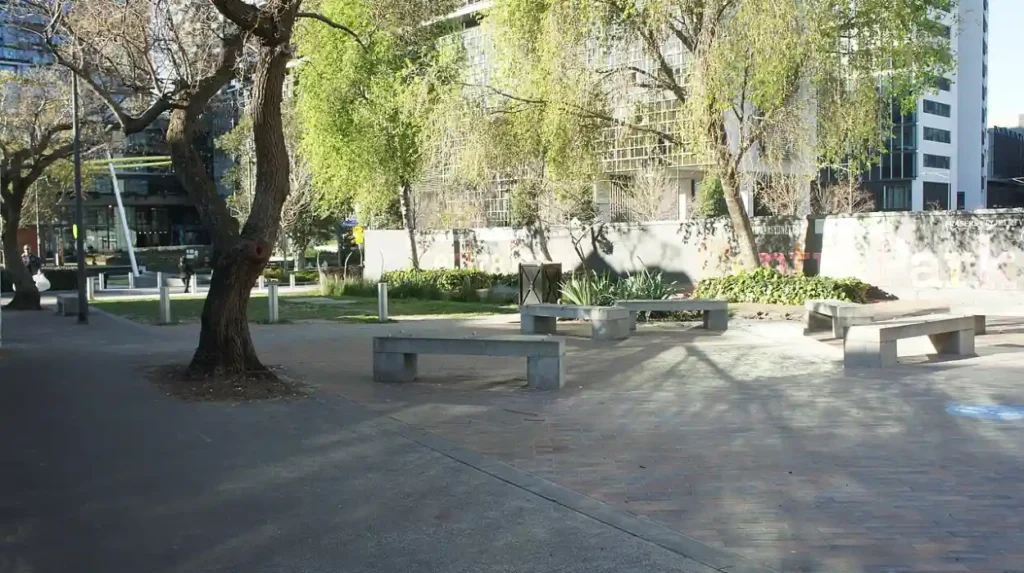
Since Schedule 3 of the Flood and Water Management Act came into force in Wales in 2019, SuDS are mandatory in all new drainage proposals. Cardiff Council’s SuDS Approving Body (SAB) reviews all drainage schemes for compliance with the statutory national standards before construction consent is granted. Adoption of SuDS features post-construction — with associated commuted sums to fund long-term maintenance — must be agreed before handover.
Cardiff’s planning policies require 10–20% green space provision in new developments, delivered through a combination of public open space, private gardens, green roofs, living walls, and SuDS features. Section 106 planning obligations and biodiversity net gain requirements ensure developers fund enhancements that connect into the city’s wider green network.
Pocket parks in higher-density housing estates provide greenspace without sacrificing developable land. Living walls and green roofs on taller buildings expand canopy coverage vertically, supplementing ground-level planting in space-constrained settings. Engineered soil cell systems, as used at Greener Grangetown, are increasingly specified in new developments to maximise below-ground rooting volume for trees planted in hard-surfaced areas such as car parks and retail environments.
Monitoring applications allow post-construction tracking of green infrastructure performance, enabling adaptive management and ensuring long-term viability of SuDS and planting schemes. The developer-council partnership model, when working well, embeds sustainability requirements from project inception rather than retrofitting them at planning stage.
Measuring Success and Ongoing Monitoring
Cardiff uses a range of quantitative and qualitative metrics to evaluate its green infrastructure network. Biodiversity indices, flood volume captured, pumping station energy consumption, water quality data from River Taff monitoring, and visitor numbers all feed into annual audits against Green Infrastructure SPG targets.
The post-construction monitoring of Greener Grangetown provides one of the most detailed datasets for any SuDS retrofit project in the UK. Analysis of electricity consumption at the Grangetown Marl Sewage Pumping Station showed significant energy reductions compared with pre-construction baselines, despite substantially higher rainfall. Natural Resources Wales continues routine water quality sampling of the River Taff, and water quality at the four new outfalls constructed as part of Greener Grangetown has remained within expected parameters since commissioning.
Cardiff University is quantifying the water quality benefits of the SuDS components and informing future design standards. School of Medicine researchers are publishing findings from pre- and post-construction community health surveys. These research outputs linking academic institutions, statutory bodies, and delivery partners strengthen the evidence base for future green infrastructure investment decisions across Wales.
Citizen science applications allow residents to log species sightings, refining ecological monitoring and engaging communities in ongoing stewardship. Economic valuations, including the B£ST tool assessment, quantify avoided flood damage costs and wider social benefits, providing the justification for continued public investment. Multiple Green Flag Award winners across Cardiff’s park estate reflect the quality of management and the standard of measurable outcomes being achieved.
Global Context and Cardiff’s Leadership
leading mid-sized cities for nature-based urban design. Its SuDS delivery, particularly the Greener Grangetown project, exceeds UK averages and has attracted international attention as a replicable model for flood-prone, densely built urban environments.
The Greener Grangetown bicycle street drew directly on precedent from the Netherlands, where cycling-priority street design has been standard practice for decades. Adapting this model to a Welsh context, combining it with bioretention drainage, community engagement, and multi-partner funding, demonstrates Cardiff’s capacity to learn from global best practice and translate it into locally relevant solutions.
International collaborations through EU-funded programmes share knowledge and methodology across European cities. Locally, Cardiff’s SuDS expertise is influencing retrofit approaches across the Welsh valleys and informing the statutory SuDS framework now in force across Wales. Dŵr Cymru Welsh Water’s ongoing research into microplastic removal in rain gardens and tree pits has potential significance well beyond Cardiff, contributing to the global evidence base on urban water quality management.
As net-zero ambitions intensify and climate adaptation becomes an urgent priority for cities worldwide, Cardiff’s integrated approach blending Victorian park heritage with 21st-century drainage innovation, policy ambition with community engagement, and ecological science with engineering practice offers a genuinely replicable blueprint for sustainable urbanism in the post-carbon era.
What is the Cardiff Heat Network Energy Centre?
The Cardiff Heat Network Energy Centre is a key part of a low-carbon heating system in Cardiff. It captures excess heat generated from waste at an energy recovery facility and redistributes it through insulated pipes to buildings across the city (especially Cardiff Bay).
Where is the most expensive place to live in Cardiff?
The most expensive areas in Cardiff are mainly in the north of the city, particularly Lisvane and Cyncoed, which are known for large homes, green spaces, and high property values.
Who is the most famous person in Cardiff?
There isn’t a single “most famous” person, but Cardiff has produced several globally known figures. One of the most widely recognised is Roald Dahl, the famous writer of books like Charlie and the Chocolate Factory, who was born in Cardiff.
What is the ethnicity of Grangetown?
Grangetown is one of the most ethnically diverse areas in Cardiff. It has a multicultural population with significant communities of Somali, Asian, and mixed-ethnicity residents, alongside White British and other groups.
What is the Greener Grangetown scheme?
The Greener Grangetown scheme is an innovative environmental project in Grangetown designed to manage rainwater in a sustainable way. Instead of sending rainwater into the sewer system, the scheme uses green infrastructure like trees, planters, and “rain gardens” to absorb, clean, and redirect water into the River Taff.