
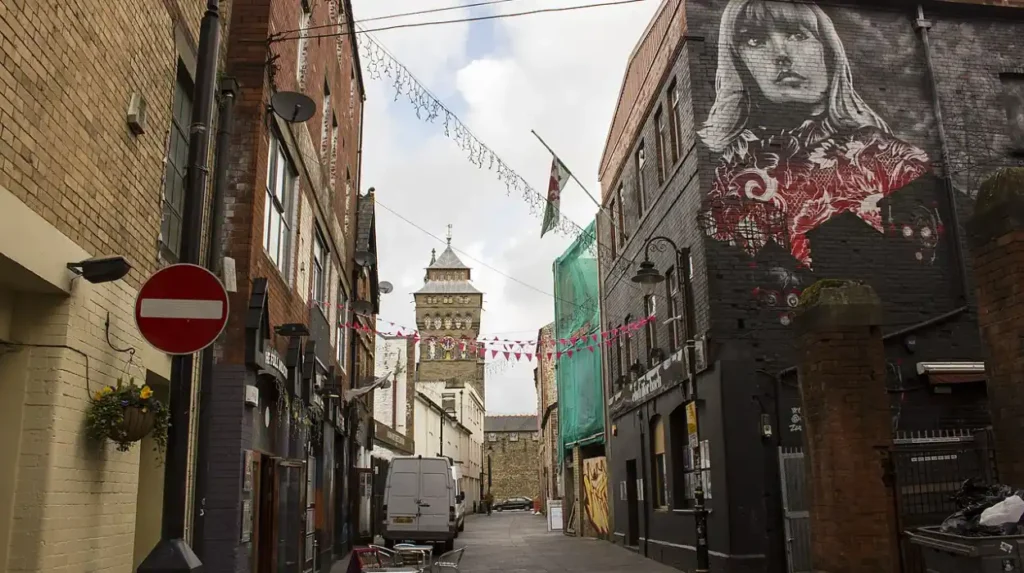
Nestled in the shadow of Cardiff Castle, Womanby Street has pulsed with rhythm for centuries, evolving from a Viking-era trade route into the beating heart of Wales’ live music scene. Today, this narrow cobblestone lane faces an uncertain future as beloved venues grapple with economic pressures, licensing battles, and urban redevelopment. This article delves into the street’s rich legacy, the forces threatening its revival, and why preserving it matters for Cardiff’s cultural identity.
Historical Roots of a Music Legacy
Womanby Street traces its origins to the Norse word “Wimundby,” meaning the settlement of a Viking trader named Wimund, dating back over a millennium. Positioned between Cardiff Castle and the old quay on the River Taff, it served as a vital link for merchants unloading goods from across the Bristol Channel. By the medieval period, the street had transformed into a bustling hub of taverns and inns, where sailors, traders, and locals gathered to share stories over ale.
This convivial atmosphere laid the groundwork for Womanby Street’s musical heritage. In the 19th century, as Cardiff boomed during the Industrial Revolution with coal exports fueling its growth into the world’s largest coal port, public houses along the street hosted folk singers and traveling minstrels. These early performances, often accompanied by fiddles and accordions, reflected the multicultural influx of Irish, Italian, and Welsh workers. By the early 20th century, the street’s pubs had become informal stages for brass bands and choirs, embedding live entertainment into its DNA long before rock ‘n’ roll arrived.
The post-World War II era marked a shift toward modern music. Jazz and skiffle clubs emerged in the 1950s, drawing crowds eager for American influences amid rationing’s end. Womanby Street’s compact layout—flanked by Castle Street to the north and Quay Street to the south—fostered an intimate vibe, where performers and patrons mingled freely. This organic evolution positioned the street as Cardiff’s creative quarter, a precursor to its status as a grassroots music powerhouse.
Rise as Cardiff’s Premier Music Hub
The 1980s ignited Womanby Street’s golden era, coinciding with Cardiff’s punk and post-punk explosion. Clwb Ifor Bach, opening in 1983 at number 11, became the epicenter. Named after a medieval Welsh prince known for his small stature but mighty spirit—”Clwb Ifor Bach” translates to “Ifor Bach Club”—it championed Welsh-language acts alongside international indie bands. Over four decades, it launched careers of global stars like Manic Street Preachers, Stereophonics, Super Furry Animals, and Duffy, who all cut their teeth on its cramped stage.
Fuel Rock Club, established in 2006 at number 10, carved out a niche for heavy metal and rock. It hosted festivals like Metal to the Masses, qualifying winners for Bloodstock Open Air, and drew fans from across the UK for Iron Maiden tribute nights. The venue’s raw energy—think sweat-drenched mosh pits and thunderous riffs—embodied Womanby Street’s unpretentious ethos. Nearby, The Moon at the former Y Fuwch Goch pub revived the space after a 2017 closure, blending gigs with club nights until its abrupt end.
This cluster effect turned Womanby Street into Cardiff’s live music hub. Venues operated in symbiosis: punters hopped between Clwb Ifor Bach’s indie sets, Fuel’s metal marathons, and pop-up events at dive bars. The street’s nocturnal hum—amplified by buskers and late-night jams—created a magnetic pull, especially during festivals like the Cardiff Music City Festival. By the 2010s, it hosted over 1,000 gigs annually, nurturing talents like Huw Stephens’ Radio 1 discoveries and S4C broadcasts.
Cultural Impact on Cardiff and Wales
Jeremy Segrott
Womanby Street’s influence extends far beyond gigs; it has shaped Welsh identity in a nation where music is a cultural cornerstone. As home to the Welsh Music Foundation and Swn Festival origins, it democratized access to the industry, offering affordable entry for unsigned acts. This grassroots model contrasts with London’s glossy venues, providing a distinctly Welsh alternative where language and heritage thrive alongside global sounds.
Economically, the street generates millions for Cardiff’s night-time economy. A 2017 Institute of Welsh Affairs report highlighted its role in retaining young talent, preventing brain drain to bigger cities. Venues like Clwb Ifor Bach double as rehearsal spaces and workshops, training sound engineers and promoters who staff Glastonbury or O2 Arena tours. For locals, it’s a rite of passage—students from Cardiff University flock here for £5 entry, forging lifelong memories amid the haze of stage smoke.
Globally, Womanby Street alumni dominate charts. Manic Street Preachers’ raw early shows here evolved into stadium anthems, while Super Furry Animals’ psychedelic experiments echoed psychedelic pioneers. Duffy’s soulful breakthroughs earned Grammys, crediting the street’s supportive chaos. This legacy cements Cardiff as “Music City,” with Womanby Street as its soul, rivaling Bristol’s Colston Hall or Manchester’s Haçienda in cultural cachet.
Challenges Threatening the Revival
Despite its storied past, Womanby Street teeters on the brink. Venue closures have accelerated since 2020: The Moon shuttered in November 2024 after its parent company liquidated, following The Full Moon’s 2017 collapse. Fuel Rock Club fights eviction amid rising rents, exacerbated by post-pandemic recovery and cost-of-living crises. Licensing disputes plague operators, with Cardiff Council enforcing noise restrictions to appease nearby hotels and residents.
Urban redevelopment poses the gravest threat. Cardiff’s St David’s Dewi Sant shopping center expansion and Hayes Island snack bar gentrification encroach on the creative quarter. Clwb Ifor Bach’s 2023 planning bid for expansion—aiming for bigger stages and training facilities—hangs in limbo, facing opposition over heritage concerns. Critics argue high-rise apartments and chain bars dilute the street’s authenticity, mirroring losses in London’s Denmark Street or Glasgow’s Sub Club scene.
Economic headwinds compound issues. Grassroots venues nationwide face 20% annual closures, per the Music Venue Trust, due to business rates hikes and streaming’s erosion of ticket sales. In Cardiff, Welsh Government grants help but fall short against £2 billion UK-wide losses. Womanby Street’s fight symbolizes a broader crisis: without intervention, the hub risks becoming a sanitized tourist trap.
Community Campaigns and Grassroots Fightback
The revival effort is fierce and community-driven. Campaigns like #SaveWomanbyStreet rallied thousands via petitions and social media after 2024 closures. Former Moon staff hosted fundraisers, channeling proceeds to reopen as a co-operative space. Clwb Ifor Bach’s team lobbies for “Asset of Community Value” status, protecting it from developers akin to Dublin’s Whelan’s protections.
Musicians lead the charge. Local acts like Buzzard Buzzard Buzzard and CHROMA host benefit gigs, while alumni like Kelly Jones of Stereophonics pen op-eds urging council support. The Night Time Industries Association partners with Cardiff Council for a “Cultural Protection Zone,” proposing tax breaks and 24-hour bus routes to sustain the ecosystem. These efforts echo successful revivals, like Sheffield’s Corporation venue, blending advocacy with innovation.
Public momentum builds. In 2025, a “Womanby Weekender” festival packed the street, showcasing 50 acts and raising £50,000 for a venues hardship fund. Collaborations with BBC Wales amplify voices, framing the street as vital to Cymru’s (Wales’) soft power. This united front—fans, artists, and businesses—positions the revival as a model for UK music cities.
Future Prospects and Redevelopment Visions
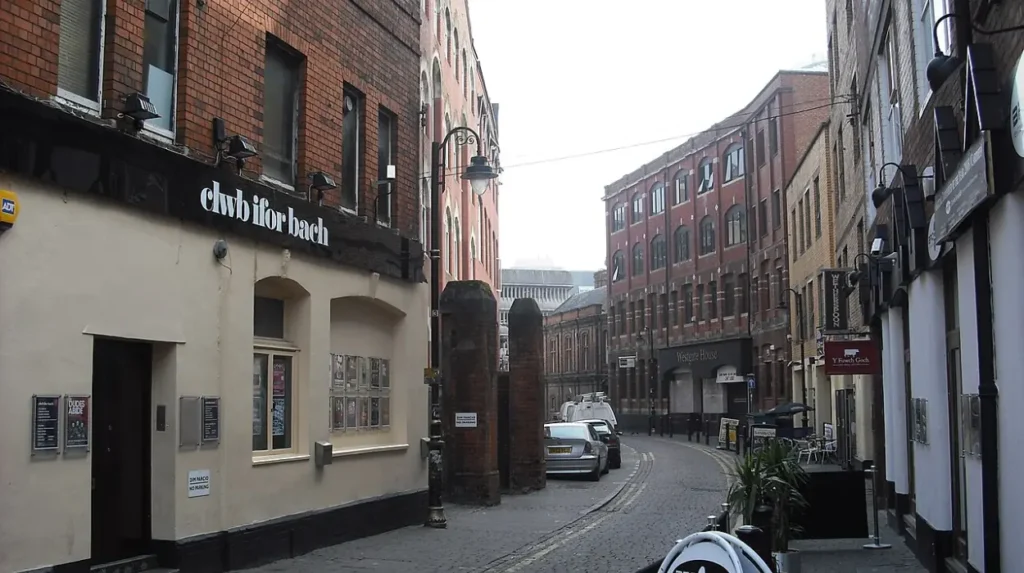
Optimism flickers amid uncertainty. Clwb Ifor Bach’s redevelopment, if approved, promises a 300-capacity expansion, recording studios, and youth academies, solidifying its launchpad role. Plans include solar panels and accessibility upgrades, aligning with Welsh net-zero goals. Fuel eyes relocation nearby, preserving metal’s foothold.
Cardiff Council’s 2026 Night Time Economy Strategy prioritizes Womanby Street, allocating £1.5 million for infrastructure like better lighting and CCTV. Partnerships with Tŷ Cerdd, Wales’ music center, envision pop-up venues in vacant units. Digitally, VR gig archives and NFT ticket sales could bridge generations, ensuring evergreen appeal.
Long-term, the street could anchor a “Cardiff Creative Corridor,” linking to Chapter Arts Centre and Tramshed. Success hinges on balanced growth: preserving grit while inviting investment. If revived, Womanby Street will endure as Cardiff’s sonic beacon, proving small streets can roar loudest.
Why Womanby Street Matters Today
In an era of algorithm-driven playlists, Womanby Street reminds us of music’s live alchemy—unpredictable, communal, transformative. It nurtures diversity, from Welsh folk to grime, fostering inclusivity in a divided world. For Cardiff Daily readers, it’s more than venues; it’s heritage worth fighting for.
Preservation efforts underscore a universal truth: cities thrive on culture, not concrete. As campaigns gain traction, Womanby Street’s revival isn’t just possible—it’s imperative. By supporting gigs, signing petitions, and voting for cultural policies, locals can ensure this Viking lane keeps rocking into the 2030s and beyond.