Cardiff City Stadium sits at the heart of Cardiff City Football Club’s long‑term strategy, acting as both home ground and venue for the Wales national team. Recent discussions with the Football Association of Wales (FAW) indicate that the club and its partners are actively considering a large‑scale expansion that could raise capacity from around 33,000 to roughly 45,000 seats, though final plans remain conditional on the club’s league status and formal approvals. This article explains the current stadium layout, the design and phasing of any proposed expansion, the regulatory and financial mechanics involved, and what these changes mean for fans, match‑day experience, and Welsh football as a whole.
- What is Cardiff City Stadium and why is it important?
- What expansion plans are currently being discussed?
- How would the expansion change the stadium’s capacity and layout?
- What is the historical background of Cardiff City Stadium expansions?
- What are the key components of the proposed expansion project?
- What is the process for getting expansion plans approved?
- How would the expansion be funded and who pays for it?
- What impact would expansion have on match‑day experience for fans?
- How would the expansion affect Cardiff City Football Club’s league ambitions?
- What role does the Football Association of Wales play in these plans?
- How does Cardiff City Stadium compare to other major Welsh stadiums?
- What are the likely timelines and conditions for the expansion?
- What are the long‑term implications for Cardiff, Welsh football, and fans?
What is Cardiff City Stadium and why is it important?
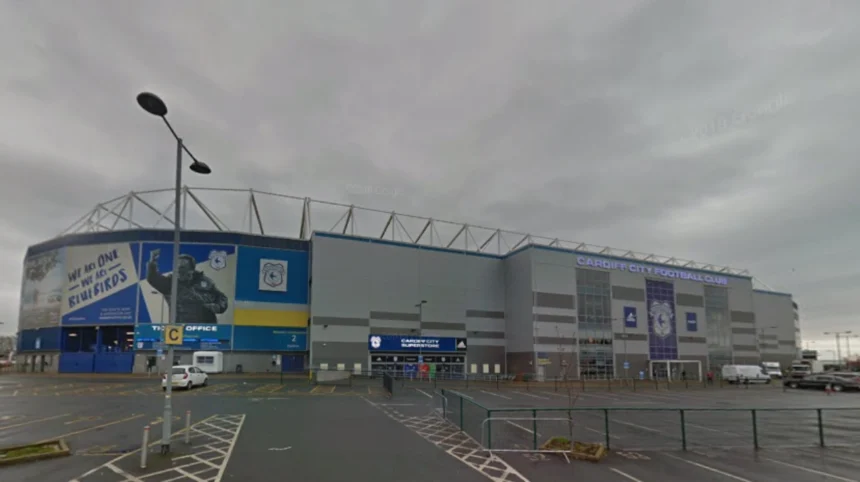
Cardiff City Stadium is a football ground located in the Leckwith area of Cardiff, Wales. Built between 2007 and 2009 at a construction cost of £48 million, it was designed by Arup Associates and opened officially on 22 July 2009, replacing Ninian Park as Cardiff City FC’s home ground.
The stadium currently holds 33,280 supporters following the expansion of the Ninian Stand in 2014, making it the second largest stadium in Cardiff and Wales, after the Millennium Stadium (now Principality Stadium). It is owned by Cardiff City Football Club Holdings Ltd and operated by Cardiff City Stadium Ltd.
Since opening, it has served three tenants: Cardiff City FC, the Wales national football team, and Cardiff Blues rugby union (2009–2012). Today, it functions as the primary home of both Cardiff City FC and the Welsh national team, making it the most important football venue in Wales.
Its significance goes beyond club football. The Football Association of Wales (FAW) increasingly uses Cardiff City Stadium as its preferred venue for international fixtures, World Cup qualifiers, and UEFA qualifying matches. The passionate Welsh supporter base, famously known as the “Red Wall,” fills the stands for major internationals, and the FAW wants to provide them with greater capacity and improved facilities, which is the central driver behind current expansion discussions.
What expansion plans are currently being discussed?
Preliminary plans discussed in early 2026 propose expanding Cardiff City Stadium to a capacity of approximately 45,000 seats, which would make it one of the largest football stadiums in the United Kingdom.
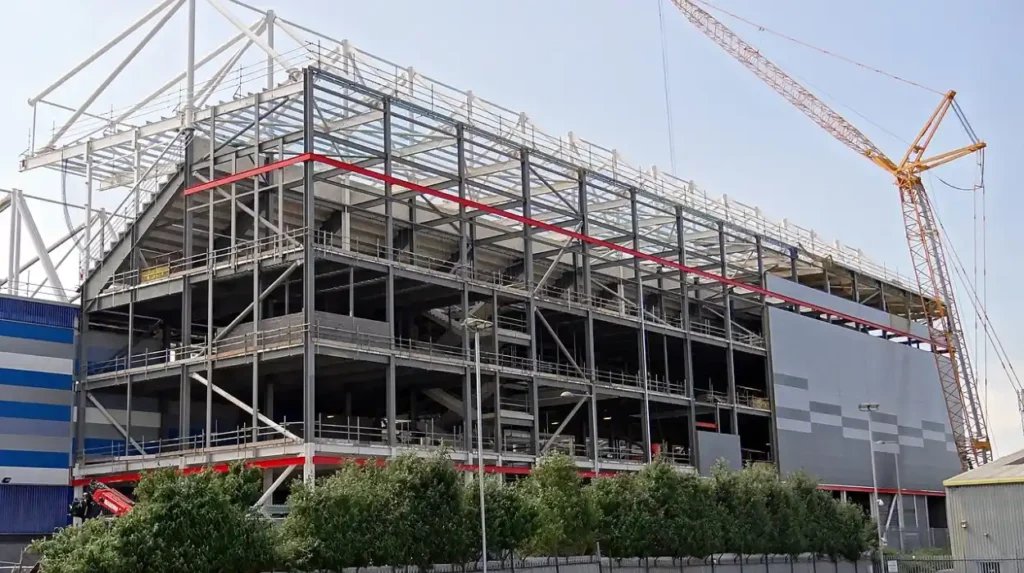
The core of the proposal centres on the expansion of two opposite stands, specifically enlarging both end sections of the ground. This approach allows new seating to be added without requiring a complete demolition and rebuild of the entire facility. The existing structure of Cardiff City Stadium is considered suitable for this kind of phased, gradual expansion.
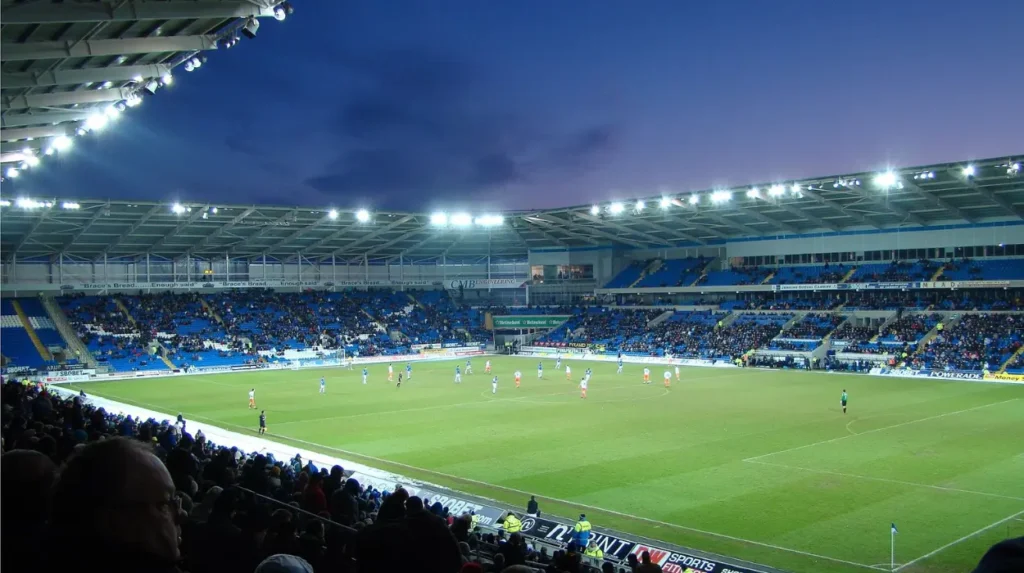
Earlier master‑development plans from the 2010s already laid groundwork for a phased approach, initially targeting a final capacity of around 38,000. Those original plans envisaged adding a second tier to the Ninian Stand (south end) first, then incrementally expanding the Canton and Grange ends by roughly 2,500–3,000 seats each. If realised at 45,000 seats, Cardiff City Stadium would rank within the second ten of the largest stadiums in the UK, surpassing the capacities of several well-known Premier League grounds, including Stamford Bridge and Villa Park.
It is important to note these remain preliminary plans at this stage. No planning application has been formally submitted, and the timeline for implementation depends significantly on the sporting and financial situation of Cardiff City FC, particularly whether the club can return to the EFL Championship or ultimately the Premier League.
How would the expansion change the stadium’s capacity and layout?
Cardiff City Stadium’s current capacity stands at 33,280, a figure reached after Phase 1 of a prior expansion added a second tier to the Ninian Stand in 2014, providing approximately 5,150 extra seats including enhanced commercial and hospitality facilities.
The new proposal would take the stadium well beyond that level. The plan involves expanding two opposite stands — the end stands — adding thousands of new seats at both ends of the pitch. This method avoids disrupting the existing side stands and allows construction to proceed in phases if needed.
The projected outcome is a stadium of around 45,000 capacity, though earlier phased plans had outlined interim targets:
- Phase 2 & 3 (previously discussed): Adding up to 3,000 seats each to the Canton End and Grange End, which would bring overall capacity to approximately 38,000
- Current 2026 proposal: A more ambitious target of ~45,000, achieved through expanding both ends more substantially
At 45,000, Cardiff City Stadium would become larger than Stamford Bridge and Villa Park, and comfortably enter the upper tier of football stadiums in the UK by size.
The GrassMaster hybrid pitch surface and overall field dimensions (100m x 68m) are not expected to change as part of the expansion.
What is the historical background of Cardiff City Stadium expansions?
Cardiff City Stadium has undergone several capacity changes since it first opened:
- 2009 (Opening): The stadium opened with an initial capacity of approximately 26,830–28,018 seats. Original plans had called for 30,000 seats, but a second tier was removed to cut construction costs, with the option to reinstate it later.
- 2013–2014 (Ninian Stand Expansion): Following investment from Malaysian co-owner Vincent Tan who outlined a £35 million plan in June 2012, Cardiff City submitted a planning application in August 2013 to add a second tier to the Ninian Stand. Local authority planning permission was granted in October 2013. The expansion was completed by August 2014, raising capacity to 33,280.
- 2015 (Partial Closure): Due to poor ticket sales following relegation from the Premier League, the Ninian Stand extension was temporarily closed for the 2015–16 season, reducing usable capacity to around 27,978.
- 2026 (Current Proposal): New preliminary plans emerged proposing expansion to ~45,000, expanding two end stands, driven largely by the FAW’s desire for greater capacity for Wales national team fixtures.
The stadium’s record attendance of 33,280 was set on 12 June 2015 during a Wales vs Belgium match. The club’s own attendance record is 33,082, set against Liverpool on 21 April 2019 during Cardiff City’s last Premier League season (2018–19).
The wider Leckwith development surrounding the stadium a 60-acre project costing an estimated £100 million also included the Cardiff International Sports Stadium, a retail park (Capital Retail Park), road improvements, and a hotel.
What are the key components of the proposed expansion project?
The 2026 expansion proposal has several distinct components:
Two-Stand Expansion: The primary element is expanding both end stands of the stadium. Rather than rebuilding the entire ground, the existing side stands (the Ninian Stand and the opposite stand) remain in place while both ends are extended upward and outward.
Increased Seating Capacity. The target is approximately 45,000 seats, a net addition of around 12,000 seats over the current 33,280 capacity.
Enhanced Hospitality and Commercial Facilities. Any expansion of this scale would also involve increasing corporate hospitality areas, executive boxes, and food and beverage concession points, all of which directly contribute to matchday and event-day revenues.
Improved Fan Facilities for the Red Wall. The Football Association of Wales has specifically cited the need for more space and better conditions for Welsh national team supporters. Expanding the end stands would most directly benefit these fans, who traditionally occupy the most vocal sections of the ground.
Phased Construction Approach The stadium’s structure allows expansion to be implemented in stages, meaning construction does not necessarily have to happen all at once. This phased model mirrors the approach used in the 2013–2014 Ninian Stand expansion.
What is the process for getting expansion plans approved?
Any Cardiff City Stadium expansion would need to pass through several stages before construction could begin:
The current 2026 plans are still at the preliminary concept stage. Detailed architectural designs, structural surveys, and feasibility studies would need to be commissioned. A formal planning application must be submitted to Cardiff Council. This is the same body that granted planning permission for the Ninian Stand expansion in October 2013. The council would assess the proposal against local planning policies, transport impact, and community considerations.
For larger developments, the Welsh Government (formerly the Welsh Assembly) may also need to provide approval, as it did during the original stadium development in 2003. Public consultation is typically required. Local residents, transport authorities, and businesses in the Leckwith area would all need to be engaged, particularly given the existing road infrastructure demands on matchdays.
Planning is secured, and construction contracts will be tendered. The original stadium was built by Laing O’Rourke; a project of similar or greater scale would require contractors of comparable capability.
How would the expansion be funded and who pays for it?
Funding for stadium expansion typically comes from a combination of club capital, private investment, and sometimes public or quasi‑public grants where community or national‑interest benefits are demonstrated. In Cardiff’s case, owner Tan Sri Vincent Tan’s previous investments show that a significant share of capital would likely originate from club‑owned or closely linked entities, especially if the club returns to the Premier League and gains higher broadcast and commercial revenues.
Additional revenue streams would include match‑day ticket‑sales uplifts, increased hospitality and corporate‑box sales, and long‑term naming‑rights or sponsorship deals tied to the expanded end‑stands. The Football Association of Wales could also contribute via stadium‑stewardship budgets or joint‑funding agreements, given its co‑ownership stake and the benefits of hosting larger international‑team crowds. Local authorities or regional development agencies might, in principle, offer limited infrastructure‑related support if the project generates measurable economic spillovers in West Cardiff.
What impact would expansion have on match‑day experience for fans?
A capacity increase to 45,000 seats would transform the matchday experience at Cardiff City Stadium in several important ways.With 33,280 current seats and consistent sellouts for Wales international fixtures, many fans are currently locked out of major matches. An additional 12,000 seats would open up more opportunities for supporters to attend.
Larger stadiums, when well-attended, generate a more intense atmosphere. Expanding both end stands typically the most vocal sections would amplify crowd noise and atmosphere, particularly for Wales national team fixtures where the Red Wall gathers. New construction would include upgraded concourses, toilets, catering outlets, and accessibility provisions, improvements that benefit all supporters, not just those in new sections.
Expanded corporate hospitality areas would attract business clients and sports tourists visiting Cardiff, adding to the economic footprint of major fixtures. The stadium is served by Ninian Park railway station (Cardiff City Line) and Grangetown railway station (Vale of Glamorgan Line), with frequent services to Cardiff Central and Queen Street. An increase of 12,000 fans on matchday would place additional pressure on these rail links, Leckwith Interchange on the A4232, and the surrounding road network, all of which would need to be assessed as part of the planning process.
How would the expansion affect Cardiff City Football Club’s league ambitions?
Funding a stadium expansion to 45,000 seats is a major financial undertaking. Several potential funding streams are relevant:
The club is the primary stakeholder. A return to the EFL Championship and ultimately the Premier League would dramatically increase revenues from broadcast rights, commercial partnerships, and ticket sales, making the investment more financially viable. Cardiff City FC currently holds a 125-year lease on the land on which the stadium sits.
Football Association of Wales (FAW) Given that the FAW uses Cardiff City Stadium as the home of the Wales national team, the federation has a clear interest in the expansion. FAW investment or co-funding arrangements are a likely component of any realistic financing plan, given the national team’s growing supporter base and increasing international fixture schedule.
Naming Rights Cardiff City Stadium has never had a commercial naming rights sponsor, an arrangement that has been available since the stadium opened in 2009. Selling naming rights could generate significant upfront or annual income to contribute toward construction costs.
Welsh Government grants or investment via Sports Wales or other public bodies are possible, particularly if the expansion is framed as infrastructure supporting Welsh national sport and tourism in Cardiff. The club’s ownership structure, currently majority-owned by Malaysian businessman Vincent Tan, may also contribute. Previous expansion work in 2013 was partly financed through a £35 million investment package from Tan’s ownership group.
What role does the Football Association of Wales play in these plans?
The Football Association of Wales (FAW) is a central figure in the Cardiff City Stadium expansion story — arguably as important as the club itself.
Since the stadium opened in 2009, it has become the primary home of the Wales national football team. Wales have played the majority of their home fixtures there, including World Cup qualifying matches and UEFA qualifying fixtures. In that time, Cardiff City Stadium has established itself as the most important international football venue in Wales.
The FAW has been explicit about wanting to provide the Red Wall, the passionate Welsh supporter base, with more space and better conditions. This desire is one of the primary stated reasons behind the current expansion proposals.
From a practical standpoint, the FAW’s involvement matters because:
- They are a co-tenant, meaning their fixture schedule and revenue contribution make the stadium economics more compelling for any expansion investment
- They can co-fund or co-guarantee elements of the project, improving the financial case
- International fixtures drive the highest attendances, meaning expansion would most immediately serve the national team’s needs
The FAW’s growing ambition, reflected in Wales qualifying for major tournaments in recent years, means demand for a larger, more modern home venue is only likely to increase.
How does Cardiff City Stadium compare to other major Welsh stadiums?
Understanding where Cardiff City Stadium sits in the broader landscape helps put the expansion plans in context.
Within Wales:
- Principality Stadium (Millennium Stadium), Cardiff — capacity ~74,500 — the largest stadium in Wales, used for rugby and major football occasions
- Cardiff City Stadium — 33,280 — second largest in Wales and Cardiff
- Swansea.com Stadium (Liberty Stadium) — ~20,750 — home of Swansea City
At 45,000 post-expansion, Cardiff City Stadium would remain behind the Principality Stadium but extend its lead as the second largest stadium in Wales by a significant margin.
Within the UK: At 45,000 seats, Cardiff City Stadium would surpass:
- Stamford Bridge, Chelsea FC — ~40,000
- Villa Park, Aston Villa FC — ~42,000
It would rank within the second ten largest stadiums in the UK, a major step up in prestige for both the club and Welsh football.
Record Attendances for Context:
- Cardiff City Stadium record: 33,280 (Wales vs Belgium, 12 June 2015)
- Cardiff City club record: 33,082 (vs Liverpool, 21 April 2019)
- UEFA Super Cup attendance (2014): 30,854 (Real Madrid vs Sevilla)
The stadium has also hosted the 2014 UEFA Super Cup and the 2017 UEFA Women’s Champions League Final, demonstrating that it already meets UEFA standards for major events. Expansion would further enhance its credentials for hosting elite European competition.
What are the likely timelines and conditions for the expansion?
There is no confirmed or committed timeline for the Cardiff City Stadium expansion as of 2026. The plans remain at a preliminary stage, and several conditions need to be met before construction can realistically begin.
Key Conditions:
- Sporting promotion — A return to the EFL Championship, and ideally the Premier League, would make the financial case compelling and accelerate planning
- Formal planning application — Cardiff Council approval would need to be secured, a process that took several months during the 2013 Ninian Stand expansion
- Funding agreement — A clear financial structure between Cardiff City FC, the FAW, and any other stakeholders (naming rights, government grants) must be established
- Detailed design — Architects and structural engineers would need to produce detailed plans beyond the current preliminary concept
Realistic Scenario: If Cardiff City FC were to achieve promotion to the Championship in 2025–26 and sustain that level for one or two seasons, a formal planning application could realistically be submitted by 2027–2028. Construction on a phased basis could then begin in the early 2030s, depending on funding being secured.
Best-Case Scenario: A rapid return to the Premier League, combined with FAW co-investment, could accelerate the process significantly, potentially beginning phased construction within three to four years of a committed decision being made.
What are the long‑term implications for Cardiff, Welsh football, and fans?
If the Cardiff City Stadium expansion to 45,000 seats is ultimately delivered, the implications extend well beyond the club.
A larger stadium means greater commercial capacity, higher ticket revenues, more hospitality income, bigger naming rights deals, and increased appeal to global sponsors. In the Premier League, these advantages compound quickly. The club’s last Premier League stint (2018–19) showed how rapidly fan interest scales up; a 45,000-seat ground would capture that demand fully.
A 45,000-seat Cardiff City Stadium would give the Wales national team a genuinely world-class home venue. It would strengthen Wales’s ability to bid for and host major international tournaments, UEFA events, and high-profile friendlies. The Red Wall would have more seats available for every fixture, deepening fan engagement with the national team at a critical period in Welsh football’s development.
A larger stadium capacity means more sports tourism visitors travelling to Cardiff for international matches and major club games. The economic ripple effect covers hotels, restaurants, transport, and retail across the city. The stadium already sits within the broader Leckwith development, which includes Capital Retail Park. An expanded stadium would make Cardiff a more attractive location for UEFA and FIFA to assign high-profile matches and tournaments.
Ultimately, the expansion is about access. More seats mean more fans can attend, whether for a sold-out Wales qualifier or a Premier League visit from a top club. Improved facilities mean a better experience for everyone inside the ground. And a higher-ranked stadium in the UK hierarchy means Cardiff City and the Wales national team compete in an environment that reflects their ambitions.
The expansion plans are still in their early stages, but the direction of travel is clear: Cardiff City Stadium is being positioned for a significantly larger and more prominent future.
Does Cardiff City play at the Millennium Stadium?
No. Cardiff City F.C. play their home matches at Cardiff City Stadium, not the Millennium Stadium.
The Millennium Stadium (now called Principality Stadium) is mainly used for rugby and major events, though Wales football team occasionally plays there.Who owns Cardiff City Stadium now?
The stadium is owned by Cardiff City F.C. (via its holding company) and operated by Cardiff City Stadium Ltd. There’s also a joint interest with the Football Association of Wales in how it’s used, especially for international matches.
What is the biggest stadium in Wales?
The largest stadium in Wales is the Millennium Stadium, with a capacity of about 74,000.
It’s the national stadium and significantly bigger than Cardiff City Stadium (~33,000).Can St. Mary’s stadium be expanded?
St Mary’s Stadium (home of Southampton) can be expanded, and plans have been discussed over the years. However, expansion depends on demand, finances, and planning approval. Like many modern stadiums, it was designed with potential future expansion in mind, but no major upgrade has been permanently implemented yet.
Where do away fans drink in Cardiff?
Away fans visiting Cardiff City F.C. typically head into Cardiff city centre rather than staying near the stadium, as it offers a much better range of pubs and atmosphere. Popular spots include St Mary Street, which is the main hub packed with bars and lively crowds, and Cowbridge Road East, which is well-known among both home and away supporters.
Many also gather around pubs close to the Principality Stadium. Overall, the city centre is preferred because it’s just a short walk or quick bus ride to Cardiff City Stadium, while offering a far more vibrant pre-match experience.