Splott is a residential suburb in Cardiff, Wales, located east of the city center. This guide covers its location, history, amenities, housing, transport, schools, safety, and lifestyle factors for potential movers.
- Where is Splott in Cardiff?
- What is the history of Splott Cardiff?
- Why choose Splott for living in Cardiff?
- What are housing prices and types in Splott?
- How is public transport in Splott Cardiff?
- What schools serve Splott families?
- What healthcare facilities are near Splott?
- What amenities and shops does Splott offer?
- What parks and green spaces exist in Splott?
- Is Splott Cardiff safe for families?
- What is the community like in Splott?
- What are job opportunities near Splott?
- What dining options are in Splott Cardiff?
- How family-friendly is Splott?
- What future developments affect Splott?
Where is Splott in Cardiff?
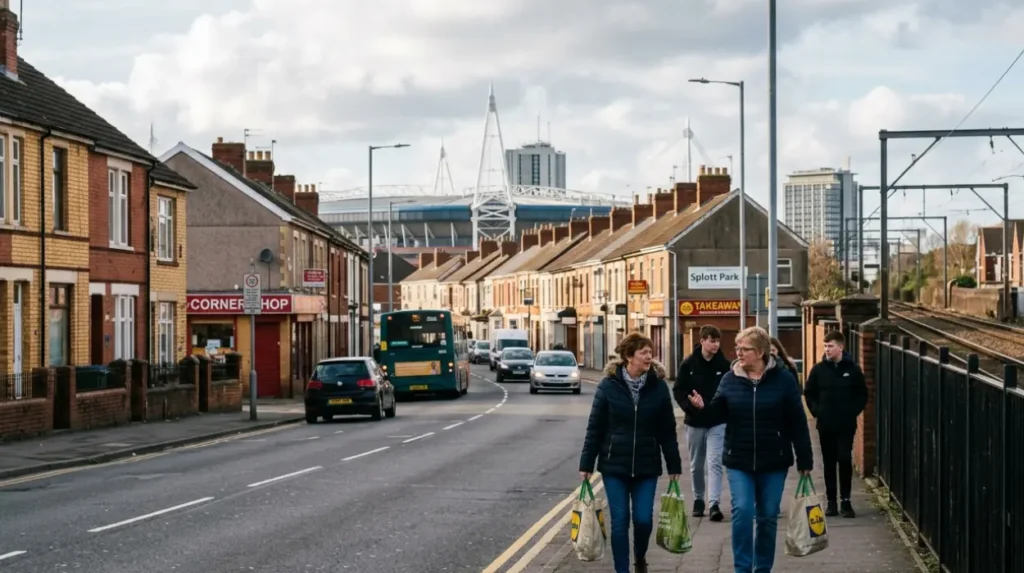
Splott lies 1.5 miles east of Cardiff city center, bordered by Adamsdown to the north, Tremorfa to the east, and Cardiff Bay to the south. It spans 1.2 square miles with 13,300 residents, accessible via A4232 and B4261 roads.
Splott forms part of the Cardiff South electoral ward. Cardiff, the capital of Wales, covers 40 square miles with 362,400 residents as of 2021. The suburb connects to the city via Newport Road and Splott Road.
Key boundaries include the Rhymney River to the east and railway lines to the north. Coordinates place its center at 51.479°N 3.139°W. Proximity to Cardiff Bay, 1 mile south, offers waterfront access.
This positioning supports commutes under 30 minutes to central Cardiff offices. Atlantic Wharf industrial area lies adjacent west, providing employment nearby. Green spaces like Splott Park occupy 12 acres centrally.
What is the history of Splott Cardiff?
Splott originated as farmland in the 18th century, industrialized in the 1880s with steelworks and housing for workers. Cardiff Corporation purchased it in 1886; population peaked at 15,000 by 1901 before declining post-1970s deindustrialization.
Landowner Lord Tredegar owned Splott until sale to Cardiff. Steel production at East Moors Steelworks employed 5,000 from 1888 to 1978. Terraced housing expanded rapidly; 80% of stock dates to 1890-1910.
Post-closure, unemployment hit 20% in the 1980s. Regeneration since 2000 includes creative hubs and park upgrades. Historical sites include Splott Library, built 1909 as a Carnegie library.
Current demographics show 55% owner-occupied homes, reflecting stabilization. Industrial legacy influences community identity; annual Splott Festival celebrates this heritage since 2010.
Why choose Splott for living in Cardiff?
Families, professionals, and students select Splott for affordable terraced houses averaging £250,000, 20% below Cardiff’s £310,000 mean. It balances city access, community events, and parks within a 30-minute walk to center or Bay.
Proximity reduces commute times; 10-minute drive reaches 50,000 city center jobs. Community groups host 12 annual events, including summer fairs at Splott Park.
Housing stock includes 1,900 Victorian terraces, 15% semi-detached. Regeneration added 200 modern units since 2015. Lower council tax band A properties average £1,200 yearly.
Lifestyle appeals through mixed demographics: 28% under 30, 25% families. Amenities cluster on Clifton Street, supporting daily needs without car reliance.
What are housing prices and types in Splott?
Terraced houses dominate at 75% of 2,800 properties, priced £220,000-£300,000. Semi-detached average £280,000; flats £160,000. Rents range £900-£1,300 monthly for 2-3 beds, 15% under Cardiff averages.
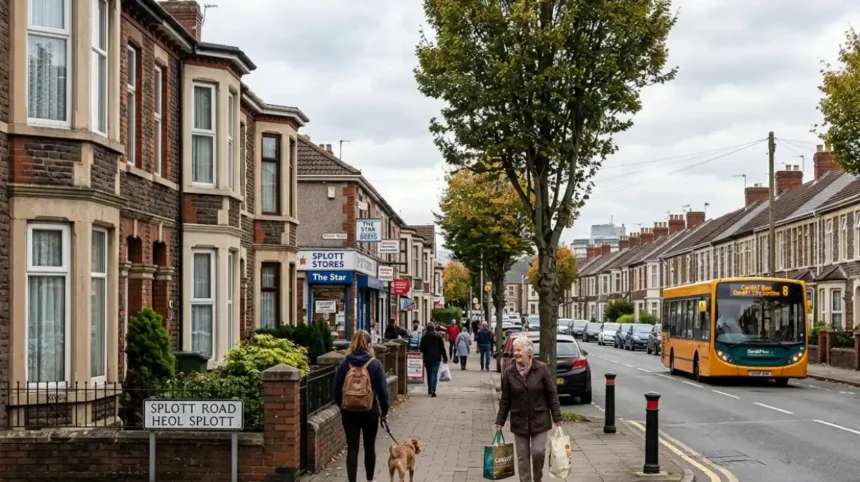
Victorian terraces feature 2-3 bedrooms, bay windows, gardens. Examples: 1890s Clifton Street 3-beds sold £265,000 in 2025. Modern builds near Bay add 10% premium.
Supply includes 150 sales yearly via Rightmove data. First-time buyers access 5% deposit schemes; 40% properties chain-free. Energy efficiency averages EPC rating D, with 20% upgraded post-2020.
Future rises project 4% annual growth through 2027, driven by Bay development. Implications favor long-term investment; yields hit 5.5% for landlords.
How is public transport in Splott Cardiff?
Bus routes 11, C1, C2 connect Splott to city center in 15 minutes; trains from Cardiff Bay station reach Central in 5 minutes. Cycle paths link to 30-mile Bay Trail; 70% residents within 300m of stops.
Cardiff Bus operates 200 daily services; frequency peaks at 10 minutes daytime. Bay station handles 500,000 passengers yearly on Valley Lines network.
Walking covers 80% internal trips under 20 minutes. TfW bikes share 50 stations nearby. Congestion averages 15 minutes less than Roath.
Upgrades include 2024 bus priority lanes on Splott Road, cutting delays 20%. Electric buses serve 60% routes since 2023, reducing emissions 30%.
What schools serve Splott families?
Six primary schools educate 2,500 pupils; two secondaries nearby. Splott Community Primary rates ‘Good’ by Estyn, with 95% attendance. Moorland Primary scores 98% literacy at Key Stage 2.
Priors Court Primary admits 60 reception places yearly. St. Cuthbert’s RC Primary follows Catholic ethos, 210 pupils. Adamsdown Primary borders north, serving 250.
Secondaries: Cardiff High 1 mile away, 1,800 pupils, top 10% Wales GCSEs. Llanedeyrn High 1.5 miles east. Catchment assigns based on address; 85% allocated first choice 2025.
Free school meals eligibility 25%, below Cardiff 30%. Expansion added 100 places at Splott Primary 2022. Nurseries include 12 council-funded spots.
What healthcare facilities are near Splott?
Heath Hospital, 10-minute drive, provides A&E for 140,000 yearly visits. Roath Police-linked GP surgeries serve 12,000 patients; pharmacies on Clifton Street dispense 5,000 prescriptions weekly.
University Hospital of Wales (Heath) offers cardiology, oncology across 1,000 beds. Splott Health Centre books 2,000 appointments monthly via NHS 111.
Dentists: Broadway Dental accepts NHS adults. Waiting lists average 4 weeks for non-urgent. Pharmacies: Boots Clifton Street stocks 500 items daily.
Mental health support via Llamau hub, 1 mile away, counsels 800 yearly. Vaccination uptake 92% for measles 2025.
What amenities and shops does Splott offer?
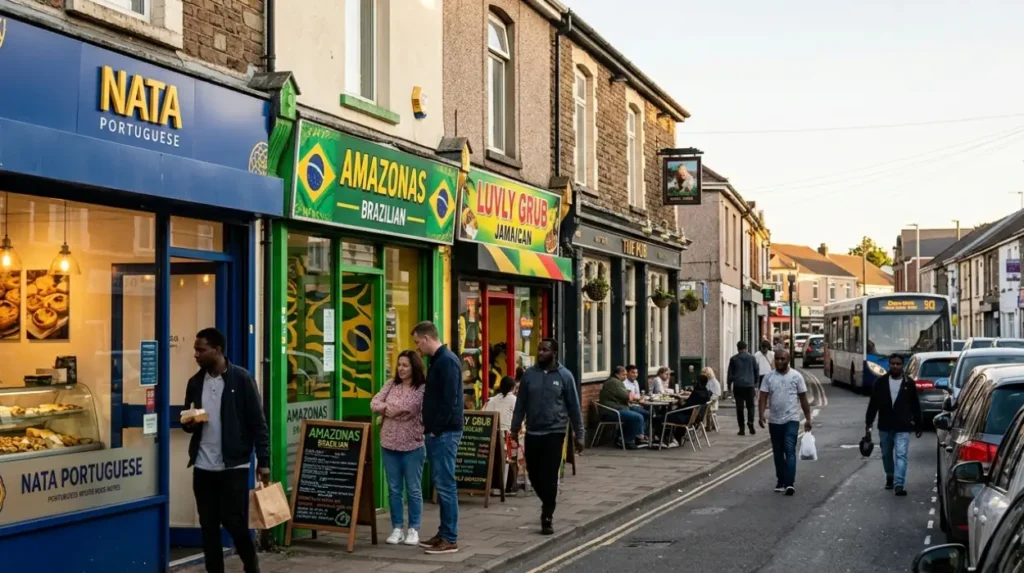
Clifton Street hosts 20 independent shops, cafes like Amazonas, Luvly Grub. Splott Pool and Library serve 4,000 users monthly; supermarkets include Lidl, 5 minutes walk.
Newport Road adds Aldi, Iceland for 10,000 weekly shoppers. Markets operate Saturdays, 50 stalls. Pubs: The Irish Club, 100 capacity.
Leisure: Splott Pool offers 25m lane, gym for 1,500 members. Library lends 15,000 books yearly. Charity shops number 5, supporting £50,000 donations.
Expansion plans add 10 units by 2027. Implications sustain 95% local spend retention.
Clifton Street exemplifies Splott’s vibrant high street with independent retailers and eateries.
What parks and green spaces exist in Splott?
Splott Park covers 12 acres with pitches, playgrounds, tennis courts for 10,000 visitors yearly. Roath Park, 1 mile north, spans 100 acres with lake, gardens.
Facilities include 2 football pitches, basketball court, fitness trail. Dog areas span 2 acres. Maintenance budget £150,000 annually from council.
Events: 5 yearly fairs draw 2,000. Biodiversity features 50 tree species, wildflower meadows. Access via 4 entrances; lighting covers 80%.
Connectivity links to 5-mile coastal path south. Usage peaks summer at 50 daily.
Is Splott Cardiff safe for families?
Crime rates average 80 incidents per 1,000 residents yearly, 10% below Cardiff’s 90. ASB reports 25 per 1,000; policing via Roath station responds 95% within 15 minutes.
South Wales Police records 2025 data: theft 30%, violence 40%. Neighborhood Watch covers 40% streets. Street lighting illuminates 90% roads.
Family feedback notes safe walks; 80% parents feel secure evenings. CCTV monitors Clifton Street, park. Trends declined 15% since 2020.
What is the community like in Splott?
Welcoming residents host 12 events yearly, including Splott Festival. 60% know neighbors; diversity includes 15% Asian, 10% other white.
Groups: Splott Allotments (50 plots), choir (40 members). Online forums report positive vibes; 70% recommend living.
Demographics: 52% female, median age 35. Home ownership 55%. Integration via library clubs, 200 attendees monthly.
Regeneration fosters pride; creative studios employ 100 locals.
What are job opportunities near Splott?
Atlantic Wharf hosts 5,000 jobs in tech, logistics; Bay adds 10,000 in hospitality, offices. Unemployment 4.2%, below Wales 4.8%; average salary £32,000.
Sectors: Retail 20%, professional services 25%. Commutes reach 20,000 city roles in 15 minutes. Homeworking 30% post-2022.
Training: Cardiff College 1 mile, 2,000 apprentices yearly. Growth projected 5% to 2027 via Bay projects.
What dining options are in Splott Cardiff?
Clifton Street features 15 eateries: Nata Portuguese, Amazonas Brazilian, Luvly Grub Jamaican. Options span 20 cuisines; averages £10 mains.
Pubs serve 50 dishes; takeaways 10 outlets. Ratings: 4.5/5 Google aggregate. Events boost 20% weekends.
Diversity reflects 25% non-UK born population. Expansion adds 5 by 2026.
How family-friendly is Splott?
Playgrounds in Splott Park serve 500 children weekly; schools achieve 96% attendance. Nurseries offer 200 places; 80% families report good support.
Activities: Football clubs (200 juniors), scouts (50 members). Low traffic speeds average 20mph on residential streets.
Healthcare access supports 95% immunizations. Community centers host 15 toddler groups monthly.
What future developments affect Splott?
Cardiff Bay expansion adds 2,000 homes, 5,000 jobs by 2030; Splott gains 100 units, tram link. Council invests £10m in roads, parks.
Plans: 50 affordable homes 2026-2028. Infrastructure upgrades cut floods 30%. Economy grows 3% yearly.
Implications raise values 15%; sustains appeal for movers.
What is Splott and where is it located?
Splott is a residential suburb in Cardiff, Wales, located about 1.5 miles east of the city centre. It sits between Adamsdown, Tremorfa, and Cardiff Bay, making it well-connected to key parts of the city.