Key Points
- Principal contractor Graham is due to formally begin construction of the Cardiff Central to Cardiff Bay tram-train route on 15 June.
- The project is Phase 1a of the wider Cardiff Crossrail vision, which aims to link Plasdŵr in the north-west of the city with a proposed Parkway railway station in the east.
- Cardiff Council and Transport for Wales are developing the scheme, with £50m from the Welsh Government and £50m from the UK Government.
- The line is intended to move workers, residents and visitors between Cardiff Bay and the city centre, including access to a planned 16,500-seat indoor arena.
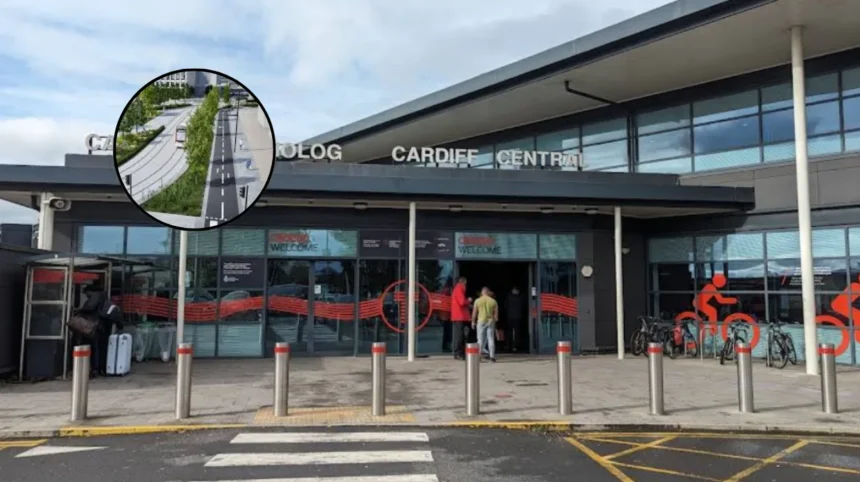
- The route will start at a two-platform tram-train stop in the southern car park of Cardiff Central station, pass through Callaghan Square and then run on raised track to Cardiff Bay station.
- A third platform is planned at Cardiff Bay, alongside a second platform already being delivered through South Wales Metro works.
- The project also includes road redesign, new pedestrian areas, landscaping, drainage and segregated cycle routes.
- Phase 1b, which would extend the route on-street from Cardiff Bay Station to Pierhead Street, is not currently funded.
Cardiff Bay (Cardiff Daily) June 8, 2026 marking the start of Phase 1a of the Cardiff Crossrail project, which is being led by Cardiff Council and Transport for Wales with funding from the Welsh and UK governments. The scheme is designed to improve transport links between the city centre and Cardiff Bay, while also serving future destinations such as a 16,500-seat indoor arena that is currently under construction.
As reported by the unnamed journalist behind the supplied coverage, Graham said the route will “fundamentally change how people move around the city”, with Contracts Director Andrew Henry adding that Cardiff has
“an exciting few years ahead” and that the company is
“proud to be delivering infrastructure of this scale in the city”.
According to the same coverage, the works form part of a wider transport vision for Cardiff that is intended to create a greener, more sustainable and affordable network.
What is the Cardiff Crossrail tram-train project?
Cardiff Crossrail is a proposed tramway network that would ultimately connect Plasdŵr in the north-west of the city with a planned Parkway railway station in the east. The first operational section, Phase 1a, focuses on the corridor between Cardiff Central and Cardiff Bay, where existing demand is expected to be strongest.
The route is being delivered as a tram-train line, meaning it is designed to operate in a way that connects tram-style urban movement with rail infrastructure.
The line is intended to support commuters, residents and visitors moving between the Bay and the city centre. It is also meant to provide transport access to major regeneration and entertainment sites in Cardiff, including the new indoor arena.
The scheme is framed by the council as part of a longer-term effort to reshape how people travel across the city.
Where will the route run?
The first section will begin at a two-platform tram-train stop in the southern car park of Cardiff Central station. From there, the line will run through Callaghan Square, where significant utility diversions are required before construction can progress.
After that, it will move onto raised track and connect to the existing railway alignment into Cardiff Bay station.
At Cardiff Bay, the project includes provision for a third platform. That would sit alongside the second platform being delivered as part of the South Wales Metro railway upgrading programme.
The surrounding works also include a simpler road layout, new pedestrian spaces, landscaping, drainage improvements and segregated cycle routes.
Who is delivering the scheme?
Graham has been appointed principal contractor for the project and is due to begin construction formally on 15 June. Cardiff Council and Transport for Wales are developing the scheme together. Funding has been split evenly between the Welsh Government and the UK Government, with £50m contributed by each.
Andrew Henry, Contracts Director at Graham, said the company sees the project as one with long-term significance for Cardiff.
Councillor Dan De’Ath, Cabinet Member for Climate Change, Strategic Planning and Transport at Cardiff City Council, said the scheme reflects the city’s 10-year transport vision and is aimed at building a greener, more sustainable and affordable system.
Why does the project matter?
The route matters because it is intended to improve movement between two of Cardiff’s key areas: the city centre and Cardiff Bay.
That link is expected to be particularly important for people travelling to jobs, homes, leisure destinations and the new arena. In transport terms, the project also fits into a wider push to reduce reliance on cars and improve the quality of urban travel routes.
The inclusion of pedestrian spaces, cycle routes and road changes suggests the scheme is being designed as more than a rail project alone. It is being presented as part of a broader urban regeneration plan. The fact that Phase 1b remains unfunded also shows that the vision is still incomplete, even though the first stage is now moving into construction.
What did the officials say?
Andrew Henry of Graham said the line
“will fundamentally change how people move around the city”.
He added that Cardiff has
“an exciting few years ahead” and that Graham was “proud to be delivering infrastructure of this scale in the city”.
Councillor Dan De’Ath said the vision for Cardiff Crossrail is clearly set out in the city’s 10-year transport strategy. He described the project as part of efforts to build
“a greener, more sustainable and affordable transport system for the city”.
Both comments underline that the scheme is being promoted as a long-term infrastructure investment rather than a short-term transport upgrade.
Explore More Cardiff Bay News
Senedd Secures Landmark Deal for Tŷ Hywel Offices Cardiff Bay 2026
Plaid Cymru Minority Gov’t Bid, Cardiff Bay 2026
What happens next?
Construction is expected to start formally on 15 June, with early work likely to focus on enabling works and utility diversions, particularly around Callaghan Square.
Further stages will follow as the tram-train stop, track alignment and associated public realm improvements are delivered. The next major unknown is the future of Phase 1b, which has been proposed but is not yet funded.
The project will also need to integrate with other transport upgrades in the city, including the South Wales Metro works at Cardiff Bay. That makes coordination important, particularly where new platforms and existing rail services overlap.
Background of the development
Cardiff Crossrail is a long-term transport concept that has been developing as part of wider plans to improve public transport in the Welsh capital.
The aim is to create a city-wide tramway network, with the Cardiff Central to Cardiff Bay section serving as the first practical step. The route has been presented as part of a strategy to connect major districts and support planned growth in housing, employment and leisure.
The Cardiff Bay corridor is already significant because of its role in tourism, entertainment and public life, and the coming arena is expected to increase demand further.
The project’s wider significance lies in how it fits into Cardiff’s approach to transport planning, regeneration and city-centre connectivity. Although only Phase 1a is moving ahead now, the overall Crossrail concept remains broader and more ambitious.
What could this mean for passengers?
For commuters, residents and visitors, the main effect should be improved travel between Cardiff Central and Cardiff Bay once the line is complete. That could reduce pressure on other forms of transport and make journeys more direct for people heading to offices, homes, attractions and events. The new route may also make the Bay easier to reach for major occasions at the planned arena.
For the wider audience in Cardiff, the project could influence how the city centre develops around the new infrastructure. If the tram-train line performs as intended, it may encourage more sustainable travel choices and support further investment in surrounding areas.
The scale of that impact will depend on how quickly construction progresses, whether later phases are funded, and how effectively the new service connects with the rest of the transport network.