Key Points
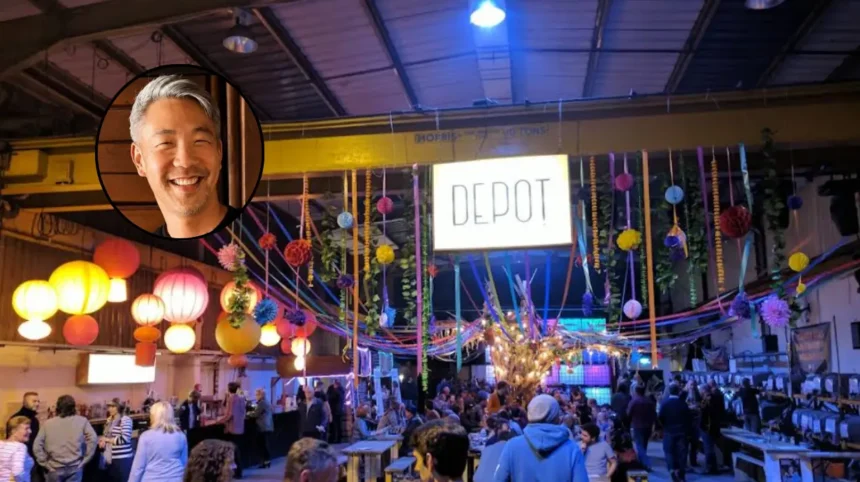
- Initial Concept: Brother Thai originated in 2015 as a mobile food operation using a basic gazebo and makeshift shack at The DEPOT in Cardiff.
- Signature Menu Item: Founder Andrew Chongsathien shifted from traditional Thai food to create a unique culinary vehicle: flaky, South Thai-Muslim style paratha rotis filled with elements like Sticky Spicy Beef.
- Award-Winning Success: The brand secured the ‘Best Vegetarian Dish’ title at the British Street Food Awards in 2017 for its distinct jackfruit and shiitake mushroom roti variation.
- Brick-and-Mortar Transition: Following six years of touring prominent food festivals, the first permanent Brother Thai Roti Bar opened on Whitchurch Road, Cardiff, on July 8, 2021.
- Cross-Border Expansion: Marking its eleventh year of total operations, the independent brand expanded into England by opening its second brick-and-mortar restaurant at 104 Stokes Croft, Bristol, on April 9, 2026.
- Strategic Philosophy: The growth from a mobile stall to a multi-city operation has been attributed to menu restraint, operational consistency, and utilizing a professional background in graphic design.
Cardiff (Cardiff Daily) July 11, 2026 – An independent Welsh street food brand that began as a makeshift gazebo operation eleven years ago has successfully transitioned into a cross-border casual dining enterprise, celebrating five years of permanent residency in Cardiff alongside a major new restaurant expansion into Bristol. Founded in 2015 by former graphic designer Andrew Chongsathien, Brother Thai established its first permanent “Roti Bar” on Whitchurch Road in Cardiff in July 2021 after more than half a decade on the UK festival circuit. In April 2026, the brand crossed the Severn Estuary to open a secondary permanent location at 104 Stokes Croft, Bristol, formalizing its presence in one of the West of England’s most competitive independent culinary hubs. The expansion reflects a growing national trend of regional British street food vendors leveraging hyper-local brand loyalty to withstand wider hospitality industry pressures through strict structural discipline and concise, highly specialized menus.
- Key Points
- How Did a Graphic Designer Build a Street Food Sensation?
- What Drove the Transition From a Mobile Gazebo to a Permanent Roti Bar?
- Why Has Brother Thai Expanded Across the Border into Bristol?
- What Are the Core Operational Management Strategies Behind the Brand’s Longevity?
- Background of the Street Food to Brick-and-Mortar Development Model
- Prediction: How This Development Will Affect Regional Independent Food Operators and Consumers
How Did a Graphic Designer Build a Street Food Sensation?
The origins of the enterprise date back to a career pivot by its founder. As detailed by What’s On Editor Kathryn Williams of WalesOnline, Andrew Chongsathien grew up in Bridgend during the 1980s within a small Thai community and initially pursued higher education in graphic design and advertising.
After electing to leave the advertising sector, Chongsathien traveled globally, worked within the charitable sector, and operated a doughball street food van in the early 2010s before channelizing his cultural heritage into the culinary arts.
As reported by Rhys Gregory of Wales 247, Brother Thai initially debuted at the Cardiff street food venue The DEPOT in 2015, serving a conventional Thai menu.
However, Chongsathien sought to distinguish the brand within a rapidly expanding regional food scene by redesigning the physical format of how Thai flavours were consumed.
In public statements documenting the evolution of the menu, Chongsathien explained that the inspiration for his signature product came from personal home cooking and international travel observations. As recorded by WalesOnline, Chongsathien stated:
“I’ve always looked at different recipes, chefs and cooks to see what they are doing in Thailand. I saw that in the south of Thailand, where there’s a strong Muslim population, they were using parathas to serve their curries and I just thought that’d be a really good vehicle holding something. And, people love meat in bread here, everything’s a version of that, pasty, sandwich, burger — so I started thinking around that idea.”
This conceptual fusion resulted in the brand’s signature dish: the Sticky Spicy Beef Roti, featuring tender beef chunks combined with sweet slaw and sriracha mayonnaise inside a flaky, unleavened, south-Thai style flatbread.
The recipe was first systematically publicised at the Waterloo Gardens summer fete in 2016. By 2017, the innovative food concept achieved critical national validation when Brother Thai won the “Best Vegetarian Dish” title at the British Street Food Awards for a specialized jackfruit and shiitake mushroom variation of their signature beef roti.
What Drove the Transition From a Mobile Gazebo to a Permanent Roti Bar?
Between 2016 and 2021, Brother Thai operated as a peripatetic vendor, becoming a staple fixture at major South Wales culinary events, including Street Food Circus and the Abergavenny Food Festival. Simultaneously, the brand cultivated an external consumer base in England by regular trading at the Harbourside Market in Bristol starting in 2018.
However, the continuous operational demands of mobile street food logistics ultimately prompted a shift toward a fixed-location strategy. As reported by WalesOnline, the administrative burden of running a highly popular mobile stall meant that Chongsathien’s designated days off were entirely consumed by back-end corporate administration.
Furthermore, his previous employment background at established casual dining chains like Pizza Express provided an operational blueprint for kitchen efficiency that could be better executed inside a dedicated infrastructure.
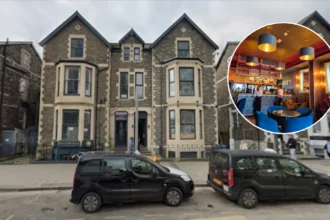
On July 8, 2021, amidst the volatile trading conditions of the global pandemic, Brother Thai opened its first brick-and-mortar restaurant at 35 Whitchurch Road, Cardiff. The location quickly became a neighborhood anchor point, with tables heavily booked for the opening months.
Local food commentators noted that the transition followed a successful regional pattern established by other South Wales street food alumni, such as Hang Fire Southern Kitchen and Got Beef, who successfully converted festival popularity into stable retail footprints.
Why Has Brother Thai Expanded Across the Border into Bristol?
Following five years of consecutive trading on Whitchurch Road, Chongsathien authorized the brand’s first international expansion outside of Wales.
On April 9, 2026, Brother Thai Bristol officially opened at 104 Stokes Croft, an area widely recognized for its independent retail ecosystem and diverse dining demographics.
According to reports published by Business News Wales, the decision to secure a permanent footprint in Bristol was a calculated continuation of the groundwork laid during the brand’s mobile trading years at the Bristol Harbourside.
In a press statement addressing the dual milestones of the Cardiff anniversary and the Bristol opening, Chongsathien noted:
“Opening in Bristol this year was a huge step for us — and also a natural one; we traded there for years before opening, so to now have a proper home in Stokes Croft feels really special. But we would not be here without the Cardiff crowd who backed us from the beginning, helping to turn our Whitchurch Road site into a buzzing neighbourhood favourite — lots have even travelled over the bridge to visit us there.”
The Stokes Croft location introduces an expanded menu architecture alongside the signature rotis, incorporating rice bowls, small plates, cocktails, and a dedicated iteration of Khao Soi (a northern Thai coconut curry noodle soup).
Corporate registry data filed with Companies House confirms that Brother Thai Bristol Limited was formally incorporated to manage the assets of the English location, with Chongsathien listed as the primary director and person with significant control.
What Are the Core Operational Management Strategies Behind the Brand’s Longevity?
Independent hospitality operations within the United Kingdom face high failure rates, yet Brother Thai has reached an eleven-year total operational lifespan.
In direct interviews reflecting on this milestone, Chongsathien indicated that the primary mechanism behind the brand’s commercial stability is strict adherence to menu restraint and quality control rather than aggressive diversification.
As reported by WalesOnline, Chongsathien stated:
“We haven’t really changed that much since we opened on Whitchurch Road, I’d probably say we refined a few of our offerings and then doubled down on our core values. There’s always been temptation to bring in bigger menus — but finding that key to consistency is balance and quite often that means restraint. Consistency is something I go on about all the time.”
Additionally, organizational growth has been heavily anchored around internal personnel stability. The founder emphasized that establishing strong foundational teams within the Cardiff venue was a strict prerequisite before committing capital to the Bristol expansion.
This internal stabilization occurred alongside significant personal changes, as Chongsathien’s immediate family size doubled with the birth of two children during the same five-year period, requiring a delicate balance between corporate scaling and domestic commitments.
While acknowledging a long-term ambition to introduce the Brother Thai concept to additional UK metropolitan areas, the management has stated that current capital expenditure and corporate focus remain strictly partitioned between stabilizing the new Bristol site and maintaining the output of the original Cardiff branch.
Background of the Street Food to Brick-and-Mortar Development Model
The trajectory displayed by Brother Thai represents a definitive case study of the “pop-up-to-permanent” business model that has fundamentally altered the British hospitality industry over the past fifteen years. Historically, launching a restaurant required substantial upfront capital investment, extensive commercial bank loans, and long-term property lease commitments, presenting an immense barrier to entry for independent chefs.
The emergence of curated street food incubators in the early 2010s—such as Street Food Circus and The DEPOT in Wales, alongside entities like Street Feast and Kerb in London—created a low-risk testing ground. Micro-entrepreneurs could validate their culinary concepts, refine operational workflows, and construct organic brand equity utilizing minimal infrastructure, often operating out of basic gazebos, converted horseboxes, or temporary shacks.
This incubation period serves as a critical de-risking mechanism for both the operator and potential landlords. When a brand demonstrates consistent consumer demand and efficient volume output in a street food environment, it generates a verifiable proof of concept.
When transitioning to fixed real estate, these businesses possess an existing, highly loyal digital and physical audience, significantly lowering the customer acquisition costs that typically plague newly opened restaurants.
However, the transition presents severe operational friction points. Operators must adapt from flexible, weather-dependent weekend event cycles to fixed overhead structures, including commercial business rates, permanent employment contracts, stringent utility costs, and rigorous local council regulatory compliance. Many street food brands have failed during this transition due to an inability to scale production volumes consistently or manage the complex administrative realities of fixed retail property.
Brands like Brother Thai highlight the necessity of strong corporate discipline, standard operating procedures, and strict menu containment to survive the transition from casual event catering to structural retail commerce.
Explore More Local Cardiff News
Baby Dies at University Hospital of Wales: Inquest Opens Cardiff 2026
Funeral For A Friend Release Streetcar Live at Cardiff Castle 2026
Prediction: How This Development Will Affect Regional Independent Food Operators and Consumers
The successful expansion of Brother Thai into England’s competitive South West market is anticipated to exert a measurable influence over both regional independent food operators and casual dining consumers across South Wales and the West of England.
For independent culinary entrepreneurs within Wales, Brother Thai’s successful cross-border expansion provides an actionable blueprint for scaling beyond the local market.
It proves that regional Welsh brands can successfully export their concepts into competitive English food markets like Bristol, provided they possess a highly differentiated signature product.
This development is likely to encourage contemporary Welsh street food vendors to view temporary cross-border trading—such as appearing at regional markets in Bristol, Bath, or Gloucester—as a deliberate, long-term market penetration strategy rather than a temporary revenue generator.
Landlords and local councils in both regions will likely monitor this shift, potentially leading to increased collaboration between Welsh food incubators and English commercial property developers seeking validated, high-demand independent tenants to anchor new retail quarters.
For consumers within the Cardiff and Bristol metropolitan zones, this development secures the long-term availability of specialized independent dining options amidst an increasingly homogenized high street dominated by national corporate chains.
Consumers in Bristol will benefit from increased culinary diversity within the Stokes Croft corridor, gaining access to a highly decorated regional brand without the necessity of regional travel.
Conversely, for the foundational consumer base in Cardiff, the successful scaling of their local favorite protects the longevity of the original Whitchurch Road site.
By expanding its corporate footprint and diversifying its revenue streams across multiple cities, the parent company increases its resilience against localized economic downturns and supply chain shocks.
This ensures that the original venue remains financially viable, maintaining neighborhood stability and continuing to serve its established community.