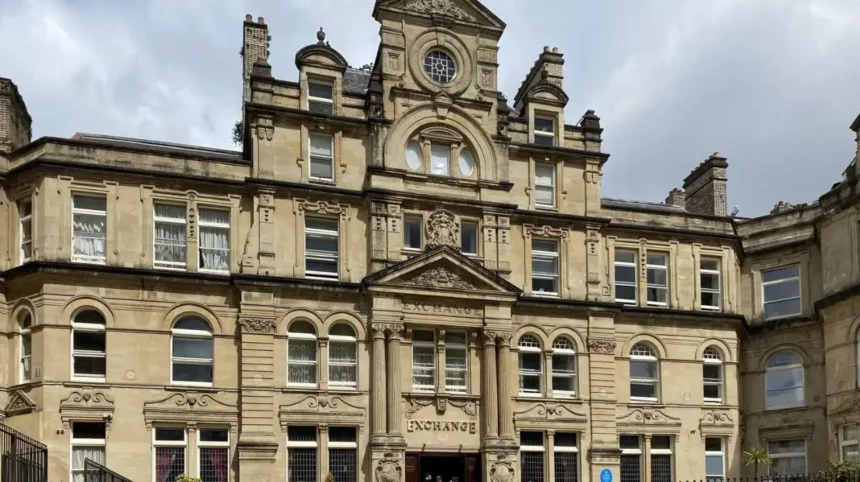
The Cardiff Coal Exchange, also known historically as the Coal and Shipping Exchange, is one of the most important surviving buildings from Cardiff’s industrial and maritime era. Located in Mount Stuart Square in Butetown, Cardiff Bay, the building was created during the late nineteenth-century expansion of the South Wales coal trade.
- What was the Cardiff Coal Exchange?
- Why was the Coal Exchange built in Cardiff?
- When was the Cardiff Coal Exchange built?
- How did trading work inside the Coal Exchange?
- How important was Cardiff’s Coal Exchange to the global coal trade?
- How did the Coal Exchange change Cardiff?
- What happened to the Coal Exchange trading hall?
- When did the Coal Exchange stop being a coal-trading centre?
- Why is the Coal Exchange a Grade II* listed building?
- What is the heritage significance of the Coal Exchange today?
Cardiff became a major international coal-exporting port because railways connected the South Wales coalfields with the docks. Steamships then carried Welsh coal to markets across Britain and overseas. The Coal Exchange provided a central commercial location where coal owners, shipowners, brokers, agents, and other business interests negotiated transactions.
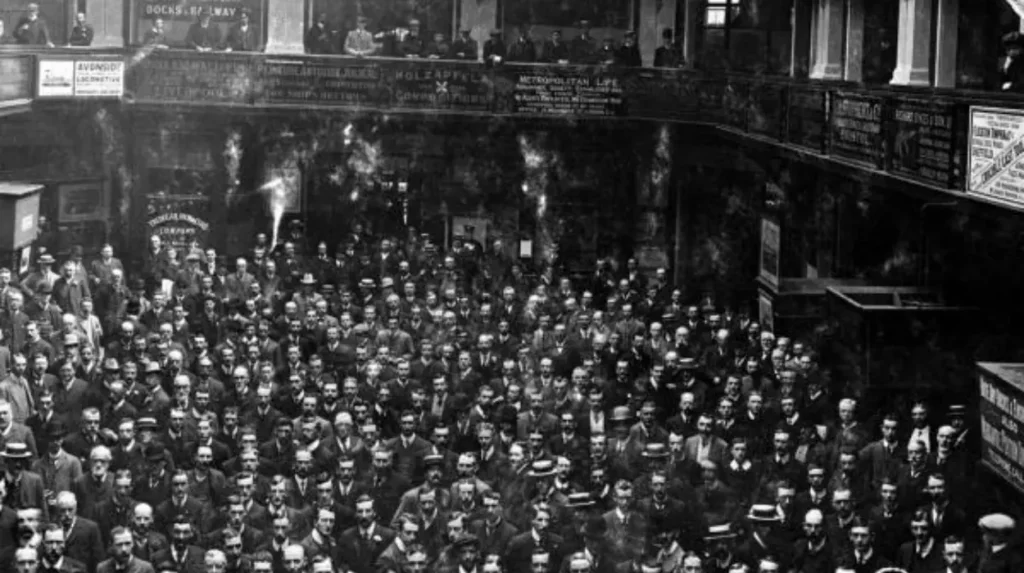
The building opened for business in 1886. Its central trading hall became the focus of daily commercial activity. During peak trading periods, as many as 200 men could be present on the trading floor, while historical estimates indicate that as many as 10,000 people passed through the building each day.
The Exchange also represents the connection between Cardiff’s coalfields, railway network, docks, shipping companies, financial services, and international markets. Cardiff’s port exported approximately 10.7 million tonnes of coal in 1913, demonstrating the scale of the industry that supported the city’s commercial expansion.
Today, the Coal Exchange is protected as a Grade II listed building*, a designation recognising buildings of particularly important historic and architectural interest. Its history provides direct evidence of how coal transformed Cardiff from a regional town into a major international commercial centre.
What was the Cardiff Coal Exchange?
The Cardiff Coal Exchange was a Victorian commercial building in Mount Stuart Square, created to centralise coal and shipping transactions. It became the administrative heart of South Wales coal commerce, linking mine owners, shipowners, brokers, agents, financiers, and international buyers.
The Coal Exchange was designed as a dedicated marketplace for the rapidly expanding coal and shipping industries. Before its construction, Cardiff’s coal trade lacked one central location where merchants could conduct business.
The building therefore served a practical commercial purpose. It brought different parts of the coal industry together in one location close to Cardiff’s docks.
The coal owners represented mining interests. Shipowners controlled vessels used to transport coal. Brokers and agents arranged transactions between producers, shipping companies, and customers. Financial and legal businesses provided additional services around the trade.
The Exchange was not a mine, dock, railway station, or warehouse. It was a commercial institution centred on information, negotiation, contracts, and business relationships.
Its location was particularly important. Mount Stuart Square stood within Cardiff’s expanding dockland commercial district. Coal transported from the valleys could therefore move through an integrated system involving railways, docks, ships, merchants, and international customers.
The Royal Commission on the Ancient and Historical Monuments of Wales records the building as a nineteenth-century Coal Exchange with the National Primary Resource Number 31766.
The building’s historical significance extends beyond Cardiff. It documents the commercial infrastructure created to support the international movement of Welsh coal.
Why was the Coal Exchange built in Cardiff?
Cardiff needed a central trading venue because coal exports expanded rapidly during the nineteenth century. Before the Exchange, merchants negotiated prices outside offices and in public houses. Growing docks, railways, mining output, and international shipping demanded a permanent commercial centre.
Cardiff’s transformation was closely connected with the industrial development of South Wales.
Large coalfields developed across areas including the Rhondda, Cynon, Merthyr, and Rhymney valleys. Railways connected these mining districts with Cardiff’s docks. The resulting transport system allowed large quantities of coal to reach ships efficiently.
The port infrastructure expanded as trade increased. The East Bute Dock opened in 1859, while later developments included Roath Dock in 1887 and Queen Alexandra Dock in 1907. These facilities strengthened Cardiff’s position within the coal-export economy.
Mount Stuart Square itself originally had a different character. The square was developed between 1855 and 1859, probably to designs associated with architect Alexander Roos, and initially contained residential buildings around a central garden.
The growth of commercial activity changed that character. The construction of the Coal Exchange in the 1880s replaced the central garden and established the square as a major business location.
Glamorgan Archives records that the idea for an Exchange was developed in 1882 at the request of influential Cardiff businessmen. Local solicitor Frederick De Courcey Hamilton formulated a scheme for an Exchange providing offices and meeting facilities for merchants, shipowners, brokers, and other maritime business interests.
The project therefore responded directly to commercial growth. Cardiff required a purpose-built institution capable of handling the volume and complexity of its expanding coal and shipping economy.
When was the Cardiff Coal Exchange built?
Construction began in the early 1880s and the Exchange opened for business in 1886. Local architects James, Seward and Thomas designed the building around a central trading hall, with offices and commercial facilities arranged around the busy coal market daily.
The building was constructed during a period when Cardiff was experiencing rapid economic and population growth.
Historical records give slightly different construction descriptions because the project developed in phases. Coflein records the Coal Exchange as built in 1884–1885, while other heritage records describe the wider construction period as 1883–1886. The building formally opened for business in 1886.
The architects were James, Seward and Thomas, a Cardiff architectural partnership associated with several significant nineteenth-century buildings in the city.
Edwin Seward was an important Victorian architect in Cardiff. His work included the Cardiff Free Library, Cardiff Royal Infirmary, and other major buildings. The Coal Exchange became one of the partnership’s most significant commercial projects.
Glamorgan Archives records that a contract for the first phase of construction was awarded to C. Burton toward the end of 1883. The remainder of the structure was constructed in stages.
The formal opening established a permanent centre for the coal trade. Business that had previously taken place in scattered offices, public houses, and informal meeting locations could now be concentrated within a purpose-built commercial building.
The opening also coincided with Cardiff’s emergence as one of the most important coal-exporting centres in the world.
How did trading work inside the Coal Exchange?
The Exchange operated through direct negotiation between coal owners, shipping interests, brokers, and agents. Traders discussed cargoes, prices, destinations, and contracts in the hall, while telephones expanded communication. The building therefore combined physical trading, administration, information exchange, and maritime business.
The trading floor was the operational centre of the Coal Exchange.
Coal owners needed to sell output from mines. Shipowners needed cargoes for their vessels. Brokers and agents helped bring these commercial interests together. Buyers required information about coal availability, quality, price, shipping arrangements, and destination.
The Exchange created a physical environment for these transactions.
According to Cadw, Cardiff’s coal merchants previously wrote changing prices on slates outside their offices or negotiated deals in local public houses. The Coal Exchange replaced this informal system with a central commercial environment.
The trading process depended heavily on personal communication. Merchants and agents met face to face and negotiated agreements directly. Telephone technology also became an important part of the Exchange’s operations.
During the busiest trading period, from 12 noon to 1pm, as many as 200 men could be trading coal on the floor. Historical estimates indicate that approximately 10,000 people entered and left the building each day during its busiest period.
The building therefore functioned as more than a marketplace. It was a communications centre for an international commodity industry.
The trading hall was surrounded by office accommodation. These offices supported the commercial ecosystem operating around the central market.
The Cardiff University research paper Cardiff’s Coal Exchange: architecture and the social life of trade in ‘black gold’ also identifies additional facilities associated with the building, including dining spaces, a temperance bar, coffee facilities, billiard rooms, and smoking rooms. These spaces illustrate the wider social infrastructure of Victorian commercial life.
How important was Cardiff’s Coal Exchange to the global coal trade?
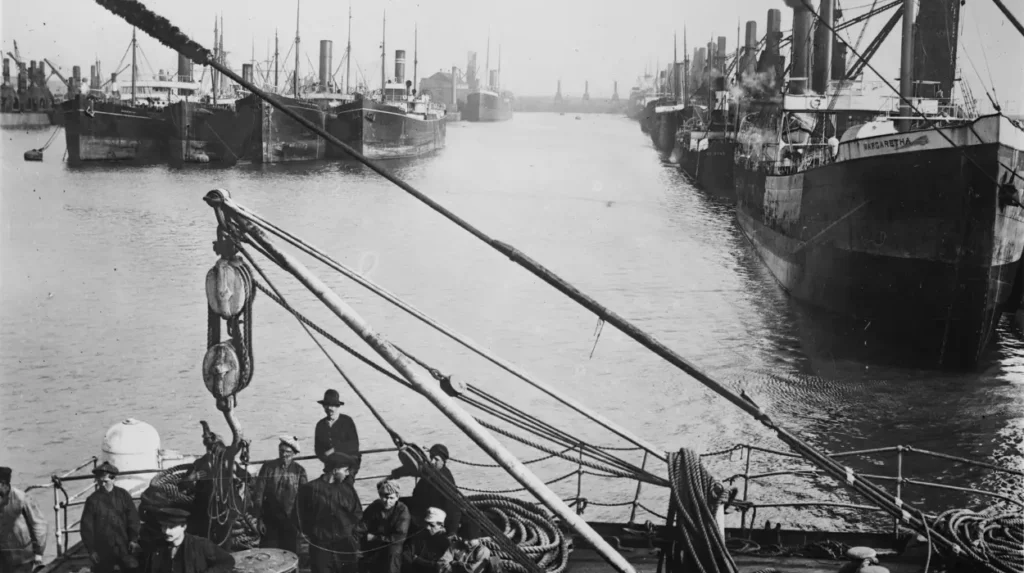
Cardiff Coal Exchange became internationally significant because Cardiff handled enormous coal exports. The port reached about 10.7 million tonnes in 1913, while the Exchange concentrated commercial administration of this trade and connected South Wales coalfields with global shipping markets. worldwide
Cardiff’s importance came from the relationship between coal production and maritime transport.
The South Wales coalfield contained large quantities of steam coal. Steam coal was particularly important for ships, railways, industrial machinery, and power generation during the industrial era.
Cardiff’s dock system provided the infrastructure needed to load this coal onto ships. Railways transported coal from inland mining communities to the port, while shipping companies carried it to domestic and international markets.
The scale of the trade was substantial.
People’s Collection Wales records that Cardiff’s coal exports reached nearly 9 million tonnes annually by the early twentieth century. The port’s coal-export industry reached its peak in 1913, when approximately 10.7 million tonnes were exported.
By 1910, Cardiff had approximately 250 locally owned tramp steamers. Tramp steamers were merchant vessels operating without fixed schedules or regular routes, carrying cargoes according to commercial demand. Their owners needed coal cargoes, and the Coal Exchange provided a central place to arrange those transactions.
The Exchange’s influence was therefore connected to a much larger network.
That network included coal mines, railways, dock infrastructure, shipping companies, brokers, insurance businesses, banks, legal firms, engineers, merchants, and overseas customers.
The building became a visible symbol of Cardiff’s commercial power during the peak of the coal economy.
How did the Coal Exchange change Cardiff?
The Coal Exchange reflects Cardiff’s wider industrial transformation because coal exports supported docks, railways, shipping, finance, offices, and employment. Its location in Mount Stuart Square placed commercial decisions beside Cardiff’s dock system, linking inland production with maritime trade overseas effectively.
The Coal Exchange was part of a much larger transformation of Cardiff.
During the nineteenth century, Cardiff changed from a relatively small town into a major industrial and maritime centre. The growth of the coal trade created demand for transportation infrastructure, commercial offices, financial services, warehouses, dock facilities, and housing.
The city’s population also increased significantly during this industrial expansion.
The 1881 census recorded Cardiff as the largest town in Wales, reflecting the scale of its economic and demographic growth. The development of the Coal Exchange followed this transformation rather than causing it independently.
Mount Stuart Square became an important business district because of its proximity to the docks. Coal and shipping companies established offices around the square, creating a concentrated commercial environment.
Coflein records that Mount Stuart Square changed from a residential area into a commercial district during the late nineteenth century. The construction of the Coal Exchange in 1884–1885 accelerated that change.
Other commercial buildings followed.
The surrounding area included offices associated with coal companies, shipping firms, banks, and other businesses. This commercial landscape demonstrated the importance of services connected with the coal economy.
The Coal Exchange also reflected Cardiff’s international connections.
Coal shipped from South Wales powered industrial activity in Britain and other parts of the world. The commercial decisions made in Cardiff therefore had consequences far beyond the city itself.
Cardiff University describes the Coal Exchange as a symbol of the city’s international significance during this period. The university’s historical material identifies the building as an important representation of Cardiff’s development as a port and financial centre.
Explore more Area Guide
Insole Court Guide: Explore Cardiff’s Victorian Mansion, Gardens, History and Heritage Today
What happened to the Coal Exchange trading hall?
The Exchange’s central trading hall was rebuilt in 1911 after structural problems affected the original hall. The later hall retained its commercial identity through Corinthian columns, an oak balcony, rich wood panelling, and surrounding galleried office spaces inside historically.
The trading hall underwent a major rebuilding in 1911.
The original hall had been designed as the central volume of the building. Its large internal space was essential because the Coal Exchange depended on direct interaction between traders.
The later hall became one of the building’s most distinctive surviving interiors.
Coflein describes the rebuilt Coal and Shipping Hall as containing Corinthian columns, an oak balcony, and rich wood panelling. The trading floor remained surrounded by galleried office levels designed in a Jacobean style.
The entrance hall also contained distinctive decorative features. Two lion statues supported dials displaying tide times. The feature connected the building’s commercial identity with Cardiff’s maritime environment.
The architectural design communicated the economic importance of the activities conducted inside.
The building was constructed largely with stone and contained elaborate late-Victorian detailing. Its architectural scale reflected the wealth generated by the coal and shipping industries.
Academic research also examined the building’s original structural design. A Cardiff University architectural conservation study records the trading hall as a large single-volume space with a vaulted and glazed roof supported by steel trusses.
The architectural structure was therefore closely linked to the function of the Exchange. The large hall provided the physical space required for intensive trading, while the surrounding offices accommodated the companies and professionals involved in the trade.
When did the Coal Exchange stop being a coal-trading centre?
The Coal Exchange closed as a coal-trading institution in 1958 after Cardiff’s traditional coal economy declined. Coal exports from Cardiff ended in 1964, ending the commercial system that had made the Exchange internationally important during Victorian and Edwardian periods.
The decline of the Coal Exchange followed the decline of Cardiff’s traditional coal-export economy.
The First World War changed international trade patterns and affected the maritime economy. After the war, Cardiff faced increasing competition and structural changes in energy markets.
Coal remained important, but the conditions that had created Cardiff’s dominant export position had weakened.
The growth of alternative fuels, changes in shipping, international competition, industrial restructuring, and changing energy requirements reduced the importance of traditional coal-exporting infrastructure.
The Coal Exchange eventually closed in 1958. Cardiff’s coal-export trade ended in 1964.
These dates mark an important transition in Cardiff’s economic history.
The closure of the Exchange did not simply represent the loss of one commercial building. It reflected the decline of an entire economic system involving mines, railways, docks, shipping companies, merchants, and international coal markets.
Cardiff’s docklands subsequently experienced economic decline.
Coflein records that Mount Stuart Square and the wider Cardiff Bay area experienced substantial deterioration during the twentieth century as the former commercial economy declined.
The building entered a new phase in which its original commercial purpose had disappeared but its architectural and historical significance remained.
Why is the Coal Exchange a Grade II* listed building?
The building gained Grade II listed status in 1975, recognising its special architectural and historic importance. Later uses included entertainment, music, events, and hotel conversion. These changes demonstrate how heritage buildings acquire new functions after their original industries disappear nationally.*
The Grade II* designation places the Coal Exchange among buildings of particular importance within the national heritage system.
Listing protects significant architectural and historic features and recognises the building’s contribution to the history of Wales.
The Coal Exchange is particularly significant because its architectural importance is inseparable from its industrial history.
It is a rare surviving commercial building associated directly with the nineteenth-century coal-export economy. Its trading hall, offices, architectural detailing, location, and relationship with Cardiff’s docks collectively demonstrate the scale of the industry.
The building’s heritage importance was formally recognised with Grade II* listing in 1975. This status has shaped later discussions about restoration, alteration, reuse, and conservation.
The Coal Exchange also experienced several proposed alternative uses.
During the twentieth century, the building was considered for institutional purposes. In the late twentieth and early twenty-first centuries, it became associated with entertainment and music events.
The venue hosted performances and events involving well-known artists, giving the historic building a new cultural role after its original trading function had ended. A 2016 UK Parliament debate records its later use as a major entertainment venue and notes performances by acts including the Manic Street Preachers, Ocean Colour Scene, and Stereophonics.
The building subsequently entered a major redevelopment phase.
From 2016, restoration and renovation work associated with Signature Living converted part of the structure into a hotel. The hotel opened in May 2017, while several historic architectural features were retained.
The conservation history also demonstrates the difficulty of adapting a large listed Victorian commercial building to modern uses while protecting historic fabric.
What is the heritage significance of the Coal Exchange today?
The Coal Exchange remains historically important because its architecture, location, and records connect Cardiff with global coal commerce. Its history explains how energy, maritime infrastructure, financial services, and urban development combined to transform Cardiff into an internationally significant city today.
The Coal Exchange remains an important source for understanding Cardiff’s industrial history.
Its significance comes from several interconnected factors. The building represents the commercial organisation of the coal trade, the expansion of Cardiff’s docks, the development of international shipping, the growth of financial and professional services, and the architectural confidence of late Victorian Cardiff.
Its location in Mount Stuart Square is equally important.
The square forms part of the historic commercial landscape surrounding Cardiff’s former dock system. Buildings around the square demonstrate how residential streets were transformed into offices and commercial premises as the coal economy expanded.
The Coal Exchange also provides evidence of the changing relationship between industry and urban development.
Coal was extracted from inland valleys. Railways carried it toward Cardiff. Dock infrastructure transferred it to ships. Shipping companies transported it overseas. Merchants and brokers negotiated commercial arrangements. Banks, insurers, solicitors, and other businesses supported the transactions.
The Coal Exchange sat at the centre of that system.
Its history also has a wider heritage dimension because the South Wales coal industry affected communities throughout the valleys and contributed to Cardiff’s multicultural maritime population.
The building’s Grade II* status confirms its importance within Welsh built heritage. The Victorian Society has repeatedly identified the Coal Exchange as one of Wales’s important nineteenth-century buildings and has raised concerns about its conservation and long-term condition.
A 2024 Victorian Society assessment placed the building on its Top Ten Endangered Buildings list for the second time. Its March 2026 status update described a divided condition, with the southern part used for hotel purposes while substantial northern areas remained vacant and deteriorating.
This conservation debate demonstrates why the Coal Exchange remains relevant.
The building is not simply an old commercial property. It is a physical record of Cardiff’s role in the global coal economy. Protecting its significant historic fabric preserves evidence of how the city operated during one of the most important periods in its economic development.
The history of the Coal Exchange therefore extends from the Victorian expansion of coal exports to modern questions surrounding adaptive reuse and heritage conservation.
For Cardiff Daily, the building provides a clear historical connection between Cardiff’s industrial past and its modern identity as a capital city, cultural centre, and waterfront destination. Its surviving architecture continues to document the commercial power created by Welsh coal and the international networks that developed around Cardiff’s docks.
What is the Cardiff Coal Exchange?
The Cardiff Coal Exchange is a historic Victorian commercial building in Mount Stuart Square, Cardiff Bay. It was established as a central marketplace for coal and shipping transactions and became an important centre of Cardiff’s international coal trade.