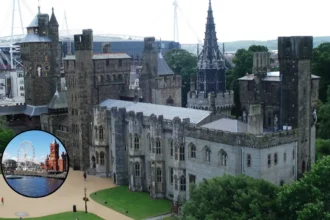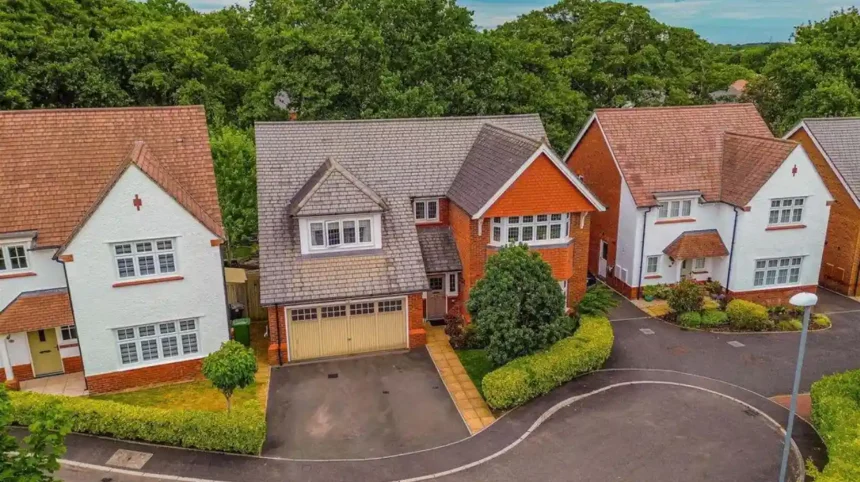
Cardiff offers a wide range of residential environments for families, from established suburban neighbourhoods to newer developments on the city’s northern and western edges. Areas such as Lisvane, Cyncoed, Rhiwbina, Radyr, Whitchurch, Llandaff, Pontprennau, Old St Mellons and parts of Penylan provide different combinations of housing, schools, parks, local facilities and transport connections.
- Which Cardiff areas are best known for quiet family living?
- What makes a Cardiff neighbourhood suitable for raising children?
- Which Cardiff neighbourhoods have strong access to schools and education?
- Why catchment areas matter
- Primary school capacity
- Welsh-medium education
- New residential development and schools
- Which quiet Cardiff areas offer the best access to parks and outdoor space?
- Cyncoed and Roath Park
- Llandaff and Llandaff Fields
- Radyr and the River Taff
- Whitchurch and north Cardiff
- How important are childcare and everyday family services in Cardiff?
- How should parents compare transport and road safety in quiet Cardiff areas?
- Which Cardiff areas provide a balance between quiet living and city access?
- What should families check before choosing a quiet Cardiff neighbourhood?
- Check the exact school catchment
- Visit at different times
- Measure walking distances
- Assess housing layout
- Examine future development
- How do Cardiff’s quiet residential areas compare for different family needs?
- For green-space access
- For established suburban housing
- For newer residential development
- For historic surroundings
- For school-focused family planning
- What is the long-term outlook for family-friendly residential areas in Cardiff?
“Quiet” is not an official Cardiff planning classification. For families, the term is better understood through measurable residential characteristics such as lower-density housing, access to green space, proximity to schools, pedestrian routes, local amenities and distance from major commercial or entertainment centres.
Cardiff had 362,308 usual residents at the 2021 Census. The Office for National Statistics recorded 17.5% of Cardiff households as couples with dependent children, while 12.3% were lone-parent households. These figures demonstrate the importance of family-oriented housing and neighbourhood services across the city.
Cardiff Council also identifies dedicated neighbourhood planning areas covering communities including Rhiwbina, Lisvane, Llanishen, Cyncoed, Penylan, Pontprennau, Old St Mellons, Radyr, Morganstown, Whitchurch, Tongwynlais and Llandaff.
For parents choosing a home, the best approach is to assess the exact street rather than relying only on a neighbourhood name. School catchments, traffic patterns, green-space access and housing layouts can change within a short distance.
Which Cardiff areas are best known for quiet family living?
Lisvane, Cyncoed, Rhiwbina, Radyr, Whitchurch, Llandaff, Pontprennau and Old St Mellons are established Cardiff choices for family-oriented residential living, combining suburban housing with schools, parks, local facilities and connections to wider Cardiff. Exact conditions differ by street, property and proximity to main roads.
Lisvane
Lisvane is one of Cardiff’s northern residential communities. It has a predominantly suburban character, with detached and semi-detached housing, local amenities and access to green surroundings.
The area sits close to Llanishen and Thornhill and provides access to Cardiff’s wider northern transport network. Cardiff Council groups Lisvane and Thornhill within its active-travel network mapping, allowing residents to examine walking and cycling infrastructure in the area.
Lisvane is particularly relevant for families who prioritise a suburban setting while remaining within Cardiff.
Cyncoed
Cyncoed is an established residential district in north-east Cardiff. It contains substantial family housing and benefits from access to green spaces associated with Roath Park and Roath Park Lake.
Cardiff Council lists Roath Park Lake and Gardens within the Cyncoed and Penylan conservation context.
The neighbourhood also connects with Cardiff’s wider network of schools, sports facilities and local services.
Rhiwbina
Rhiwbina has a distinctive suburban identity and contains the Rhiwbina Garden Village, which Cardiff Council recognises as a conservation area.
Its residential environment includes traditional housing layouts and established streets. The community is also positioned close to Whitchurch, Llanishen and other northern Cardiff districts.
Radyr and Morganstown
Radyr and Morganstown form a residential community in north-west Cardiff. The area combines established housing with access to open countryside and the River Taff corridor.
Radyr also has a dedicated comprehensive school and local primary provision. Cardiff Council’s school transport information lists dedicated routes serving Radyr Comprehensive School from surrounding communities.
Whitchurch
Whitchurch is a major northern Cardiff residential community with established housing, shops, schools, parks and local services.
The area is particularly useful for families seeking a suburban environment without moving far from the city’s main urban areas. Cardiff Council records both Whitchurch and Tongwynlais within the Cardiff West neighbourhood planning area.
Llandaff
Llandaff combines historic residential streets with green spaces and access to the River Taff area. Cardiff Council identifies Llandaff as a conservation area, reflecting its historic built environment.
The area also has established local facilities and access to Llandaff Fields and other nearby green spaces.
Pontprennau and Old St Mellons
Pontprennau and Old St Mellons represent Cardiff’s north-eastern residential edge. The communities contain established suburban housing alongside newer residential development.
Cardiff Council treats Pontprennau and Old St Mellons as a combined area for active-travel planning.
Old St Mellons also has a specific community-based school catchment arrangement for St Mellons Church in Wales Primary School in the 2026–27 admissions arrangements.
What makes a Cardiff neighbourhood suitable for raising children?
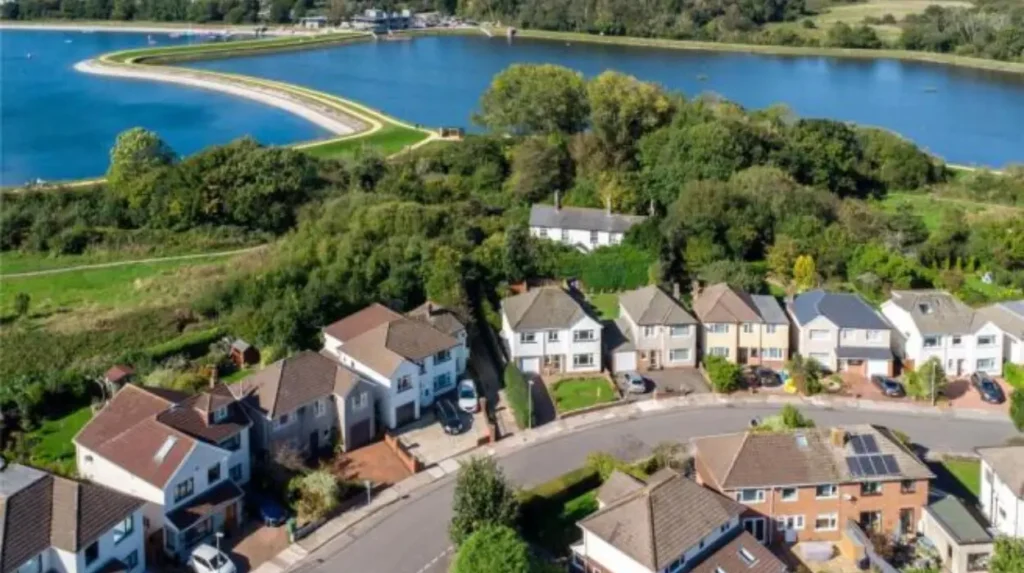
A child-friendly residential area needs more than a quiet street. The strongest family locations combine safe pedestrian access, nearby schools, green space, playgrounds, childcare, healthcare, local shops, transport links and suitable housing within a practical daily travel distance.
Residential density and street design
Housing density influences the physical character of a neighbourhood. Lower-density streets often contain gardens, driveways and larger residential plots. Higher-density areas typically contain terraces, apartments and more compact streets.
Neither format automatically determines family suitability.
A quiet terrace close to a large park can provide excellent family access. A detached property beside a busy arterial road can provide less practical outdoor access.
Parents should therefore inspect the specific street during school-run periods, evenings and weekends.
Access to parks and play areas
Green space is one of the most important practical considerations for families.
Cardiff Council maintains a citywide network of parks and play areas and provides an online search facility covering parks and green spaces.
The relevant question is not simply whether a neighbourhood has a park. Parents should assess walking distance, crossings, playground equipment, open grass, sports facilities and the quality of connecting pavements.
Schools and nurseries
Schools strongly influence residential decisions in Cardiff. Cardiff Council states that the city has 125 schools, covering nursery, primary, secondary and special education.
School catchment boundaries are particularly important because living near a school does not automatically guarantee admission.
Cardiff Council provides postcode-based catchment information for English-medium and Welsh-medium community primary and secondary schools.
Families should therefore check the official catchment position for the exact property before purchasing or renting.
Which Cardiff neighbourhoods have strong access to schools and education?
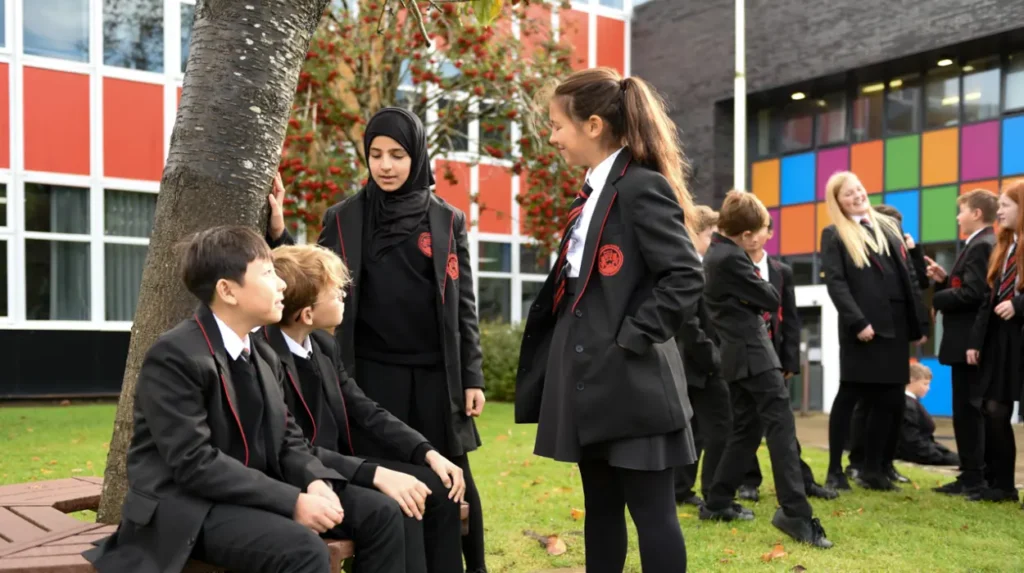
Cardiff’s family-oriented northern and western suburbs contain numerous primary and secondary schools, while the city provides English-medium, Welsh-medium, bilingual and faith-school options. Catchment boundaries and admission criteria change by school, so parents must verify the exact property before moving.
Why catchment areas matter
A catchment area is the geographical area associated with a particular school for admissions purposes.
Cardiff Council explains that children living within a catchment area receive higher priority for their catchment school, although residence within a catchment area does not guarantee a place.
This makes catchment checking essential when comparing supposedly quiet family neighbourhoods.
Primary school capacity
Cardiff’s published allocation information demonstrates variation between schools.
For example, the published figures show Radyr Primary School with 60 places and 60 allocated, Whitchurch Primary School with 90 places and 75 allocated, Rhiwbeina Primary School with 90 places and 69 allocated, and Thornhill Primary School with 60 places and 42 allocated in the referenced allocation data.
These figures demonstrate why parents should examine individual schools rather than assume that every family-friendly area has identical admissions pressure.
Welsh-medium education
Welsh-medium education is available across Cardiff. Cardiff Council states that Welsh-medium education is open to families regardless of the language spoken at home.
Families considering a Welsh-medium pathway should check the location of the relevant school, transport arrangements and admissions requirements before selecting a property.
New residential development and schools
Cardiff continues to experience residential expansion.
The Plasdŵr development in north-west Cardiff includes education infrastructure. Cardiff Council established Ysgol Gynradd Groes-wen Primary School to serve parts of Creigiau, St Fagans, Radyr, Morganstown and Fairwater. The school opened its first pupils in September 2023 and has provision for 420 primary-age places plus 96 part-time nursery places.
This demonstrates how new housing developments can change local education provision over time.
Which quiet Cardiff areas offer the best access to parks and outdoor space?
Radyr, Llandaff, Whitchurch, Rhiwbina, Lisvane and Cyncoed provide strong access to parks, recreation areas or wider green infrastructure. Cardiff Council maintains extensive public parks and play facilities, while local geography creates different opportunities for walking, sport and outdoor play.
Cyncoed and Roath Park
Cyncoed benefits from proximity to Roath Park Lake and Gardens, one of Cardiff’s recognised historic green-space environments.
The park provides landscaped areas, water features, paths and recreational space. Its position between Cyncoed and Penylan makes it particularly relevant to families living in these neighbourhoods. Cardiff Council recognises the area within its conservation framework.
Llandaff and Llandaff Fields
Llandaff provides access to established green spaces and the wider River Taff corridor.
Llandaff Fields also provides a significant recreational area near the western side of the central Cardiff urban area. Cardiff Council lists a dedicated Llandaff Fields car park, demonstrating its role as a major public recreational destination.
Radyr and the River Taff
Radyr’s position near the River Taff gives residents access to a wider network of walking and cycling environments.
The area’s connection to Cardiff’s western transport and active-travel network also makes it relevant for families who want outdoor activity without leaving the city.
Whitchurch and north Cardiff
Whitchurch connects with a wider network of northern Cardiff parks and recreational spaces. Its position near Rhiwbina, Tongwynlais and other northern communities gives families access to multiple outdoor destinations.
Parents should distinguish between formal parks, sports grounds, woodland areas and riverside paths because each provides different types of children’s recreation.
How important are childcare and everyday family services in Cardiff?
Childcare availability, schools, healthcare, shops, leisure centres and community facilities determine whether a quiet neighbourhood remains practical for everyday family life. Cardiff Council identifies broadly sufficient childcare across the city while recording local gaps in specific services and locations.
Childcare availability
Cardiff Council’s Childcare Sufficiency Assessment reports that childcare is broadly sufficient across Cardiff, while identifying unmet demand in some localities, service types and specific childcare services.
This is important for parents who work full-time or use childcare before and after school.
A neighbourhood with a quiet residential character becomes less convenient if parents need long journeys to reach nursery or wraparound childcare.
Leisure facilities
Children need access to structured activities as well as parks.
Cardiff Council provides leisure centres, sports facilities, outdoor activities, play services and allotments across the city.
For older children, facilities such as skateparks provide additional recreational opportunities. Cardiff Council lists a Radyr Skatepark at Moundfield in Morganstown, as well as facilities in Pentwyn and St Mellons.
Local shopping
Family convenience depends on access to everyday services.
Parents should check walking distance to supermarkets, pharmacies, convenience shops, cafés, libraries and other essential services.
Whitchurch, Llandaff and Penylan provide established local commercial areas. More peripheral residential communities often require greater use of cars or buses for larger shopping trips.
How should parents compare transport and road safety in quiet Cardiff areas?
Transport suitability depends on walking routes, school-run traffic, bus services, railway access, cycling infrastructure and the location of major roads. A quiet residential street is most practical when essential destinations are reachable without long car journeys.
Walking and active travel
Cardiff Council publishes Active Travel Network Maps for individual wards and communities, including Cyncoed, Lisvane and Thornhill, Llandaff, Penylan, Pontprennau and Old St Mellons, Radyr and Rhiwbina.
These maps provide a useful starting point for evaluating pedestrian and cycling infrastructure.
For families, the quality of the final route matters. A short journey with a difficult road crossing is different from a longer route using quieter residential streets and dedicated paths.
School-run traffic
Traffic conditions can change substantially during weekday mornings and afternoons.
Parents should inspect streets between approximately 8am and 9am and around school collection time. Parking pressure, vehicle movements and pedestrian congestion are often different from conditions observed during a weekend property viewing.
Public transport
Public transport provides an important alternative as children become more independent.
Rail services from areas such as Radyr provide access towards central Cardiff and surrounding communities. Bus networks also connect Cardiff’s suburban districts with the city centre and other major destinations.
Parents should assess the route from the actual property to the stop or station rather than relying only on neighbourhood-level transport maps.
Which Cardiff areas provide a balance between quiet living and city access?
Llandaff, Whitchurch, Rhiwbina, Cyncoed and Radyr provide different balances between suburban residential conditions and access to Cardiff’s urban services. The best choice depends on school location, commuting requirements, housing type, transport and preferred access to green space.
Llandaff
Llandaff is suitable for families seeking a historic residential environment close to central Cardiff.
Its location provides access to green spaces, schools, local services and transport corridors. The conservation designation also protects important elements of the area’s historic character.
Whitchurch
Whitchurch provides a stronger suburban retail and community environment.
Its position in northern Cardiff gives residents access to schools, shops, recreation and transport routes. The neighbourhood also connects naturally with Rhiwbina, Tongwynlais and other north Cardiff communities.
Rhiwbina
Rhiwbina provides established residential streets alongside the distinctive Garden Village environment.
Its location offers access to northern Cardiff services while retaining a suburban layout. Cardiff Council’s conservation information specifically recognises Rhiwbina Garden Village.
Radyr
Radyr combines suburban housing with a western location near open landscapes and the River Taff.
It is also connected to school infrastructure and dedicated school transport routes.
Cyncoed
Cyncoed provides a residential environment with access to Roath Park, schools and eastern Cardiff facilities.
Its position makes it relevant to parents who want suburban housing while remaining relatively close to central Cardiff.
What should families check before choosing a quiet Cardiff neighbourhood?
Families should evaluate the exact property’s school catchment, road conditions, walking routes, green-space access, childcare, public transport, healthcare, local shopping and housing costs. A neighbourhood name alone does not establish that a particular street meets every family requirement.
Check the exact school catchment
This is one of the most important steps.
Cardiff Council provides an official postcode search for school catchment areas. Parents should complete this check before signing a tenancy or exchanging contracts.
School admissions arrangements also change. Cardiff Council has already published arrangements for the 2027–28 academic year, following the required consultation process.
Visit at different times
A property should be inspected during weekday mornings, afternoons and evenings.
This provides a more accurate picture of traffic, parking, pedestrian activity and local noise.
Measure walking distances
Map the walking route to:
- the likely primary school;
- nursery or childcare;
- nearest park;
- supermarket;
- GP surgery;
- pharmacy;
- bus stop;
- railway station;
- library;
- sports facility.
The shortest route on a map is not always the most suitable route for children.
Assess housing layout
Family suitability depends on the property as well as the neighbourhood.
Important factors include garden space, bedroom arrangement, storage, parking, stairs, outdoor access and proximity to busy roads.
Examine future development
New housing can change traffic, school demand and local infrastructure.
Cardiff’s Plasdŵr development demonstrates the scale at which new residential communities can influence education infrastructure, transport and services.
Families should therefore examine current planning proposals when purchasing a long-term home.
Explore More Area Guide
Best Family Picnic Locations in Cardiff 2026
Family Community Events Throughout Cardiff 2026
How do Cardiff’s quiet residential areas compare for different family needs?
Different Cardiff suburbs serve different family priorities. Lisvane and Rhiwbina suit established northern suburban living; Radyr suits western residential living; Whitchurch offers broad local services; Llandaff combines heritage and green space; Cyncoed provides access to Roath Park.
For green-space access
Cyncoed, Llandaff and Radyr stand out for access to substantial outdoor environments.
Cyncoed benefits from Roath Park and its gardens. Llandaff provides access to Llandaff Fields and the River Taff corridor. Radyr connects with western Cardiff’s riverside and countryside environments.
For established suburban housing
Lisvane, Rhiwbina, Cyncoed and Whitchurch contain extensive established residential areas.
These communities have developed over decades and contain established schools, shops, community services and transport connections.
For newer residential development
Pontprennau, Old St Mellons and areas around north-west Cardiff contain newer housing environments alongside established communities.
Families should evaluate the age of infrastructure, school capacity and the availability of local services before making a long-term decision.
For historic surroundings
Llandaff and Rhiwbina have particularly identifiable historic or planned residential character.
Cardiff Council recognises both Llandaff and Rhiwbina Garden Village through its conservation work.
For school-focused family planning
Whitchurch, Radyr, Rhiwbina, Cyncoed and Lisvane are useful areas to investigate because they contain established school networks and family housing.
However, the exact catchment must always be checked against the property’s postcode. Cardiff Council does not guarantee a place simply because a child lives close to a school.
What is the long-term outlook for family-friendly residential areas in Cardiff?
Cardiff’s family neighbourhoods will remain shaped by housing development, school capacity, childcare provision, active-travel investment and demand for green space. Official planning and admissions information should guide long-term decisions because neighbourhood infrastructure changes alongside population and housing growth.
Cardiff’s residential structure continues to evolve. New developments create additional homes and require supporting education, transport and community infrastructure.
The city’s education system is also subject to annual admissions arrangements. Cardiff Council has established coordinated arrangements for maintained mainstream schools and continues to update policies as local requirements change.
Active travel is another long-term consideration. Cardiff Council publishes ward-level Active Travel Network Maps, covering many of the residential communities discussed in this guide.
Childcare planning also remains important. Cardiff Council’s assessment identifies broad citywide sufficiency but acknowledges unmet demand in specific localities and service categories.
The strongest family decision therefore combines current conditions with future infrastructure.
A quiet street near a school and park provides one set of advantages. A newer development with planned schools, active-travel infrastructure and community facilities provides another. Families should compare both using official information rather than relying on general reputation.
Cardiff has several established residential communities that suit families seeking quieter surroundings, green space, schools and practical local services. Lisvane, Cyncoed, Rhiwbina, Radyr, Whitchurch, Llandaff, Pontprennau and Old St Mellons are important areas to investigate.
The right choice depends on the individual household. School catchment, childcare, walking infrastructure, parks, housing type, commuting distance and local services all influence daily family life.
Cardiff Council’s official school, parks, childcare and active-travel information provides the strongest foundation for comparing neighbourhoods.
For a long-term family move, the most reliable method is to identify several candidate streets, check the exact school catchment, inspect transport and walking routes, visit at different times of day and review future development proposals.
What are the quietest residential areas in Cardiff for families?
Lisvane, Cyncoed, Rhiwbina, Radyr, Whitchurch, Llandaff, Pontprennau and Old St Mellons are established Cardiff areas associated with suburban family living. They offer access to schools, parks, local services and transport connections, although conditions vary by individual street.