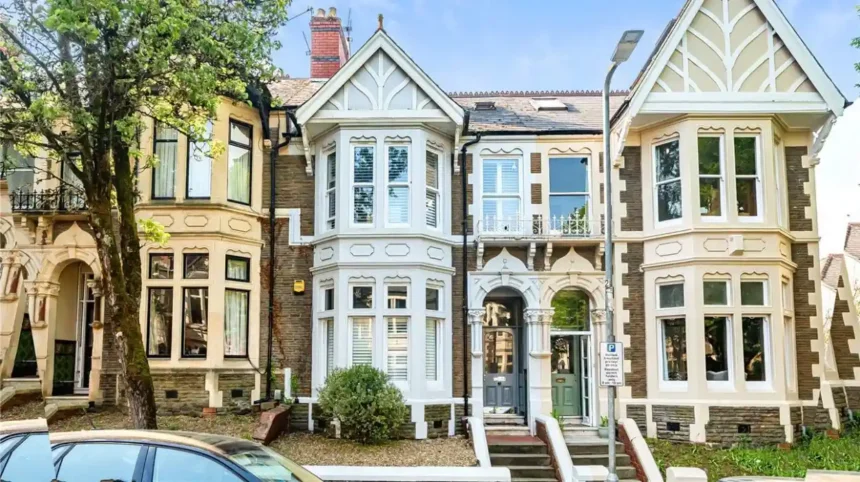
Penylan is one of Cardiff’s established residential districts, with a built environment strongly associated with late-Victorian, Edwardian and interwar housing. Its historic character is particularly visible around Roath Park, where traditional terraces, semi-detached houses and villas form part of a planned suburban landscape. Cardiff Council identifies Roath Park, Roath Park Lake and Gardens, and Roath Mill Gardens as conservation areas associated with Penylan.
- What makes the historic homes of Penylan important?
- When were most historic homes in Penylan built?
- What architectural styles can be found in Penylan’s historic houses?
- How did Roath Park influence Penylan’s historic homes?
- Which historic house features are common in Penylan?
- Are Penylan’s historic houses listed buildings?
- What is the difference between a listed house and a conservation-area house in Penylan?
- Which Penylan streets are associated with historic residential character?
- How did Cardiff’s industrial growth shape Penylan’s historic housing?
- How have Penylan’s historic homes changed since they were built?
- Why are Penylan’s historic homes important for Cardiff’s heritage today?
- How can visitors explore Penylan’s historic homes responsibly?
- What is the future relevance of Penylan’s historic homes?
The district’s historic homes developed alongside Cardiff’s rapid expansion during the late 19th and early 20th centuries. Their architecture reflects changes in household size, building technology, suburban planning and the growth of Cardiff as an industrial and commercial city.
Penylan is therefore important for understanding Cardiff’s residential history. Its surviving houses provide physical evidence of how suburban Cardiff developed beyond the historic city core.
What makes the historic homes of Penylan important?
Penylan’s historic homes are important because they preserve late-Victorian, Edwardian and interwar residential architecture within Cardiff’s expanding eastern suburbs, especially around Roath Park, where houses, streets, gardens and public spaces form a connected historic townscape.
Penylan is a district and community in eastern Cardiff. The area contains a substantial concentration of traditional residential buildings dating from the period when Cardiff expanded rapidly beyond its older urban core.
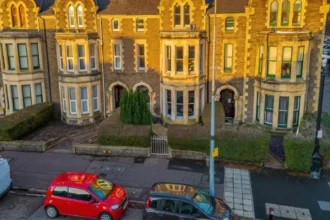
The strongest historic character appears around the Roath Park area. Cardiff Council describes the Roath Park Conservation Area as a late-Victorian and Edwardian residential development with a distinctive domestic scale. Its buildings include terraced, semi-detached and detached houses arranged around consistent building lines.
This collective character is important. A historic home does not need to be individually listed to contribute to the historic appearance of a neighbourhood. Groups of houses can create architectural value through their shared scale, materials, setbacks, rooflines, boundaries and street layout.
Penylan also contains conservation areas that recognise different aspects of its historic environment. Cardiff Council lists Roath Park, Roath Park Lake and Gardens, and Roath Mill Gardens among the city’s designated conservation areas associated with the Penylan area.
When were most historic homes in Penylan built?
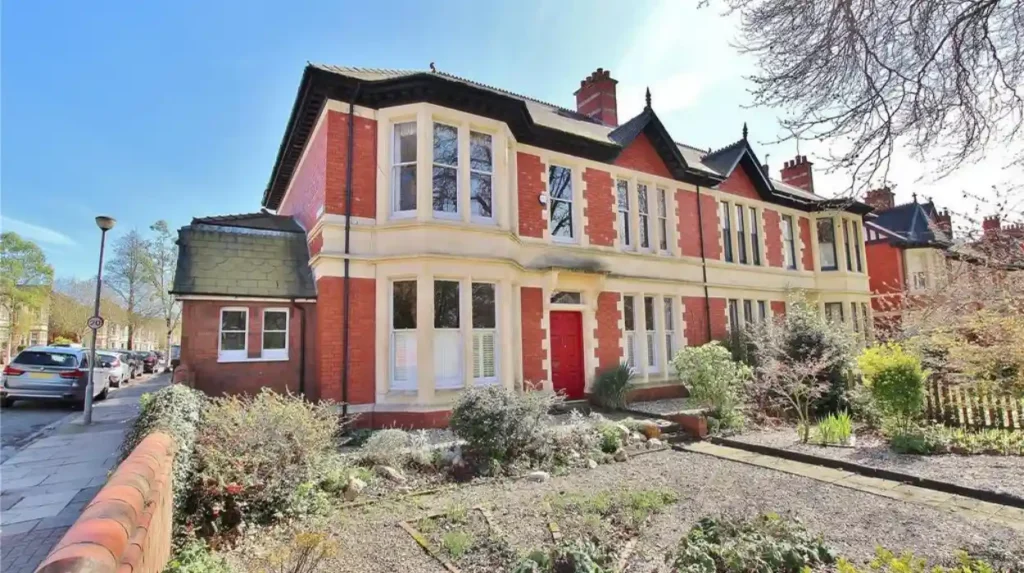
Most of Penylan’s characteristic historic housing dates from the late 19th and early 20th centuries, with Victorian and Edwardian development creating terraces, semi-detached houses and larger villas as Cardiff expanded and demand for suburban housing increased.
The Victorian period covered 1837 to 1901. The Edwardian period generally refers to the reign of Edward VII from 1901 to 1910, although Edwardian architectural and suburban development continued beyond 1910.
Penylan’s residential character reflects both periods.
The late Victorian expansion of Cardiff produced new residential districts for a growing urban population. Improved transport connections, expanding employment and rising demand for suburban housing encouraged development away from the historic centre.
Roath and Penylan became part of this outward expansion. The development around Roath Park is particularly significant because the park and surrounding residential streets were planned as part of a broader suburban environment.
Cardiff Council describes the Roath Park Conservation Area as a late-Victorian and Edwardian residential development. Its appraisal identifies three distinct character areas: Roath Park itself, the principal arterial streets around the park, and the side streets leading from those main routes.
Individual properties also demonstrate the period directly. A Residential Property Tribunal record describes 5 Pen-Y-Lan Road as a three-bedroom mid-terrace Edwardian house with traditional brick construction, a pitched slate roof and a historic two-reception-room layout.
These surviving buildings show how historic Penylan housing combined traditional construction with increasingly standardised suburban layouts.
What architectural styles can be found in Penylan’s historic houses?
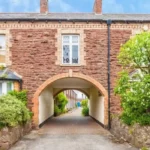
Penylan contains a mixture of Victorian and Edwardian domestic architecture, including terraces, semi-detached houses and detached villas with brickwork, rendered elevations, pitched slate roofs, bay windows, gables, decorative detailing and carefully planned front boundaries.
The architecture varies between individual streets. The common feature is the relationship between individual houses and the wider street.
Late-Victorian houses often use strong horizontal and vertical divisions. Bay windows project from front elevations. Brick or rendered walls create contrasting surfaces. Slate roofs provide steep or moderately pitched rooflines.
Edwardian houses frequently use broader façades and more varied arrangements. Gables, timber details, decorative brickwork and larger windows create additional visual interest.
Roath Park’s conservation documentation highlights a palette of high-quality materials and Arts-and-Crafts influences within the area’s late-Victorian and Edwardian housing. The architectural character includes terraces, semi-detached properties and detached houses arranged along consistent building lines.
The term Arts and Crafts describes an architectural and design movement that emphasised traditional craftsmanship, natural materials and carefully considered domestic design. In Cardiff, its influence appears in some residential detailing from the late 19th and early 20th centuries.
Historic houses in Penylan also frequently retain features associated with period construction. These include timber sash or casement windows, slate roofs, chimneys, timber doors, decorative brickwork, plaster details and traditional boundary walls.
Not every property retains all original features. Alterations have occurred over more than a century. Replacement windows, extensions, conversions and modern interiors form part of the current residential landscape.
How did Roath Park influence Penylan’s historic homes?
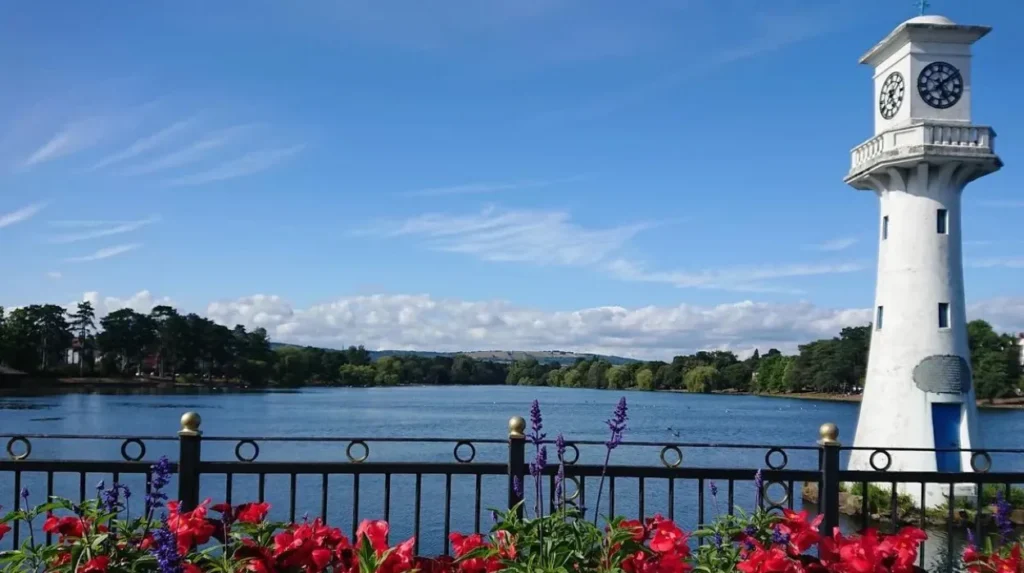
Roath Park helped shape Penylan’s historic residential character by providing a major planned public landscape around which late-Victorian and Edwardian streets developed, creating a strong relationship between homes, gardens, roads, open space and views.
Roath Park is central to understanding Penylan’s historic homes.
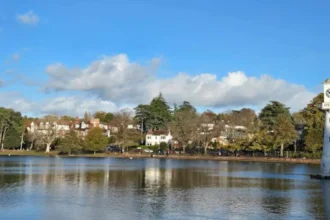
The park is a registered historic park and garden. Cardiff Council describes it as a late-Victorian space forming the heart of the Roath Park Conservation Area. The surrounding conservation area includes the park and residential streets around it.
This arrangement created a different residential environment from densely built inner-city streets.
Homes close to the park benefited from a relationship with substantial public open space. Streets were laid out with consistent building lines, while properties included front gardens, rear gardens and boundary treatments.
The park also influenced the visual setting of nearby houses. Mature planting, open views and tree-lined streets contribute to the character of the residential area.
The historic relationship remains important today. Conservation area policies consider not only individual buildings but also the wider appearance of streets and their relationship with open spaces.
This explains why a historic Penylan house should be considered within its street and landscape context rather than as an isolated building.
Which historic house features are common in Penylan?
Common historic features in Penylan include bay windows, pitched slate roofs, chimneys, brick or rendered walls, gabled elevations, traditional doors, front gardens, boundary walls and period room layouts found across Victorian and Edwardian residential properties.
Bay windows are particularly useful architectural indicators. They project beyond the main wall and increase daylight inside reception rooms. Many period Cardiff houses use bay windows as prominent front-elevation features.
Roof construction is another defining characteristic. Traditional slate roofs create a strong visual pattern across Penylan streets. Chimneys also remain important features on many historic houses, even where fireplaces have been altered internally.
Front boundaries contribute to the streetscape. Brick walls, stone walls, railings, gates and planted front gardens separate private houses from public pavements while maintaining consistent building lines.
Interior layouts provide another historical clue. Period houses often contain separate reception rooms, entrance halls, staircases and multiple bedrooms. The documented Edwardian house at 5 Pen-Y-Lan Road retains a two-reception-room arrangement, kitchen/diner and three-bedroom configuration.
Original materials also have heritage value. Traditional timber windows, slate roofs, brickwork, stone details and decorative joinery contribute to architectural authenticity.
Modern alterations do not automatically remove historic significance. A house can retain significant external character while having modern kitchens, bathrooms, insulation, heating systems or glazing.
Are Penylan’s historic houses listed buildings?
Not every historic house in Penylan is individually listed. Listed-building protection applies to specific buildings, while conservation-area protection covers the character of a wider area and can affect alterations to otherwise unlisted historic houses.
Listed buildings are buildings recognised for special architectural or historic interest. Cadw, the Welsh Government’s historic environment service, administers the national listed-building system.
Cardiff contains around 1,000 listed buildings, according to Cardiff Council. The council also records around 300 locally listed buildings.
Conservation areas operate differently.
A conservation area protects the character and appearance of an identified historic area. It does not mean every building inside that boundary has individual listed status.
This distinction is important in Penylan.
The Roath Park Conservation Area contains individual listed and locally listed buildings alongside many unlisted historic houses. A planning document concerning 106 Ninian Road records nearby Grade II listed properties at 78–81 Ninian Road, Roath Park United Reformed Church and locally listed properties at 84–85 Ninian Road.
Historic terraces can therefore have collective significance even when individual houses are not listed.
Property owners need to check the exact status of their address before undertaking major external alterations.
What is the difference between a listed house and a conservation-area house in Penylan?
A listed house receives individual statutory protection for its special architectural or historic interest, while a house within a conservation area contributes to the character of a protected historic area and can face additional planning controls.
Listed-building protection focuses on the building itself and its special interest.
Cardiff Council states that Listed Building Consent is required where proposed demolition, alteration or extension affects the character of a listed building. A Heritage Impact Statement is required for Listed Building Consent applications.
Conservation-area protection focuses on the wider place.
This includes streets, building groups, gardens, trees, materials, views and historic layouts. Cardiff Council states that additional planning controls can apply within conservation areas. Article 4 Directions can also remove certain permitted development rights, including controls affecting windows and other minor alterations.
The difference matters for Penylan homeowners.
An unlisted Victorian terrace within a conservation area is not equivalent to a Grade II listed house. However, changes to the unlisted property can still affect the appearance of the conservation area.
This is why the planning history and designation status of the individual property need to be checked before work begins.
Which Penylan streets are associated with historic residential character?
Historic residential character is particularly associated with streets around Roath Park and its conservation area, where late-Victorian and Edwardian houses form consistent terraces, semi-detached groups and villas along established tree-lined residential routes.
Ninian Road is an important example within the Roath Park setting. Planning documentation records Edwardian architecture and identifies listed and locally listed heritage assets nearby.
Pen-Y-Lan Road also contains surviving Edwardian housing. A Residential Property Tribunal inspection documented a traditional three-bedroom Edwardian mid-terrace house at number 5.
Other roads across the wider Penylan and Roath Park area contain Victorian and Edwardian terraces, semis and larger houses. Their architectural value often comes from groups of buildings rather than one isolated property.
The precise designation boundary is important. Not every street associated with Penylan has the same conservation status.
Cardiff Council publishes conservation-area boundaries and appraisal documents that allow property owners and visitors to establish which locations fall within designated areas.
Historic character also changes from one street to another. Main roads can contain larger houses and stronger architectural landmarks, while side streets often contain repeated terraces and semi-detached groups.
How did Cardiff’s industrial growth shape Penylan’s historic housing?
Cardiff’s expansion as an industrial, commercial and transport centre increased demand for suburban housing, helping create residential districts where Victorian and Edwardian homes accommodated growing professional, commercial and working populations outside the older urban core.
Cardiff underwent major economic and population growth during the 19th century.
The city’s docks became central to the export of coal from the South Wales coalfield. Industrial employment, commerce, shipping and associated services increased the demand for housing.
Residential development expanded beyond the historic centre.
Penylan’s historic housing belongs to this wider suburban transformation. Houses provided accommodation in a planned residential setting rather than the dense urban environment associated with older central neighbourhoods.
The architectural scale reflects this function.
Larger houses contained multiple bedrooms and reception rooms. Terraced houses provided relatively efficient use of urban land. Semi-detached and detached properties offered larger gardens and greater separation between homes.
The development around Roath Park added another layer. Public open space formed part of the residential environment, while roads and houses were arranged around established landscape features.
The result is a historic housing landscape that records Cardiff’s transition from a smaller town into a major industrial-era city.
How have Penylan’s historic homes changed since they were built?
Penylan’s historic homes have changed through extensions, internal alterations, conversions, replacement windows, modern services and changing household use, while many properties continue to retain historic façades, roof forms, street layouts and architectural details.
Historic houses rarely remain completely unchanged.
Modern households require different heating, insulation, kitchens, bathrooms, electrical systems and communications infrastructure. Owners have therefore adapted many Penylan properties to contemporary living.
Some larger houses have also been divided into flats or other residential units. Current property records show both traditional family houses and converted period properties within Penylan.
Subdivision changes the way a historic building is occupied. It can also alter internal layouts, entrances, gardens and services.
External alterations have a different impact. Replacement windows, rendered elevations, roof changes, extensions and boundary modifications can change the appearance of historic streets.
The conservation system exists partly to manage these changes.
Cardiff Council provides specific guidance on conservation areas, residential alterations and planning applications. It also identifies Article 4 controls in some conservation areas.
The objective is not to freeze every historic house in its original condition. Historic buildings remain functioning homes. The planning system manages change so that important architectural and townscape characteristics remain identifiable.
Why are Penylan’s historic homes important for Cardiff’s heritage today?
Penylan’s historic homes provide evidence of Cardiff’s suburban expansion, architectural development and changing domestic life, while their conservation-area settings preserve relationships between period buildings, streets, gardens, trees and major historic public landscapes.
The heritage value of Penylan extends beyond individual buildings.
A terrace records repeated construction patterns. A semi-detached pair demonstrates suburban planning. A villa records larger domestic ambitions. A street records the organisation of land and movement.
Roath Park adds another important layer. Cardiff Council identifies the park as a Grade I registered historic park and garden and describes the surrounding residential development as one of the important late-Victorian and Edwardian environments in the city.
The combination of architecture and landscape gives the area its historic identity.
Penylan also demonstrates how historic neighbourhoods continue to function as modern residential communities. Period houses remain homes rather than museum buildings.
This continuing use creates practical heritage challenges. Buildings require maintenance, energy improvements and adaptation. At the same time, traditional features require careful treatment.
The long-term significance of Penylan therefore depends on maintaining both buildings and the relationships between them.
Explore More Area Guide
Industrial Heritage Walk Around Grangetown, Cardiff
Cardiff Bay Heritage Route: History, Docks and Landmarks
How can visitors explore Penylan’s historic homes responsibly?
Visitors can explore Penylan’s historic character by walking through public streets around Roath Park, observing architectural details from public spaces, visiting designated public landscapes and using official conservation information without entering private properties.
A walking route around Roath Park provides the clearest introduction to the area’s historic environment.
Visitors can observe terraces, semi-detached houses, detached properties, front boundaries, mature trees and rooflines from public pavements.
Roath Park itself provides the landscape context. The conservation area encompasses the historic park and surrounding residential streets.
The best approach is architectural observation rather than property access.
Historic details can be identified from public areas. Bay windows, gables, slate roofs, brickwork, chimneys, boundary walls and consistent building lines are visible without entering private land.
Cardiff Council’s conservation information provides another useful resource. The council publishes appraisal documents explaining the special character of designated areas and the planning controls associated with them.
Visitors should avoid photographing through private windows, entering gardens or treating occupied houses as public attractions.
Penylan’s heritage is primarily experienced through its streetscape, public parks and architectural setting.
What is the future relevance of Penylan’s historic homes?
Penylan’s historic homes remain relevant because Cardiff continues to adapt established neighbourhoods while conservation policies protect important architectural and townscape qualities, allowing period housing to remain part of the city’s modern residential environment.
The future of Penylan’s historic housing involves balancing continued residential use with heritage protection.
Energy efficiency is increasingly important for older buildings. Traditional construction requires appropriate solutions that respect existing materials and building behaviour.
Planning also remains significant. Cardiff Council provides guidance covering residential extensions and alterations, conservation areas, listed buildings and related planning matters.
Conservation-area designation provides a framework for managing change. Article 4 Directions can introduce additional controls where specific alterations threaten the character of an area.
Penylan’s historic houses therefore have two roles.
They are functioning homes for modern residents. They are also physical records of Cardiff’s late-Victorian and Edwardian suburban development.
Maintaining both roles preserves the continuity of the district.
The most important heritage feature is not one architectural detail alone. It is the cumulative relationship between historic houses, streets, gardens, trees, public parks and the wider urban structure.
For Cardiff, Penylan provides a clear example of how historic residential architecture remains embedded in everyday city life. Its Victorian and Edwardian houses, Roath Park setting and conservation areas together preserve an important chapter in the development of modern Cardiff.
What type of historic homes are found in Penylan?
Penylan is known for Victorian and Edwardian residential architecture. The area contains traditional terraced houses, semi-detached homes and detached villas, particularly around the Roath Park area.