Grangetown is one of Cardiff’s most important industrial heritage areas, shaped by docks, railways, gas production, rope making, brickmaking, ironworking and coal transport. An industrial heritage walk reveals how Victorian infrastructure transformed former marshland into a densely populated working district beside Cardiff’s docks and rivers.
- What is the industrial heritage of Grangetown?
- How did Cardiff’s docks create Grangetown’s industrial landscape?
- Where did the Grangetown gas works operate?
- What can visitors learn about the Grangetown rope works?
- What was the Grangetown Iron Works?
- Where were the brick works in Grangetown?
- How did railways shape an industrial heritage walk around Grangetown?
- What role did the River Taff play in Grangetown’s industrial history?
- How did industry influence Grangetown’s Victorian housing?
- How can Grange Gardens fit into a Grangetown heritage walk?
- What remains of Grangetown’s industrial heritage today?
- How should visitors plan an Industrial Heritage Walk Around Grangetown?
- Why is Grangetown’s industrial heritage important for Cardiff today?
The story of Grangetown is closely connected to the wider industrial development of Cardiff. During the nineteenth century, coal from the South Wales Valleys reached Cardiff through canals and railways before being exported through the docks. Cardiff’s coal exports increased from 2 million tonnes in 1862 to nearly 11 million tonnes by 1913.
Many original industrial structures have disappeared, but the historic street pattern, river corridors, railway infrastructure, industrial sites and surviving records still reveal how Grangetown worked. The route also connects local history with the wider industrial landscape of Cardiff Bay.
What is the industrial heritage of Grangetown?
Grangetown’s industrial heritage records the transformation of marshland into a Victorian working district serving Cardiff’s docks, railways and industries. Its key themes include gas production, rope making, ironworking, brickmaking, transport, housing and dock-related employment from the nineteenth century.
Grangetown developed rapidly during the second half of the nineteenth century. Construction began in 1857, when the area was still characterised by marshy ground and agricultural land. The development was associated with the Windsor-Clive family and wider investment connected with nearby Penarth Docks and Cardiff’s expanding industrial economy.
The district became closely connected to Cardiff’s industrial transport system. The River Taff formed its eastern boundary, while railway routes connected the area with Cardiff, Penarth and the South Wales coalfield.
The industrial landscape included several different types of production. Grangetown had gas works, rope works, brick works and an iron works. Chemical production also appeared in the nineteenth century. These activities supplied Cardiff and the wider dock economy.
The industrial heritage is therefore broader than individual factories. It includes streets built for workers, railway routes, river crossings, industrial yards, former wharves and the surviving physical geography of the district.
How did Cardiff’s docks create Grangetown’s industrial landscape?
Cardiff’s docks created the commercial demand that drove Grangetown’s industrial development. Coal, iron, imported raw materials, shipping and railway transport generated employment and encouraged factories, workshops, warehouses and workers’ housing around the docklands.
Cardiff’s industrial transformation began before Grangetown became heavily built up. The Glamorganshire Canal connected Cardiff with Merthyr Tydfil in 1794, while a sea-connected basin followed in 1798. The Taff Vale Railway opened in 1841, creating a faster land connection between the coalfield and Cardiff.
The opening of West Bute Dock in 1839 strengthened Cardiff’s position as an export port. Further dock expansion followed as coal production increased across the South Wales Valleys.
By the nineteenth century, Cardiff had become an international coal-exporting centre. Coal was transported from mining districts to Cardiff and then loaded onto ships serving markets around the world.
Grangetown occupied an important position within this system. It stood beside the Taff and close to Cardiff’s docklands and railway infrastructure. Industrial businesses could therefore access transport networks linking raw materials, manufacturing and overseas trade.
The growth of industry also created demand for housing. Thousands of workers required homes close to factories, railway routes and docks. Grangetown developed as part of this wider industrial urbanisation.
Where did the Grangetown gas works operate?
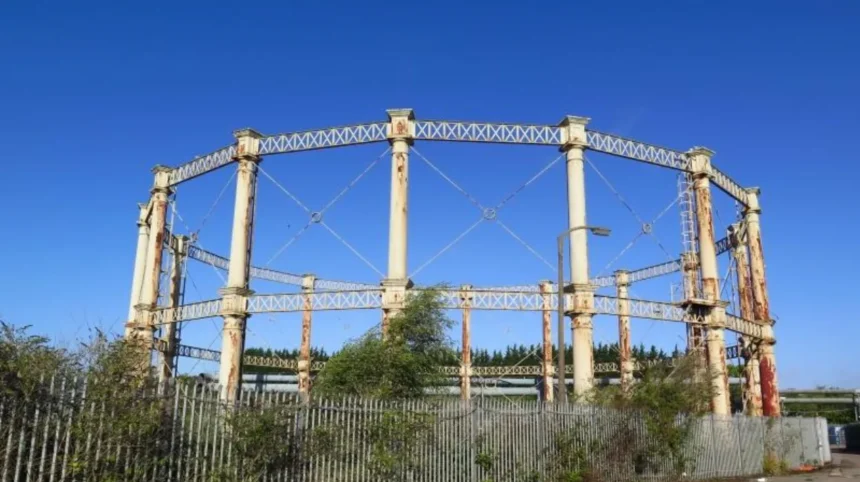
The Grangetown gas works opened in 1863 on land acquired by the Cardiff Gas Light and Coke Company in 1859. It became one of the district’s major industrial employers and supplied gas for lighting and other urban uses as Cardiff expanded.
The gas works is one of the most important industrial sites to understand on a Grangetown heritage walk.
The Cardiff Gas Light and Coke Company was established in 1837. Its original works were in central Cardiff, but the company needed additional space as demand increased. Land was acquired in Grangetown in 1859 and production began there in 1863.
The works required access to coal and transport infrastructure. Coal was the essential raw material for traditional town-gas production, making the relationship between the gas works and Cardiff’s industrial transport system particularly important.
By 1870, the Grangetown works supplied gas to several expanding suburbs, including Cogan, Whitchurch, Radyr and St Fagans.
The site also demonstrates the environmental realities of nineteenth-century industry. Historical accounts record complaints about smells and difficult working conditions. Workers handled coal and ash manually during the early period of operation.
The former gas works site later became part of the modern redevelopment story of Grangetown. Cardiff Council acquired the former Ferry Road gas works site in 2020 for a council-led mixed-tenure housing scheme.
This creates an important heritage lesson: industrial sites do not always survive as factories. Their historic significance can remain through records, archaeology, street patterns and redevelopment history.
What can visitors learn about the Grangetown rope works?
Grangetown’s rope works was established during the 1860s to manufacture rope for South Wales docks. Hemp and jute were imported from Russia and India, while a 340-yard ropewalk allowed long lengths of rope to be manufactured.
The rope industry demonstrates the international character of Victorian Cardiff.
The Grangetown rope works manufactured rope required by ships and dock operations. The materials travelled long distances before reaching the factory. Coflein records imported hemp and jute from Russia and East India.
The ropewalk measured approximately 340 yards. A ropewalk was a long industrial space where fibres could be laid, twisted and combined into rope.
At its height, the Grangetown works produced approximately nine tons of rope each week.
The business was therefore directly connected with Cardiff’s maritime economy. Ships required ropes for mooring, cargo handling and other operations, while dock activity generated continuing demand for industrial supplies.
The works also illustrates the scale of manufacturing hidden within a residential district. Industrial production did not exist only in enormous dock complexes. Smaller specialist factories supported the wider port economy.
The rope works suffered a major fire in the late nineteenth century. Contemporary accounts describe the destruction of the rope yard, machinery and hemp stocks, demonstrating the risks associated with industrial materials and timber structures. Historical local research records that the business continued operating after the fire.
What was the Grangetown Iron Works?
The Grangetown Iron Works was established in the 1860s near Ferry Road and the gas works. It included furnaces, boilers, coke ovens and railway sidings, but struggled with costs and competition before closing after a short industrial life.
The iron works forms one of the clearest examples of the challenges faced by Victorian industrial entrepreneurs in Grangetown.
The works was associated with Oliver York and opened during the industrial expansion of the 1860s. Historical research describes a substantial industrial complex containing 12 pudding furnaces, four steam boilers and six coke ovens. The site covered approximately six acres and had its own railway sidings.
Puddling furnaces were used to refine pig iron into wrought iron. The process required significant quantities of fuel and labour.
The railway sidings were important because industrial production depended on the movement of coal, coke, iron and finished products. However, the railway connection did not eliminate all transport costs.
The works struggled during a difficult period for iron production in South Wales. Historical research records a failed 1873 sale, followed by continued financial problems and eventual liquidation. The works had closed by the early 1880s.
Its short life is significant because it demonstrates that industrialisation was not an uninterrupted process of expansion. Some businesses succeeded because of their location and access to resources, while others failed because operating costs and competition made production difficult.
The former iron works area subsequently became associated with the expanding gas works.
Where were the brick works in Grangetown?
Brickmaking was an important nineteenth-century Grangetown industry because the area contained clay suitable for manufacturing. Historic maps identify brick works around Upper Grangetown and between Penarth Road and the streets that developed as the district expanded.
Brickmaking was closely connected to Grangetown’s own urban expansion.
As new terraces, public buildings and industrial premises were constructed, local building materials were required. Historical research records brickmaking sites around the developing district.
An important brick works operated between modern Redlaver Street and North Street. At its height during the late 1860s, the works reportedly produced approximately 1.5 million bricks annually.
Historic Ordnance Survey mapping also records brickmaking features in Upper Grangetown, including brick works, brick kilns and associated industrial structures.
The relationship between brickmaking and housing is particularly important. Grangetown was being built rapidly during the same period that these works operated.
Terraced housing required large quantities of bricks. Streets, boundary walls, schools and industrial buildings also consumed locally produced construction materials.
Much of the physical evidence of brickmaking has disappeared beneath later development. Historic maps therefore provide an essential method for reconstructing the industrial landscape.
A heritage walk should treat these former sites as archaeological and cartographic evidence rather than expecting surviving factory buildings.
How did railways shape an industrial heritage walk around Grangetown?
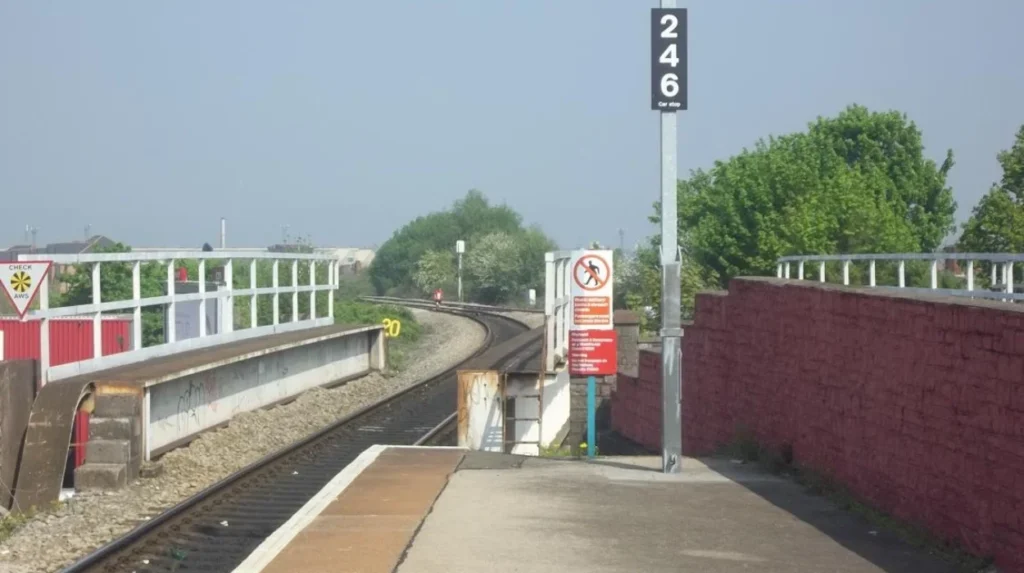
Railways connected Grangetown with Cardiff’s docks, Penarth and the South Wales industrial valleys. They transported workers, coal, industrial materials and finished products, while railway corridors also influenced the location and expansion of housing and factories.
Rail transport is essential to understanding the industrial geography of Grangetown.
The Taff Vale Railway opened in 1841 between Cardiff and the South Wales coalfield. Its development helped connect mineral-producing districts with Cardiff’s port.
Later railway connections strengthened links between Grangetown and Penarth. Railway infrastructure formed part of the physical framework around which the Victorian suburb developed.
Railways had several functions. They moved coal and other raw materials, transported industrial products, carried workers and provided access to docks.
Railway infrastructure also influenced the appearance of the area. Embankments, bridges, sidings and crossings became permanent features of the urban environment.
The heritage significance remains visible even where tracks have disappeared. Surviving railway bridges and alignments can identify former transport corridors.
The relationship between rail and industry also explains why Grangetown developed as a dense working-class district. Employment, transport and housing were closely connected.
What role did the River Taff play in Grangetown’s industrial history?
The River Taff formed Grangetown’s eastern edge and connected the district with Cardiff’s wider dock and maritime economy. The river supported transport, waterfront industry and infrastructure while separating Grangetown from the central docklands across the water.
The River Taff is one of the defining physical features of Grangetown.
Cardiff itself developed around a strategic position at the junction of the Taff, Ely and Rhymney river systems.
The Taff connected the industrial hinterland with Cardiff’s port. Coal and industrial products travelled towards the docks, while imported goods moved in the opposite direction.
River crossings were therefore important pieces of industrial infrastructure.
The James Street corridor provides an example of how roads, canals, bridges and waterways interacted. A former swing bridge crossed the Glamorganshire Canal near James Street. The bridge measured approximately 32 metres and rotated to allow vessels through.
Although this particular structure is outside the central Grangetown route, it helps explain the engineering environment that surrounded the district.
The river also preserves archaeological evidence. The wreck of the Louisa lies in the River Taff and is a scheduled monument. It represents a transitional period in shipbuilding between timber and iron construction.
This protected wreck demonstrates that industrial heritage extends beyond buildings and land-based infrastructure.
How did industry influence Grangetown’s Victorian housing?
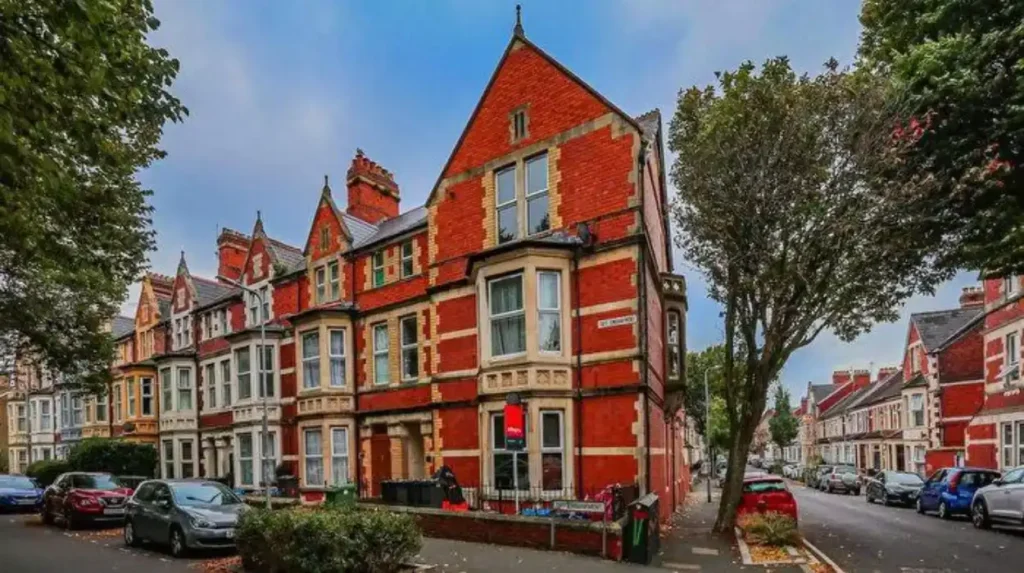
Industrial employment drove rapid residential development in Grangetown during the Victorian period. Terraced houses were built close to factories, railways, docks and workplaces, creating a compact urban district designed around the daily needs of industrial workers.
Grangetown was planned partly around employment and housing.
Construction began in 1857, when the area remained difficult to develop because of marshy ground. Workers were required for nearby docks and industrial businesses, creating pressure for new housing.
The early housing stock included small terraced homes. Many survive, although some of the earliest houses have disappeared or been replaced.
Street names and layouts provide additional evidence of the district’s development. Local historical research identifies connections between street names and the estates and investors involved in Grangetown’s construction.
The housing was not separate from industrial history. It was part of the same economic system.
Workers needed homes within walking distance of factories, gas works, docks and railway facilities. Shops, schools, places of worship and community facilities then developed around the residential population.
A walk through the residential streets therefore forms part of an industrial heritage route. The houses represent the workforce that powered Cardiff’s nineteenth-century industrial economy.
How can Grange Gardens fit into a Grangetown heritage walk?
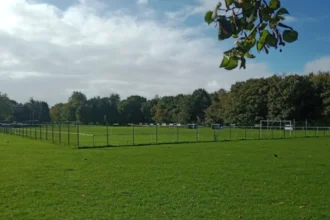
Grange Gardens provides evidence of the social infrastructure that developed alongside Grangetown’s industrial population. The park opened as a community recreation space and included facilities for bowls, tennis, quoits, music and public gatherings.
Industrial heritage includes social life as well as factories.
Grange Gardens became an important recreational space for local residents. Historical records describe bands performing in the park, including the East Moors Band, Canton Brass Band and Splott Temperance Band.
The park also contained sporting facilities. These included bowling, tennis and quoits.
A drinking fountain installed in 1909 commemorated Rachel Joseph, a member of the Samuel family. The fountain illustrates the contribution of local families to public amenities.
The Grangetown war memorial was erected in the park in 1921.
The park therefore connects industrial employment with community identity, recreation and remembrance.
For a walking route, Grange Gardens works particularly well as a point for understanding how industrial neighbourhoods developed institutions that supported everyday life beyond working hours.
What remains of Grangetown’s industrial heritage today?
Modern Grangetown contains fewer surviving industrial buildings than the Victorian district once had, but historic streets, railway infrastructure, river corridors, former industrial sites, parks and documentary records preserve evidence of its industrial past.
Industrial change is visible throughout the district.
The large factories and works that once dominated parts of Grangetown have largely disappeared. Some sites have been redeveloped for housing, commercial activity, transport infrastructure and other modern uses.
The former gas works site is an important example. Cardiff Council identified the former Ferry Road gas works as a strategic redevelopment site and approved acquisition for mixed-tenure housing.
Other industrial evidence survives through archives.
Amgueddfa Cymru holds photographs documenting Cardiff’s industrial landscape, including views of the East Moors steelworks and Cardiff Docks. A 1952 aerial photograph shows the relationship between East Moors Works and East and West Bute Docks.
These collections are valuable because industrial landscapes changed dramatically during the twentieth century.
The East Moors steelworks itself was constructed by the Dowlais Iron Company between 1891 and 1895. It later became known as East Moors Works and closed in 1978.
Although East Moors lies beyond the immediate Grangetown walking route, its history explains the wider industrial environment that surrounded Cardiff’s southern districts.
Explore More Area Guide
Cardiff Bay Heritage Route: History, Docks and Landmarks
Walking Through Old Butetown: Cardiff’s Tiger Bay History
How should visitors plan an Industrial Heritage Walk Around Grangetown?
A Grangetown industrial heritage walk works best as a connected route through former industrial zones, residential streets, river infrastructure and community spaces. Historic maps and archival records add essential context where factories, gas works and railway structures no longer survive.
Begin near the central Grangetown streets and move towards the areas associated with the former gas works and industrial sites around Ferry Road.
Continue through the older residential streets. Look for the relationship between terraces, roads and former employment areas.
The next stage should focus on transport. Railway routes, bridges and embankments demonstrate how workers and industrial materials moved through the district.
Grange Gardens provides a useful community-history stop before continuing towards the River Taff.
The precise route should be checked against current pedestrian access because industrial sites have been redeveloped and some historic alignments no longer function as public routes.
Historic maps are particularly useful. The National Monuments Record and Coflein provide information about archaeological and historic sites across Wales. Cadw’s Cof Cymru mapping service also allows visitors to identify designated historic assets.
Visitors should also distinguish between surviving heritage and reconstructed interpretation. Not every location associated with historic industry retains visible remains.
Why is Grangetown’s industrial heritage important for Cardiff today?
Grangetown’s industrial heritage explains how Cardiff became a global coal-exporting port and how industrial growth shaped housing, transport, employment and community life. Its surviving evidence connects present-day Cardiff with the nineteenth-century infrastructure that transformed South Wales.
Cardiff’s industrial development was part of the wider Industrial Revolution in Wales.
Coal from the South Wales Valleys transformed Cardiff into an international port. Cardiff’s coal exports increased from 2 million tonnes in 1862 to nearly 11 million tonnes in 1913.
The industrial system required much more than mines and ships. It required canals, railways, docks, factories, gas works, warehouses, roads and housing.
Grangetown formed part of that interconnected system.
The district also demonstrates the social consequences of industrialisation. Rapid population growth produced new streets, schools, recreation spaces and community organisations.
Today, heritage protection in Wales operates through a statutory framework that includes listed buildings and scheduled monuments. The Historic Environment (Wales) Act 2023 provides the current legislative framework, which came fully into effect in November 2024.
Not every historic industrial site has statutory protection. Cadw recognises that locally important historic assets can also contribute to the character and identity of communities without being nationally designated.
This distinction is important in Grangetown because much of its industrial story survives through ordinary streets, archaeological evidence, former site boundaries and historical documentation rather than monumental factory buildings.
An Industrial Heritage Walk Around Grangetown therefore provides a way to read Cardiff’s development through its physical landscape. The route connects nineteenth-century industry with modern regeneration and demonstrates how former industrial districts continue to shape the city’s identity.
What is the Industrial Heritage Walk Around Grangetown?
The Industrial Heritage Walk Around Grangetown explores the area’s industrial past, including its gas works, rope works, iron works, brickmaking sites, railway infrastructure, docks, river connections and Victorian workers’ housing.