Cardiff is one of the most practical Welsh cities for travelling without owning a car. The city combines local buses, regional rail, walking routes, cycleways, taxis, demand-responsive transport and integrated journey-planning services. Its compact central area also places many major destinations within walking distance of Cardiff Central and Cardiff Queen Street stations.
- What is the best way to get around Cardiff without a car?
- How easy is it to walk around Cardiff without a car?
- How can you use Cardiff buses without owning a car?
- How useful are trains for getting around Cardiff without a car?
- Can you cycle around Cardiff without a car?
- How do Cardiff trains, buses, walking and cycling work together?
- What are the best car-free options for travelling around Cardiff Bay?
- Can you travel between Cardiff neighbourhoods without a car?
- How can students and young professionals live in Cardiff without a car?
- How can older and disabled passengers travel around Cardiff without a car?
- How can you travel around Cardiff at night without a car?
- How much does it cost to get around Cardiff without a car?
- What transport changes will improve car-free travel in Cardiff?
- Is Cardiff a good city to live in without a car?
- What is the simplest car-free transport strategy for Cardiff residents?
Cardiff had a population of about 362,300 in the 2021 Census, making it the largest local authority by population in Wales. The city is also Wales’ most densely populated local authority, creating strong demand for efficient alternatives to private car travel.
The best car-free strategy depends on distance. Walking works well for central Cardiff. Buses connect residential neighbourhoods with the city centre. Trains provide fast links across Cardiff and the wider South Wales region. Cycling provides a flexible option for short and medium journeys. Taxis and private hire vehicles fill gaps when public transport is unsuitable.
What is the best way to get around Cardiff without a car?
The best way to travel around Cardiff without a car is to combine walking, buses, trains and cycling according to distance. Walking suits central trips, buses cover neighbourhoods, trains connect key corridors, and cycling provides flexible point-to-point travel.
Cardiff does not depend on one transport mode. Its transport network works as a combination of systems.
Walking is particularly useful in the city centre. Cardiff Central railway station sits close to major attractions, shopping areas, entertainment venues and the Principality Stadium. Transport for Wales describes Cardiff Central as the largest and busiest railway station in Wales.
Local buses provide the main public transport option for many neighbourhood journeys. Cardiff Council directs passengers towards Traveline Cymru for journey information covering buses and trains.
Rail is especially useful when travelling between Cardiff’s main stations and surrounding communities. Cardiff Central, Cardiff Queen Street and Cardiff Bay stations provide important connections within the city and region.
Cycling provides another important option. Cardiff Council maintains an Active Travel Network Map showing existing and proposed walking and cycling routes. The network is developed under the Active Travel (Wales) Act 2013.
The practical approach is to choose the mode based on the journey rather than trying to use one system for every trip.
How easy is it to walk around Cardiff without a car?
Walking is one of the easiest ways to travel around central Cardiff without a car because major destinations are concentrated around the city centre, Cardiff Central, Cardiff Queen Street, shopping areas, cultural venues and Cardiff’s riverside districts.
Central Cardiff has a strong pedestrian network. Cardiff Council provides walking and cycling maps to help residents and visitors plan journeys. The council also maintains public rights of way and pedestrian infrastructure across the local authority area.
Cardiff Council records 176,848 metres of public footpaths and 102,650 metres of separate surfaced footpaths in built-up areas. The authority also records 100.90 kilometres of purpose-built cycleways. These figures demonstrate the scale of infrastructure supporting non-car travel.
Walking works particularly well for journeys within central Cardiff. Cardiff Central is approximately a 10-minute walk from the Principality Stadium and provides access to the central shopping and entertainment districts.
Cardiff Castle, the city’s shopping areas, historic arcades and central cultural attractions are also concentrated within the wider central area.
Cardiff Bay requires a longer journey from the traditional city centre. Walking remains possible, but rail, bus and cycling provide practical alternatives for people travelling regularly between the two areas.
For daily life, walking is particularly useful for combining several short activities. A resident can walk between a railway station, workplace, shops, restaurants and entertainment venues without changing transport modes.
How can you use Cardiff buses without owning a car?
Cardiff buses provide extensive local coverage for residents travelling between neighbourhoods and the city centre. Use Cardiff Bus and Traveline Cymru information to identify routes, stops, timetables and connections before starting a journey.
Buses form a central part of Cardiff’s car-free transport system. Cardiff Council states that most bus services across Cardiff are provided by commercial operators following the deregulation of local bus services under the Transport Act 1985.
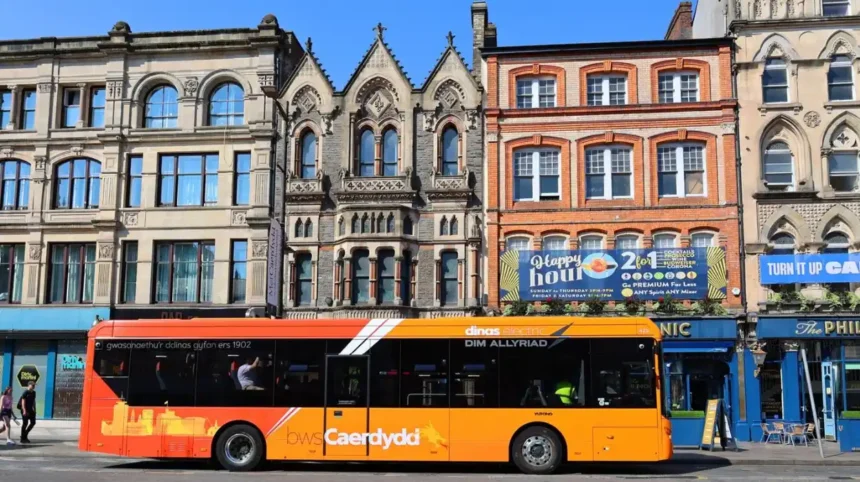
Cardiff Bus is the principal local operator associated with the city. Its network serves residential districts and central destinations, while other operators provide additional local and regional services.
Traveline Cymru provides journey-planning information for public transport throughout Wales. Transport for Wales also provides a multimodal journey planner covering buses, trains, walking and cycling.
This makes bus travel easier for people who do not know individual route numbers. Entering the origin and destination identifies available transport combinations.
Bus travel is especially useful for journeys where rail stations are not close to either end of the trip. A bus can provide a direct neighbourhood-to-centre journey without requiring a walk to a railway station.
Bus stops are distributed throughout residential areas, making buses important for everyday activities such as commuting, education, shopping and healthcare.
Passengers should check live journey information before travelling because roadworks, events and operational changes affect journey times. Cardiff Council provides travel information covering roadworks and major events.
How useful are trains for getting around Cardiff without a car?
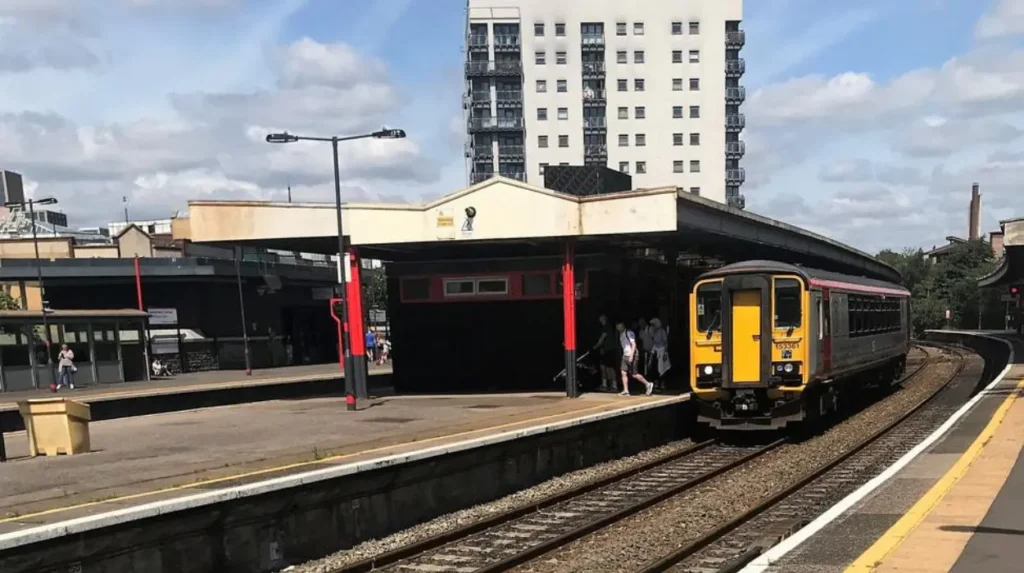
Trains are highly useful for car-free travel across Cardiff because Cardiff Central, Cardiff Queen Street and Cardiff Bay connect important parts of the city with surrounding communities and South Wales destinations. Rail is particularly effective for longer cross-city journeys.
Cardiff’s railway network developed alongside the city’s industrial expansion. Cardiff Central opened in 1850 as part of the South Wales Railway. Its location helped connect Cardiff with the docks and wider railway network.
Cardiff Queen Street is another important urban station. It provides access to services serving eastern and northern parts of the city and the wider South Wales Metro network.
Cardiff Bay station serves the waterfront district. Cardiff Bay contains major destinations including the Wales Millennium Centre, restaurants, attractions and public spaces.
Rail becomes particularly valuable when travelling beyond central Cardiff. Destinations such as Pontypridd, Caerphilly, Newport, Bridgend, Barry Island and other South Wales communities have rail connections to Cardiff.
Transport for Wales provides journey planning, live information and ticket purchasing through its digital services. Contactless pay-as-you-go rail travel is also available on Transport for Wales and CrossCountry services in South Wales at participating stations.
For commuters, rail can reduce dependence on private cars for journeys between Cardiff and surrounding towns.
Can you cycle around Cardiff without a car?
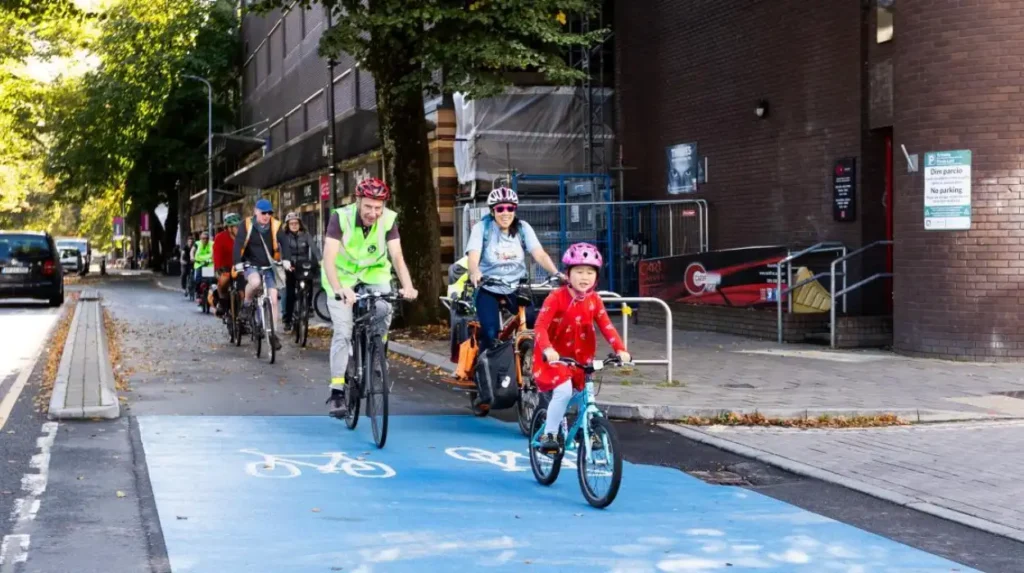
Cycling is a practical car-free transport option in Cardiff for short and medium journeys. Cardiff has purpose-built cycleways, an expanding active travel network and designated routes connecting residential communities with major destinations such as the city centre and Cardiff Bay.
Cardiff Council’s active travel programme supports walking and cycling as everyday transport. The council’s Active Travel Network Map identifies existing routes and proposed future routes. The map forms part of a longer-term programme under the Active Travel (Wales) Act 2013.
The council records 100.90 kilometres of purpose-built cycleways. It also identifies a programme of Cycleways designed to connect communities with major destinations.
Cycling is useful for journeys that are too long to walk but do not justify a bus or train connection.
Cardiff’s geography also supports cycling between several important districts. Routes around the city centre and Cardiff Bay provide connections between employment, leisure and residential areas.
Cycle travel requires greater attention to route planning than walking. Riders should use designated cycleways where available and follow road safety requirements.
Secure cycle parking is another consideration for commuters. Cardiff Council provides information about secure cycle lockers through the Spokesafe system.
For regular cycling, a reliable lock, lights and weather-appropriate clothing form part of practical trip planning.
How do Cardiff trains, buses, walking and cycling work together?
Cardiff’s transport network works best when different modes are combined. A typical car-free journey can involve walking to a bus stop, taking a train to Cardiff Central, then walking or cycling from the station to the final destination.
Integrated travel reduces the need for every journey to be completed using one transport mode.
Transport for Wales provides a multimodal journey planner that allows users to plan journeys involving buses, trains, walking and cycling. Its travel map displays bus stops, railway stations and park-and-ride facilities.
This approach is particularly useful for residents living outside the central area.
For example, a resident can walk from home to a local bus stop, take a bus towards a railway station, use rail for a longer section, then walk to work.
Another journey can involve cycling from a residential area to Cardiff Central, taking a train to another South Wales destination and continuing on foot.
Transport interchanges are becoming increasingly important to Cardiff’s transport planning. Metro Central is designed to improve connections between rail, bus, walking and cycling around Cardiff Central.
The objective is to make transfers between transport modes easier rather than treating buses, trains and active travel as separate systems.
What are the best car-free options for travelling around Cardiff Bay?
Cardiff Bay is accessible without a car using walking, buses, trains and cycling. Cardiff Bay railway station provides rail access, while walking and cycling connect the waterfront with central Cardiff and surrounding districts.
Cardiff Bay has developed from an industrial dockland into a major leisure and cultural district. Transport for Wales identifies the area as a destination containing waterside cafés, restaurants, attractions and the Wales Millennium Centre.
Walking works well once visitors arrive in the Bay because many attractions are concentrated around the waterfront.
Cycling provides another direct option between the city centre and Bay. Cardiff Council’s active travel programme specifically identifies Cardiff Bay as a major destination for proposed Cycleway connections.
Rail provides a useful alternative when walking the entire distance is unsuitable.
The transport situation around Cardiff Bay is also changing. Cardiff Council and Transport for Wales are progressing the first phase of Cardiff Crossrail, which involves a new tramway connection between Cardiff Central and Cardiff Bay. Site clearance and enabling works are scheduled from June 2026, with the main construction phase starting in July 2026.
The project is designed to improve connectivity between Cardiff Central, Butetown and Cardiff Bay.
Can you travel between Cardiff neighbourhoods without a car?
Yes. Cardiff neighbourhoods are connected through combinations of local buses, railway services, walking routes and cycleways. The most efficient option depends on the neighbourhood, destination, time of day and proximity to public transport infrastructure.
Different parts of Cardiff have different transport strengths.
Areas close to Cardiff Central benefit from rail, buses and walking connections. Areas around Cardiff Queen Street benefit from access to the urban rail network and central bus services.
Neighbourhoods without nearby railway stations depend more heavily on buses, walking and cycling.
This distinction matters when choosing where to live without a car. A home close to a frequent bus corridor or railway station generally provides more transport options than a home located farther from public transport.
The Active Travel Network Map is useful for identifying established walking and cycling routes. Transport for Wales provides the multimodal journey planner for comparing transport options.
Residents should also consider the complete journey rather than the distance between two points.
A destination two miles away with a direct bus can be easier to reach than a destination one mile away requiring several changes.
How can students and young professionals live in Cardiff without a car?
Students and young professionals can live car-free in Cardiff by combining walking, cycling, buses and rail. Central neighbourhoods provide particularly strong access to universities, workplaces, shops, entertainment, railway stations and cultural destinations.
Cardiff’s concentration of services supports a car-free lifestyle.
Walking reduces the need for transport on short journeys. Buses extend access to residential neighbourhoods. Rail provides regional connections. Cycling fills gaps between destinations.
Cardiff’s population growth also reinforces the importance of alternative transport. The city’s population increased by 4.7% between 2011 and 2021, reaching about 362,400. Cardiff remained the largest local authority in Wales by population.
For students, the location of accommodation relative to university campuses and bus routes is more important than car parking availability.
For young professionals, proximity to Cardiff Central, Cardiff Queen Street or a strong bus corridor can reduce daily transport requirements.
The same principle applies to people working hybrid schedules. A resident who works from home several days per week can use walking and cycling for local activities and public transport for office days.
How can older and disabled passengers travel around Cardiff without a car?
Older and disabled passengers have access to concessionary bus travel and accessibility support across Cardiff. Transport for Wales and Cardiff Council provide information about accessible transport, assistance, eligibility and travel passes.
Wales operates a concessionary travel scheme for eligible older and disabled residents.
Cardiff Council states that people aged over 60 and eligible disabled people can receive free bus travel on local bus services throughout Wales with a valid concessionary pass.
Transport for Wales states that eligible concessionary pass holders can use free travel on most bus services in Wales and the borders, including TrawsCymru and fflecsi services.
Accessibility is also relevant to rail journeys.
Transport for Wales provides information about accessible stations and assistance for passengers who require help. Cardiff Council recommends contacting railway stations or Cardiff Airport in advance when personal assistance is required.
Cardiff also has buses and taxis with accessibility facilities. Cardiff Council specifically notes that several buses, trains and taxis have low-access facilities designed for wheelchair users.
Passengers should check accessibility before travelling when a journey involves several changes.
How can you travel around Cardiff at night without a car?
Night-time travel without a car requires advance planning because service frequencies and operating hours vary by route and transport mode. Check current bus and train information, identify the final available service, and use licensed taxis or private hire vehicles when necessary.
Night journeys require more planning than daytime travel.
Rail services have defined timetables, while bus frequencies vary between routes and operating periods. A late journey therefore requires checking the current timetable rather than relying on daytime frequency.
Transport for Wales provides live travel information and journey-planning tools for buses and trains.
Taxis provide another option. Cardiff Council distinguishes between hackney carriages and private hire vehicles. Hackney cabs can be hailed from the roadside, while private hire vehicles must be pre-booked.
The city centre has several licensed taxi ranks.
For late-night travel, passengers should identify their return option before beginning an evening journey. This is particularly important for trips outside central Cardiff where public transport services operate less frequently.
How much does it cost to get around Cardiff without a car?
The cost of car-free travel in Cardiff depends on journey frequency, distance, transport mode and eligibility for concessionary schemes. Walking and cycling have no public transport fare, while buses and trains require appropriate tickets or passes.
Walking is the lowest-cost transport option because it does not require a fare.
Cycling also avoids public transport fares when using a privately owned bicycle. The main costs involve purchasing, maintaining and securing the bicycle.
Bus and rail costs vary by operator, route and ticket type. Transport for Wales provides journey planning and ticket purchasing tools, while Cardiff Council directs passengers towards Traveline Cymru for public transport information.
Eligible older and disabled passengers can use concessionary bus passes for free travel under the Welsh scheme.
Regular commuters should compare available ticket products rather than buying individual tickets automatically for every journey.
The financial calculation should also include the costs avoided by not owning a car. A car-free household does not pay for vehicle fuel, insurance, servicing, road tax or parking associated with private vehicle ownership.
What transport changes will improve car-free travel in Cardiff?
Cardiff is continuing to develop its transport network through active travel infrastructure, South Wales Metro improvements, Cardiff Crossrail and transport interchange projects. These programmes aim to improve connections between walking, cycling, buses and rail.
Cardiff’s transport strategy increasingly focuses on integrated travel.
The council’s Local Transport Plan includes walking and cycling infrastructure, bus network improvements, junction improvements, 20mph limits and road safety measures.
The Active Travel Network Map provides a 15-year vision for walking and cycling infrastructure. Existing routes are audited against Welsh Government Active Travel Design Guidance.
Metro Central is another important part of the long-term transport system. The project focuses on improving Cardiff Central and its surrounding connections between rail, buses, walking and cycling.
Cardiff Crossrail is progressing as a major future connection between Cardiff Central and Cardiff Bay. The first phase includes a new tramway, a new stop at Cardiff Central and improvements around Cardiff Bay station.
These developments are significant for residents who do not own cars because they strengthen connections between transport modes.
Explore More Area Guide
Cardiff Public Transport Guide for New Residents
Cardiff Resident Parking Zones and Permits Explained
Is Cardiff a good city to live in without a car?
Cardiff is well suited to car-free living because its central area is walkable, its bus network serves residential communities, its rail network connects key districts and South Wales, and its active travel infrastructure continues to expand.
The city’s transport advantages come from its combination of density and multiple transport modes.
Cardiff ranked first among Wales’ 22 local authorities for population in the 2021 Census. It was also the most densely populated local authority in Wales.
This urban structure supports shorter journeys and public transport demand.
A car-free resident can use walking for local errands, buses for neighbourhood travel, trains for longer journeys and cycling for direct trips between areas. Taxis provide an additional option when public transport does not match the required time or destination.
The strongest car-free locations are generally those close to frequent public transport, employment centres, education, shops and everyday services.
Before choosing a home, residents should check the actual transport options from the property rather than judging an area solely by its distance from Cardiff city centre.
What is the simplest car-free transport strategy for Cardiff residents?
The simplest strategy is to use walking for short trips, buses for neighbourhood journeys, trains for longer journeys, cycling for direct medium-distance travel, and taxis for late or difficult trips. Use current journey-planning information before travelling.
A practical Cardiff car-free routine starts with walking.
Walk when the destination is close and the route is convenient. Use a bus when the destination lies outside comfortable walking distance. Choose rail when a station provides a faster connection. Use cycling when a suitable active travel route gives a direct journey.
Transport for Wales provides one journey-planning system covering bus, train, walking and cycling, making it possible to compare different combinations before leaving home.
Cardiff Council’s walking and cycling information provides additional route-planning resources. Its Active Travel Network Map shows existing and proposed infrastructure.
The city’s transport network has developed over more than 175 years. Cardiff Central opened in 1850, Cardiff’s municipal electric tram system began in 1902, and modern Cardiff now combines rail, buses, active travel and emerging Metro infrastructure.
For residents, the key is not replacing a car with one alternative. It is building a journey pattern around several transport options. That approach provides access to Cardiff’s city centre, neighbourhoods, Cardiff Bay and the wider South Wales region without depending on private car ownership.
Can you get around Cardiff without a car?
Yes. Cardiff has an extensive public transport and active travel network. Residents can use buses, trains, walking routes, cycleways, taxis and private hire vehicles for most everyday journeys.