
Travelling between Cardiff and Barry is a practical option for commuters, students, families and professionals who live in one town and work or study in the other. The route connects the Welsh capital with Barry, a coastal town in the Vale of Glamorgan, through a combination of rail services, local buses and road links.
- What should commuters know about travelling from Cardiff to Barry?
- How long does the Cardiff to Barry train journey take?
- How frequent are trains between Cardiff and Barry?
- How can commuters travel from Cardiff to Barry by bus?
- What is the difference between Cardiff Bus routes 93 and 94?
- When is bus route 95 useful?
- What does bus route 96 serve?
- Is driving from Cardiff to Barry a practical commuting option?
- How much does the Cardiff to Barry commute cost?
- Which transport option is best for daily commuters?
- What should commuters know about delays and service disruptions?
- How accessible is the Cardiff to Barry commute?
- How can commuters plan a reliable Cardiff to Barry journey?
- Is Barry a practical place to live for people working in Cardiff?
- What is the future outlook for Cardiff to Barry commuters?
The best commuting option depends on the starting point in Cardiff, the destination in Barry, the time of travel and the need for onward transport. Trains provide a direct connection between Cardiff Central and Barry, while buses serve additional neighbourhoods and destinations. Driving offers flexibility for people travelling to workplaces away from railway stations.
Transport for Wales operates the railway services linking Cardiff with Barry and Barry Island. Cardiff Bus also operates routes between Cardiff city centre and Barry, including services through Dinas Powys, Llandough, Wenvoe and Culverhouse Cross.
What should commuters know about travelling from Cardiff to Barry?
The Cardiff to Barry commute connects Cardiff’s employment, education and transport hubs with residential neighbourhoods and workplaces in Barry. Rail is a direct option, buses cover additional areas, and driving suits journeys that require greater flexibility. The right choice depends on the complete door-to-door journey.
Cardiff is the capital of Wales and a major centre for public administration, retail, education, healthcare, professional services and employment. Cardiff Central railway station and Cardiff Bus Interchange provide important transport connections for people travelling within the city and beyond.
Barry is the largest town in the Vale of Glamorgan local authority area. Its residential neighbourhoods, commercial centre, industrial areas, Barry Docks and Barry Island create different travel requirements for commuters. Barry railway station serves the town centre, while Barry Island station serves the popular seaside district.
The journey is relatively straightforward because the two places have established public transport links. However, the most suitable route depends on the precise destination. Someone travelling from Cardiff Central to an office near Barry railway station has different requirements from a person commuting from western Cardiff to a workplace near Barry Hospital.
Commuters should compare the entire journey rather than looking only at the time spent on a train or bus. Walking to a station, waiting for a service and travelling from the arrival stop to work all contribute to the daily commute.
How long does the Cardiff to Barry train journey take?
The train journey from Cardiff Central to Barry generally takes around 20–30 minutes, depending on the service and stopping pattern. Journeys to Barry Island take approximately 30 minutes on suitable services. Check the current Transport for Wales timetable before travelling.
Rail travel provides a direct connection between Cardiff and Barry without requiring a change for many journeys. Transport for Wales operates services on the route, connecting Cardiff Central with several stations in the Vale of Glamorgan.
The actual journey time depends on the selected train, intermediate stops and destination station. Barry and Barry Island are separate railway destinations, so passengers should select the station closest to their workplace or onward destination.
Which Cardiff station should commuters use?
Cardiff Central is the main starting point for many commuters travelling from the city centre. It provides access to regional rail services and connections to other parts of Wales and the United Kingdom.
Cardiff Queen Street is useful for people living or working around the eastern city centre and nearby districts. However, passengers should check whether their chosen service calls at Queen Street before planning a journey.
Grangetown is another relevant station for residents in southern Cardiff. Its position on the route can make it useful for commuters who live closer to Grangetown than Cardiff Central.
The most convenient departure station depends on the starting address. A shorter journey to the station often saves more time than choosing a train that is marginally faster.
Which stations serve Barry?
Barry railway station is suitable for destinations around the town centre. Barry Docks serves the docks area, while Cadoxton is relevant for parts of northern Barry.
Barry Island station serves the seaside district and its attractions. It is useful for workers based near the waterfront, hospitality businesses and other workplaces in the island area.
Transport for Wales publishes station information and live departure details for these locations. Commuters should use the station information and current journey planner to confirm platforms, service times and accessibility arrangements.

How frequent are trains between Cardiff and Barry?
Transport for Wales runs repeated services between Cardiff and Barry throughout the day. The exact frequency changes according to the timetable, time of day and destination. Commuters should check departures for their specific travel date rather than assume that every train runs at identical intervals.
Rail services support commuting for people travelling to work, college, appointments and other regular commitments. The timetable includes journeys between Cardiff and Barry, with services continuing to Barry Island or other destinations depending on the train.
Morning and evening travel patterns are particularly important for commuters who must arrive at work at a fixed time. A suitable departure should leave enough time for walking from the arrival station, entering the workplace and dealing with minor service delays.
Passengers should also review return services before starting the day. This is especially important for people working late shifts, attending evening classes or finishing work after the busiest commuting period.
Transport for Wales provides online journey planning, live departures and ticket purchasing. These tools are useful for checking the planned journey and identifying changes before leaving home.
A practical commuting routine includes identifying a preferred train, an alternative departure and the last suitable return option. This approach helps passengers respond to cancellations or missed connections without having to plan the entire journey from scratch.
How can commuters travel from Cardiff to Barry by bus?
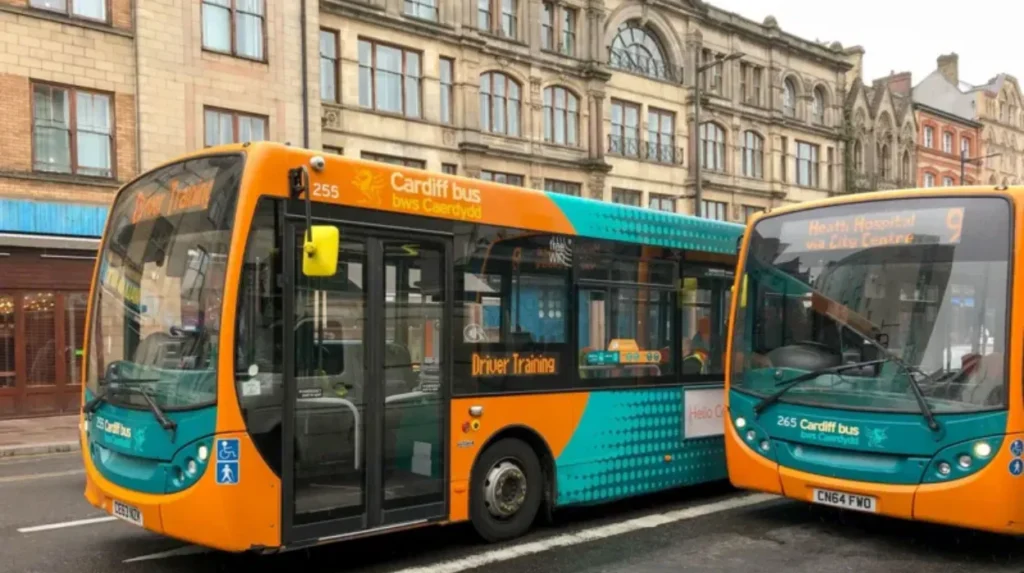
Buses connect Cardiff city centre with Barry through several routes serving different neighbourhoods. Cardiff Bus services 93, 94, 95 and 96 provide relevant connections, with routes varying through Penarth, Dinas Powys, Llandough, Wenvoe and Culverhouse Cross. Check the route before boarding.
Bus travel is useful for commuters whose homes or workplaces are not close to a railway station. It also provides access to residential areas, shopping destinations and local facilities along the route.
Cardiff Bus publishes individual route pages with timetables, maps and stop information. These details help passengers select a service based on their starting point and final destination.
What is the difference between Cardiff Bus routes 93 and 94?
Cardiff Bus routes 93 and 94 connect Cardiff with Barry through different corridors. The operator lists route 93 via Penarth and Dinas Powys, while route 94 travels via Penarth and Sully.
These routes are relevant for people travelling from parts of southern Cardiff or locations along the Penarth corridor. The precise stops and departure times determine whether either route is suitable for a particular commute.
Commuters should check the direction of travel and the destination shown on the bus. Not every service necessarily follows an identical stopping pattern throughout the day.
When is bus route 95 useful?
Route 95 connects Cardiff city centre with Barry, including King Square and Barry Island. Its route runs through Leckwith, Llandough, Dinas Powys and Gibbonsdown.
This service is relevant for passengers who need access to these neighbourhoods rather than a station-to-station rail journey. It can also suit commuters whose final destination is closer to a bus stop than a railway station.
Travel time depends on traffic, the number of stops and the time of day. Passengers should allow additional time during busy periods and check the latest timetable before departure.
What does bus route 96 serve?
Route 96 runs between Cardiff and Barry through Culverhouse Cross, Wenvoe, Winston Square, Barry Hospital, Barry College and Morrisons. It provides a useful alternative for passengers travelling from western Cardiff or destinations along its route.
The route is particularly relevant when the commute begins outside Cardiff city centre. A direct bus from a nearby stop can reduce the need to travel into the centre before heading towards Barry.
The operator’s timetable lists individual stops and scheduled departures. Passengers should confirm that their required stop is served at the time they intend to travel, because the route’s stopping pattern and operating times affect the journey.
Is driving from Cardiff to Barry a practical commuting option?
Driving between Cardiff and Barry provides flexibility for commuters travelling to industrial sites, business premises or residential areas away from railway stations. Journey times depend on the starting address, traffic, roadworks and parking availability, so drivers should check live traffic conditions before departure.
The road journey connects Cardiff with Barry through the road network serving the Vale of Glamorgan. Drivers can select a route based on their origin, destination and current traffic conditions.
For journeys from western Cardiff, routes through Culverhouse Cross can be relevant. Drivers travelling from southern Cardiff use different connecting roads depending on whether they are heading towards central Barry, Barry Docks, Barry Hospital or Barry Island.
A car is particularly useful for employees who carry equipment, travel between several sites or work shifts that do not match public transport timetables. It can also reduce the need for additional bus journeys between a railway station and a workplace.
However, driving introduces costs that are not reflected in journey time alone. Fuel, vehicle maintenance, parking and insurance contribute to the total expense of commuting by car. Parking restrictions and workplace parking availability also affect the practicality of this option.
How does traffic affect the Cardiff to Barry drive?
Traffic conditions vary by time, weather, incidents and roadworks. Congestion around major junctions and busy approaches can increase journey times, especially during weekday commuting periods.
Drivers should check a live navigation service before leaving. An estimated journey time should be treated as a planning figure rather than a guaranteed arrival time.
People who must reach work at a fixed hour should build a reasonable buffer into their schedule. This is especially important for appointments, shift handovers and jobs where arriving late affects other staff.
Where should commuters park in Barry?
Parking depends on the destination. Town-centre workplaces, industrial premises, healthcare facilities and Barry Island have different parking arrangements.
Employees should first establish whether their workplace offers staff parking. If it does not, they should check local car parks, parking charges, time limits and restrictions before committing to a daily driving routine.
Drivers travelling to Barry Island should pay particular attention to busy weekends and seasonal visitor demand. Parking availability can change when visitor numbers rise, so a parking plan should include a realistic alternative.
How much does the Cardiff to Barry commute cost?
The cost of commuting from Cardiff to Barry depends on the transport mode, ticket type, travel frequency and journey length. Train fares, bus fares and driving expenses differ, so regular commuters should compare current ticket prices with the full cost of travelling by car.
Rail passengers should compare the available single, return and season-ticket options. The most economical ticket depends on how frequently a person travels, whether the journey occurs at peak times and which stations are used.
Transport for Wales provides journey and ticket information through its official website. Passengers should check the price for their actual travel date and route rather than rely on an old fare quoted elsewhere.
Bus passengers should consult Cardiff Bus for the current fare structure and any applicable travel products. A regular traveller should compare the cost of individual journeys with any available multi-journey or period ticket that suits their travel pattern.
Driving costs require a broader calculation. Fuel consumption, distance, parking, vehicle depreciation and maintenance all affect the total. Drivers who already own a car still face additional mileage-related costs when using it for a daily commute.
A useful comparison involves calculating the weekly or monthly cost of each realistic option. Include the journey to the departure point, any onward transport and the return journey. This produces a more meaningful estimate than comparing one train ticket with one tank of fuel.
Which transport option is best for daily commuters?
The best Cardiff to Barry commuting option depends on the distance to stations or bus stops, the workplace location, the timetable and the overall budget. Trains suit many station-to-station journeys, buses serve additional neighbourhoods, and cars offer flexibility for less accessible destinations.
Each transport mode serves a different commuting need. A person working near Barry railway station can often use rail without needing a second vehicle journey. Someone working near Barry Hospital should compare the nearest bus services, rail connections and walking distance.
A commuter starting in western Cardiff should examine routes 95 and 96 alongside rail options. The bus can offer a convenient connection when the nearest stop is close to home and the destination lies along the route.
Driving is more attractive when a workplace is difficult to reach by public transport or when the employee must carry tools and equipment. However, parking costs and traffic uncertainty can make a car less convenient for a journey that is well served by rail.
Which option suits commuters travelling at peak times?
Train travel is worth comparing first when both ends of the journey are close to railway stations. It avoids road traffic between Cardiff and Barry, although passengers still need to account for station access, service disruptions and crowding.
Bus journeys offer direct access to locations along their routes, but road congestion can affect reliability. Drivers face similar traffic conditions and must also account for parking.
Commuters should test their intended route at the time they expect to travel. A journey that works well during the middle of the day does not automatically provide the same result during the morning peak.
Which option is suitable for shift workers?
Shift workers should prioritise timetable coverage and reliable return options. Early starts, late finishes and weekend duties require checking the exact first and last services rather than assuming that daytime frequencies continue throughout the day.
A car can provide additional flexibility for shifts outside public transport operating hours. Where driving is not practical, workers should investigate whether a suitable bus or train operates for both legs of the journey.
The return trip deserves equal attention to the outbound journey. A route is not suitable for a regular shift if the final service leaves before the workday ends.
What should commuters know about delays and service disruptions?
Disruptions on the Cardiff to Barry route can affect trains, buses and road journeys. Commuters should check live departures, planned engineering work, traffic incidents and replacement transport before travelling, particularly when they have fixed working hours, appointments or important connections to make.
Rail services sometimes operate differently during engineering work or unexpected disruption. Transport for Wales provides service information and directs passengers to relevant rail replacement guidance when replacement road transport is required.
Rail replacement buses do not always follow the same route or stop at the railway station entrance. Passengers should check the operator’s instructions, designated pickup locations and expected journey arrangements.
Bus passengers should also allow time for road congestion. Cardiff Bus advises passengers to arrive at stops ahead of the scheduled departure and notes that actual running times can vary.
A practical disruption plan includes an alternative departure, a second route and the details of the destination station or stop. Commuters who regularly travel at the same time should familiarise themselves with the available alternatives before an unexpected delay occurs.
How accessible is the Cardiff to Barry commute?
Accessibility depends on the station, bus stop, vehicle and final destination. Passengers with mobility requirements should check step-free access, boarding arrangements, walking distances and assistance options for their chosen service before travelling between Cardiff and Barry.
Transport for Wales publishes station information, including facilities and passenger services. These details help passengers establish whether a particular station meets their requirements. Facilities differ between stations, so commuters should check information for both their departure and arrival locations.
Bus accessibility also depends on the service and stop. Passengers who require wheelchair access, additional boarding time or assistance should consult the operator’s accessibility information before making a regular journey.
The final part of the commute matters as much as the main transport leg. A railway station can be accessible while the pavement, crossing or route to the workplace presents a separate challenge.
Anyone planning a new commuting routine should check the complete journey in advance. This includes the route to the station, boarding arrangements, interchange points and the path from the arrival stop to the workplace.
How can commuters plan a reliable Cardiff to Barry journey?
A reliable commuting routine starts with checking the exact origin, destination, departure time and return journey. Comparing train and bus timetables, checking live travel conditions and allowing extra time for walking or delays helps commuters establish a practical daily schedule.
Start by identifying the nearest suitable station or bus stop to home and work. Do not assume Cardiff Central or Barry station is the best choice if another departure point or route provides a more direct connection.
Next, compare the total door-to-door journey. Include walking, waiting, transfers and the final journey to the workplace. Record the planned arrival time and identify an alternative service in case the preferred departure is cancelled or missed.
Commuters should also review the route on different working days. Service patterns, traffic conditions and personal commitments can change the best departure time.
For current information, use these official resources:
- Transport for Wales: Cardiff Central to Barry for rail journeys and ticket information.
- Transport for Wales: Cardiff Central to Barry Island for journeys to the seaside district.
- Cardiff Bus: Route 95 for services between Cardiff city centre, Barry and Barry Island.
- Cardiff Bus: Route 96 for services via Culverhouse Cross, Wenvoe and Barry Hospital.
These resources allow passengers to check the relevant timetable and route details before setting off. Timetables, fares and service arrangements change, so live information takes precedence over a general commuting estimate.
Explore More Area Guide
Cardiff to Caerphilly Commute Guide: Trains, Buses and Costs
Cardiff to Bridgend Commute Guide | Trains & Buses
Is Barry a practical place to live for people working in Cardiff?
Barry is a practical residential option for some Cardiff workers because it has direct rail connections and bus links to the capital. Suitability depends on the workplace location, commuting budget, required working hours and the convenience of local transport.
Living in Barry can provide access to a coastal town while retaining a public transport connection to Cardiff’s employment centres. The railway link is particularly relevant for workers whose offices are within reasonable walking distance of Cardiff Central or another station served by their journey.
The location of the home within Barry is important. Residents living near Barry station have different transport needs from those living farther from the railway or in areas primarily served by buses.
Commuters should assess housing costs alongside travel expenses rather than considering either in isolation. A lower housing cost does not automatically produce a lower overall monthly budget if the commute requires a car, paid parking or several public transport journeys each day.
Prospective residents should test the journey during their expected commuting hours before choosing a home. This helps establish whether the timetable, walking distance and return options suit their regular routine.
What is the future outlook for Cardiff to Barry commuters?
The Cardiff to Barry commute will continue to depend on coordinated rail, bus and road connections between the Welsh capital and the Vale of Glamorgan. Checking current services, choosing suitable departure points and reviewing travel costs remain essential for making informed commuting decisions.
The route serves a range of travel needs, including employment, education, healthcare, shopping and leisure. Its rail connection provides a direct option between Cardiff and Barry, while buses connect additional residential districts and destinations.
Commuters benefit from understanding more than one route. A train is often suitable for journeys between central locations, while a bus or car can be more convenient for workplaces beyond the railway network.
Long-term travel decisions should account for timetable changes, ticket prices, road conditions and changes in working arrangements. People who move house or change jobs should reassess their route rather than assume that their previous commuting pattern remains the most efficient.
For accurate planning, official operator information should remain the starting point. Current departure times, ticket prices, accessibility details and service notices provide the basis for a realistic Cardiff to Barry commuting plan.
The Cardiff to Barry commute offers several practical travel options. Transport for Wales trains connect Cardiff Central with Barry and Barry Island, while Cardiff Bus routes 93, 94, 95 and 96 serve different corridors between the city and the town. Driving offers additional flexibility for workplaces that are less accessible by public transport.
The most suitable option depends on the precise origin and destination, travel time, cost and required arrival time. Checking current timetables, allowing time for the final part of the journey and planning an alternative for disruptions help commuters build a more reliable routine.
For daily travellers, the most effective approach is to compare the full door-to-door journey and verify the latest information through official transport operators before leaving home.
How long does the train take from Cardiff to Barry?
The train from Cardiff Central to Barry generally takes around 20–30 minutes, depending on the service and stopping pattern. Journeys to Barry Island take approximately 30 minutes on suitable services.