
Choosing a secondary school in Cardiff involves understanding the Welsh education system, school catchment areas, admissions criteria, GCSE qualifications, additional learning needs and the transition from primary education. This guide helps parents compare schools and prepare for their child’s next stage of education.
- What should parents know about secondary education in Cardiff?
- Which types of secondary schools are available in Cardiff?
- How do Cardiff secondary school catchment areas work?
- When should parents apply for a Cardiff secondary school place?
- How should parents compare Cardiff secondary schools?
- What curriculum do Cardiff secondary schools follow?
- Which GCSE qualifications do Cardiff secondary school pupils study?
- How do Welsh-medium and English-medium secondary schools differ?
- How do Cardiff secondary schools support additional learning needs?
- What should parents know about attendance, behaviour and pupil wellbeing?
- How can Cardiff parents plan school transport and daily travel?
- What extracurricular activities should parents look for in Cardiff secondary schools?
- What happens after Year 11 at a Cardiff secondary school?
- How can parents make an informed secondary school choice in Cardiff?
What should parents know about secondary education in Cardiff?
Secondary education in Cardiff usually begins in Year 7, the academic year in which children turn 12. Pupils generally move from primary school after Year 6 and continue through Year 7 to Year 11, studying a broad curriculum before completing qualifications and planning their next educational stage.
Cardiff is the capital of Wales and has an education system shaped by Welsh national curriculum requirements, local authority admissions policies and the needs of English-medium and Welsh-medium learners. Parents choosing a school need to consider academic provision, language, pastoral care, location and the subjects available to their child.
Cardiff Council manages admissions to its community secondary schools and publishes information about school locations, catchment areas and application procedures. Parents can use the council’s official secondary school admissions service to check current requirements and deadlines.
Secondary school typically covers five main year groups:
- Year 7: the first year of secondary education.
- Year 8: the second year, when pupils build on their initial secondary curriculum.
- Year 9: the final year before the usual GCSE options process begins.
- Year 10: the first year of the main qualification stage for many pupils.
- Year 11: the final compulsory school year for most pupils, with formal assessments and progression planning.
The transition affects more than academic learning. Pupils encounter different teachers, subject-specific classrooms, new friendship groups and greater responsibility for organising homework. Parents can support this change by reviewing school information, preparing travel arrangements and discussing their child’s concerns before the first term.
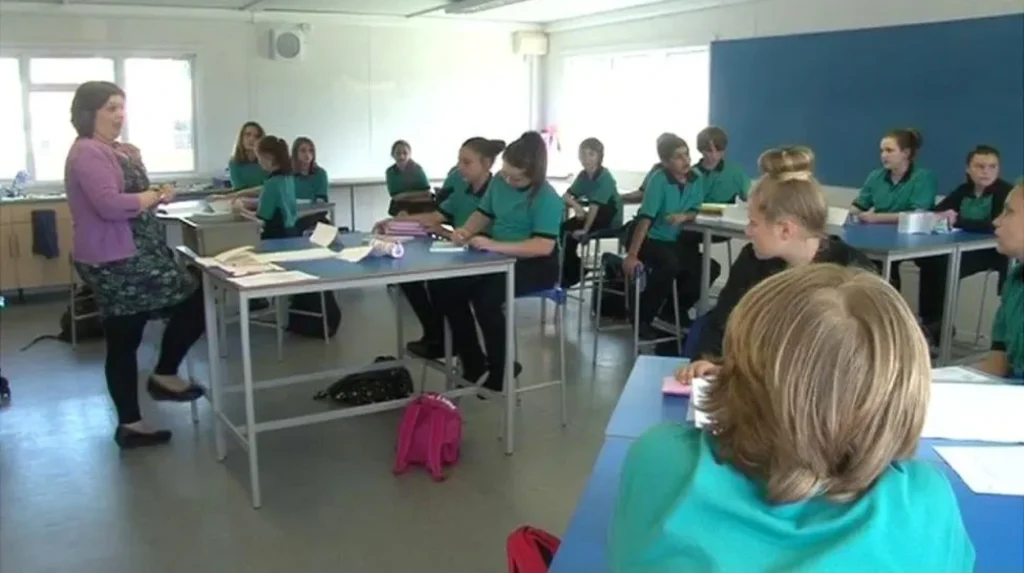
Which types of secondary schools are available in Cardiff?
Cardiff parents can explore English-medium community schools, Welsh-medium secondary schools, faith-based schools and specialist provision. Each setting has distinct admission arrangements, curriculum delivery and support services, so families should compare the official school information against their child’s language, learning and personal requirements.
English-medium secondary schools teach most subjects through English, while Welsh-medium schools provide education through Welsh in line with their language model. Faith-based schools operate within a religious foundation and apply their published admissions policies. Specialist provision supports pupils whose educational needs require a different setting or a more tailored approach.
Examples of Cardiff secondary schools parents can research include:
- Cardiff High School, an English-medium secondary school.
- Whitchurch High School, a secondary school in north Cardiff.
- Fitzalan High School, serving communities in the western part of the city.
- Eastern High School, located at Eastern Community Campus in Trowbridge.
- Cantonian High School, situated in Fairwater.
- Ysgol Gyfun Gymraeg Glantaf, a Welsh-medium secondary school.
- The Bishop of Llandaff Church in Wales High School, a faith-based secondary school.
- Corpus Christi Catholic High School, a Catholic secondary school.
These examples are starting points for research, not a ranking of school quality. School designations, admission arrangements and the availability of places should be checked through the relevant school and Cardiff Council.
The council’s school directory allows families to search by location, school type, ward, language and address. Parents can use this service to identify relevant schools before reviewing inspection reports and visiting them.
How do Cardiff secondary school catchment areas work?
A catchment area is a geographical area associated with a school for admission purposes. Cardiff Council uses catchment information as part of its admissions arrangements, but living within a school’s designated area does not guarantee a place when applications exceed available capacity.
A catchment area helps local authorities manage demand and assess applications. It is not always the same as the area surrounding the nearest school, and a family’s preferred school is not automatically their designated catchment school.
Parents should enter their postcode into Cardiff Council’s catchment search and check the information for the relevant academic year. Families considering a house move should verify the designated schools for the exact property rather than relying on estate agent descriptions or assumptions based on distance.
Admission decisions depend on the published criteria and the number of places available. The council’s allocation information for September 2026 illustrates why planning matters. Cardiff High School had a published admission number of 240, received 520 expressed preferences and allocated all 240 places. Fitzalan High School had a published admission number of 300 and received 439 expressed preferences. These figures show that demand exceeded the available intake at both schools.
Parents should therefore distinguish between three important concepts:
- Catchment eligibility: whether the home address falls within a school’s designated area.
- Published admission number: the number of pupils the school plans to admit to its intake year under its admission arrangements.
- Guaranteed admission: a confirmed offer of a school place, rather than an expectation based on proximity.
The council recommends including the catchment school among a family’s preferences, while also researching other suitable options. Parents should read the current admissions policy carefully because the priority given to individual circumstances depends on the applicable criteria.
When should parents apply for a Cardiff secondary school place?
Parents should follow Cardiff Council’s published application timetable and submit a complete application before the stated deadline. For September 2027 entry, the council lists 30 October 2026 as the closing date, with offers scheduled for 1 March 2027 for the main admissions round.
The application process normally begins during Year 6. Parents should establish which authority handles the application, identify their preferred schools and check whether any school requires an additional form.
For the September 2027 intake, Cardiff Council’s published timetable includes the following dates:
- 4 September 2026: the main application process begins.
- 30 October 2026: the closing date for applications.
- 1 March 2027: the main offer day.
- 15 March 2027: the deadline to accept or refuse the offered place, according to the published timetable.
- September 2027: pupils begin secondary school.
These dates apply to the council’s published 2027–2028 admissions process. Parents applying in another year should use the relevant current timetable rather than reusing dates from an earlier intake.
Cardiff also operates coordinated arrangements with certain faith-based schools. The council identifies Corpus Christi RC High School, Mary Immaculate RC High School, St Teilo’s Church in Wales High School, St Illtyd’s RC High School, The Bishop of Llandaff Church in Wales High School and Whitchurch High School within its coordinated admissions information. Some applicants need an additional form, so families should check the specific school’s requirements.
A complete application requires accurate address details and any supporting documents requested under the admissions policy. Parents should keep confirmation of submission and monitor messages about the decision.

How should parents compare Cardiff secondary schools?
Parents should compare schools using curriculum provision, inspection findings, pupil wellbeing, subject choices, accessibility and travel arrangements. A school’s suitability depends on how its educational offer matches the child’s needs, not simply on its reputation, distance from home or examination results.
Start by reviewing the school’s website and the most recent inspection information published by Estyn, the education and training inspectorate for Wales. Inspection reports help parents understand what inspectors found about teaching, learning, leadership, wellbeing and improvement priorities.
The Estyn website provides individual school pages and inspection documents. For example, its listings include information for Eastern High School and Cantonian High School. Parents should read the full, dated report rather than relying on a single headline or an old summary.
School visits also help families assess everyday arrangements that are difficult to establish from published results. During an open day, parents can ask about:
- Subject choices and the process for selecting qualifications.
- Homework expectations and support for pupils who fall behind.
- Behaviour policies, anti-bullying procedures and attendance.
- Support for pupils with additional learning needs.
- Clubs, sport, music, arts and other enrichment activities.
- School meals, uniform costs and equipment requirements.
- Communication between teachers and parents.
- Public transport, school buses, walking routes and cycling facilities.
Ask how the school monitors pupil progress and responds when a child struggles with a subject. Parents should also establish how the school communicates assessment results and who to contact about pastoral concerns.
Comparisons become more useful when families apply the same questions to every school. This approach creates a clear basis for understanding differences without treating one measure as a complete assessment of school quality.
What curriculum do Cardiff secondary schools follow?
Cardiff maintained schools follow the Curriculum for Wales, a national framework designed to develop knowledge, skills and learner independence. The framework organises learning into six Areas of Learning and Experience, with schools designing their curriculum to reflect statutory requirements and their pupils’ educational needs.
The Curriculum for Wales replaced the previous national curriculum framework in a phased transition. From September 2026, it applies to learners aged 3 to 16, including Year 11 for the first time. Its four purposes focus on developing ambitious, capable learners; enterprising, creative contributors; ethical, informed citizens; and healthy, confident individuals.
The six Areas of Learning and Experience are:
- Languages, Literacy and Communication: English, Welsh and other language learning, including reading, writing, speaking and listening.
- Mathematics and Numeracy: mathematical reasoning, calculations, problem-solving and applying numerical skills.
- Science and Technology: scientific understanding, experimentation, digital skills and technological design.
- Humanities: history, geography, religion, values, ethics and understanding people and society.
- Health and Wellbeing: physical health, emotional wellbeing, relationships and healthy decision-making.
- Expressive Arts: creative work through disciplines such as music, drama, dance and visual arts.
These areas provide the overall framework, but they do not mean every school teaches identical lessons in an identical order. Schools develop their own curriculum within national requirements and establish how pupils progress through different stages of learning.
Parents should ask how a school delivers the framework, monitors progress and prepares pupils for qualifications. They should also establish how the curriculum accommodates pupils with different starting points, language backgrounds and learning requirements.
Which GCSE qualifications do Cardiff secondary school pupils study?
GCSE qualifications provide a formal assessment route for pupils in the later years of secondary education in Wales. Cardiff schools are introducing reformed, Wales-specific qualifications in stages, so the subjects and assessment arrangements available depend on the pupil’s year group and the school’s approved offer.
Qualifications Wales regulates qualifications in Wales. The reformed GCSEs align with the Curriculum for Wales and include changes to subject content, assessment methods and qualification structures.
The first wave of reformed GCSEs began teaching in September 2025. It includes subjects such as English Language and Literature, Mathematics and Numeracy, Art and Design, Business, Computer Science, Geography, French, German, Spanish, Music and Religious Studies.
A second wave began in September 2026. It includes subjects such as History, Design and Technology, Digital Technology, Digital Media and Film, Dance, Health and Social Care, and new science qualification options. Existing GCSEs in Biology, Chemistry and Physics remain available alongside specified reformed science options for a transition period.
The reform is phased, which means pupils in different year groups can follow different qualification arrangements. Parents should consult the school’s current subject handbook rather than assume that every subject follows the same specification or assessment format.
How should parents assess GCSE subject choices?
Parents should help children consider their interests, strengths, future ambitions and the range of subjects available at their school. English, mathematics, science and language learning provide important foundations, while optional subjects let pupils explore areas such as creative arts, business, technology and humanities.
Schools explain their options process before pupils begin their main qualification courses. Some subjects have prerequisites, timetable restrictions or limited capacity. A subject appearing in a school’s general prospectus does not necessarily mean it will run for every cohort.
Qualifications Wales explains the changes through its official GCSE guidance for parents and carers. This is particularly useful for families whose children enter Year 10 in September 2026, when further reformed GCSEs become available.
How do Welsh-medium and English-medium secondary schools differ?
Welsh-medium schools teach through Welsh as the principal language of instruction, while English-medium schools teach most subjects through English. Parents should consider their child’s existing language skills, preferred learning environment and long-term bilingual development when comparing schools across Cardiff.
Welsh-medium education gives pupils opportunities to develop academic vocabulary and subject knowledge through Welsh. Pupils also study English in accordance with curriculum requirements. English-medium education provides a different language setting, with Welsh language learning forming part of the wider educational offer.
Ysgol Gyfun Gymraeg Glantaf is an example of a Welsh-medium secondary school in Cardiff. Parents can use Cardiff Council’s school directory to identify other relevant settings and check the language category associated with each school.
Families moving to Cardiff from elsewhere in the UK or from overseas should ask how the school supports pupils who are new to Welsh. They should also clarify the language used for teaching individual subjects, communicating with parents and delivering additional learning support.
Language choice should not be based on assumptions about academic quality. Parents should review the same practical factors for both language settings, including admissions requirements, curriculum options, travel arrangements, inspection reports and pupil wellbeing.
How do Cardiff secondary schools support additional learning needs?
Additional learning needs, or ALN, describe learning difficulties or disabilities that call for additional learning provision. Cardiff parents should discuss identified needs with the primary school and prospective secondary school, confirm how support is arranged and ensure relevant information is transferred during the transition to Year 7.
Wales uses an ALN framework intended to identify and support learners who require provision beyond or different from what is normally available. Depending on the learner’s circumstances, support involves school staff, the local authority and other relevant professionals.
An Individual Development Plan, commonly called an IDP, records a learner’s identified additional learning needs and the additional learning provision required to meet them. Responsibility for preparing and maintaining the plan depends on the circumstances set out in the Welsh ALN system.
Before applying, parents should ask how the school supports pupils with specific learning difficulties, communication needs, physical disabilities, sensory needs or emotional and behavioural challenges. They should discuss reasonable adjustments, classroom support, accessibility, specialist facilities and communication between staff and families.
A pupil’s support needs should be assessed individually. The availability and type of provision differ between schools, so parents should not assume that every school offers the same specialist services.
The transition from primary to secondary education is an important point for sharing information. Parents should confirm who coordinates the transfer of learning plans and reports, how support will operate during the first term and how the school will review the child’s progress.
What should parents know about attendance, behaviour and pupil wellbeing?
Attendance, behaviour and wellbeing policies explain how a secondary school supports pupils’ safety, learning and participation. Parents should read these policies before accepting a place and understand how the school handles absence, bullying, safeguarding concerns, disciplinary issues and requests for help.
Regular attendance helps pupils maintain continuity in lessons and access the support available at school. Cardiff families should understand the school’s procedure for reporting absence, providing evidence when requested and contacting staff about recurring illness or other difficulties.
Safeguarding refers to the arrangements used to protect children from harm and respond to concerns about their welfare. Parents should identify the designated safeguarding contact and learn how pupils can report problems confidentially.
Pastoral support is also important during adolescence. Form tutors, heads of year, wellbeing staff and other designated members of staff can provide different forms of support, depending on the school’s structure. Parents should ask who oversees a pupil’s wellbeing and how concerns are escalated.
Bullying policies should explain reporting routes, investigation procedures and follow-up support. Parents should check how the school responds to online bullying, discrimination, peer conflict and repeated incidents rather than relying only on a general statement that bullying is prohibited.
Wellbeing provision can include counselling referrals, peer support, physical education, extracurricular activities and lessons on healthy relationships. The exact provision varies by school, so families should confirm what is available and how pupils access it.
How can Cardiff parents plan school transport and daily travel?
School transport planning should consider journey time, safety, reliability and eligibility for assistance. Cardiff parents remain responsible for ensuring their child can travel to school, and they should check walking routes, public transport services and the council’s current school transport policy before choosing a school.
A school that appears close on a map is not always the easiest to reach. Busy roads, railway lines, river crossings and limited pedestrian access affect the practicality of a daily journey.
Cardiff Council encourages families to consider walking, cycling and scooting where appropriate. These options support physical activity and can reduce congestion around school entrances. Parents should assess crossings, lighting, pavement conditions and cycle storage before deciding whether independent travel is suitable for their child.
Public transport provides another option for pupils travelling across Cardiff. Families should check current bus and rail timetables, school-day service frequencies, journey costs and arrangements for delays. A trial journey before the start of term helps children learn the route and identify where to get on and off.
Free school transport eligibility depends on the relevant council policy, including distance and whether the school meets the applicable definition of the nearest appropriate school. Parents should check the rules directly rather than assume that every child attending a distant preferred school qualifies for free travel.
Travel planning should also account for after-school clubs, detentions, examinations and changes to normal finishing times. Agreeing on a collection point and an emergency contact arrangement helps children manage unexpected changes safely.
What extracurricular activities should parents look for in Cardiff secondary schools?
Extracurricular activities extend learning beyond timetabled lessons and give pupils opportunities to develop interests, confidence and practical skills. Parents should compare the clubs, sports, arts activities, competitions and volunteering opportunities available at each school, including participation requirements and any additional costs.
Secondary school life includes opportunities to develop talents outside the formal curriculum. Activities can help pupils build friendships, practise teamwork and explore interests that later influence subject choices or career plans.
Examples include football, rugby, athletics, netball, music ensembles, drama productions, coding clubs, debating, environmental projects and student leadership. The exact range depends on staffing, facilities, pupil interest and the school’s current programme.
Parents should ask how pupils join activities, whether beginners are welcome and whether sessions take place during lunch breaks or after lessons. Transport arrangements are particularly important when clubs finish later than the normal school day.
Participation costs also deserve attention. Some activities require specialist clothing, instruments, equipment, competition fees or travel expenses. Families should ask whether the school offers equipment loans or financial assistance for activities where cost creates a barrier.
Enrichment should complement academic learning rather than replace it. Parents can help children balance clubs with homework, rest, family commitments and preparation for assessments.
Explore More Area Guide
Prepared for the article: Cardiff Primary School Guide for New Residents
Cardiff Schools Near New Housing Developments: Family Guide
What happens after Year 11 at a Cardiff secondary school?
After Year 11, young people can progress to sixth form, further education college, apprenticeships or other recognised training routes. The right option depends on GCSE results, personal interests, entry requirements and longer-term goals, so planning should begin before pupils complete their final school year.
Sixth forms offer academic and vocational courses, depending on the institution. Further education colleges provide a wider range of programmes, including technical qualifications and practical training linked to employment sectors.
Apprenticeships combine paid employment with structured training and recognised qualifications. They provide a route for young people who want to develop occupational skills while gaining workplace experience.
Careers Wales provides information about qualifications, courses, apprenticeships and career planning. Parents can use its curriculum and qualifications guidance to understand the routes available to learners in Wales.
Schools should help pupils understand the entry requirements for their intended next step. Some courses require particular GCSE subjects or achievement levels, so learners should investigate these conditions before making final choices.
Parents can support progression by encouraging conversations with teachers and careers advisers, attending information events and comparing course content. A clear plan helps pupils understand how current subjects connect with future study, employment and training.
How can parents make an informed secondary school choice in Cardiff?
An informed school choice combines admissions research, curriculum suitability, inspection evidence, wellbeing support and practical travel arrangements. Parents should verify current information with Cardiff Council and individual schools, submit applications on time and keep alternative preferences that meet their child’s needs.
The first step is to identify the relevant catchment area and establish which schools offer the required language provision. The next step is to compare current inspection reports, subject options, pastoral policies and transport arrangements.
Parents should then visit schools where possible and prepare specific questions. Asking about homework, additional learning needs, communication, extracurricular opportunities and qualification choices produces a more useful comparison than relying on reputation alone.
Admission planning remains essential. Cardiff Council’s published September 2027 admissions timetable sets the main application deadline at 30 October 2026. Families applying for a different year must check the appropriate timetable and any additional forms required by their preferred schools.
School suitability can change as a child develops. Parents should consider the support available now and how the school prepares pupils for GCSEs, further education and adult life. Reviewing verified information and maintaining communication with school staff helps families make decisions that support educational progress and wellbeing.
At what age do children start secondary school in Cardiff?
Children in Cardiff generally start secondary school in Year 7, aged 11 or 12. They usually transfer from primary school after completing Year 6. The academic year begins in September.