Cardiff is home to a diverse market scene that combines Victorian trading heritage, independent businesses, Welsh food producers and neighbourhood shopping traditions. From the historic Cardiff Central Market in the city centre to the weekly farmers’ markets in Riverside, Roath and Rhiwbina, markets provide visitors with opportunities to discover local products, traditional food and independent retailers.
- What Is Cardiff Market and Why Is It Important?
- How Did Cardiff Market Develop Through History?
- Where Is Cardiff Market and How Can Visitors Get There?
- How Can Visitors Reach Cardiff Market by Train?
- Can Visitors Reach Cardiff Market by Bus?
- Is Parking Available Near Cardiff Market?
- What Can Visitors Buy at Cardiff Market?
- Fresh Fruit and Vegetables
- Fresh Fish and Meat
- Traditional Welsh Food
- International Street Food
- Clothing, Records and Specialist Products
- Which Farmers’ Markets Can Visitors Explore in Cardiff?
- Where Can Visitors Find Vintage, Antique and Craft Markets in Cardiff?
- What Are the Opening Times of Cardiff’s Main Markets?
- What Traditional Welsh Foods Should Visitors Try at Cardiff Market?
- Welsh Cakes
- Bara Brith
- Laverbread
- Welsh Cheese and Artisan Dairy Products
- Local Bread, Honey and Preserves
- How Do Cardiff Markets Support Independent Businesses and Local Producers?
- Affordable Opportunities for Small Businesses
- Direct Relationships Between Producers and Customers
- Supporting the Welsh Food Economy
- Encouraging Independent Shopping
- What Other Shopping Attractions Are Near Cardiff Market?
- How Can Visitors Plan a Successful Cardiff Market Visit?
- Choose the Right Market Day
- Arrive Early for Fresh Produce
- Bring Reusable Shopping Bags
- Check Individual Trader Availability
- Combine Market Shopping with Sightseeing
- What Is the Future of Markets in Cardiff?
A Cardiff market guide helps residents, tourists and day visitors understand where to shop, what to buy and when to visit. The city’s markets offer everything from fresh fruit and vegetables to Welsh cakes, artisan bread, handmade crafts, vintage clothing, antiques and international street food.
Markets also contribute to Cardiff’s local economy by providing trading opportunities for independent businesses and connecting consumers with regional producers. They preserve traditional shopping practices while introducing new food concepts, creative products and small retail businesses.
What Is Cardiff Market and Why Is It Important?
Cardiff Market is a historic indoor shopping destination in the city centre, known for independent traders, fresh produce, Welsh specialities and street food. Its Victorian architecture and long trading history make it an important part of Cardiff’s commercial and cultural heritage.
Cardiff Market, also known as Cardiff Central Market, stands on St Mary Street in the heart of the Welsh capital. It is one of the city’s most recognisable shopping landmarks and provides a traditional alternative to modern shopping centres and high-street retailers.
The market operates inside a covered Victorian building featuring a large glass roof, decorative ironwork and two shopping levels. Its ground floor accommodates food retailers, specialist shops and takeaway businesses, while the upper balcony provides additional trading space.
Cardiff Market serves several purposes within the city. It operates as a retail destination, supports independent businesses and maintains a connection with Cardiff’s historic trading culture.
Visitors find a combination of traditional and contemporary products, including:
- Fresh fruit and vegetables from independent greengrocers.
- Fresh fish, meat and poultry from specialist traders.
- Welsh cakes, bread and traditional baked goods.
- Cheese, deli products and international ingredients.
- Coffee, takeaway meals and street food.
- Vinyl records, books, clothing and household goods.
The market also gives visitors access to businesses that specialise in particular products rather than selling general merchandise. This includes independent food retailers, specialist record sellers, traditional butchers and local craft businesses.
According to Visit Cardiff, the market has traded in one form or another since the 1700s. Its current Victorian building remains an important attraction for people exploring Cardiff’s city centre.
How Did Cardiff Market Develop Through History?
Cardiff Market developed from an eighteenth-century farmers’ trading site into a permanent Victorian market hall. The present building officially opened on 8 May 1891, establishing a covered commercial centre that continues to support independent traders and traditional shopping.
The history of Cardiff Market reflects the city’s transformation from a developing Welsh town into a major commercial and industrial centre.
Before the current building existed, the site accommodated a farmers’ market where livestock and agricultural produce were traded. Farmers and merchants supplied local residents with essential goods, making the market an important part of everyday commercial activity.
The location also has an earlier and darker history. Cardiff’s former gaol occupied the site, and the gallows stood near the present St Mary Street entrance. Dic Penderyn, associated with the Merthyr Rising of 1831, was executed there on 13 August 1831.
When Did the Present Cardiff Market Building Open?
The present Cardiff Market building opened on 8 May 1891. The Lady Mayoress, the Marchioness of Bute, officially opened the market.
William Harpur, Cardiff’s Borough Surveyor, designed the building. Its architectural structure reflected the Victorian preference for large public market halls that provided natural light, ventilation and substantial indoor trading space.
The original layout included 349 stalls. Traders occupied different sections according to their commercial activities, with food businesses concentrated on the ground floor and many non-food retailers positioned on the balcony.
This arrangement encouraged visitors to explore both levels and allowed different types of businesses to operate within the same building.
How Has the Market Changed Over Time?
Cardiff Market has adapted to changes in consumer behaviour, food retailing and city-centre shopping.
Traditional businesses continue to sell fresh fish, meat, fruit, vegetables and bakery products. Newer businesses have introduced international street food, artisan coffee, specialist retail products and contemporary food concepts.
The market has also maintained connections with longstanding traders. E Ashton Fishmongers has historical trading links with the site dating back to the nineteenth century, while The Market Deli has occupied its established stall since 1928.
Cardiff Council’s historical records identify the market as a Grade II* listed Victorian building, reflecting its architectural and historical significance.
Where Is Cardiff Market and How Can Visitors Get There?
Cardiff Market is located on St Mary Street in Cardiff city centre, with entrances from St Mary Street and Trinity Street. Its central position places it within walking distance of Cardiff Central railway station, major shopping streets and important city attractions.
Cardiff Market, St Mary Street, Cardiff, CF10 1AU, Wales
Visitors can enter the building through its St Mary Street entrance or the Trinity Street entrance, close to St John’s Church. Another entrance connects the market with an alleyway off Church Street.
The surrounding area contains independent retailers, shopping arcades, restaurants, cafés and historic city-centre buildings.
How Can Visitors Reach Cardiff Market by Train?
Cardiff Central railway station provides convenient rail access to the city centre. Visitors arriving by train can walk towards St Mary Street and follow the pedestrian shopping routes to the market.
Cardiff Central connects the city with destinations across Wales and other parts of the United Kingdom. It is particularly useful for visitors travelling from Newport, Swansea, Bristol and other regional destinations.
Can Visitors Reach Cardiff Market by Bus?
Cardiff’s city-centre bus network connects surrounding neighbourhoods with central shopping areas. Visitors can use local bus services to reach stops around the city centre and continue on foot.
Traveline Cymru provides public transport journey information for people planning journeys within Cardiff and across Wales.
Is Parking Available Near Cardiff Market?
Several city-centre car parks provide parking within walking distance of Cardiff Market. Visitors travelling by car should check parking charges, restrictions and availability before arriving.
Cardiff Council’s market visitor information confirms that nearby parking facilities are available. Cardiff Council Property
The central location also makes the market suitable for visitors combining shopping with sightseeing, restaurants and visits to Cardiff’s historic arcades.
What Can Visitors Buy at Cardiff Market?
Cardiff Market sells fresh food, traditional Welsh products, international street food, specialist retail goods and everyday household items. Its independent stalls provide access to locally produced ingredients, established food retailers and specialist products.
The variety of products is one of the main reasons people visit Cardiff Market. Unlike supermarkets that organise products through standardised retail departments, the market brings together individual businesses with specialised merchandise.
Fresh Fruit and Vegetables
Greengrocers sell seasonal fruit, vegetables, salad ingredients and everyday cooking essentials.
Examples include:
- Apples, oranges and bananas.
- Potatoes, carrots and onions.
- Leafy vegetables and salad ingredients.
- Seasonal berries and fresh herbs.
Sullivan’s Fruit and Veg and Yeates Fruit and Veg are examples of greengrocery businesses associated with the market.
These stalls provide an alternative shopping option for residents who prefer selecting fresh ingredients directly from specialist retailers.
Fresh Fish and Meat
Cardiff Market has a long association with traditional butchers and fishmongers.
E Ashton Fishmongers is one of its historically recognised seafood businesses. Customers visit specialist fish retailers for fresh fish and seafood products.
Butchers provide meat cuts and poultry for household cooking. Specialist counters also offer advice about preparation, portion sizes and suitable cooking methods.
Traditional Welsh Food
Welsh food is an important part of the Cardiff Market experience.
Visitors can find traditional products associated with Welsh culinary heritage, including Welsh cakes, bara brith and laverbread.
Welsh cakes are small, round griddle-baked cakes traditionally prepared with ingredients such as flour, butter, sugar and dried fruit. They are commonly served warm and are popular with visitors exploring Cardiff.
Cardiff Bakestones is a recognised Welsh cake business operating inside the market.
Bara brith is a traditional Welsh fruit loaf, while laverbread is a food made from edible seaweed commonly associated with Welsh cuisine.
These products provide visitors with opportunities to experience regional food traditions while supporting independent retailers.
International Street Food
Cardiff Market also reflects the city’s multicultural food scene.
Visitors can find prepared meals influenced by different international cuisines. Examples include:
- Greek-style souvlaki.
- Taiwanese-inspired bao buns.
- Indian dishes and snacks.
- Mexican-style tacos.
- Italian-inspired pizza and pasta dishes.
Businesses such as The Bearded Taco, Bao Selecta and Ffwrnes Pizza demonstrate the range of contemporary food businesses operating within the market.
Clothing, Records and Specialist Products
The market is not limited to food shopping.
Independent retailers sell vintage clothing, second-hand records, books, jewellery, craft supplies, household accessories and other specialist goods.
Kellys Records, for example, provides a destination for people interested in vinyl and recorded music.
The presence of specialist retailers makes Cardiff Market relevant to shoppers looking for products beyond standard high-street merchandise.
Which Farmers’ Markets Can Visitors Explore in Cardiff?
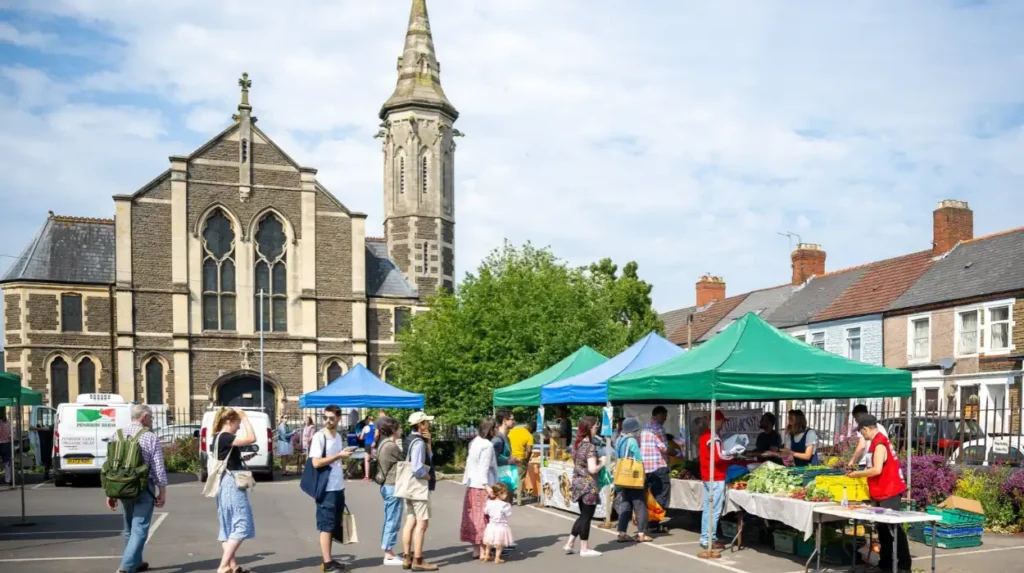
Cardiff has three established weekly farmers’ markets in Riverside, Roath and Rhiwbina. These markets connect shoppers with Welsh farmers, independent food producers, artisan bakers and specialist food businesses through regular community-based trading events.
Cardiff’s farmers’ markets provide a different shopping experience from the permanent indoor market.
They focus on direct relationships between producers and customers. Visitors can purchase food and drink from independent businesses while learning more about where products originate.
Cardiff Farmers Markets operates three regular weekly markets, with more than 100 farmers and small producers participating across its market network.
1. Riverside Farmers’ Market
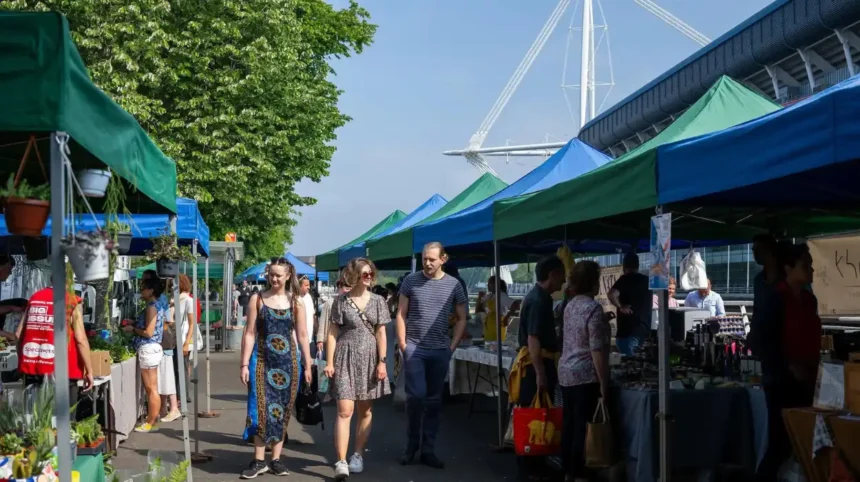
Located opposite the Principality Stadium, this market features Welsh food producers, fresh ingredients, baked goods and prepared food.
2. Roath Farmers’ Market
This neighbourhood market provides fresh produce, artisan food, baked goods and independent products in the Roath area.
3. Rhiwbina Farmers’ Market
This neighbourhood market serves north Cardiff with local food, fresh ingredients and products from independent producers.
What Makes Riverside Farmers’ Market Different?
Riverside Farmers’ Market is particularly convenient for visitors exploring central Cardiff.
The market follows the River Taff along Fitzhamon Embankment, opposite the Principality Stadium. It began in 1998 through the efforts of local food enthusiasts and developed into an established destination for Welsh producers.
Products include organic meat, free-range eggs, dairy products, artisan bread, preserves, honey and prepared food.
The market provides a direct sales channel for independent producers and allows customers to purchase goods closer to their source.
Why Visit Roath and Rhiwbina Farmers’ Markets?
Roath and Rhiwbina offer neighbourhood shopping experiences outside the immediate city centre.
Roath Farmers’ Market takes place at Mackintosh Sports Club and is suitable for residents and visitors exploring the Roath and Plasnewydd areas.
Rhiwbina Farmers’ Market operates near the Butchers Arms in north Cardiff. Its location makes it convenient for people living in or visiting surrounding residential neighbourhoods.
Both markets support independent producers and provide regular opportunities to purchase fresh food and locally made products.
Where Can Visitors Find Vintage, Antique and Craft Markets in Cardiff?
Cardiff has specialist markets and independent trading spaces for vintage clothing, antiques, collectibles, handmade products and creative goods. These destinations provide alternatives to conventional retail shopping and attract collectors, local residents and visitors interested in independent sellers.
Cardiff’s market culture extends beyond fresh food and traditional shopping. Several locations cater to people interested in second-hand merchandise, antiques, handmade products and independent creative businesses.
Cardiff Indoor Flea Market
Cardiff Indoor Flea Market is located at Unit 2, Clydesmuir Road Industrial Estate, Tremorfa, Cardiff, CF24 2QS.
This indoor destination brings together independent dealers selling antiques, vintage products, collectibles and household goods.
Its merchandise includes:
- Vintage furniture and decorative items.
- Jewellery and collectible accessories.
- Second-hand books and records.
- Antique china and household ornaments.
- Vintage clothing and other pre-owned goods.
The market provides opportunities to discover individual pieces that are not generally available through mainstream retailers.
Its warehouse-style setting also makes it suitable for visitors who prefer browsing multiple independent dealers in one location.
Jacob’s Antiques Market
Jacob’s Antiques Market is another established name associated with Cardiff’s vintage and antiques scene.
Located at West Canal Wharf, near the lower end of St Mary Street, it has been known for its collection of independent antique and vintage dealers.
Products associated with this destination include antique furniture, silverware, jewellery, vintage clothing, collectibles and decorative pieces.
Opening arrangements should be checked before travelling because trading days and availability can change.
Roath Craft Market
Roath Craft Market operates alongside the wider Saturday market activity at Mackintosh Sports Club.
It provides a platform for handmade products, creative work and independent craft businesses.
Visitors can explore locally made gifts, decorative objects and other products created by independent makers. Its location makes it convenient to combine craft shopping with a visit to Roath Farmers’ Market.
What Are the Opening Times of Cardiff’s Main Markets?
Cardiff’s permanent indoor market generally opens Monday to Saturday, while its farmers’ markets operate on different weekdays and weekends. Riverside trades on Sundays, Roath on Saturdays and Rhiwbina on Fridays.
Opening times are an important part of planning a Cardiff market visit. Unlike permanent shopping centres, many independent and farmers’ markets operate on specific days.
Opening times are based on published market information available in November 2026. Individual trader hours, seasonal arrangements and holiday schedules can differ.
Cardiff Market’s official visitor information lists its regular opening hours as 8 am to 5 pm, Monday to Saturday. The market remains closed on Sundays.
Farmers’ markets operate within shorter trading windows. Visitors should arrive early when shopping for popular food products or looking for the widest selection of goods.
The Cardiff Farmers Markets website provides information about participating producers and individual market arrangements.
What Traditional Welsh Foods Should Visitors Try at Cardiff Market?
Cardiff’s markets provide access to traditional Welsh foods, including Welsh cakes, bara brith, laverbread and regional cheeses. Independent bakeries, fishmongers and specialist food traders introduce visitors to ingredients and recipes associated with Welsh culinary heritage.
Food shopping is an important part of the Cardiff market experience. Traditional Welsh products provide visitors with an opportunity to understand the region’s food culture through locally recognised ingredients and recipes.
Welsh Cakes
Welsh cakes are traditional griddle-baked treats prepared using flour, butter, sugar and dried fruit.
They are cooked on a flat baking surface known as a bakestone. Their texture is generally softer than biscuits but firmer than conventional sponge cakes.
Cardiff Bakestones is one of the businesses associated with this traditional product inside Cardiff Market.
Visitors can enjoy freshly prepared Welsh cakes or purchase them as edible gifts.
Bara Brith
Bara brith is a traditional Welsh fruit loaf. Its name translates into English as speckled bread.
The loaf traditionally contains dried fruit and tea-soaked ingredients. It is commonly served sliced with butter and tea.
Bara brith is available through specialist Welsh bakeries and regional food producers.
Laverbread
Laverbread is a traditional Welsh food prepared from edible seaweed, particularly associated with coastal communities in South Wales.
It is commonly cooked with oatmeal and served with bacon as part of a traditional Welsh breakfast.
The product demonstrates the historical connection between Welsh food traditions and the country’s coastline.
Welsh Cheese and Artisan Dairy Products
Cardiff’s farmers’ markets provide access to regional dairy products and independent cheese producers.
These include specialist cheeses, farmhouse dairy products and other foods made by small producers.
Tŷ Caws, a Welsh cheese business, participates in Cardiff’s farmers’ market network and provides opportunities to explore British and regional cheeses.
Local Bread, Honey and Preserves
Farmers’ markets also introduce visitors to artisan food production.
Examples include sourdough bread, handmade jams, chutneys, honey, pastries and seasonal baked products.
These foods are useful for visitors staying in self-catering accommodation and residents purchasing ingredients for everyday meals.
Visit Cardiff’s Welsh food guide highlights traditional market products and specialist businesses selling regional food.

How Do Cardiff Markets Support Independent Businesses and Local Producers?
Cardiff markets support independent businesses by providing accessible retail spaces, direct customer relationships and opportunities for small producers to sell specialist products. Farmers’ markets also connect Welsh food producers with consumers seeking regional ingredients and locally made goods.
Markets contribute to Cardiff’s economy through independent retail, food production, hospitality and small-scale entrepreneurship.
Unlike large retail chains, market traders often operate specialised businesses with smaller product ranges and direct customer relationships.
Affordable Opportunities for Small Businesses
Cardiff Market provides commercial space for independent traders in a central location.
This arrangement allows small businesses to access city-centre customers without operating a conventional standalone shop.
For new retailers, market stalls provide an opportunity to introduce products, develop customer relationships and establish a local trading presence.
Cardiff Council’s 2023 market restoration report identifies the market’s role in providing affordable trading opportunities for smaller businesses. It also records more than 60 businesses operating within the market at that time.
Direct Relationships Between Producers and Customers
Farmers’ markets connect food producers directly with shoppers.
Customers can purchase products from the people or businesses responsible for producing them. This relationship creates opportunities to ask questions about ingredients, production methods and product origins.
Examples include buying eggs from poultry producers, bread from independent bakeries and honey from specialist producers.
Supporting the Welsh Food Economy
Cardiff’s farmers’ markets provide an important sales platform for Welsh food businesses.
Independent producers gain access to urban consumers, while shoppers find regional food without relying exclusively on large supermarket distribution networks.
The Cardiff Farmers Markets organisation reports participation from more than 100 farmers and small producers across its three regular markets.
Encouraging Independent Shopping
Markets also contribute to the diversity of Cardiff’s retail environment.
Specialist food shops, craft sellers, vintage retailers and independent businesses provide products that differ from mass-market shopping options.
This diversity supports the city’s independent commercial identity and maintains traditional retail activity within local communities.
What Other Shopping Attractions Are Near Cardiff Market?
Cardiff Market sits within a wider city-centre shopping district that includes historic Victorian arcades, independent boutiques, cafés and major retail streets. Visitors can combine a market visit with nearby shopping, food and cultural attractions.
The market’s central location makes it a practical starting point for exploring Cardiff’s independent shopping destinations.
Cardiff’s Victorian Shopping Arcades
Cardiff is recognised for its historic shopping arcades, which contain independent shops, cafés and specialist retailers.
Important examples include:
- Castle Arcade: Known for independent food shops, specialist retailers and small businesses.
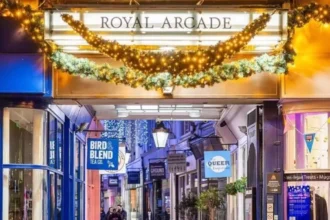
- Royal Arcade: One of Cardiff’s historic shopping arcades, connecting major city-centre streets.
- Morgan Arcade: Recognised for its Victorian architecture and independent shopping businesses.
These arcades complement Cardiff Market by providing additional opportunities to explore independent retail.
St David’s Shopping Centre
St David’s is a major modern shopping destination in central Cardiff.
It contains national retailers, fashion stores, restaurants and other commercial businesses.
Visitors interested in combining traditional market shopping with contemporary retail can reach the shopping centre on foot from Cardiff Market.
Cardiff Castle
Cardiff Castle is one of the city’s most prominent historic attractions.
Its location within the city centre makes it convenient to include in a day of sightseeing that begins at Cardiff Market.
Visitors can explore its historic architecture, grounds and exhibitions while learning about Cardiff’s development.
Principality Stadium
Principality Stadium is a major sporting and entertainment venue located near Cardiff Market and Riverside Market.
It hosts major sporting fixtures, concerts and other events.
Visitors attending an event can explore Cardiff Market during the day and visit the surrounding city-centre businesses before the event begins.
Explore More Area Guide
Emergency Services in Cardiff: Police, Ambulance and Fire Rescue
Maternity Services in Cardiff: NHS Pregnancy and Birth Care
How Can Visitors Plan a Successful Cardiff Market Visit?
Visitors can plan a successful Cardiff market visit by checking opening times, choosing suitable transport and identifying the products they want to explore. Weekday visits suit indoor market shopping, while weekends provide access to several farmers’ markets.
A little preparation helps visitors make better use of their time.
Choose the Right Market Day
The choice of day determines which markets visitors can explore.
Friday is suitable for visiting Rhiwbina Farmers’ Market and Cardiff Central Market.
Saturday provides access to Cardiff Central Market and Roath Farmers’ Market.
Sunday is suitable for Riverside Farmers’ Market, while Cardiff Central Market remains closed.
Arrive Early for Fresh Produce
Morning visits are useful for shoppers looking for fresh ingredients and popular food products.
Farmers’ markets have shorter operating hours than permanent indoor markets. Arriving early provides more time to browse individual stalls and speak with producers.
Bring Reusable Shopping Bags
Reusable shopping bags are practical for carrying groceries, bakery products and other purchases.
Visitors buying fresh food should also consider how they will transport temperature-sensitive products, particularly meat, fish and dairy items.
Check Individual Trader Availability
Not every business operates identical hours.
Some market traders open later than the main building or close earlier depending on their products and customer demand.
Checking individual business information before travelling helps avoid disappointment.
Combine Market Shopping with Sightseeing
Cardiff Market is close to several attractions, making it suitable for a wider city-centre itinerary.
A practical visit can include:
- Cardiff Market for traditional food and independent shopping.
- Cardiff’s Victorian arcades for specialist retailers.
- Cardiff Castle for local history and architecture.
- Principality Stadium for sporting and entertainment heritage.
- Riverside Market on Sunday for Welsh food producers.
What Is the Future of Markets in Cardiff?
Cardiff’s markets remain important to the city’s independent retail economy, food culture and historic identity. Continued investment in heritage buildings, support for small businesses and interest in locally produced food contribute to their future relevance.
Traditional markets face changes in shopping habits, competition from supermarkets and online retailers, rising business costs and changing customer expectations.
However, Cardiff’s market network offers several advantages that distinguish it from conventional retail environments.
Maintaining Historic Buildings
Cardiff Central Market is an important example of Victorian commercial architecture.
Its glass roof, iron structure and traditional trading layout provide a historic setting for modern businesses.
Investment in building maintenance and restoration helps protect this architectural heritage while keeping the market functional for traders and visitors.
Cardiff Council’s 2023 restoration project report recognises the market’s architectural importance and its continuing role in the city’s commercial environment. cardiff.moderngov.co.uk
Supporting New Independent Businesses
Markets provide accessible spaces for entrepreneurs developing new retail and food businesses.
Independent food operators, specialist retailers and creative businesses introduce new products while contributing to Cardiff’s commercial diversity.
The combination of established traders and newer businesses helps maintain the market’s relevance to different generations of customers.
Growing Interest in Local Food
Farmers’ markets provide a direct connection between Welsh producers and consumers.
Interest in product origins, independent food businesses and regional ingredients gives these markets an important role in contemporary food shopping.
Riverside, Roath and Rhiwbina provide regular opportunities for this relationship to continue.
Strengthening Community Connections
Neighbourhood markets create regular meeting places for residents and local businesses.
They support community interaction through shopping, food, independent retail and local events.
This function is particularly important in areas such as Roath, Riverside and Rhiwbina, where regular market activity contributes to neighbourhood identity.
Cardiff’s market network therefore represents more than a collection of retail locations. It connects the city’s history, independent economy, Welsh food culture and community life.
Cardiff’s markets provide a comprehensive shopping experience that combines historic architecture, traditional Welsh food, fresh produce, independent retail and neighbourhood trading.
Cardiff Central Market remains the city’s principal indoor market, with a history extending back to the eighteenth century and a Victorian building that opened in 1891.
Riverside, Roath and Rhiwbina Farmers’ Markets extend the city’s market culture through regular trading opportunities for local food producers and independent businesses. Specialist destinations such as Cardiff Indoor Flea Market and Jacob’s Antiques Market provide further options for vintage shopping, antiques and collectibles.
For tourists, markets offer an opportunity to discover Welsh food and explore Cardiff’s commercial heritage. For residents, they provide convenient access to fresh ingredients, specialist retailers and independent producers.
Exploring Cardiff’s markets is an effective way to understand the city’s shopping traditions, local businesses and contemporary food culture.
What is the main market in Cardiff?
Cardiff Central Market is the city’s main indoor market. It is located on St Mary Street and sells fresh produce, Welsh food, baked goods, clothing, records and specialist products.