Splott is a district in eastern Cardiff with a heritage shaped by industrial expansion, dock activity, working-class housing, religious institutions, public recreation and transport. Much of its historic character sits within ordinary streets rather than monumental landmarks.
- What makes Splott historically important within Cardiff?
- How did the East Moors steelworks shape Splott’s heritage?
- Where can visitors see Victorian and Edwardian housing heritage around Splott?
- What is the history of Splott Road Baptist Chapel?
- Why is Splott Park an important piece of hidden heritage?
- What other industrial heritage can be found around Splott?
- How did Cardiff’s docks and transport network influence Splott?
- How can visitors explore Splott’s hidden heritage today?
- Why does Splott’s hidden heritage remain relevant today?
The area developed rapidly during the late 19th and early 20th centuries as Cardiff expanded around its docks and industrial economy. East Moors became an important centre of steel production, while new terraced housing, chapels, schools, shops and public facilities served a growing population.
Today, several heritage clues remain. Splott Park preserves an Edwardian public-park layout. Splott Road Baptist Chapel records the area’s Nonconformist religious history. Historic housing patterns reveal the planned expansion of the district. Former industrial sites around East Moors connect Splott with the wider industrial history of South Wales.
The heritage of Splott therefore extends beyond individual listed buildings. It includes buildings, streets, parks, former industrial land, community institutions and archaeological records that explain how the district developed.
What makes Splott historically important within Cardiff?
Splott is historically important because its development records Cardiff’s industrial expansion, dock economy and rapid urban growth. Its heritage includes East Moors steelworks, Victorian and Edwardian housing, religious buildings, Splott Park, former commercial premises and transport-related industrial sites.
Splott’s modern identity developed alongside Cardiff’s transformation into a major industrial and port city. The growth of the docks created demand for industrial land, workers and housing.
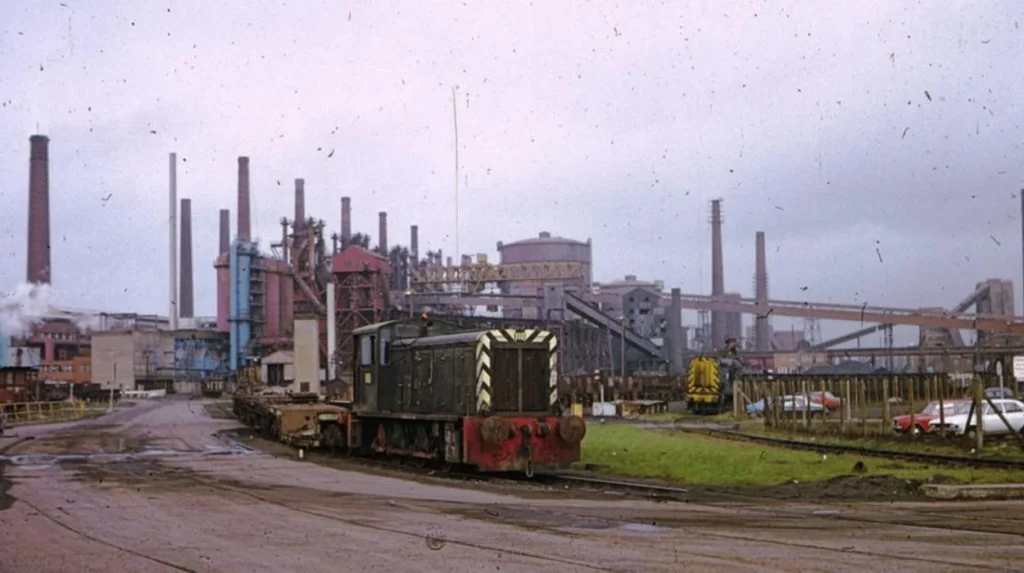
The East Moors area became particularly important. Guest, Keen and Nettlefolds established the East Moors steelworks in 1890 after moving major production from Dowlais in Merthyr Tydfil. The location provided better access to Cardiff’s docks and maritime transport. The works eventually closed in 1978.
This industrial history connects Splott directly with the wider development of South Wales iron and steel production. Dowlais Ironworks had been founded in 1759 and became one of the world’s largest ironworks during the 19th century. Production subsequently moved towards the Cardiff operation.
Urban development followed industrial employment. Historic mapping recorded Splott Farm and Lower Splott before substantial development. By the early 20th century, much of the housing landscape had been transformed into planned Victorian and Edwardian terraces arranged around squares and connecting streets.
This makes Splott valuable for understanding ordinary urban history. Its heritage is not concentrated in one historic building. It is distributed through the relationship between industry, housing, religion, recreation and community infrastructure.
How did the East Moors steelworks shape Splott’s heritage?
The East Moors steelworks became one of Splott’s defining industrial landmarks after production began in 1890. Its location near Cardiff Docks connected steel manufacturing with maritime transport, employment and urban expansion before the works closed in 1978.
The East Moors steelworks was established by Guest, Keen and Nettlefolds. The company had links with the historic Dowlais Ironworks in Merthyr Tydfil. The Cardiff site was selected partly because of its convenient access to the docks.
The industrial complex represented a major change in the geography of Welsh metal production. Traditional ironworks had developed in the South Wales Valleys close to mineral resources and industrial communities. East Moors connected heavy manufacturing more directly with Cardiff’s port infrastructure.
The site operated for almost nine decades. Coflein, the online database of the Royal Commission on the Ancient and Historical Monuments of Wales, records the works as opening in 1890 and closing in 1978. The industrial structures were later demolished and the land was partly redeveloped.
The disappearance of the physical works does not remove its historical significance. Historic aerial photographs and archaeological records preserve evidence of the former complex. Coflein holds photographic records of East Moors steelworks, including aerial views taken in 1995 and earlier historical imagery.
For visitors exploring hidden heritage, the former steelworks landscape demonstrates an important principle: industrial heritage often survives through records, street patterns, redevelopment boundaries and archaeological evidence rather than intact factories.
The East Moors story also explains why Splott became closely associated with industrial employment. Steel production formed part of the economic system linking Cardiff’s docks, railways, factories and residential districts.
Where can visitors see Victorian and Edwardian housing heritage around Splott?
Victorian and Edwardian housing remains one of Splott’s most visible heritage features. Terraced streets, planned squares, repeated house designs and historic road layouts record the district’s rapid expansion during Cardiff’s industrial growth in the late 19th and early 20th centuries.
The residential landscape developed as Cardiff’s population and industrial economy expanded. Historic records describe an area around Splott Farm and Lower Splott that changed from open land into a developed residential district.
The historic housing pattern included terraced houses arranged around squares. Roads connected the residential blocks, while front elevations faced streets and rear gardens faced internal spaces. This layout created a recognisable urban structure associated with planned working-class housing.
These streets are important because they show how industrial cities accommodated workers and families. Housing was not separate from industrial development. Residential expansion supported factories, docks, warehouses, railway facilities and commercial services.
The architectural details also provide useful heritage evidence. Repeated terraces can reveal building periods, construction materials, street planning and changing standards of domestic accommodation.
Visitors interested in hidden heritage can therefore treat the residential streets themselves as historical evidence. The most useful approach is to observe the relationship between streets, terraces, corner properties, public buildings and open spaces.
Not every historic house in Splott has statutory listed-building status. Cardiff Council states that the city has around 1,000 listed buildings and around 300 locally listed buildings across Cardiff. Listing recognises particular architectural or historic significance, while locally significant buildings can also receive recognition through local listing.
This distinction matters when exploring Splott. Heritage value does not depend entirely on whether an individual terrace appears on a national statutory register. Historic streetscapes can provide important evidence about urban development even when individual buildings have not received statutory designation.
What is the history of Splott Road Baptist Chapel?
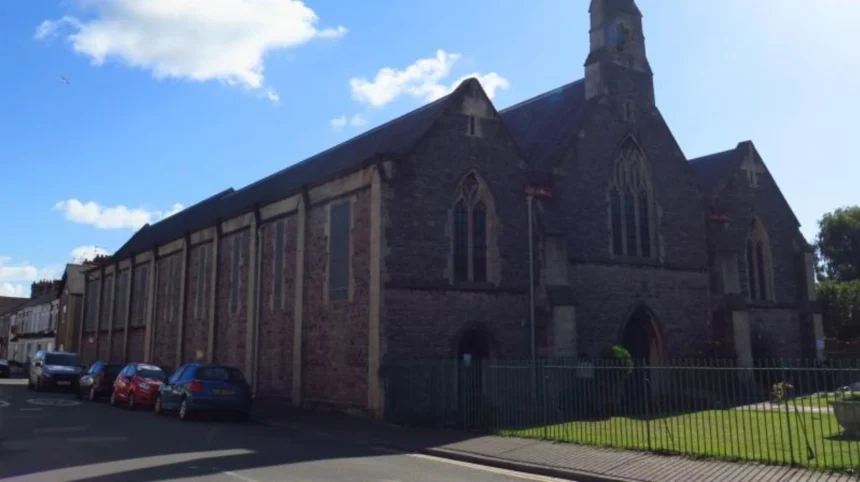
Splott Road Baptist Chapel is a significant surviving religious heritage site. Its Sunday school dates from 1884, while the chapel was built in 1895. The building records the importance of Nonconformist worship and education within expanding Victorian Splott.
The chapel is recorded by Coflein as a post-medieval religious site within the Splott community. The Sunday school was built in 1884, followed by the chapel in 1895. Cardiff architects Habershon and Fawckner designed the buildings, while E. Turner & Sons were the builders.
The chapel was modified in 1903. Its architecture uses a Simple Gothic style, with a stone-built structure and gable-entry arrangement. These characteristics place the building within the wider architectural tradition of late Victorian Nonconformist chapels in Wales.
Religious buildings played an important role in Victorian Welsh communities. Chapels were not solely places for worship. Sunday schools provided education, while associated rooms supported meetings and community activities.
Splott Road Baptist Chapel therefore provides evidence of both religious and social development. Its construction during the district’s major expansion reflects the demand for institutions serving a growing population.
The building also illustrates the architectural diversity of Cardiff’s historic religious landscape. The city’s industrial growth generated new neighbourhoods where Anglican churches, Baptist chapels, Methodist buildings and other religious institutions developed alongside housing.
For a heritage walk, the chapel is particularly useful because its construction date can be connected directly with the wider residential development of Splott. It represents the institutional infrastructure that accompanied urban expansion.
Why is Splott Park an important piece of hidden heritage?
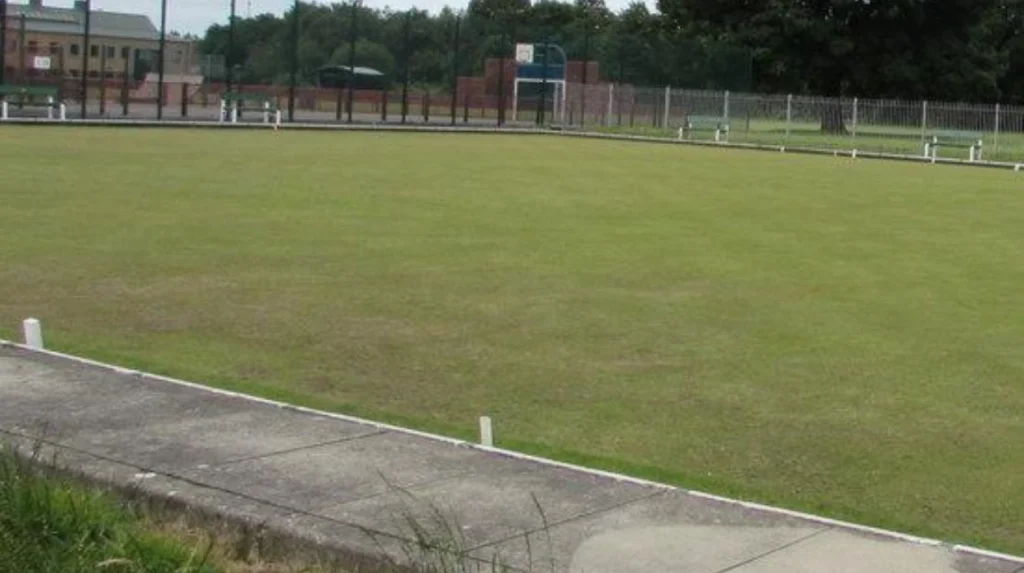
Splott Park is an Edwardian public park established in 1901 and covering 18 acres. Its historic facilities included a bandstand, cricket pitches, playgrounds, bowling green, tennis courts and swimming pool, making it an important record of early public recreation.
Splott Park was gifted to Cardiff Corporation by Lord Tredegar in December 1901. The Royal Commission records the park as an Edwardian public park covering 18 acres.
The park developed rapidly after its establishment. A bandstand was built in 1904. Cricket pitches and a children’s playground were also laid out in 1904. Practice nets followed in 1905, while the bowling green opened on 15 June 1906. Quoits facilities and tennis courts were added in 1907.
These dates demonstrate how public recreation became part of municipal urban planning during the early 20th century. The park provided structured recreational space within a densely developing residential district.
The swimming pool opened on 14 August 1922. Construction began in October 1921 and was completed by late March 1922. Covered baths were later constructed in 1976 and refurbished in 2003.
The park remains part of Splott’s contemporary community infrastructure. Cardiff Council currently records a skatepark within Splott Park, with facilities including two quarter-pipes, a driveway, flatbank and grind rails.
This combination of historic and modern facilities gives Splott Park particular heritage relevance. Its role has changed over time, but the basic principle remains consistent: public recreation is an important part of the district’s social history.
Historic Cardiff Parks records also contain administrative material relating to Splott Park, including discussions about the development of its bowling green. Such records demonstrate that the park’s history survives through municipal documentation as well as the physical landscape.
What other industrial heritage can be found around Splott?
Splott’s industrial heritage extends beyond steelmaking to timber, food manufacturing, railway sidings and aviation. Surviving records identify timber merchants, a mid-20th-century biscuit factory, railway infrastructure and a former aerodrome, showing the district’s diverse industrial economy.
Coflein records a timber yard associated with Robinson David and Company at East Tyndall Street. The firm was established in 1886 and operated as a timber and plywood importer. The company had earlier connections with J and J Grant, timber and slate merchants.
This timber-trading history illustrates the importance of Cardiff’s port economy. Imported materials required storage, distribution and commercial premises close to transport infrastructure.
Another industrial record concerns a biscuit factory near Pengam Junction. The factory was probably built during the mid-1940s and included long single-storey ranges, two-storey blocks and a railway siding. Historic aerial photography from 1947 records vehicles associated with biscuit manufacturing on the site.
The surviving structures were later incorporated into the Clydesmuir Industrial Estate. Their continued physical presence provides an example of industrial buildings being adapted rather than completely erased.
Splott also has an aviation connection. The area was used during the early development of aviation and became a civilian aerodrome in September 1931. It was initially called Splott and was renamed Cardiff Municipal Airport by 1936.
Scheduled commercial services began in 1932. British Air Navigation Company operated a service between Bristol and Cardiff using aircraft including Fokker Spiders, Fox Moths and de Havilland Dragons. Great Western Railway Air Service began flights in April 1933.
These records widen the meaning of Splott heritage. The district was not defined by one industrial sector. Its historic landscape incorporated manufacturing, importation, distribution, transport and aviation.
How did Cardiff’s docks and transport network influence Splott?
Cardiff’s docks and transport infrastructure provided the economic framework for Splott’s industrial growth. Steelworks, timber yards, factories and other businesses depended on connections between manufacturing sites, railway sidings and the port, linking local streets with regional and international trade.
Cardiff’s industrial expansion was strongly connected with the development of its docks. The wider dock system expanded significantly during the 19th century as coal and iron production from the South Wales Valleys generated demand for export infrastructure.
The Bute East Dock opened in stages between 1855 and 1859. Roath Basin was constructed between 1868 and 1874, followed by Roath Dock in 1887. These developments expanded Cardiff’s capacity to handle industrial trade.
East Moors benefited from this infrastructure. The location of the steelworks was specifically connected with convenient access to Cardiff Docks.
Railways provided another essential connection. The documented biscuit factory near Pengam Junction had its own short railway siding. This arrangement demonstrates how industrial premises could be physically integrated into the railway network for receiving materials and distributing finished goods.
Transport infrastructure therefore shaped the physical geography of Splott. Industrial buildings were positioned according to access to docks, railways and major roads. Residential development then grew around the employment generated by these industries.
The result is a layered heritage landscape. A modern street can occupy a former industrial environment while retaining historic road alignments, surviving buildings, railway traces or documentary evidence of earlier land uses.
This transport connection also explains why Splott heritage extends beyond the boundaries of the residential neighbourhood. Its history forms part of a larger Cardiff industrial system involving docks, railways, factories, warehouses and workers’ housing.
Explore More Area Guide
Roath Victorian Heritage Trail: Historic Cardiff Buildings
Cardiff Historic Churches: A Heritage Walking Guide
How can visitors explore Splott’s hidden heritage today?
Visitors can explore Splott’s heritage by combining its historic residential streets, Splott Road Baptist Chapel, Splott Park and surviving industrial landscapes with documentary research. The most useful approach connects physical places with dates, historic maps, photographs and archaeological records.
A heritage exploration can begin with the residential streets around central Splott. Historic terraces demonstrate the planned expansion associated with Cardiff’s industrial growth. Look for repeated house forms, street layouts, squares and relationships between residential blocks.
Splott Park provides a second major stop. Its 18-acre Edwardian landscape records the development of public recreation from 1901 onwards. Historic dates for the bandstand, sports facilities, bowling green, tennis courts and swimming pool provide a chronological framework for understanding the site.
Splott Road Baptist Chapel provides a direct architectural connection with the Victorian period. Its 1884 Sunday school and 1895 chapel date from the period when the surrounding district was developing rapidly.
Industrial heritage requires a different approach because major structures such as the East Moors steelworks have disappeared. Coflein’s records and historic photographs provide important evidence of the former site.
The former biscuit factory near Pengam Junction demonstrates another heritage category: industrial buildings that survive through adaptive reuse. The historic factory ranges remain incorporated within the Clydesmuir Industrial Estate.
Cardiff Council’s conservation resources provide another useful reference point. The council maintains information about listed buildings, locally listed buildings, conservation areas, historic parks and scheduled monuments.
For deeper research, Coflein is particularly valuable because it records archaeological and historic sites throughout Wales. Its Splott records include industrial sites, chapels, public parks, housing and aviation sites.
A practical heritage route therefore works best as a combination of walking and research. Physical streets provide the setting, while historic records establish dates, functions and changes.
Why does Splott’s hidden heritage remain relevant today?
Splott’s heritage remains relevant because its historic landscape explains how Cardiff developed as an industrial, residential and multicultural city. Preserving records of housing, industry, religion, recreation and transport provides evidence for understanding present-day neighbourhood identity and future regeneration.
Heritage provides more than architectural interest. Splott’s surviving and documented sites explain how communities formed around industrial employment and public institutions.
The East Moors steelworks connects the district with the industrial history of South Wales. Its 1890 opening and 1978 closure mark almost nine decades of manufacturing activity.
Splott Park demonstrates a different historical process. Its creation in 1901 shows the expansion of municipal recreation and the provision of structured public space in an urban community.
The Victorian housing landscape records the physical response to population growth. Terraces and planned squares demonstrate how urban development accommodated workers and families during Cardiff’s industrial expansion.
Religious buildings provide another layer. Splott Road Baptist Chapel records the role of Nonconformist institutions in community life during the Victorian period.
Industrial records also show how quickly urban land uses can change. The East Moors steelworks was demolished after closure, while other industrial sites were adapted for later uses. The former biscuit factory is one example of historic industrial fabric continuing within a modern employment landscape.
Cardiff Council’s heritage framework demonstrates the broader importance of recognising historic buildings and places. The city has around 1,000 listed buildings and around 300 locally listed buildings, alongside conservation areas, historic parks and scheduled monuments.
Splott’s heritage is therefore best understood as a connected landscape rather than a collection of isolated landmarks. Streets, parks, chapels, factories and transport routes together explain the district’s transformation from peripheral land into an established Cardiff community.
The continued documentation of these places also supports future research. Historic photographs, maps, archives and archaeological records preserve information even when buildings disappear.
For visitors, residents and researchers, this makes Splott an important part of Cardiff’s wider heritage story. Its most significant evidence often appears in ordinary streets and spaces rather than conventional tourist attractions.
What is Splott known for historically?
Splott is historically associated with Cardiff’s industrial expansion, Victorian housing, religious institutions, public parks and transport infrastructure. The former East Moors steelworks became one of the area’s most important industrial landmarks after opening in 1890.