If you are exploring the Welsh capital for the first time—or even if you are a long‑time Cardiff resident—there is no better way to understand the city than through its historic places. Cardiff wears its past proudly, from Roman fortifications buried beneath the city centre to open‑air museums where you can wander through centuries‑old cottages and castles. This guide gathers the best historic places in Cardiff, weaving together castles, museums, arcades, and waterfront landmarks that together tell the story of Wales’ bustling capital. For readers of Cardiff Daily, it is the perfect evergreen resource for locals and visitors alike who want to uncover the city’s layered heritage in a way that ranks well on search engines and actually inspires people to visit.
- Cardiff Castle: 2,000 Years on One Site
- St Fagans National Museum of History: Wales’ Living Past
- Historic Arcades of Cardiff: Victorian and Edwardian Shopping Heritage
- National Museum Cardiff: Art, Natural History, and Welsh Origins
- Cardiff Bay: Industrial, Maritime, and Modern Heritage
- Castle Quarter and the Old Town: Streets with Roman and Medieval Roots
- The Civic Centre in Cathays Park: Planning a Capital City
- Other Notable Historic Sites Around Cardiff
- Planning a Historic Day Out in Cardiff
- Why Cardiff’s Historic Places Matter Today
Cardiff Castle: 2,000 Years on One Site
No list of historic places in Cardiff can begin anywhere but with Cardiff Castle, the stone‑clad heart of the capital. Occupying a site with nearly 2,000 years of continuous history, the castle sits on top of a 3rd‑century Roman fort that once guarded the mouth of the River Taff and the approaches to the Bristol Channel.
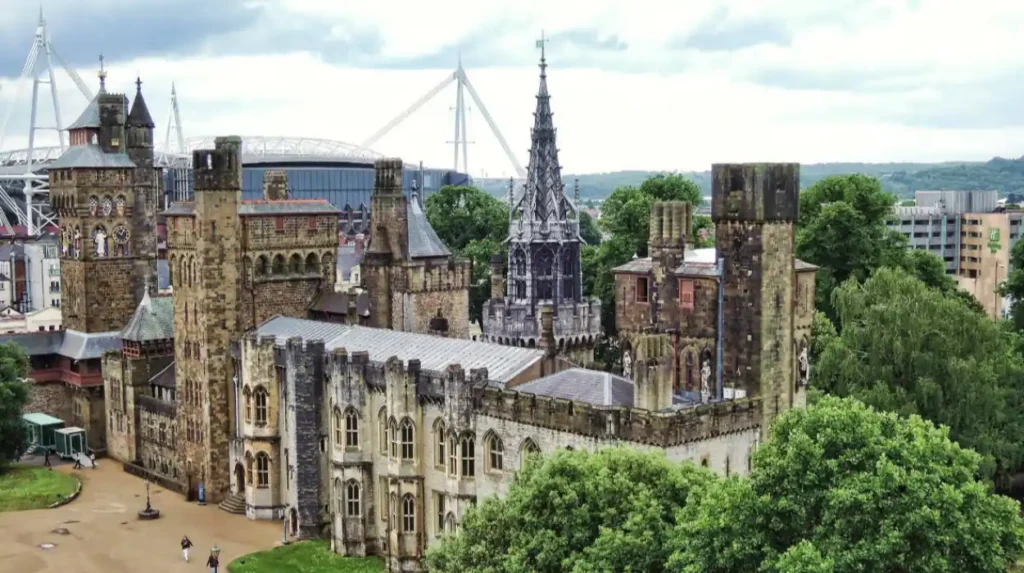
The castle as visitors see it today is a striking blend of shapes and eras. A Norman motte and bailey castle was built on the Roman foundations in the late 11th century, followed by stone curtain walls, a formidable keep, and later Gothic Revival additions. In the 19th century the Marquess of Bute and architect William Burges transformed the castle into a kind of fairytale fortress, with opulent apartments, stained‑glass windows, carved stone, and dramatic murals that still line the rooms today.
For Cardiff Daily readers, the castle is both a tourist attraction and a living history classroom. Visitors can explore reconstructed Roman walls, the preserved Norman keep, and the Victorian interiors, as well as temporary exhibitions that connect Cardiff’s past to wider Welsh and British stories. With its central location between the city centre and Cardiff Bay, Cardiff Castle is an ideal starting point for any historic day‑out in the capital.
St Fagans National Museum of History: Wales’ Living Past
A short journey west of the city centre, St Fagans National Museum of History (often simply called “St Fagans”) is one of the finest open‑air museums in Europe and a must‑visit for anyone interested in how ordinary Welsh people lived across the centuries.
The museum occupies the grounds of St Fagans Castle, a late 16th‑century manor house that was later donated to the nation by the Earl of Plymouth in 1948. Around this manor, the museum has re‑erected more than forty historic buildings moved from different parts of Wales, including farms, cottages, chapels, and workshops, each carefully reconstructed to reflect specific periods and regional styles.
Visitors can walk through a 16th‑century farmhouse, a row of miners’ cottages from Merthyr Tydfil representing life from 1805 to 1985, and even a 12th‑century church moved stone by stone from its original site. Craftspeople demonstrate traditional skills such as blacksmithing, weaving, pottery, and milling, while a working farm preserves native Welsh breeds of livestock. For Cardiff Daily, St Fagans is not only a top historic destination but also a powerful way to showcase Welsh culture and everyday history beyond the capital’s more famous monuments.
Historic Arcades of Cardiff: Victorian and Edwardian Shopping Heritage
Cardiff’s city centre is famous for its Victorian and Edwardian shopping arcades, some of the densest and best‑preserved in the UK. These glazed, glass‑roofed passages are not just places to shop; they are architectural relics that recall the city’s transformation during the 19th‑century coal boom.
Among the most notable are Royal Arcade, opened in 1858 and considered Cardiff’s oldest arcade, which runs from St Mary Street to The Hayes. Nearby, Morgan Arcade (1896) and Castle Arcade (1887) add elegant ironwork, glass roofs, and ornate shop fronts that give the Castle Quarter a distinctly historic feel. The slightly later Wyndham Arcade, built in 1887, rounds out the sequence with its Edwardian grandeur and three‑storey entrances.
For locals and visitors reading Cardiff Daily, these arcades offer a gentle way to step back into the late 19th and early 20th centuries while still browsing modern boutiques, delis, and independent shops. Because they run through the heart of the city, they also make excellent “history‑and‑shopping” itineraries that appeal to both culture‑focused readers and casual city‑break visitors.
National Museum Cardiff: Art, Natural History, and Welsh Origins
Located in the elegant Cathays Park civic centre, National Museum Cardiff is one of Wales’ grandest cultural institutions and a key historic and educational destination. The museum was founded in 1905 and granted a royal charter in 1907, designed to house the national collections of art, natural history, and archaeology for the people of Wales.
Inside, the museum’s Art Department spans over 500 years, including major works by Welsh and international artists, while the Natural History Department showcases geology, fossils, and wildlife specimens that trace the natural history of Wales. A particularly historic‑themed space is the Origins gallery, which uses artefacts such as Neolithic tombstones, early human remains, Roman cups, and medieval weapons to chart human presence in Wales from prehistoric times into the Middle Ages.
Because admission is free, National Museum Cardiff is a powerful draw for Cardiff Daily readers looking for family‑friendly, educational outings that combine history, art, and science. Its location in the planned civic centre of the early 20th century also makes it a window into Cardiff’s ambitions as a modern Welsh capital during the Edwardian era.
Cardiff Bay: Industrial, Maritime, and Modern Heritage
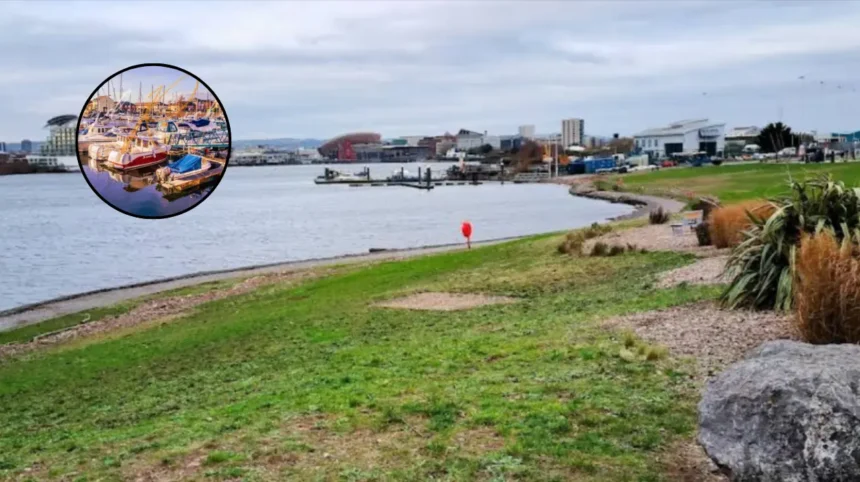
Just a short walk or short bus ride from the city centre, Cardiff Bay is one of the most visible reminders of the city’s industrial past and its ongoing reinvention. The area began as the core of the coal‑exporting port of Cardiff, which briefly became the world’s largest coal port around the turn of the 20th century, fueling industry across Britain and beyond.
Many of the historic buildings clustered around the Bay reflect that era. The Pierhead Building, a striking red‑brick Grade I listed structure completed in the 1890s, once served as the headquarters of the Cardiff Docks and is now home to exhibitions on Welsh history and government. Nearby, the Norwegian Church, originally built in the 19th century to serve the city’s Scandinavian seafarers, stands today as an arts and cultural centre.
Modern landmarks such as the Wales Millennium Centre and the Senedd (Welsh Parliament) sit alongside these historic structures, creating a layered landscape where coal‑era industrialism meets 21st‑century politics and culture. For Cardiff Daily, Cardiff Bay is an ideal historic‑and‑contemporary narrative: a district that visually tells the story of how Cardiff grew from a port town into a national capital.
Castle Quarter and the Old Town: Streets with Roman and Medieval Roots
Beyond the castle itself, the Castle Quarter and adjacent streets of Cardiff’s old town form a compact historic district that rewards slow, on‑foot exploration. St Mary Street, High Street, and Castle Street follow routes that were already established in the medieval period, if not earlier, and many of the buildings or their foundations echo those centuries.
St Mary Street, for example, takes its name from a large 11th‑century church that once stood there until it was destroyed in the Bristol Channel floods of 1607, a major natural disaster that reshaped parts of the town’s coastline. As Cardiff expanded during the industrial age, older buildings were replaced or rebuilt, but the street plan and some surviving structures still preserve the grain of the historic town.
For Cardiff Daily’s audience, this area is perfect for a “history‑walk” route: start at Cardiff Castle, loop through the arcades, and then wander along St Mary Street and High Street, noting the mix of medieval street patterns, Georgian and Victorian shop fronts, and more recent infill. Informative plaques, heritage trails, and occasional temporary exhibitions help visitors connect specific buildings to wider stories of Cardiff’s growth as a coal‑driven city.
The Civic Centre in Cathays Park: Planning a Capital City
A short distance from the old town, Cathays Park and the wider Civic Centre represent a different kind of historic place: a planned public space that embodies early 20th‑century ideals of civic order, culture, and national identity.
Here, tree‑lined avenues lead to grand public buildings such as Cardiff City Hall, the Welsh National Museum (now National Museum Cardiff), and the Law Courts, all constructed in the Edwardian and inter‑war periods. The area was designed to project Cardiff as a modern Welsh capital, combining Neoclassical and Beaux‑Arts architecture with open green space intended for public gatherings and civic ceremonies.
For readers of Cardiff Daily, the Civic Centre offers a chance to explore how city planning and architecture can reflect national pride. Walking through Cathays Park, visitors and locals can see the same streets and squares that have hosted public events, political rallies, and cultural festivals for more than a century, linking the city’s built heritage to its living democratic life.
Other Notable Historic Sites Around Cardiff
Beyond the most famous landmarks, Cardiff and its surrounding area contain a number of smaller but equally significant historic places. One example is Rhondda Heritage Park, a former coal mine in the nearby Rhondda Valley that has been transformed into a museum of Welsh coal‑mining life. Visitors can descend into the pit, meet ex‑miners, and experience the working conditions that powered Cardiff’s industrial boom.
Closer to the city, Insole Court in Llandaff is a Grade II listed Victorian mansion with extensive gardens, now open to the public as a heritage and community space. The Temple of Peace and Health in Cathays Park, built in the 1930s, is another listed building that combines classical architecture with a mission focused on public health and international peace.
These sites, while less central than Cardiff Castle or St Fagans, enrich the historic tapestry that Cardiff Daily readers can explore. They also provide opportunities for themed itineraries: for example, a “coal‑to‑culture” day out linking Rhondda Heritage Park, Cardiff Bay, and the Civic Centre museums.
Planning a Historic Day Out in Cardiff
For readers of Cardiff Daily, one of the most useful ways to engage with these historic places is to think in terms of practical itineraries. A first‑time visitor might start with Cardiff Castle in the morning, then walk through the Castle Quarter arcades toward Cardiff Bay, where the Pierhead Building and Norwegian Church offer a maritime‑heritage angle.
On a second day, a trip to St Fagans National Museum of History can fill several hours, especially if guests allow time to explore the outdoor buildings, workshops, and farm. Readers with an interest in art and archaeology can then return to the centre to spend time at National Museum Cardiff, where the Origins gallery and the wider art and natural‑history collections provide a long‑spanning narrative of Welsh history.
Because most of these sites are either free to enter or offer low‑cost admission, Cardiff’s historic attractions are unusually accessible for families and students, which aligns well with the Cardiff Daily audience’s likely mix of local residents and visitors. When writing about these places on Cardiff Daily, readers can frame each visit as both a learning experience and a leisure activity, helping the content rank well for searches such as “family‑friendly history days out in Cardiff” or “historic places to visit in Cardiff centre.”
Why Cardiff’s Historic Places Matter Today
The best historic places in Cardiff do more than look impressive; they anchor the city’s identity in a tangible, walkable form. Cardiff Castle reminds people that the capital sits on layers of Roman, medieval, and Victorian history. St Fagans grounds the museum‑going experience in everyday Welsh life across centuries, while the arcades and Civic Centre show how urban planning and commercial architecture have shaped the city’s streets.