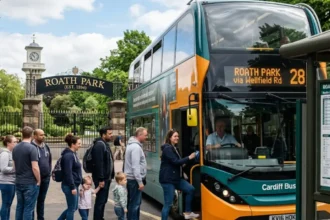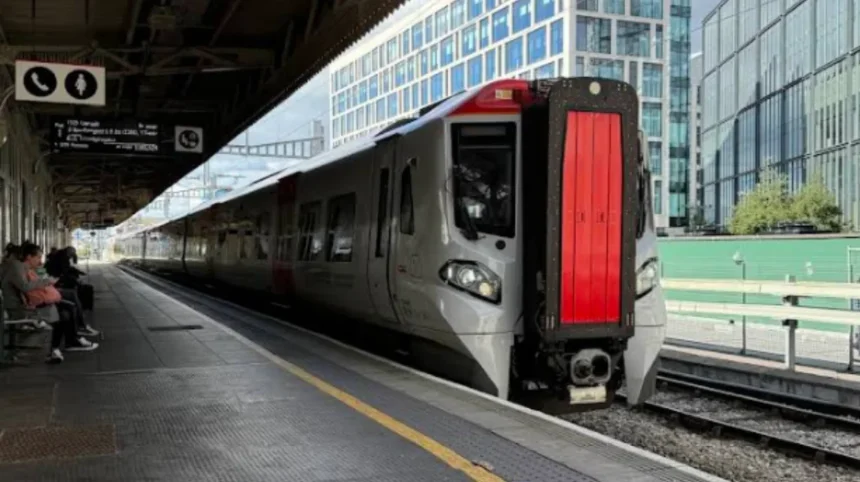
Butetown Station forms a key part of Cardiff Crossrail, a tram-train network linking Cardiff Central to Cardiff Bay. This project enhances connectivity in Cardiff, Wales’ capital, through new infrastructure and integrated rail services.
- What Is Butetown Station?
- What Is Cardiff Crossrail?
- Where Is Butetown Station Located?
- What Is the History of the Butetown Branch Line?
- How Does Cardiff Crossrail Connect Butetown Station?
- What Are the Key Components of Cardiff Crossrail?
- When Will Construction Start and Finish?
- Who Funds and Builds Cardiff Crossrail?
- What Benefits Does Butetown Station Bring to Cardiff?
- What Is the Future Beyond Phase 1a?
- How Will Cardiff Crossrail Impact Cardiff Bay?
- What Tram-Trains Will Operate on the Line?
What Is Butetown Station?
Butetown Station is a new railway station under construction on the Butetown branch line in Cardiff, Wales. Transport for Wales builds it as part of the South Wales Metro upgrades. Construction started in January 2023. The station serves Butetown residents and connects to Cardiff Bay via the branch line. Completion targets 2024 integration with broader Metro services.
Butetown Station lies on the Butetown branch line, a 1.2-mile single-track railway from Cardiff Bay to the mainline near Cardiff Central. The branch line opened in 1987 to serve Cardiff Bay’s redevelopment. Transport for Wales, the Welsh Government-owned rail operator, leads the station’s development.
The station features a single platform, step-free access, and shelters. It replaces limited services on the branch line, which previously relied on Cardiff Bay station alone. Engineering works include track realignment and signaling upgrades for Metro compatibility.
Butetown Station integrates with the South Wales Metro, a £1 billion network electrifying lines and introducing tram-trains. This station provides direct access for 5,000 Butetown residents to jobs in Cardiff Bay’s business district. Passenger numbers on the branch line reached 300,000 annually pre-upgrades.
Future operations use Stadler Citylink tram-trains, 13.5 meters long with 70 seats. These vehicles operate on street-level tracks and heavy rail at speeds up to 100 km/h. Butetown Station supports four trains per hour during peaks.
What Is Cardiff Crossrail?
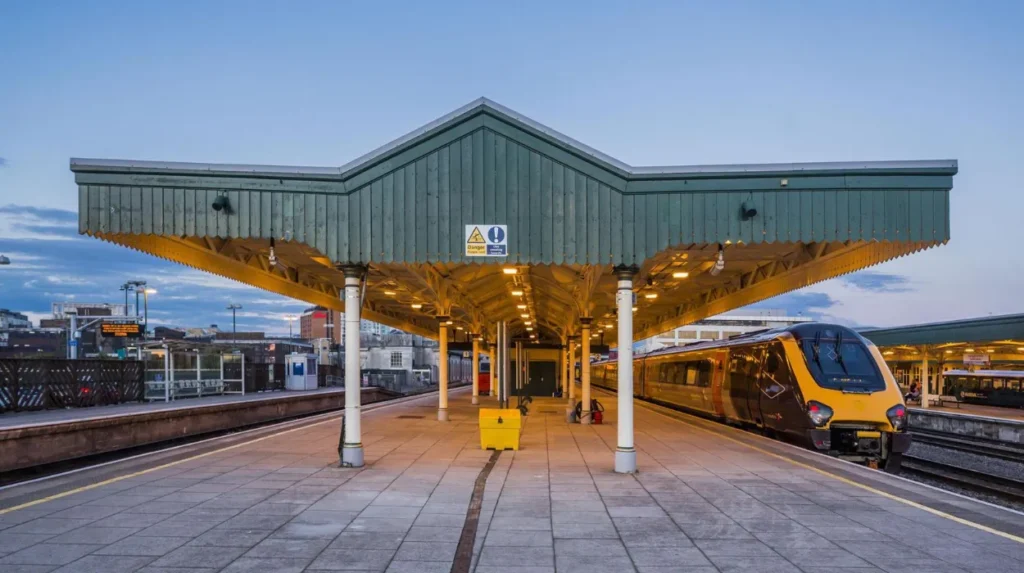
Cardiff Crossrail is a tram-train extension linking Cardiff Central station to the Butetown branch line via Callaghan Square. Phase 1a creates two new platforms at Cardiff Central and a street-level tramway to Butetown. Construction starts summer 2026. GRAHAM serves as principal contractor. Completion occurs summer 2028 with £100 million funding from Welsh and UK governments.
Cardiff Crossrail reuses Crossrail branding from London’s Elizabeth line but functions as a local Metro expansion. The project spans 1.5 miles from Cardiff Central’s new platforms through Callaghan Square to join the Butetown branch north of Butetown Station. Transport for Wales and Cardiff Council manage development.
Key components include twin-track tramways, segregated cycle paths, and pedestrian crossings. Cardiff Bay station gains a third platform for increased capacity. The line uses existing rail corridors where possible to minimize disruption.
Funding totals £100 million for Phase 1a from the Welsh Government and UK Levelling Up Fund. Contracts awarded March 2026 after councillor approval. Detailed designs finalize autumn 2025.
The system employs battery-electric tram-trains for zero-emission operation. These vehicles charge at stations and depots. Crossrail integrates with 11 other Metro lines, serving 1.5 million annual passengers initially.
Where Is Butetown Station Located?
Butetown Station sits on the Butetown branch line in Butetown, Cardiff, Wales. The site lies 0.5 miles north of Cardiff Bay station near the junction with Bute Street. It borders Callaghan Square to the north. Coordinates place it at 51.475°N 3.163°W. Access occurs via pedestrian paths from nearby housing.
Butetown occupies Cardiff’s docklands, a historic area redeveloped since the 1980s. The station occupies a brownfield site adjacent to existing tracks. Proximity to Cardiff Bay (0.8 miles south) and Cardiff Central (1.5 miles north) positions it centrally.
Surrounding infrastructure includes Atlantic Wharf offices and residential blocks housing 5,000 people. Bute East Dock lies 0.3 miles east. Road access uses Schooner Way and Willy Rowlands Avenue.
The location supports regeneration by linking deprived areas to employment hubs. Butetown’s population density reaches 4,000 per square kilometer, higher than Cardiff’s average of 2,500.
Integration with Crossrail places Butetown Station 0.7 miles south of the new Callaghan Square junction. This positioning enables seamless transfers from city center services.
What Is the History of the Butetown Branch Line?
The Butetown branch line opened June 1987 as a shuttle from Cardiff Bay to mainline tracks near Cardiff Central. British Rail constructed the 1.2-mile line to support Cardiff Bay’s enterprise zone. Passenger services used Class 153 single-car diesel units. Transport for Wales took ownership in 2005. Upgrades began 2020 for Metro electrification.
The line originated from 19th-century mineral railways serving Bute Docks. Cardiff Railway Company built tracks in 1897 for coal exports. Passenger service ceased 1964 amid dock decline.
Regeneration prompted the 1987 reopening. Initial ridership hit 500,000 annually by 1990. Service frequency doubled to hourly in 2000.
Electrification works started 2020 under South Wales Metro. Overhead lines install at 25 kV AC. New signaling uses European Train Control System Level 2 for tram-train operations.
Annual maintenance costs dropped 30% post-electrification due to electric traction efficiency. The branch now carries 400,000 passengers yearly.
How Does Cardiff Crossrail Connect Butetown Station?
Cardiff Crossrail connects Butetown Station by extending tram-trains from Cardiff Central through Callaghan Square to join the Butetown branch north of the station. The 1.5-mile link uses street-level tracks. Services run every 15 minutes peak, integrating heavy rail and tram operations. Butetown Station serves as an intermediate stop.
Phase 1a builds a twin-track alignment from Cardiff Central’s Platforms 9-10. Tracks curve south through Callaghan Square, crossing Bute Street at a signalized junction. The line merges with the branch 200 meters north of Butetown Station.
Tram-trains operate under rail regulations on the branch and light rail rules in Callaghan Square. Junction signaling prevents conflicts with road traffic.
Butetown Station gains passing loops for reliable scheduling. Northbound trains reach Cardiff Central in 7 minutes; southbound hit Cardiff Bay in 3 minutes.
This connection unlocks direct city center access, previously requiring bus transfers. Daily capacity reaches 5,000 passengers.
What Are the Key Components of Cardiff Crossrail?
Key components include two new platforms at Cardiff Central, a 1.5-mile twin-track tramway through Callaghan Square, a third platform at Cardiff Bay, and junction upgrades at Butetown branch. Infrastructure adds cycle paths, pedestrian crossings, and sustainable drainage. Tram-trains use battery-electric propulsion.
Platforms 9-10 at Cardiff Central measure 180 meters to accommodate tram-trains. Callaghan Square tramway spans 0.8 miles at street level with segregated tracks.
Cardiff Bay’s Platform 3 handles increased turns. Butetown junction installs flyover for mainline separation.
Supporting elements include 2 km of cycle routes and 10 new crossings. Drainage systems capture 80% runoff for reuse.
Power supply deploys overhead catenary on rail sections and charging pads at stops. Control center at Taffs Well Depot monitors operations.
When Will Construction Start and Finish?
Construction starts summer 2026 after TWA Order confirmation. Phase 1a completes summer 2028. Passenger services begin late 2028 or early 2029. Detailed designs finish autumn 2025. Full business case submitted winter 2024/25.
Timeline milestones: Public consultation ended 2024. Cardiff Council applied for Transport and Works Act Order August 2025. Approval expected summer 2026.
GRAHAM handles design-build for Phase 1a. Works divide into civils (2026-27) and systems (2027-28). Testing occupies first half of 2028.
Delays from past Metro phases averaged 12 months, but Crossrail benefits from matured electrification.
Who Funds and Builds Cardiff Crossrail?
Welsh Government and UK Levelling Up Fund provide £100 million for Phase 1a. Cardiff Council approves contracts. GRAHAM acts as principal contractor. Transport for Wales oversees project. Stadler supplies 36 Citylink tram-trains.
Welsh Government committed £50 million; UK matched with £50 million. Total Metro investment exceeds £1 billion since 2016.
Cardiff Council cabinet approved GRAHAM March 2026. Firm specializes in rail infrastructure with 20 UK projects.
Transport for Wales coordinates with Network Rail for mainline interfaces. Operations fall under KeolisAmey franchise.
What Benefits Does Butetown Station Bring to Cardiff?
Butetown Station provides direct rail access for 5,000 residents, cutting commute times 50% to Cardiff Central. It boosts Bay district economy by 10% through better links. Regeneration improves deprived area’s connectivity. Annual ridership projected at 200,000.
Station reduces bus dependency, lowering emissions 40% on local routes. Employment access rises for Atlantic Wharf’s 15,000 jobs.
Property values near station increase 15% historically on similar Metro lines. Community ties strengthen with events space integration.
What Is the Future Beyond Phase 1a?
Phase 1b extends south from Cardiff Bay to Pierhead Street, adding 0.5 miles and new station. Funding awaits confirmation. Full Crossrail links to Newport Parkway via freight corridors. Long-term vision serves 10 million passengers yearly by 2040.
Pierhead extension connects to waterfront developments. Electrification reaches Coryton in north Cardiff.
Integration with HS2 at Newport planned post-2030. Capacity doubles to eight trains per hour.
Economic impact forecasts £500 million GVA by 2035 from improved labor mobility. Cardiff’s modal share for rail rises from 8% to 15%.
How Will Cardiff Crossrail Impact Cardiff Bay?
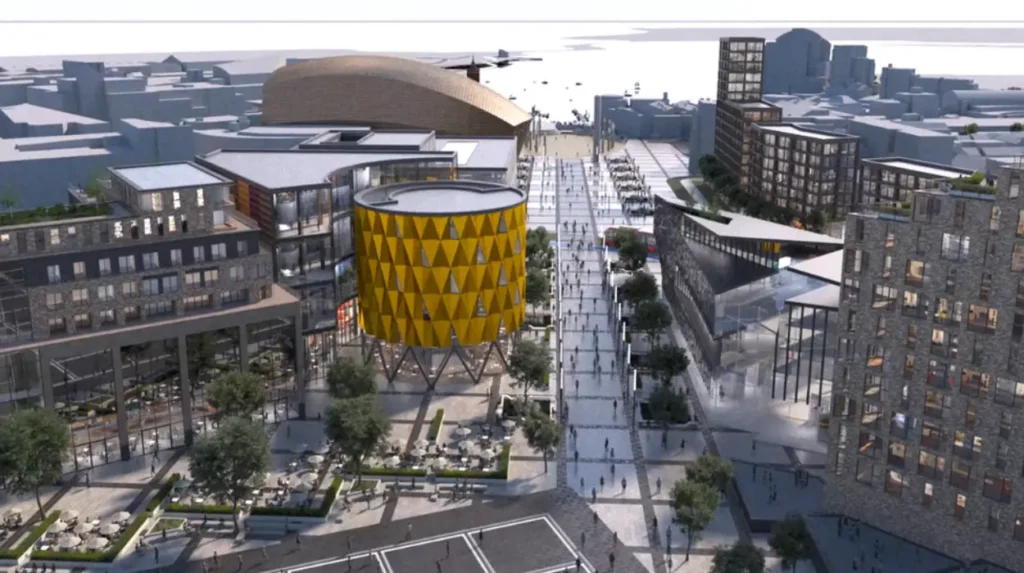
Crossrail doubles peak capacity to Cardiff Bay, serving new 16,500-seat arena. Travel time from Central drops to 10 minutes. Arena access improves for 1 million visitors yearly. Bay employment hub gains 20% commuter influx.
Cardiff Bay hosts 30,000 workers in finance and tech. Crossrail adds 2,000 daily seats.
Road congestion falls 25% around Callaghan Square. Sustainable drainage cuts flood risk 50%.
What Tram-Trains Will Operate on the Line?
Stadler Citylink battery-electric tram-trains operate services. Units measure 13.5 meters with 70 seats and 100 standing. Top speed reaches 100 km/h on rail, 70 km/h on street. Fleet totals 36 units delivered 2025-2027.
Citylinks feature low floors for accessibility. Batteries charge in 5 minutes at stops.
Dual-mode operation switches seamlessly. Maintenance at Taffs Well uses predictive diagnostics.
What is Butetown Station in Cardiff?
Butetown Station is a new railway station in Cardiff on the Butetown branch line. It is being delivered as part of the South Wales Metro project to improve rail connectivity between Cardiff Bay, Butetown, and the city centre.